
Hear from Our Customers
You’re not guessing anymore. You bring in a water sample, and within minutes you walk out with a full printout showing exactly where your water stands and what it needs to get balanced.
No more buying chemicals you don’t need. No more throwing money at a green pool hoping something works. You get precise numbers on pH, chlorine, alkalinity, calcium hardness, and everything else that matters.
The test takes about two minutes. You get a printed report with your current levels and clear recommendations for what to add and how much. If your water’s off, you’ll know why. If it’s fine, you’ll know that too.
This isn’t a sales pitch disguised as a service. It’s a free residential water test using the same technology labs use. You’re not locked into buying anything from us. You just get the information you need to make the right call for your pool.
We’ve been working with pool owners across South Georgia since 2014, built on over 30 years of hands-on experience. We’ve seen every water chemistry issue that comes with this climate and this region’s water.
Holt pool owners deal with the same challenges as the rest of South Georgia: hard water from high mineral content, iron staining, and heat that throws off chemical balance faster than you can keep up. We test water all day, every day during pool season.
We’re not a national chain. We’re local, and we know what works here. The free water quality testing we offer isn’t a gimmick to upsell you. It’s how we help pool owners in Holt keep their investment in good shape without the constant frustration of unclear water or wasted chemicals.
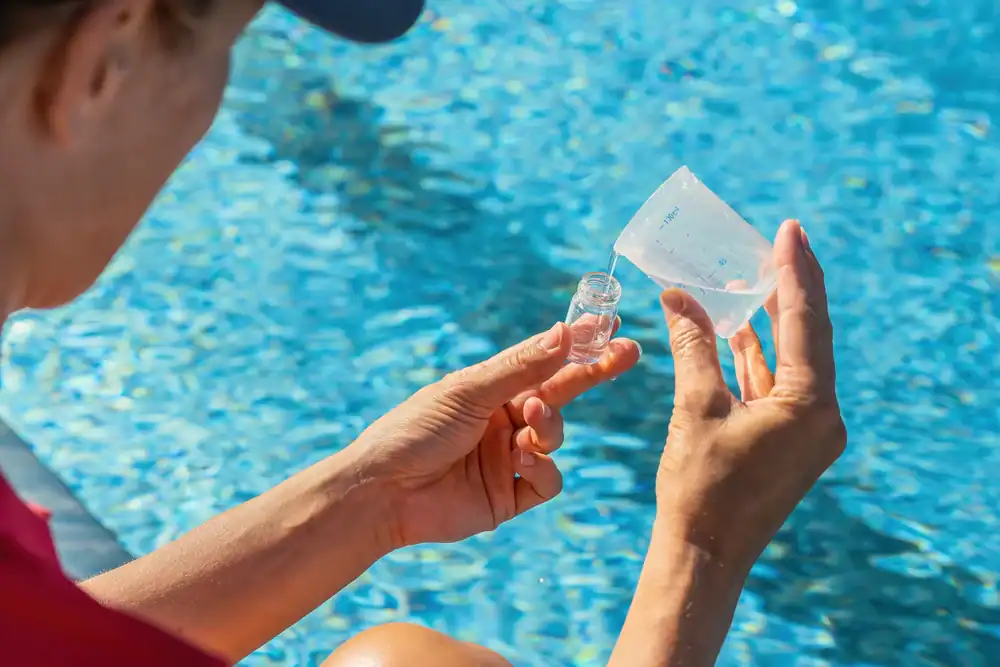
Bring us a water sample from your pool. Use a clean plastic bottle and collect water from about elbow-deep, away from return jets. About 16 ounces is plenty.
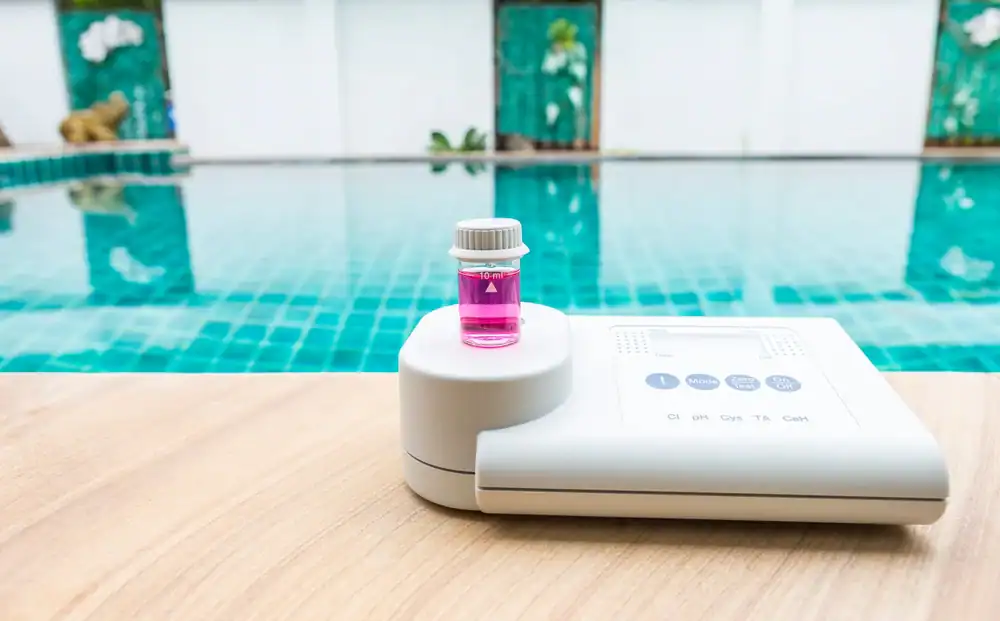
We run your sample through our Lamotte Waterlink Spin Disk system. This is the same technology chemistry and medical labs use for precision testing. It measures pH, free and total chlorine, alkalinity, calcium hardness, cyanuric acid, and other parameters that cheap test strips miss or read incorrectly.
The machine takes about two minutes. You get a printed report showing every measurement, where it should be, and what’s out of range. We walk through the results with you and explain what each number means for your specific pool.
If something’s off, we tell you exactly what chemical to use and how much. If you’re storing test strips in your garage or using old reagents, you’re probably getting bad readings. Heat and humidity destroy the accuracy of home testing kits faster than most people realize. Our equipment is calibrated and maintained specifically to avoid that problem.
Ready to get started?
Every professional pool water testing visit includes a complete analysis of your water chemistry. You’re not getting a basic three-parameter strip test. You’re getting a full workup that covers everything affecting your water balance and equipment.
The test measures pH level, which affects how well your chlorine works and whether your water is corrosive or scaling. It checks free chlorine and total chlorine to make sure you’re actually sanitizing properly. Alkalinity gets tested because it stabilizes pH. Calcium hardness matters because South Georgia water tends to run hard, and that causes scaling on your tile and equipment.
We also test cyanuric acid, which protects chlorine from the sun but causes problems when it builds up too high. Depending on your situation, we can test for metals like iron and copper that cause staining, especially common in well water around Holt, GA.
You walk away with a printed report and specific recommendations. If you need to adjust something, you know exactly what to buy and how much to add. If your water’s dialed in, you have documentation proving it. This is the same level of testing public pools are required to maintain, just offered free for residential pools.
Test your water at least once a week during swim season. If you’re using your pool heavily or you’ve had a big storm, test it more often.
Weekly testing catches problems before they become expensive. Algae blooms, cloudy water, and equipment damage all start with water chemistry that’s been off for too long. When you’re swimming daily or hosting parties, your chemical demand goes up. Rain dilutes your water and drops your chemical levels.
You can test at home between professional tests, but bring a sample in weekly to verify your home kit is still accurate. Test strips expire. Reagents go bad in heat. If you’re making decisions based on faulty readings, you’re wasting money and risking your pool’s condition. Professional testing keeps you honest about what’s actually happening in your water.
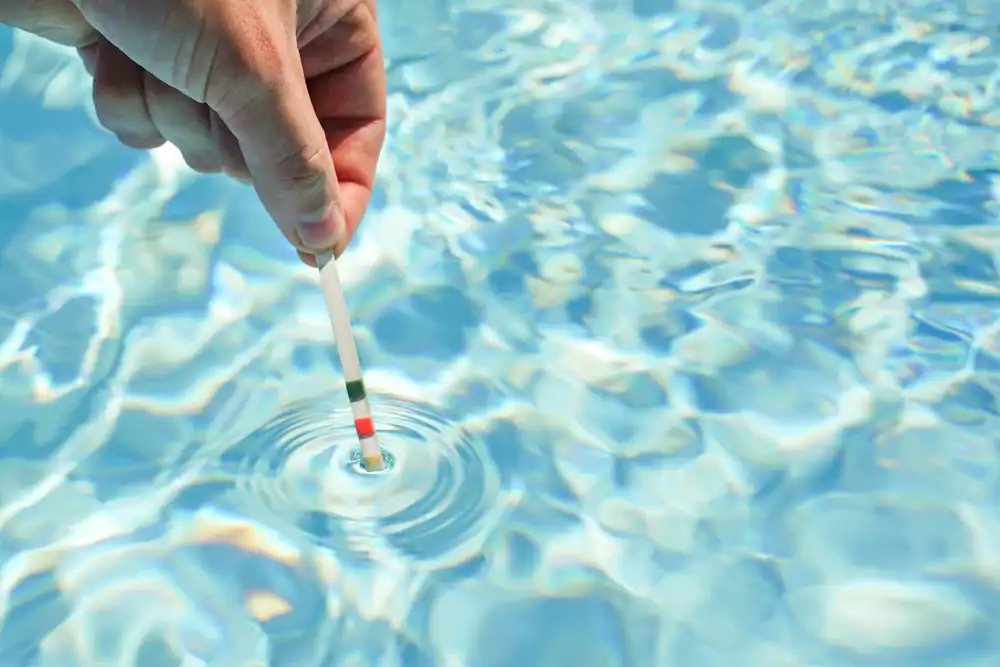
Test strips lose accuracy fast, especially in Georgia heat and humidity. Once the bottle is opened, they start degrading. Most people don’t realize their strips are giving them bad information until their pool turns green.
Professional equipment like our Lamotte system uses fresh reagents and calibrated technology. It tests parameters that strips can’t measure accurately, like cyanuric acid and calcium hardness. Those matter more than most pool owners realize, especially in this area where hard water is common.
Strips also require you to interpret color changes, which is subjective. Is that pink or purple? Is it close enough? Our system gives you exact numbers. When your pH is 7.8 instead of 7.6, that difference matters for how your chlorine performs. Strips won’t catch that. Lab-grade equipment will.
You get a clear explanation of what’s wrong and exactly how to fix it. We’ve dealt with every water chemistry problem that exists in South Georgia pools. Nothing surprises us.
If your water’s severely out of balance, we walk through the correction process step by step. Sometimes it’s a simple fix—add X amount of this chemical, wait a few hours, retest. Other times, especially if you’ve been fighting the same problem for weeks, it takes a more systematic approach.
We’re not here to sell you a service contract or make the problem sound worse than it is. You get honest information about what needs to happen. If you want to handle it yourself, we tell you how. If you’d rather have help, we can do that too. The test results are yours either way, and there’s no pressure to buy anything.
It’s actually free. No purchase required, no service contract, no catch. You bring water, we test it, you get results and recommendations. That’s it.
We offer this because it helps pool owners in Holt and across South Georgia maintain their pools correctly. Better-maintained pools mean fewer emergency calls, less frustration, and longer-lasting equipment. It’s good for everyone.
Some people test their water and buy chemicals from us because it’s convenient. Others take the results and handle it themselves. Both are fine. We’re not tracking whether you buy anything or pressuring you at the counter. The testing is a service we provide to the community, and it’s been that way since we started.
Yes. Chlorine pools, saltwater pools, vinyl liner, concrete, fiberglass—we test them all. The chemistry principles are the same even though the maintenance approaches differ slightly.
Saltwater pools still need balanced pH and alkalinity. They still accumulate cyanuric acid and calcium. The salt cell generates chlorine, but that doesn’t mean the water automatically stays balanced. Vinyl liner pools need careful attention to pH because acidic water damages the liner. Concrete pools deal with calcium scaling more than other types.
Bring us a sample from whatever pool you have. We adjust our recommendations based on your pool type, size, and what equipment you’re running. The test itself works the same way regardless. You get accurate numbers and advice specific to your situation.
Use a clean plastic bottle or container. Glass works too, but plastic is easier and won’t break in your car.
Reach down about elbow-deep into your pool, away from the return jets and skimmer. You want a sample that represents the overall pool water, not just what’s on the surface or right where chemicals are entering. Fill your container with about 16 ounces of water. Cap it and bring it in.
Don’t let the sample sit in a hot car for hours before testing. Heat changes the chemistry. If you’re running errands, test your water first or keep it in a cooler. The fresher the sample, the more accurate the results. That’s it—no special prep, no chemicals to add, no complicated collection process.