
Hear from Our Customers
You’re not just getting a hole filled with water. You’re getting a backyard that actually works for how you live—whether that’s weekend cookouts, morning laps, or a place where your kids will remember growing up.
The difference shows up in year three, not day one. That’s when you’re not dealing with cracks, leaks, or contractors who’ve disappeared. That’s when your neighbors are calling someone back out, and you’re just enjoying what you paid for.
A custom inground pool should add value to your home and your life. In Georgia, that means about 7% to your property value when it’s done right. But it also means fewer service calls, better energy efficiency, and a setup that actually makes sense for your lot.
We’re a licensed pool contractor serving Ashton and Douglas County. We specialize in custom inground cement pools, renovations, and designs that fit your property—not a template.
We’re local, which means we know what Georgia soil does in summer. We know which permits you actually need and how long they take in your county. We know the inspectors, the suppliers, and what works here versus what looks good in a magazine from Arizona.
You’ll work with people who’ve built pools on sloped lots, in tight access areas, and for families who need this done right the first time because there’s no budget for round two.
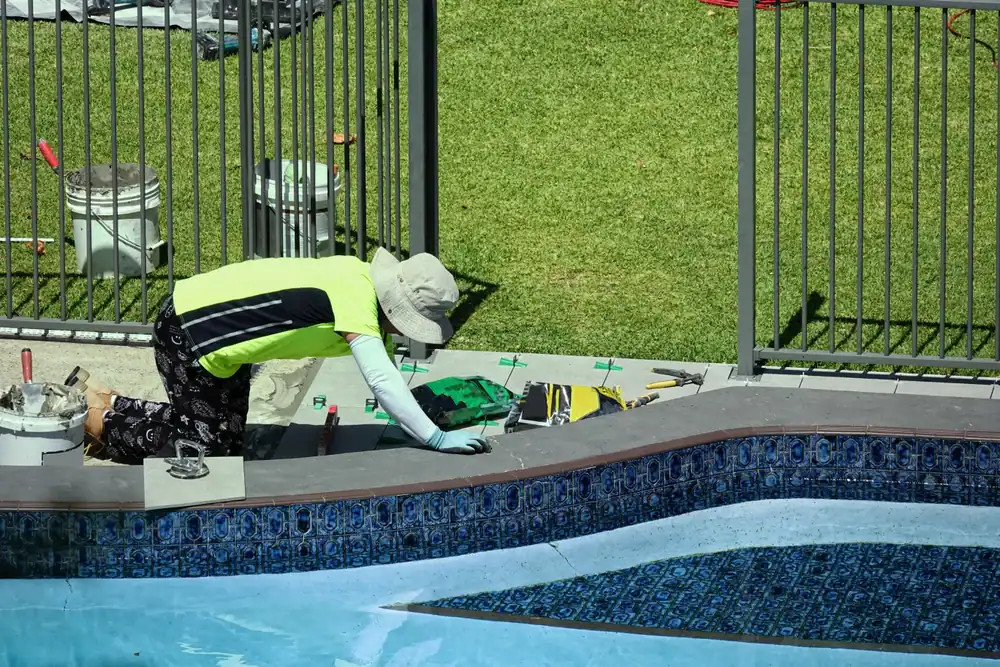
First, we come out and look at your property. Not a quick walk-through—we’re checking grade, drainage, access, and any site issues that’ll affect cost or timeline. You’ll know what’s realistic before anything gets signed.
Next, we design the pool based on what you actually want and what your lot can handle. That includes size, shape, depth, materials, and features. We also handle the permits and HOA approvals if needed, because in Georgia, you can’t start without them.
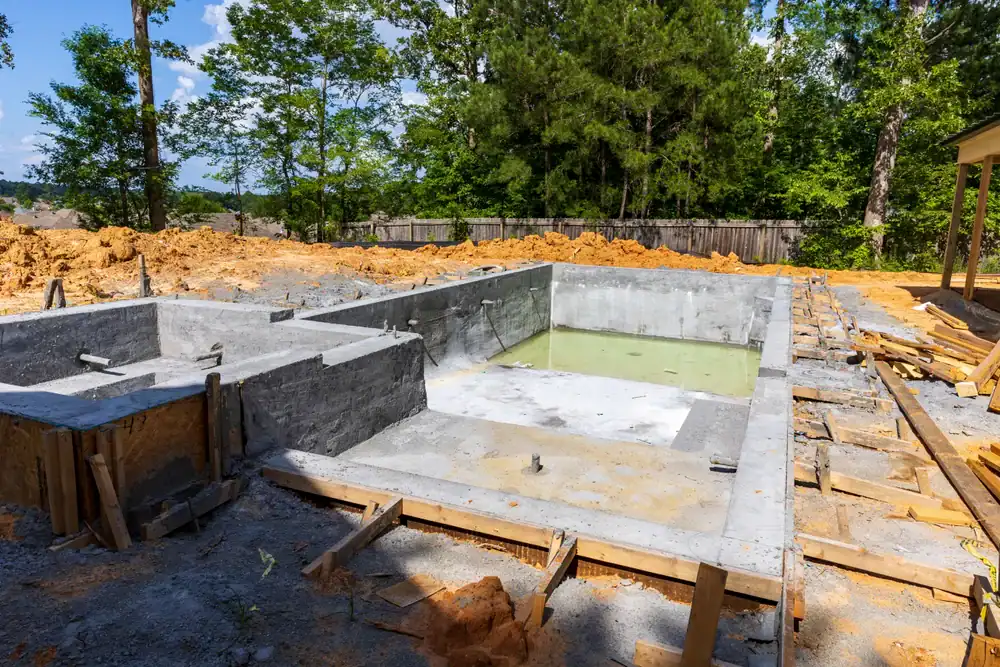
Once permits clear, we excavate, set plumbing and electrical, build the structure, and finish with decking and any additional features you’ve chosen. Then we fill it, balance it, and walk you through everything you need to know. The timeline depends on your project, but we’ll give you a real estimate up front—not best-case scenario.
Ready to get started?
You’re getting a custom inground cement pool designed specifically for your property. That means we’re not dropping in a fiberglass shell or working off a cookie-cutter plan. Every pool we build is shaped and finished based on your space, your budget, and how you’ll actually use it.
In Ashton and Douglas County, lot conditions vary. Some properties have slopes. Some have tight access. Some need extra grading or drainage work before we can even dig. We account for that in the design and the bid, so there are no surprise costs halfway through.
We also handle the full build—excavation, plumbing, electrical, structure, decking, and finishing. If you want smart controls, energy-efficient pumps, LED lighting, or saltwater systems, we can integrate that. If you want a pool that ties into an outdoor kitchen or fire pit area, we plan for that too. The goal is a finished backyard that makes sense as a whole, not just a pool dropped in the middle of your yard.
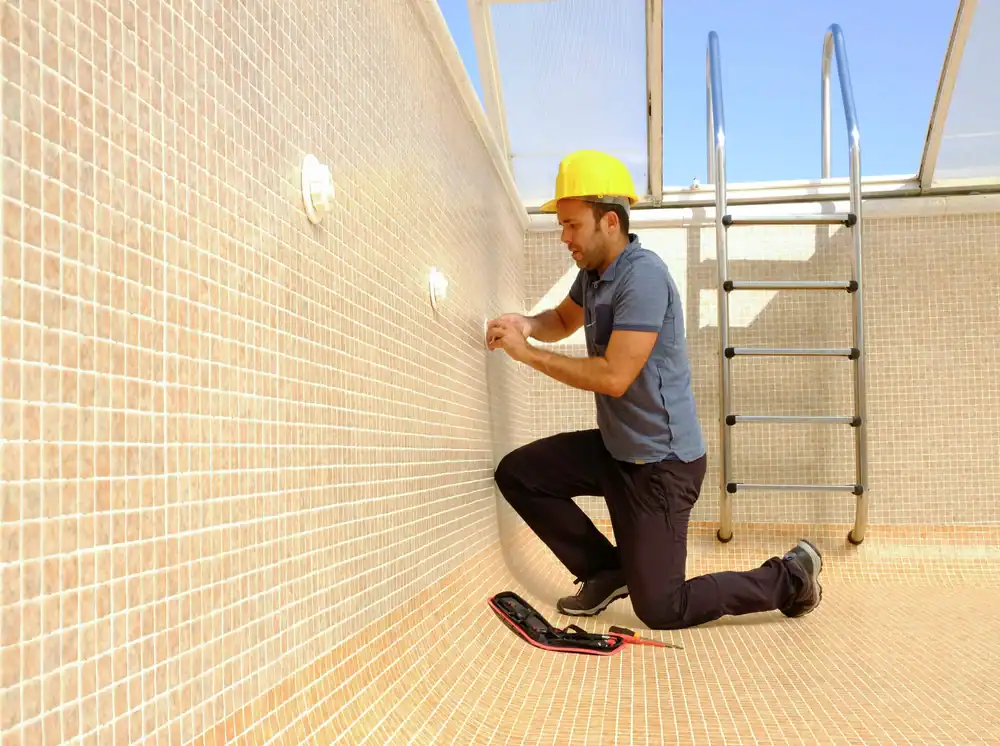
Most custom inground pools in Georgia start around $35,000 and go up depending on size, features, and site conditions. If your lot has a slope, needs significant grading, or has limited access for equipment, that affects cost. Same goes for add-ons like waterfalls, built-in spas, or high-end finishes.
We don’t give ballpark numbers over the phone because they’re usually wrong. Every property is different. The best way to get an accurate number is to have us come out, look at your lot, and talk through what you actually want. Then we can give you a real bid, not a range that doubles once we start digging.
Financing is available if that helps. But expect the process to take a few months from design to completion, and expect to invest in something that’s built to last 20-plus years if it’s done right.
From contract signing to swimming, most custom inground pools take 8 to 12 weeks in Georgia. That includes permit approval time, which can vary by county. Some permits come back in two weeks. Some take longer, especially if you’re in an HOA or need environmental health approval.
Once we break ground, the build itself usually takes 6 to 8 weeks depending on weather, site conditions, and how complex your design is. If you’re adding a lot of custom features—vanishing edges, integrated spas, extensive decking—it takes longer.
We’ll give you a timeline during the design phase. It’s not a guarantee because we don’t control the county or the weather, but it’s based on what actually happens on projects like yours. If something delays the schedule, you’ll know as soon as we do.
Yes. You need a permit from the city before any excavation starts. If you’re in an HOA, you’ll also need their approval before you can even submit for the city permit. And in Georgia, all residential pools require approval from the county environmental health department.
Skipping permits is a bad idea. If the city finds out, they can make you fill the pool in or fine you until it’s brought up to code. Plus, most inspectors can tell when work wasn’t permitted, and that becomes a problem when you try to sell your home.
We handle the permit process as part of the build. That means pulling permits, coordinating inspections, and making sure everything passes. It adds time to the front end of the project, but it keeps you legal and protects your investment.
Cement pools are fully custom. We build the shape, size, and depth based on your property and what you want. Fiberglass pools come in pre-made shells that get dropped into a hole. You’re limited to whatever shapes and sizes the manufacturer offers.
Cement costs more up front and takes longer to install, but it lasts longer and gives you full control over design. You can add benches, beach entries, custom depths, and any shape that fits your yard. Fiberglass is faster and cheaper, but you’re stuck with what’s available, and repairs down the road can be tricky.
In Georgia, cement also handles soil movement and temperature swings better over time. If you’re building something you plan to keep for 20 years, cement is the better long-term investment. If you want something fast and simple, fiberglass works. We specialize in custom cement pools because that’s what most of our clients in Ashton are looking for.
In most cases, yes—by around 7% according to recent data. But that depends on your neighborhood, the quality of the build, and whether the pool makes sense for your property. A well-designed pool in a neighborhood where pools are common is a selling point. A poorly built pool in a market where buyers don’t want them can actually hurt your value.
In Ashton and Douglas County, outdoor living spaces are popular. Buyers expect nice backyards, and a pool can be a major draw if it’s done right. But it has to look good, function well, and not take up the entire yard.
If you’re building purely for resale, talk to a local realtor first. If you’re building because you want a pool and you plan to stay in the home for a while, the value is in how you use it. The resale boost is just a bonus.
You’ll need to check and balance chemicals weekly, clean the skimmer and pump baskets regularly, and brush the walls and floor to prevent algae. Most people spend 20 to 30 minutes a week on basic upkeep if they stay on top of it.
You’ll also need to open the pool in spring and close it in fall if you’re not using it year-round. That includes draining lines, covering the pool, and winterizing equipment. Some people hire that out. Some do it themselves.
Bigger maintenance—like servicing the pump, replacing filters, or resurfacing the pool—happens every few years, not every week. If you go with energy-efficient equipment and a saltwater system, you’ll spend less time managing chemicals. If you add a pool cover, you’ll keep debris out and reduce cleaning time. We’ll walk you through all of this after the build so you know exactly what to expect.