

Hear from Our Customers
You stop wondering if the water’s safe. You stop buying chemicals you’re not sure how to use. You stop spending Saturday mornings skimming leaves when you’d rather be swimming.
When your pool gets consistent professional care, the water stays balanced. The equipment runs longer. Problems get caught early, before they turn into expensive repairs.
Your filter doesn’t clog. Algae doesn’t take over after a rainstorm. The pump doesn’t burn out because someone forgot to check it. You’re not guessing about chlorine levels or pH balance—someone who knows what they’re doing handles it every week.
That’s what regular pool cleaning service actually does. It removes the guesswork, the time drain, and the stress of keeping up with something that requires more attention than most people realize.
We started Deep Waters Pools in Douglas County over a decade ago, built on 30+ years of hands-on pool experience. We’re not a franchise. We’re local, and we know how Georgia weather affects your pool—the heat, the pollen, the summer storms that throw off your chemistry overnight.
We’ve cleaned pools through every season Wilsonville throws at us. We know which equipment holds up and which doesn’t. We know what Douglas County soil does to your water and how to adjust for it.
When you call, you’re talking to people who’ve seen it all. Green pools, broken pumps, algae blooms after heavy rain. We’ve fixed it, cleaned it, and prevented it. That experience matters when something goes wrong—or better yet, when you want to make sure it doesn’t.
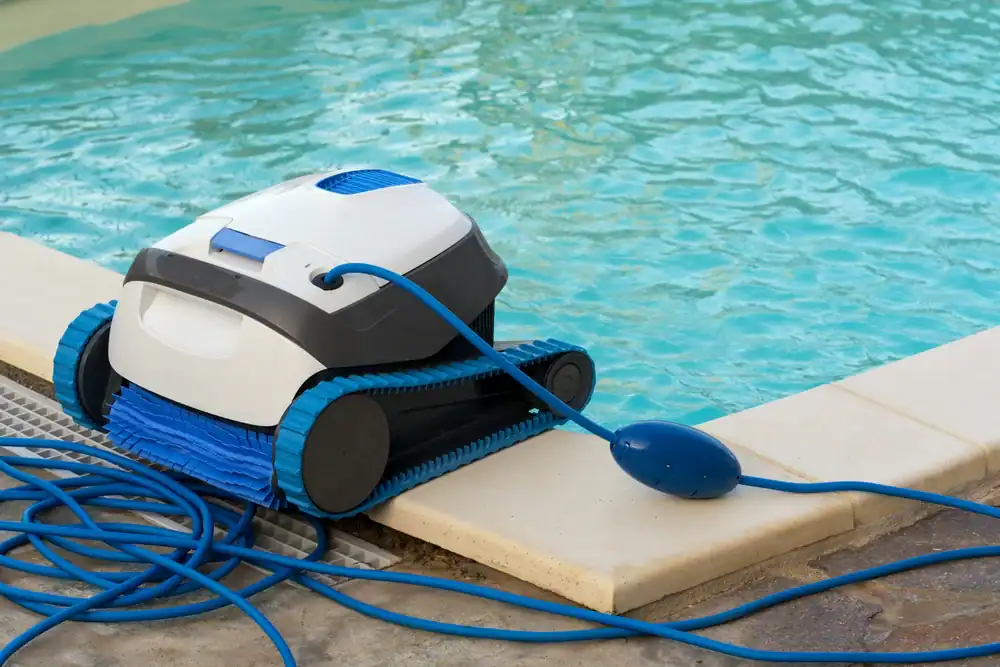
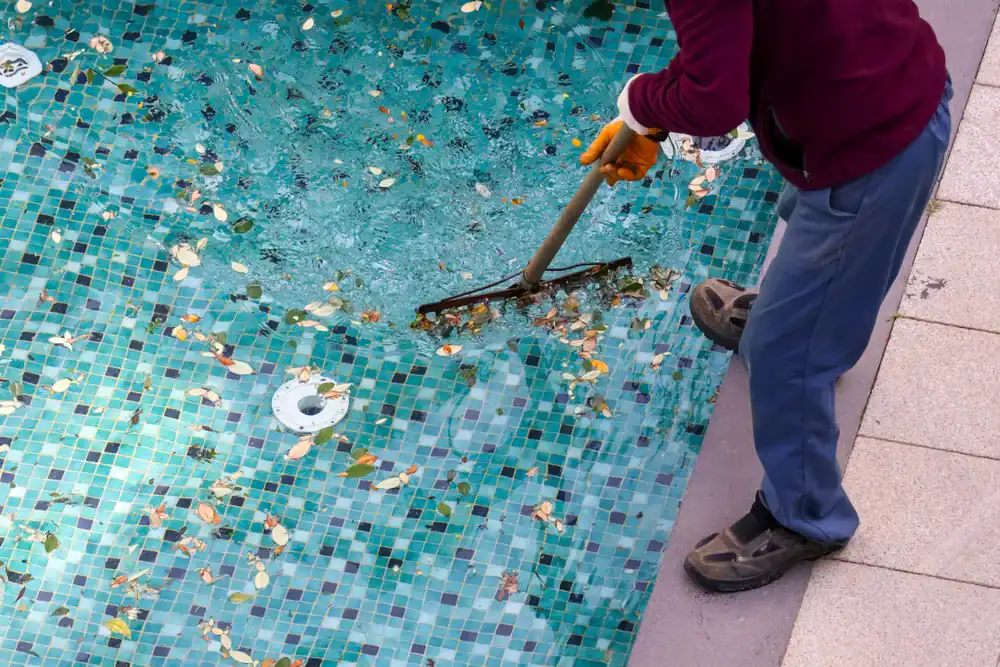
We show up on the same day, every week. First thing we do is skim the surface and vacuum the bottom. Leaves, bugs, debris—it all comes out.
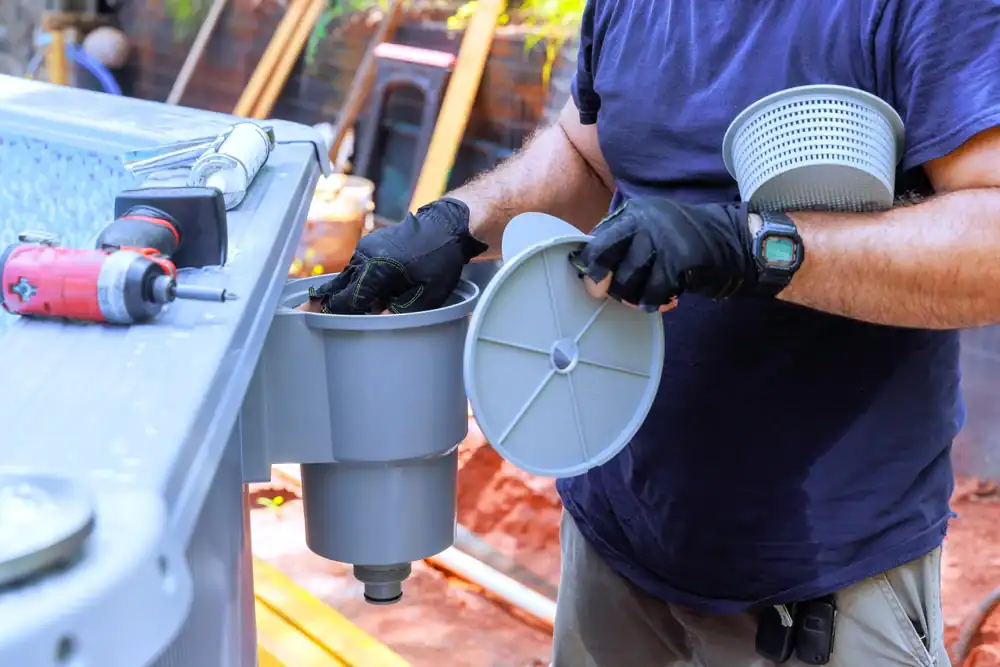
Then we brush the walls and steps. Algae loves to start in corners and along the waterline. Brushing disrupts it before it becomes visible. After that, we empty your skimmer and pump baskets, check the filter pressure, and inspect your equipment for anything that looks off.
Next comes water testing. We check pH, chlorine, alkalinity, and calcium hardness. If something’s out of range, we adjust it on the spot with the right chemicals in the right amounts. No guessing.
Before we leave, we make sure everything’s running properly. If we spot a small issue—a worn O-ring, a noisy pump, low water level—we let you know. Most problems are cheap and easy to fix early. They get expensive when they’re ignored.
You get a pool that’s ready to use, every single week, without having to think about it.
Ready to get started?
Every visit covers the basics that keep your pool functioning: skimming, vacuuming, brushing, and basket cleaning. We test and balance your water chemistry each time. That includes chlorine, pH, alkalinity, and calcium levels.
We inspect your pump, filter, and other equipment during every visit. Catching a small leak or a worn part early saves you hundreds, sometimes thousands, compared to waiting until something fails completely.
In Wilsonville and Douglas County, we deal with specific challenges. Pollen in spring. Algae growth after summer storms. Leaves in fall. Your pool needs attention year-round here, not just during swim season. Our weekly service accounts for that.
If your pool turns green or gets neglected, we also handle recovery cleaning. It’s more intensive, but it gets your pool back to swimmable condition without you having to drain it or start over. We’ve brought back pools that looked like swamps.
Once a week, minimum. That’s not upselling—it’s what keeps a pool in good shape, especially in Georgia.
Pools collect debris constantly. Leaves, pollen, dust, bugs. If you let that sit, it breaks down and feeds algae. Algae turns your pool green and makes it unsafe to swim in. Weekly cleaning prevents that cycle from starting.
Water chemistry also shifts throughout the week. Rain dilutes your chlorine. Heat makes it evaporate faster. Swimmers introduce oils, sunscreen, and sweat. If you’re only checking chemistry every two weeks, you’re reacting to problems instead of preventing them. Weekly service keeps everything stable so small issues don’t become big ones.
Your pool will show it. Water turns cloudy first, then green if algae takes hold. The longer you wait, the harder it is to fix.
Skipping maintenance also stresses your equipment. Dirty filters work harder and wear out faster. Pumps run longer trying to circulate dirty water. Heaters and salt cells get clogged with calcium buildup that could’ve been prevented with regular water balancing.
Recovery cleaning costs more than regular maintenance because it takes more time, more chemicals, and more labor. If your pool’s been sitting untouched for a month, expect it to take several visits to get it back to normal. Staying on a weekly schedule is cheaper and easier than playing catch-up.
You can, but most people underestimate what’s involved. Pool cleaning isn’t just skimming leaves. It’s water chemistry, equipment maintenance, and knowing what to look for before something breaks.
Most homeowners don’t have a proper test kit, don’t know how to read it accurately, and don’t keep the right chemicals on hand. They also don’t check their equipment regularly, so small problems turn into expensive repairs. A $20 O-ring replacement becomes a $600 pump motor if you don’t catch it early.
If you’ve got the time, the tools, and the knowledge, you can handle it yourself. But if you’re guessing about chemical levels or only cleaning when the pool looks dirty, you’re setting yourself up for bigger problems. Professional service costs less than fixing what gets missed.
We test five key levels every visit: chlorine, pH, total alkalinity, calcium hardness, and stabilizer. Each one affects how your pool performs and how safe it is to swim in.
Chlorine kills bacteria and algae. If it’s too low, your pool becomes a breeding ground for harmful organisms. Too high, and it irritates skin and eyes. pH affects how well chlorine works—if pH is off, your chlorine is basically useless even if the level looks fine.
Alkalinity buffers pH so it doesn’t swing wildly. Calcium hardness prevents your water from becoming corrosive or scaling up your equipment. Stabilizer protects chlorine from breaking down in sunlight. All of these need to stay in range, and they affect each other. Adjusting one often means adjusting another. That’s why professional balancing matters—it’s not just dumping in chlorine and hoping for the best.
For us, about 45 minutes to an hour for a standard residential pool. That includes skimming, vacuuming, brushing, emptying baskets, testing water, balancing chemicals, and checking equipment.
If your pool’s been neglected or there’s been a storm, it takes longer. Heavy debris, algae growth, or equipment issues add time. But with consistent weekly service, the process stays quick because we’re maintaining, not recovering.
For a homeowner doing it themselves, expect it to take longer. You’re learning as you go, you don’t have professional equipment, and you’re probably not as efficient. Most people spend 90 minutes to two hours doing what takes us under an hour. That’s time you could be spending in the pool instead of working on it.
Call us right away. A green pool means algae has taken over, and it spreads fast. The longer it sits, the harder it is to clear.
We’ll come out and assess what caused it—usually it’s a chemical imbalance, an equipment failure, or heavy rain that diluted your chlorine. Then we’ll shock the pool with a high dose of chlorine, brush all the surfaces to break up algae colonies, and run your filter continuously until the water clears.
This usually takes a few days and multiple chemical treatments. The water will go from green to cloudy to clear as the dead algae gets filtered out. Once it’s clear, we’ll rebalance everything and figure out what went wrong so it doesn’t happen again. If you’re on our weekly service, this rarely happens—but when it does, we handle it.