
Hear from Our Customers
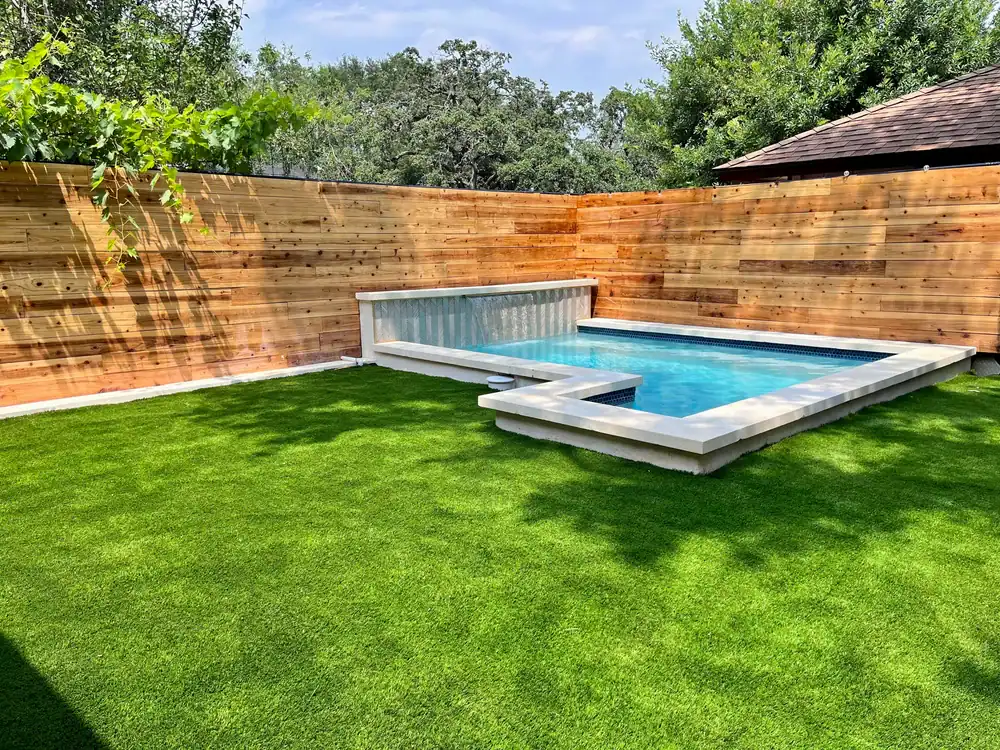
Georgia’s weather gives you nearly year-round swimming. That’s not just nice to have when you’re looking at another 95-degree July afternoon with nowhere to go. It’s the difference between your backyard sitting empty and becoming the place your family actually wants to be.
You’re not just adding a pool. You’re adding a reason to stay home on weekends, a place to cool off after work, and a setup that makes entertaining easy without leaving your property. Research shows inground pools increase home value by around 7%, but the real return is in how you use your space every single day.
Concrete pools handle Georgia’s soil movement better than other materials. The red clay here shifts, expands, and doesn’t drain well. Gunite construction accounts for that. It’s reinforced, it’s built to flex slightly without cracking, and it’s designed specifically for the conditions we deal with in South Georgia.
We’ve been building custom inground cement pools in Douglas County and surrounding areas since the early 1990s. That’s over 30 years working with Georgia’s red clay, navigating local building departments, and managing the same soil and weather challenges you’re dealing with in Ashton.
We’re licensed and insured. We handle permits from start to finish because we know which inspectors want what documentation and how long each county typically takes to approve. Most Georgia counties need 2-8 weeks for permitting, and we build that into your timeline so you’re not surprised.
You’re working with a team that knows what it takes to excavate dense clay soil, where drainage needs to go, and how to reinforce concrete so it holds up long-term. We don’t subcontract the hard parts. We do the work.
First, we evaluate your property. We’re looking at soil type, drainage, lot size, setback requirements, and how a pool fits with your home’s layout. This isn’t a sales pitch—it’s a real assessment of whether your yard works for what you want and what adjustments might be needed.
Next, we design the pool. You tell us how you plan to use it, and we show you what’s realistic for your space and budget. Custom doesn’t mean complicated. It means the pool fits your lot and matches how your family will actually use it.
Then we handle permits. We submit plans, coordinate with inspectors, and manage the back-and-forth with your local building department. This typically takes a few weeks, and we keep you updated on where things stand.
Once permits clear, we excavate. Georgia red clay requires heavy equipment and careful grading. We remove the soil, set up proper drainage, and prep the site for concrete. After excavation, we install steel reinforcement, run plumbing and electrical, and shoot the gunite. The concrete cures, we apply finish work, install your filtration system, and fill the pool. Total timeline is usually 8-12 weeks depending on weather and inspections.
Ready to get started?
You’re getting full site evaluation, custom design, all permits and inspections, excavation with proper drainage setup, steel reinforcement installation, gunite application, plumbing and electrical work, filtration system installation, finish work, and complete cleanup. We also train you on how to operate and maintain your system before we leave.
Every pool includes safety barriers that meet Georgia code. That’s fencing, gates, and proper locking mechanisms. Inspectors verify this before final approval, and we make sure it’s done right the first time so you don’t deal with reinspections or delays.
Ashton sits in a part of Georgia where soil conditions vary even within the same neighborhood. Some yards have more clay, some have better drainage, and some require additional grading work. We account for that during the site evaluation so your quote reflects what your property actually needs—not a generic estimate that changes halfway through the job.
Concrete pools give you flexibility fiberglass can’t match. You’re not limited to pre-made shapes or sizes. If your yard has an unusual layout or you want specific features like a beach entry, swim-up bar, or integrated spa, concrete handles that. It’s also more durable long-term when installed correctly in Georgia soil.
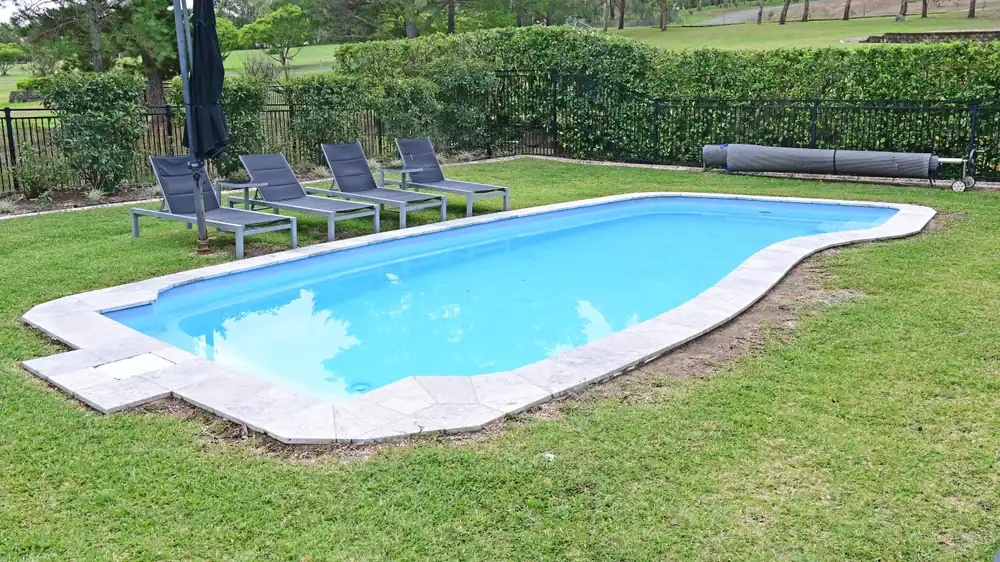
Plan on 8-12 weeks from permit approval to swim-ready. That includes excavation, concrete work, plumbing, electrical, filtration setup, and finishing. Permitting adds another 2-8 weeks depending on your county and how quickly inspectors can schedule site visits.
Weather affects timelines more than most people expect. Georgia’s summer storm season can delay concrete pours or excavation work. We don’t rush through rain delays because wet soil creates problems later. If your project starts in spring, you’re usually swimming by summer. If you start in late fall, you’re looking at a spring completion.
We build buffer time into schedules so you’re not surprised by delays. If inspections take longer or weather pushes things back a week, that’s already accounted for. You’ll get regular updates on where the project stands and what’s happening next.
Red clay is dense, holds water, and shifts when it gets saturated. Concrete pools are reinforced with steel rebar and engineered to handle that movement without cracking. Fiberglass pools are rigid—they can’t flex, so soil shifting puts stress on the shell and can cause structural issues over time.
Concrete also allows for better drainage design. We can grade around the pool, install proper drainage lines, and make sure water moves away from the structure instead of pooling against it. That’s critical in Georgia where heavy rain is common and clay doesn’t absorb water well.
The other advantage is customization. Concrete isn’t limited by pre-made molds. If your yard has elevation changes, tight access, or specific dimensions, concrete adapts. Fiberglass requires enough space to crane in a pre-formed shell, and if your yard doesn’t fit standard sizes, you’re out of options.
Most custom gunite pools in Georgia run between $60,000 and $150,000 depending on size, features, and site conditions. A basic rectangular pool with standard finishes and equipment sits on the lower end. Add custom shapes, water features, upgraded tile, integrated spas, or extensive decking, and costs go up.
Your property affects pricing too. If your yard has difficult access, requires significant grading, or needs extra drainage work, that adds to the total. Red clay excavation costs more than sandy or loamy soil because it requires heavier equipment and more labor.
We give you a detailed quote after evaluating your property. That quote includes everything—permits, excavation, concrete, plumbing, electrical, filtration, finish work, and cleanup. No surprise charges halfway through. You’ll know what you’re paying before we start digging.
Yes. We submit plans to your local building department, coordinate inspections, and manage any revisions inspectors request. Permitting in Georgia requires setback verification, safety barrier plans, electrical and plumbing compliance, and sometimes zoning approval depending on your property.
Most counties in South Georgia take 2-8 weeks to approve residential pool permits. Some move faster, some take longer. We know which departments are quicker and what documentation they expect upfront. That experience keeps your project moving without unnecessary delays.
Inspections happen at multiple stages—after excavation, after steel and plumbing installation, after electrical work, and before final approval. We schedule those inspections, make sure everything passes, and handle any follow-up if something needs adjustment. You don’t deal with inspectors or building departments. We do.
You’re looking at regular cleaning, chemical balancing, and equipment checks. Most homeowners spend around $1,200-$1,800 per year on upkeep, which includes chemicals, filter cleaning, occasional repairs, and winterizing if you close the pool during colder months.
Concrete pools need brushing more often than fiberglass because the surface is porous. Algae can grow in the texture if you don’t stay on top of it. Weekly brushing and proper chemical levels prevent that. Your filtration system does most of the work, but you’ll need to backwash or clean filters regularly depending on the type you choose.
Resurfacing happens every 10-15 years depending on usage and water chemistry. That’s when you refinish the plaster or apply a new interior coating. It’s a normal part of concrete pool ownership and costs a few thousand dollars. We train you on basic maintenance before you start using the pool so you know what to watch for and how to keep everything running smoothly.
Usually, yes. Concrete pools don’t require craning in a large pre-formed shell like fiberglass does. We bring in equipment and materials in sections, which gives us more flexibility with tight access points. If we can get an excavator to your backyard, we can build your pool.
We’ve worked with properties that have narrow side yards, steep slopes, and limited entry points. Sometimes that means using smaller equipment, hand-digging certain areas, or staging materials differently. It adds time and labor, but it’s manageable. During the site evaluation, we assess access and let you know if your property presents any challenges.
Ashton has a mix of older homes with smaller lots and newer developments with more space. We’ve handled both. If your yard has access concerns, we’ll walk the property with you and explain exactly how we’d approach the build before you commit to anything.