
Hear from Our Customers
Most Hazlehurst pool owners aren’t dealing with a lazy maintenance routine they’re dealing with water that’s working against them from the start. The city draws from the Upper Floridian Aquifer, which runs naturally high in calcium and magnesium. That mineral load doesn’t disappear when it goes into your pool. It builds on your surfaces, clouds your water, and quietly damages your equipment while your test strip reads “fine.”
Then add a South Georgia summer to the equation. August in Hazlehurst brings more than 23 rain days. Every storm dilutes your sanitizer, drops your pH, and spikes your chlorine demand sometimes within 48 hours. By the time the water looks off, you’re already behind. And at 90-plus degrees with direct sunlight burning through unprotected chlorine in under two hours, there’s very little margin for error.
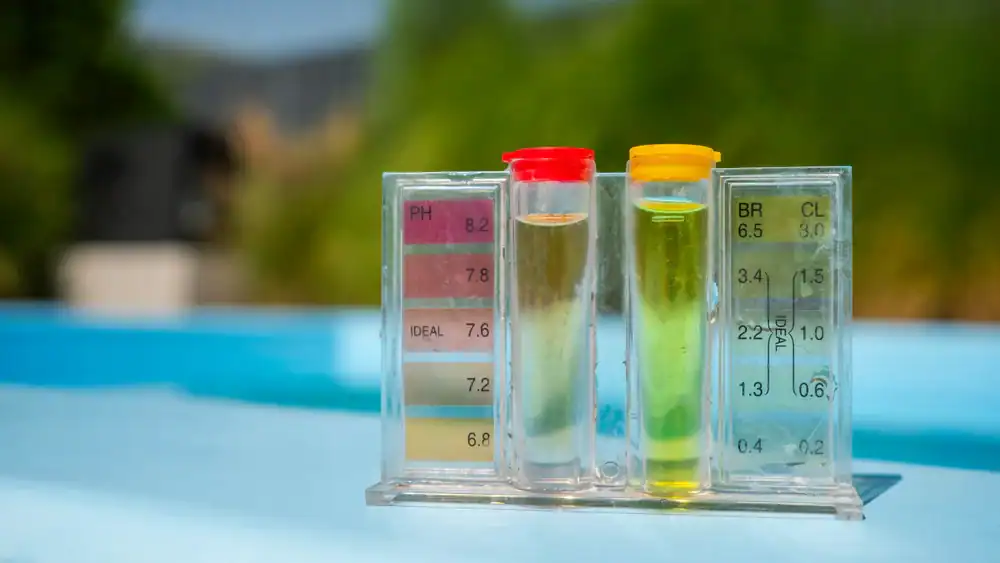
When your chemistry is dialed in correctly, you stop chasing problems. The water is clear, the equipment runs clean, and your family isn’t swimming in something that just looks okay. That’s the difference between a test strip and a professional analysis one tells you the color, the other tells you the truth.
We’re based in Douglas, GA about 30 miles west of Hazlehurst on US-221. That’s not a long-haul service call. That’s a neighbor who can actually show up when your pool turns green in July and you need someone who knows what they’re looking at.
Deep Waters Pools was built on more than three decades of hands-on pool construction gunite, shotcrete, concrete, plumbing, the whole thing. That background matters for water testing because we understand how pool surfaces actually respond to chemistry imbalance. Corrosive water eats plaster. Scaling water leaves mineral deposits that cost real money to remove. We’ve seen both, and we know the difference before it becomes your problem.
Licensed, insured, and built on a straightforward standard: no shortcuts, no surprises. Hazlehurst families deserve a straight answer about their water not a product recommendation dressed up as a test result.
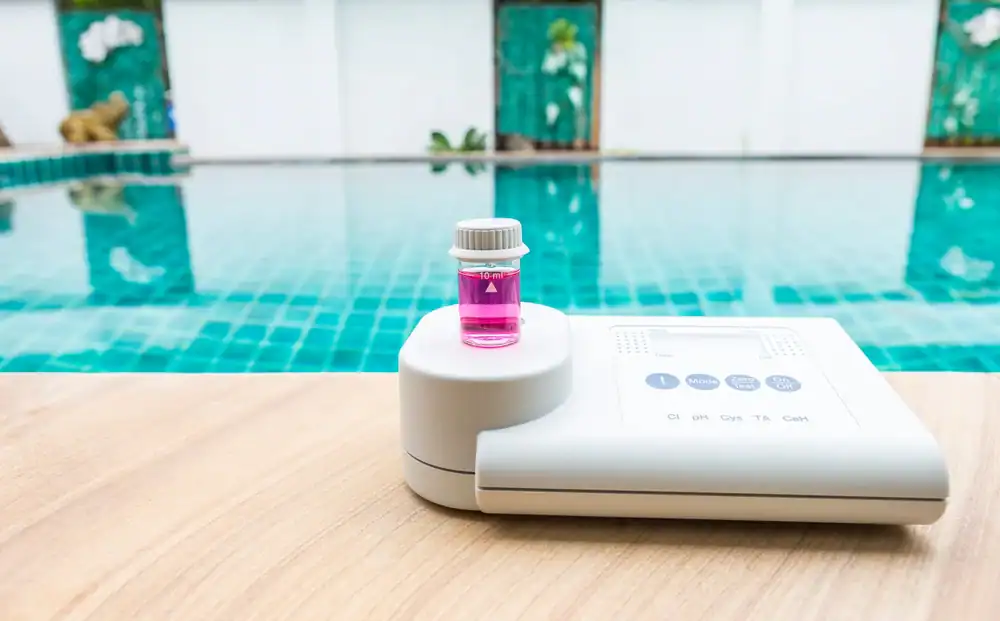
It starts with a digital water analysis not a color-matching strip, not a visual check. We measure every critical parameter to multiple decimal points: free chlorine, total chlorine, combined chlorine, pH, total alkalinity, calcium hardness, cyanuric acid, and metals. For Hazlehurst pools specifically, calcium hardness and metal content get close attention because of what the Floridian Aquifer puts into the local water supply. If you’re filling or topping off from city water or a private well on rural Jeff Davis County property, your starting chemistry is not neutral and the test accounts for that.
Once the readings are in, you get a clear breakdown of what’s off and exactly what needs to happen to correct it. No jargon, no mystery charges, no “trust us” just the numbers and the plan. If corrections are needed, we explain them in plain language so you understand what’s being done and why.
Timing matters here too. Spring is when South Georgia’s pine pollen season peaks, and the organic load it drops into a pool can spike chlorine demand fast. Summer’s heat and rain keep chemistry moving constantly. A test done in May looks different from one done in August, and the correction plan reflects that. This isn’t a one-size answer it’s an analysis built around what’s actually happening in your pool right now.
Ready to get started?
A complete water test from Deep Waters Pools covers the full picture: free and total chlorine, combined chlorine (the stuff behind eye irritation and that strong chemical smell), pH, total alkalinity, calcium hardness, cyanuric acid, and metals. Each one matters, and each one interacts with the others. pH is the foundation when it climbs above 7.8, chlorine loses roughly half its sanitizing power even when the reading looks normal. That’s a common scenario after South Georgia rain pushes pH around, and it’s invisible without a precise measurement.
Calcium hardness is the parameter most Hazlehurst pool owners have never had tested properly. Given that local water draws from the Floridian Aquifer, calcium levels in fill water tend to run high. Without regular monitoring, that translates to scaling on pool surfaces, cloudy water, and filtration problems that get expensive to correct. For homeowners on private wells in the rural parts of Jeff Davis County, the mineral profile can vary significantly from city supply which is exactly why a baseline test before filling or topping off is worth doing.
Cyanuric acid the stabilizer that protects chlorine from UV breakdown is another one that basic test strips can’t read accurately once levels climb. In a climate where direct sunlight is relentless from May through September, getting this number right is what keeps your chlorine working instead of burning off. Every reading, every correction, every recommendation is written down and explained. You leave knowing what was wrong, what was done, and what to watch for next.
Hazlehurst’s municipal water comes from two wells drawing from the Upper Floridian Aquifer beneath Jeff Davis County. That groundwater is naturally high in calcium and magnesium which means when you fill or top off your pool with city water, you’re starting with a mineral-heavy baseline that pushes toward high calcium hardness. Left unchecked, that leads to calcium scaling on pool surfaces, cloudy water caused by calcium carbonate dropping out of solution, and strain on your filtration equipment.
If you’re on a private well in the rural parts of Jeff Davis County, your mineral profile may be different from city supply sometimes higher, sometimes with elevated iron or manganese content that can stain pool surfaces. Either way, the starting point matters. A professional water test establishes your actual baseline so corrections are precise, not guesswork. It’s one of the most locally specific reasons that professional testing in Hazlehurst isn’t just helpful it’s genuinely different from what a generic test strip can tell you.
August in Hazlehurst averages more than 23 rain days and every significant storm is a chemistry event. Rainwater is slightly acidic, which drops your pH when it hits the pool. At the same time, it dilutes your sanitizer levels and introduces organic material dirt, pollen, debris that spikes your chlorine demand almost immediately. The result is a pool that tested balanced before the storm and is visibly cloudy or on its way to an algae bloom within 48 hours.
The deeper issue is that this cycle repeats constantly through peak swimming season. Each rain event resets the chemistry in some direction, and without regular professional testing, you’re always reacting instead of staying ahead. A digital water analysis after a significant rain event catches the exact parameters that shifted so corrections are targeted not a general chemical dump that may overcorrect one thing while missing another. If your pool keeps going cloudy through the summer, it’s almost never a single cause. It’s usually a combination of pH swing, sanitizer loss, and elevated organic load happening at the same time.
Cyanuric acid sometimes called pool stabilizer or conditioner is what protects chlorine from being destroyed by UV sunlight. Without it, direct sunlight can eliminate up to 90% of your pool’s chlorine in under two hours. In Hazlehurst’s climate, where temperatures push into the 90s and pools get direct sun exposure through a long swimming season, unprotected chlorine doesn’t last long enough to do its job.
The complication is that cyanuric acid levels need to stay within a specific range typically 30 to 50 ppm for most residential pools. Too low and your chlorine burns off before it can sanitize. Too high and chlorine becomes significantly less effective even when the reading looks adequate, a condition sometimes called chlorine lock. Basic test strips can’t read CYA accurately once levels climb, which means many pool owners have no idea where their stabilizer actually sits. A digital water analysis measures it precisely so you know whether you’re protected, over-stabilized, or somewhere in between and what to do about it.
For most Hazlehurst pool owners, professional testing at least twice during the swimming season once at opening and once mid-summer is a reasonable minimum. But the honest answer depends on how your pool is used and what’s happening around it. If you’re in a rural area of Jeff Davis County with significant tree cover the kind of pecan, pine, and oak canopy that’s common around local residential properties organic debris is a constant chemistry stressor. Heavy use weeks, post-storm periods, or any time you add significant water to the pool are all good triggers for a professional check.
The Georgia Department of Public Health requires public pools to test chemistry a minimum of twice daily. That’s the professional standard for water that people swim in. Residential pools don’t face the same mandate, but the underlying logic is the same water chemistry moves, especially in this climate. Catching a problem during a professional test costs a fraction of what it costs to treat an algae bloom, repair corrosion damage, or address calcium scaling that’s been building on a pool surface for two seasons.
Test strips give you a general direction they’re not useless. But they have real limitations that matter in practice. They can’t accurately measure combined chlorine, which is the depleted form of chlorine responsible for eye irritation and that strong chemical smell people associate with “too much chlorine.” They struggle to read cyanuric acid levels accurately once concentrations climb. They’re subject to user error from wet hands, sun exposure, and strips that have been open too long. And they give you a color match, not a number which means you’re estimating, not measuring.
For Hazlehurst pools specifically, the two parameters most likely to be missed by strips calcium hardness and CYA are also the two most affected by local water source conditions and South Georgia’s sun exposure. A digital water analysis reads every parameter to multiple decimal points and gives you a written result you can actually act on. It’s not about replacing every test you do at home. It’s about having a precise, accurate baseline a few times a year so that when you do test at home, you know what you’re comparing against.
Professional water testing is consistently less expensive than the problems it prevents. A single algae treatment the chemicals, the brushing, the filter cleaning, the follow-up can run well over $100 in product costs alone, and that’s if you catch it early. Calcium scaling that’s been allowed to build on a plaster pool surface can require professional removal that costs several hundred dollars or more. Chronic pH imbalance that’s been etching a concrete pool finish for two seasons can lead to a full resurfacing job a significant expense for any Jeff Davis County homeowner.
The cost-of-prevention math is straightforward. A professional water test and correction service from Deep Waters Pools is a fraction of any of those repair scenarios. For families who have put real money into a pool and in this market, a quality inground pool represents a meaningful investment regular professional testing is the least expensive way to protect it. There’s no upsell built into the process. You get a precise readout of every parameter, a clear explanation of what’s off, and a correction plan that addresses the actual problem not a list of products that happen to be on the shelf.