
Hear from Our Customers
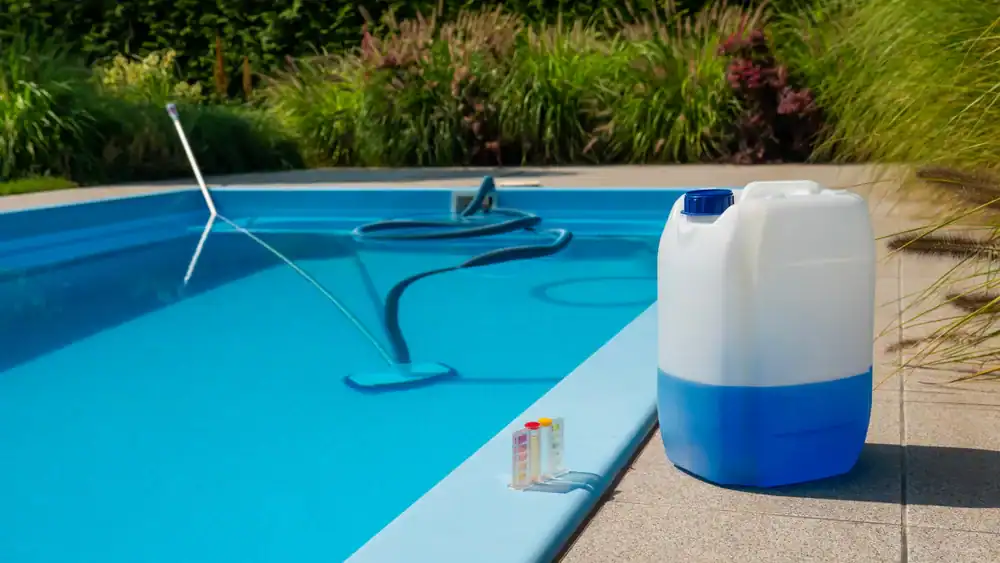
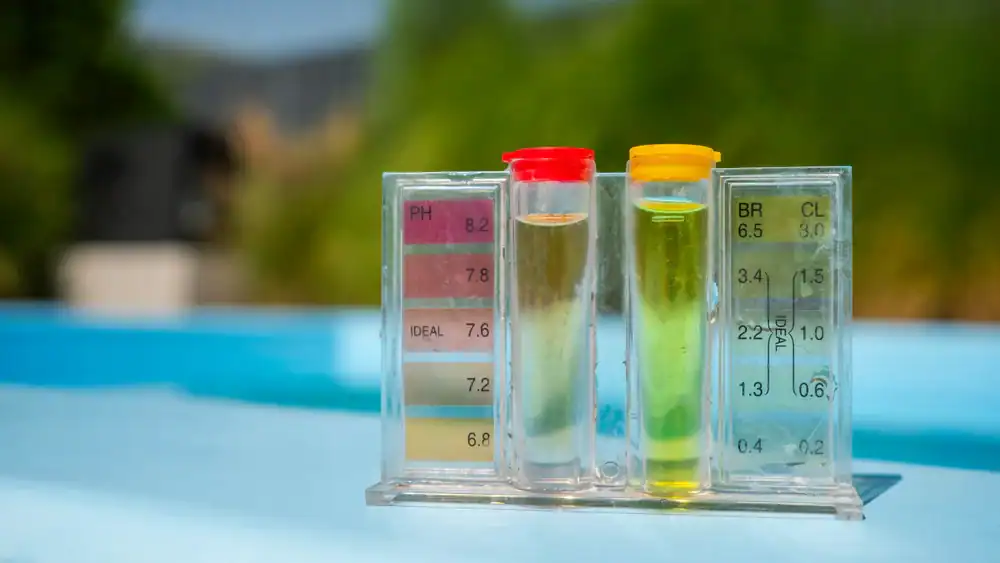
If you’ve been adding chemicals on schedule and your pool still won’t cooperate, the problem usually isn’t how much you’re adding it’s that you don’t have an accurate picture of what’s actually going on in the water. Test strips give you a ballpark. Digital water analysis gives you the truth. There’s a real difference between those two things, especially when you’re trying to protect a pool you’ve put serious money into.
Irwinville sits in the middle of some of the most productive farmland in Georgia. Irwin County ranks third in the state for percentage of land in farms, and that agricultural environment doesn’t stay out of your pool. During planting and harvest seasons, dust, pollen, and organic matter from surrounding fields land in your water and burn through chlorine faster than most people expect. If you’re on well water or served by the Irwinville Water Works which draws from groundwater your starting chemistry is different from someone in a city pulling from a treated surface water system. Higher mineral content, elevated calcium hardness, and iron are common. Those variables matter, and they have to be tested for specifically.
Getting a full, accurate read on your water means your chlorine is actually working, your pool surface isn’t quietly being eaten by corrosive water, and your equipment isn’t scaling up from mineral buildup. That’s what a professional water test actually buys you not just a number on a strip, but a real answer.
We’re based in Douglas, GA about 30 miles from Irwinville and have been working in South Georgia pools for over three decades. Our experience didn’t start when we were formally established. It started long before that, in concrete, plumbing, and custom pool construction across the same region, the same climate, and the same soil conditions that Irwinville homeowners deal with every day.
That construction-level background matters for water testing in a way that most people don’t think about. Concrete pools the kind most Irwinville-area properties have have specific chemistry requirements tied directly to the surface itself. Too little calcium hardness and the water turns aggressive, pulling minerals out of the plaster. Too much and you get scaling. Knowing how those surfaces were built is part of knowing how to maintain them.
We’re licensed, insured, and built around doing the job right the first time. No shortcuts, no guesswork, no vague recommendations.
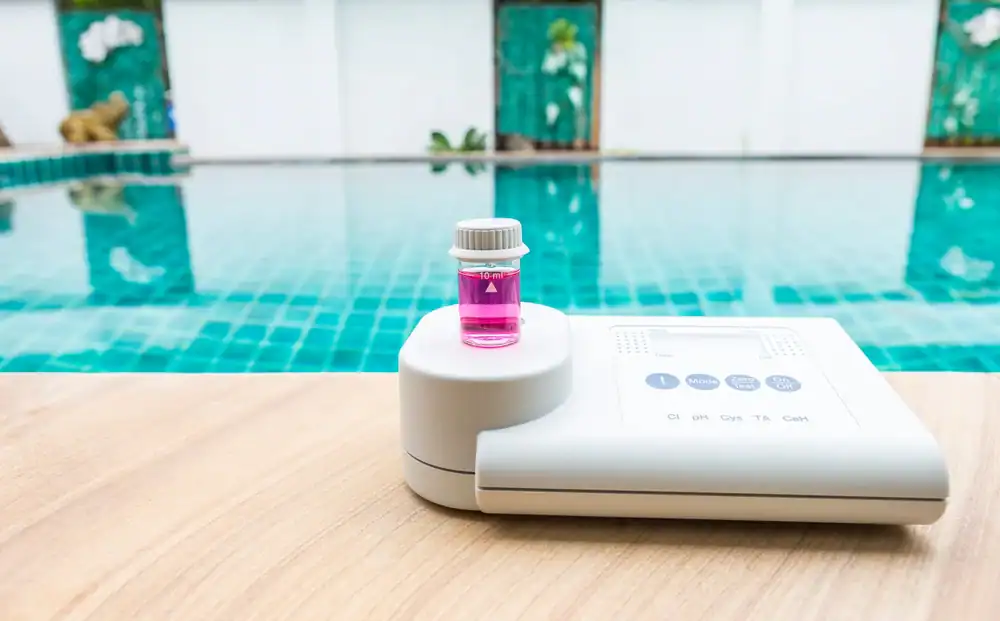
When we come out to test your pool, it’s not a quick dip of a strip and a handshake. The process starts with a full digital water analysis measuring free chlorine, combined chlorine, pH, total alkalinity, calcium hardness, cyanuric acid, and total dissolved solids. Each of those parameters tells a different part of the story, and all of them have to be in the right range for the others to work properly.
From there, we interpret the results in context. In Irwinville, that context includes whether you’re on well water, what season it is, and what’s happening on the farmland surrounding your property. A pool tested in late summer during cotton harvest faces a different organic load than one tested in early spring, and our chemistry recommendations reflect that. If pH is high, your chlorine is losing effectiveness no matter how much you’re adding that gets addressed first, because it’s the foundation everything else builds on.
After the analysis, you get a clear explanation of what’s off, why it matters, and exactly what needs to happen to correct it. No chemistry lecture, no upsell pressure just an honest read on where your water stands and what it takes to get it right. If corrections are needed, those can be handled on the spot or scheduled based on what the water actually needs.
Ready to get started?
A complete water test from us covers the full range of what your pool chemistry actually needs not just the two or three things a test strip can approximate. That includes pH level balancing, free and combined chlorine, total alkalinity, calcium hardness, cyanuric acid stabilization, and total dissolved solids. Each one of those has a direct impact on how safe, clear, and protected your pool is.
For Irwinville pools specifically, calcium hardness testing is one of the most important pieces of the puzzle. Groundwater sources in this area tend to carry higher mineral content than treated municipal surface water. If your pool was filled from a well or from the Irwinville Water Works system which pulls from groundwater your calcium hardness baseline may already be elevated. Left unmanaged, that leads to scaling on your pool surface and inside your equipment. On the flip side, if calcium is too low, the water becomes corrosive and starts breaking down your plaster from the inside out. Either direction is expensive to fix.
Cyanuric acid levels matter just as much in South Georgia’s summer sun. Without proper stabilization, UV exposure alone can destroy unprotected chlorine in a matter of hours on a clear day. Total alkalinity checks keep pH from swinging after a South Georgia thunderstorm drops a few inches of naturally acidic rainwater into your pool. These aren’t isolated readings they work together, and testing all of them at once is the only way to get a complete picture.
For most pools in the Irwinville area, professional testing at least once a month during swim season is a reasonable baseline but the honest answer is that it depends on your specific conditions. If your pool is surrounded by active cropland, which is the reality for most residential properties in Irwin County, your chlorine demand is higher than average. During planting and harvest seasons, organic matter from surrounding fields reaches your pool water in volumes that accelerate chemistry shifts significantly.
After any major rain event, which South Georgia sees regularly throughout the summer, your water needs to be checked. A heavy thunderstorm can dilute your chemicals, drop your pH, and create the conditions for algae growth within 24 to 48 hours. Waiting until your next scheduled test after a big storm is how pools turn green. The short version: test more often than you think you need to, especially from late spring through early fall, and always after significant weather.
Yes, and it’s one of the more common issues we see with pools in rural South Georgia. Well water and groundwater-sourced municipal supplies like the Irwinville Water Works system, which draws from groundwater typically carry higher mineral content than surface water that’s been treated by a city utility. That means higher calcium hardness, and sometimes elevated iron levels, right from the start.
When calcium hardness is already high before you even balance anything else, you’re working against a tougher baseline. Over time, that leads to calcium deposits on your pool surface, cloudy water, and scaling inside your pump and filter equipment. Iron from well water causes staining that’s difficult and costly to reverse once it sets. A professional water test that specifically measures calcium hardness, iron, and total dissolved solids gives you an accurate starting point and that’s the only way to manage well water chemistry correctly instead of just guessing.
This is probably the most common frustration we hear, and the cause is almost always a chemistry problem that’s invisible until it becomes visible. The most frequent culprit is pH that’s drifted too high. When your pool’s pH climbs above 7.8, chlorine loses roughly half of its sanitizing power. You can be adding chlorine on a consistent schedule, testing with strips that read in the normal range, and still have water that’s barely protected because the pH has neutralized the chlorine’s effectiveness before it can do its job.
In Irwinville’s environment, there’s an added layer. The agricultural organic load from surrounding farmland crop dust, pollen, field runoff creates elevated chlorine demand that standard dosing doesn’t account for. Your chlorine gets consumed faster than it would in a suburban pool with no surrounding farmland. The fix isn’t more chlorine. It’s an accurate test that shows you exactly what’s off, followed by corrections in the right order. pH first, then chlorine, then everything else.
Cyanuric acid, sometimes called CYA or pool stabilizer, is what protects your chlorine from being destroyed by UV radiation. In direct sunlight, unprotected chlorine can break down by up to 90 percent in under two hours. In South Georgia’s summer with long days, intense sun, and heat that doesn’t let up that’s a real daily problem for any outdoor pool without proper stabilization.
The right CYA level keeps your chlorine active throughout the day instead of burning off by mid-morning. But there’s a balance to maintain: too little and your chlorine disappears before it can work; too much and it actually starts suppressing chlorine’s effectiveness. That upper threshold matters in pools where CYA has been building up over multiple seasons without a water change. A complete water test measures your CYA level precisely, so you know whether you need to add stabilizer, dilute your water, or leave it alone instead of guessing and potentially making the problem worse.
Total alkalinity is the chemistry that keeps your pH stable. Think of it as a buffer when it’s in the right range, your pH holds steady even when outside factors try to push it around. When alkalinity is too low, pH becomes unpredictable and can swing dramatically in either direction with very little provocation. When it’s too high, pH gets locked in place and becomes difficult to adjust even when you need to.
In Irwinville, the most common reason alkalinity shifts suddenly is rainfall. South Georgia thunderstorms can drop several inches of rainwater into a pool in a single event, and rainwater is naturally acidic. That acidic dilution pulls alkalinity down and drops pH at the same time. For pools that already have a high organic load from surrounding farmland, that combination creates a fast path to algae growth and cloudy water. Checking total alkalinity after any significant rain not just on a fixed schedule is one of the most practical habits an Irwinville pool owner can build.
Yes. We’re based in Douglas, which is roughly 30 miles from Irwinville a normal service distance for rural South Georgia, where driving 20 to 40 miles for a specialized service is just part of life out here. Irwinville doesn’t have a local pool store, and the nearest retail testing options require you to bring a water sample in yourself. That in-store model works fine for a quick check, but it’s not the same as having someone come to your pool, test it on-site with professional equipment, and evaluate the results in the context of your actual property and conditions.
On-site testing matters because the results are interpreted in context. A technician who can see your pool, knows whether you’re on well water, and understands that you’re surrounded by active farmland is going to give you more useful information than a printout from a store machine. That local knowledge built over three decades of working in South Georgia pools is what makes the difference between a test that tells you something and one that actually helps you fix the problem.