
Hear from Our Customers
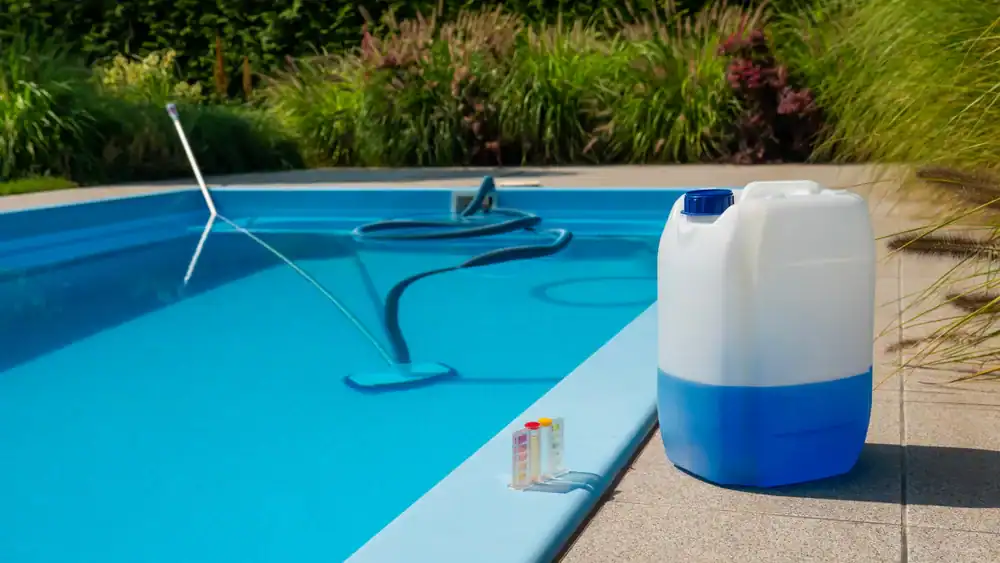
Most pool problems in Lenox don’t start with a visible issue. They start with chemistry that’s quietly drifting pH creeping up after a summer storm rolls through, chlorine burning off faster than you can add it, or phosphates building up from the agricultural air that makes this area one of South Georgia’s most productive farming corridors. By the time the water looks wrong, the problem has already been developing for days.
When your water chemistry is dialed in, you stop chasing the pool and start using it. No more adding chemicals and crossing your fingers. No more green water the weekend your family is counting on the pool. Clean, balanced water also protects your equipment your pump, your filter, your heater from the kind of slow damage that comes from chemistry that’s slightly off for months at a time.
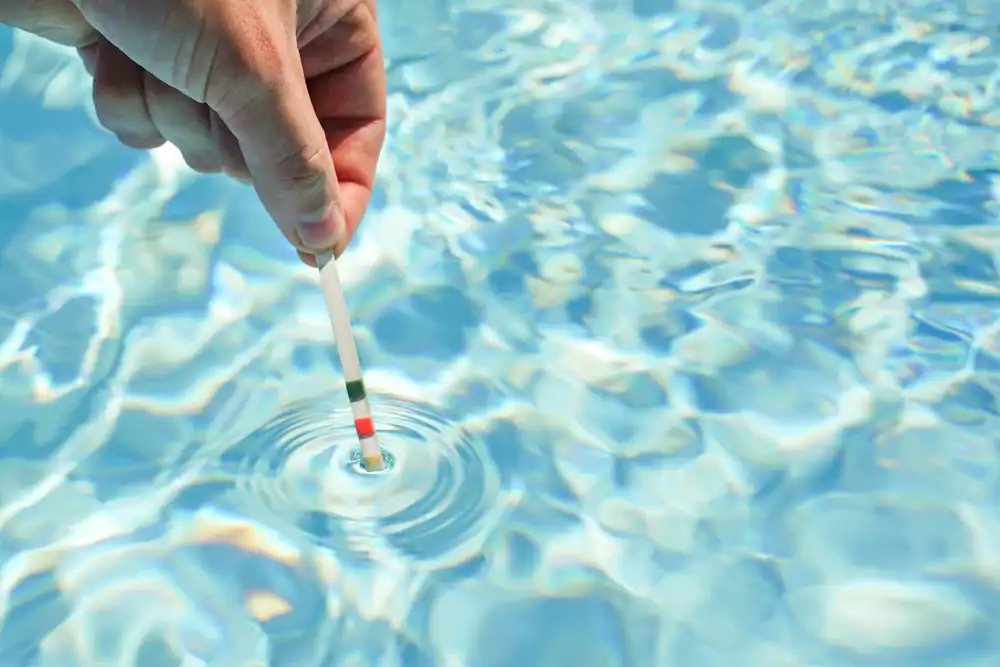
Cook County’s heat and humidity put real pressure on pool water from June through August, and the surrounding watermelon fields and row crops add seasonal pollen and phosphate load that most pool care advice doesn’t account for. We provide a professional water test that gives you a precise, complete picture not a rough color match so every adjustment we make is based on what your pool actually needs, not a guess.
Deep Waters Pools is based in Douglas, GA, and we’ve been serving South Georgia pool owners including Lenox residents for over 30 years. We don’t just service pools; we build them. Gunite, shotcrete, custom concrete construction from the ground up. That background matters when it comes to water chemistry, because we understand exactly how your pool’s surface finish whether it’s plaster, pebble, or quartz reacts to calcium hardness levels, pH swings, and total alkalinity over time.
Lenox sits right along the I-75 and US 41 corridor, and it’s the kind of community where a pool is a real investment not a throwaway amenity. We treat it that way. Licensed, insured, and straight with you about what your water needs and why. No product upsells, no guesswork passed off as expertise.
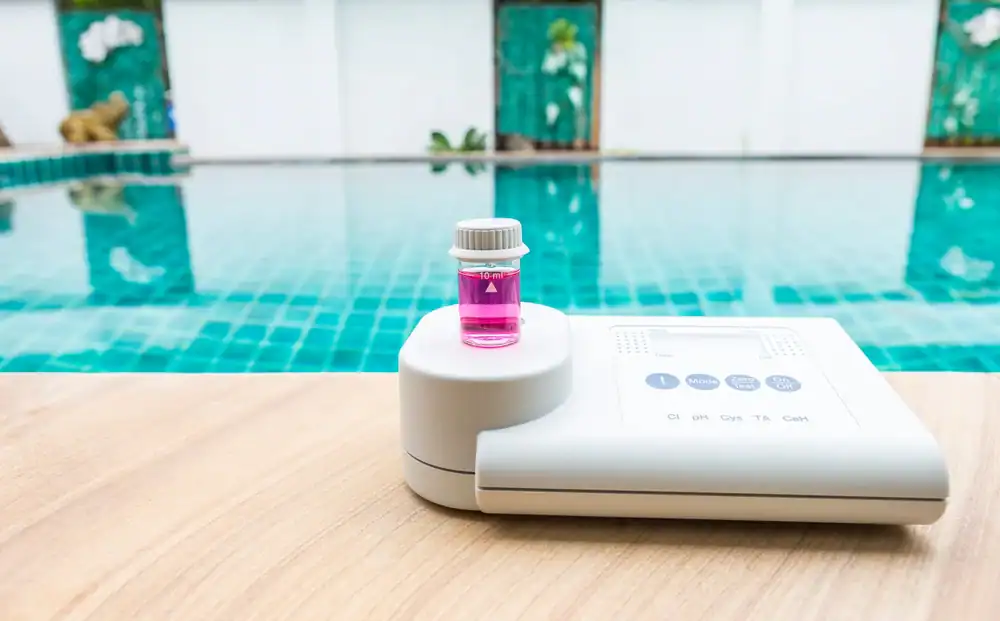
It starts with a full digital water analysis not test strips. Our equipment reads free chlorine, total chlorine, combined chlorine, pH, total alkalinity, calcium hardness, cyanuric acid, total dissolved solids, and metals. Every parameter, precise to the decimal. That level of detail matters in Lenox, where pool water can shift meaningfully within 24 hours of a heavy thunderstorm or a stretch of 95-degree afternoons.
Once the readings are in, we give you a clear breakdown of what’s off, what it means for your pool, and exactly what needs to be corrected. If your pH is high which happens frequently after summer rain events in Cook County your chlorine isn’t working at full strength even if the levels look normal. That connection between parameters is something a single-variable strip test will never show you.
From there, we make corrections in the right sequence. pH first, then alkalinity, then sanitizer. The order matters because adjusting one affects the others. After the chemistry is balanced, you’ll know what to watch for and when to schedule the next test based on your pool’s actual usage and the season you’re in not a generic calendar that doesn’t account for South Georgia summers.
Ready to get started?
A professional water test from us covers the full range of chemistry parameters that determine whether your pool is safe, clear, and protecting its own surfaces. Free chlorine and total chlorine tell you whether your sanitizer is actually working. Combined chlorine the chloramines explains why a pool can smell strongly of chlorine and still be under-sanitized. pH level balancing is the foundation of everything else; when it drifts above 7.8, your chlorine loses roughly half its effectiveness regardless of how much you’ve added.
Calcium hardness testing is where our construction background really shows up. In a concrete or plaster pool common in older Cook County homes built through the late 1980s and 1990s low calcium hardness means the water pulls minerals directly from the pool’s surface. That’s how plaster etches and pits prematurely. Too high, and you get scaling on the walls and in the equipment. The total alkalinity check keeps pH from bouncing around after every rain event or chemical addition, acting as a buffer that stabilizes the entire system.
Cyanuric acid levels are also tested, which is critical for Lenox pool owners using stabilized chlorine tablets. Too much CYA a common result of years of tablet use without a water change and your chlorine becomes significantly less effective even at normal levels. Every reading is explained in plain terms so you understand what’s happening in your water, not just what was added to it.
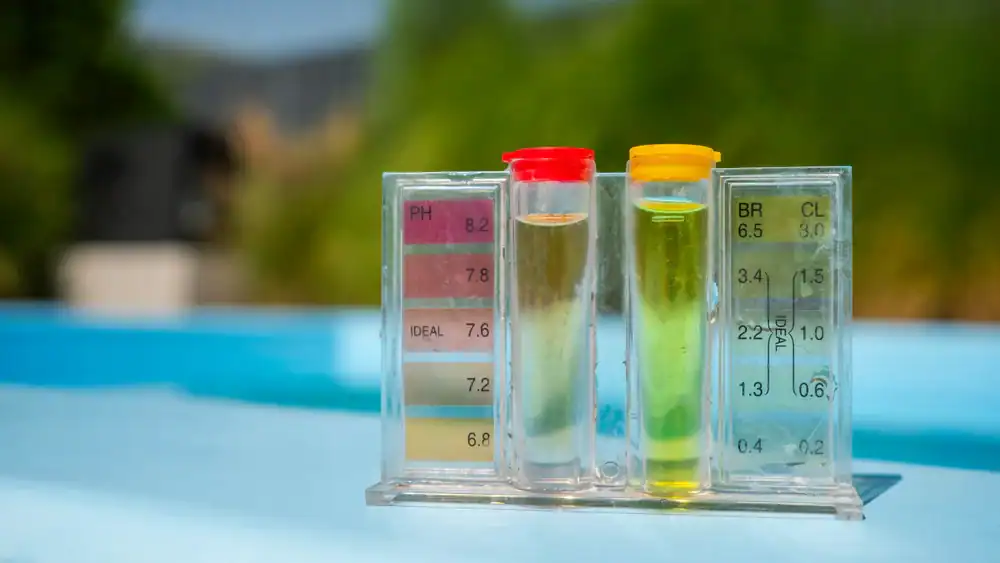
The most common reason is that your chlorine is losing effectiveness before it can do its job. In South Georgia’s summer heat, pool water temperatures regularly climb above 85°F, and UV intensity from direct sunlight can break down unprotected chlorine rapidly throughout the day. By the time the sun sets, your sanitizer levels may be critically low even if you added chlorine that morning.
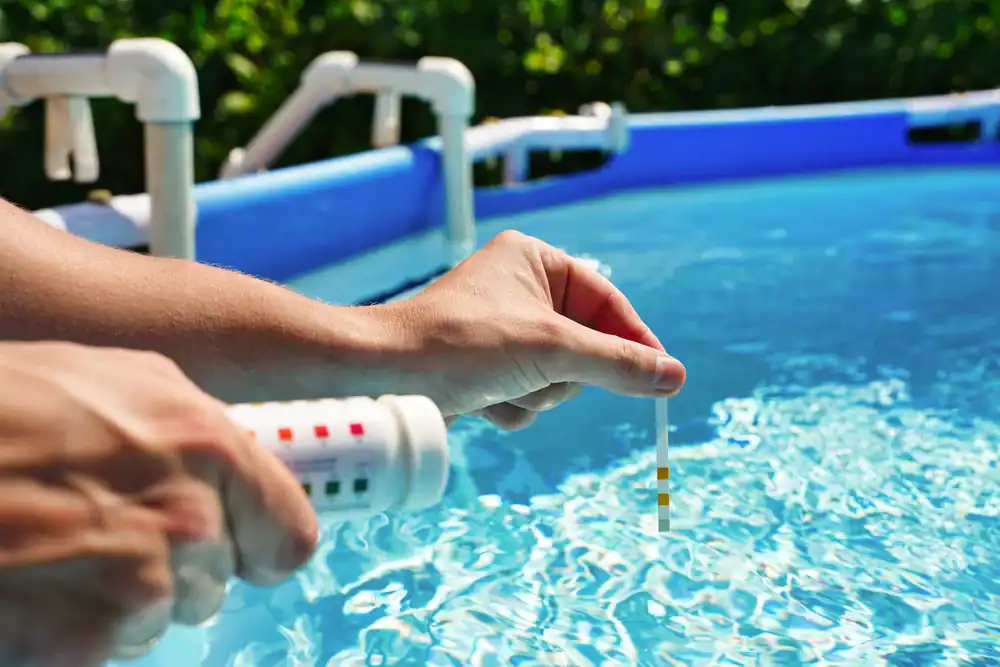
The other factor specific to Lenox is phosphates. The agricultural activity surrounding the town watermelon fields, row crops, seasonal farming operations generates phosphate-containing particulate that finds its way into pool water through wind, rain, and debris. Phosphates are a primary food source for algae. When phosphate levels are elevated, algae can multiply faster than your chlorine can kill it, and standard test strips don’t measure phosphates at all. We’ll catch what the strips miss and give you a clear path to solving the problem rather than repeating it.
During peak summer months June through August in Cook County pool chemistry should be tested at least once a week, and within 12 to 24 hours after any significant rainfall. South Georgia thunderstorm season is not gentle. A heavy rain event dilutes your chemicals, shifts your pH, and introduces organic debris from surrounding lawns and fields. That combination can create conditions for algae growth within 24 to 48 hours if chemistry isn’t corrected quickly.
Outside of summer, testing every two weeks is a reasonable baseline for pools in active use. Lenox’s mild winters mean many pools stay operational year-round, which means the chemistry management doesn’t stop in October. Fall brings decaying leaves and post-harvest agricultural debris that add phosphates and organic load. Spring brings pollen season, which spikes chlorine demand significantly. Year-round use in this climate means year-round attention not a seasonal checklist.
The free test at a pool store is a sales tool. That’s not an accusation it’s just how the model works. The recommendations that follow are shaped by what’s on the shelf, and the goal is to send you home with products. Our professional water test exists to diagnose your pool’s actual chemistry and tell you what it needs, without any interest in selling you a particular product to get there.
Beyond the motivation, there’s a meaningful difference in precision. Pool store testing typically involves a water sample dropped into a comparator or run through a basic photometer. Our digital analysis measures every relevant parameter including combined chlorine, cyanuric acid, calcium hardness, and total dissolved solids with decimal-point accuracy. In a pool environment where the difference between a pH of 7.4 and 7.9 determines whether your chlorine is working at full strength or half strength, that precision is not a minor detail. It’s the difference between a pool that stays clear and one that keeps giving you problems.
Yes and in Cook County, this is one of the most underestimated causes of recurring pool problems. A significant rain event does several things at once. It dilutes your chemicals across the board, lowering chlorine, alkalinity, and stabilizer levels simultaneously. It also introduces runoff from surrounding soil, grass, and in Lenox’s case, nearby agricultural land bringing in organic material, phosphates, and sometimes metals depending on what’s in the local soil and groundwater.
Rain also tends to drive pH down initially, which sounds helpful since high pH is the more common problem, but the rapid swing itself destabilizes the alkalinity buffer that keeps pH steady over time. After the pH correction wears off, it can rebound sharply in the other direction. The Little River and New River drainage systems that run through this part of South Georgia reflect how much water moves through the region during storm season and that same water movement affects what ends up in your pool. Testing within a day of any major storm is the most practical thing a Lenox pool owner can do to stay ahead of chemistry problems.
Calcium hardness refers to the concentration of dissolved calcium in your pool water. It matters because water is always trying to reach chemical equilibrium and if it doesn’t have enough calcium dissolved in it, it will pull calcium from whatever surface it’s in contact with. In a concrete, plaster, or pebble finish pool, that means the water is slowly etching and eroding the pool’s interior surface from the inside out. You won’t see it happening, but over time it shows up as rough texture, pitting, and surface deterioration that shortens the life of the finish significantly.
On the other side, water that’s too high in calcium deposits that excess mineral as scale the white, chalky buildup you might see on pool walls, tile lines, and inside equipment. Both problems are preventable with regular calcium hardness testing and correction. For Lenox pool owners, this matters especially because South Georgia’s high evaporation rate during summer concentrates minerals in the water over time, and topping off the pool with fresh fill water introduces additional minerals from the local water supply. Keeping calcium hardness in the 200 to 400 ppm range protects your pool’s surface and keeps your equipment running cleanly.
Yes, and this is one of the most common hidden problems in pools that use stabilized chlorine tablets which is the majority of residential pools in South Georgia. Cyanuric acid, or CYA, is added to pool water as a stabilizer that protects chlorine from UV degradation. In Lenox’s intense summer sun, some level of CYA is genuinely useful. The problem is that CYA accumulates over time and doesn’t leave the water on its own. Every tablet you add contributes more stabilizer, and without periodic dilution or a partial drain, CYA levels climb steadily year after year.
When CYA gets too high above 80 to 100 ppm it begins to bind with chlorine in a way that makes the chlorine far less effective at killing bacteria and algae. Your test reads a normal free chlorine level, but the actual sanitizing power available to your pool is a fraction of what it should be. This is sometimes called chlorine lock, and it explains why some pools seem impossible to keep clear despite regular chemical additions. The only reliable fix is diluting the water partially draining and refilling which resets CYA to a manageable level. We’ll catch elevated CYA before it becomes a recurring problem.