
Hear from Our Customers
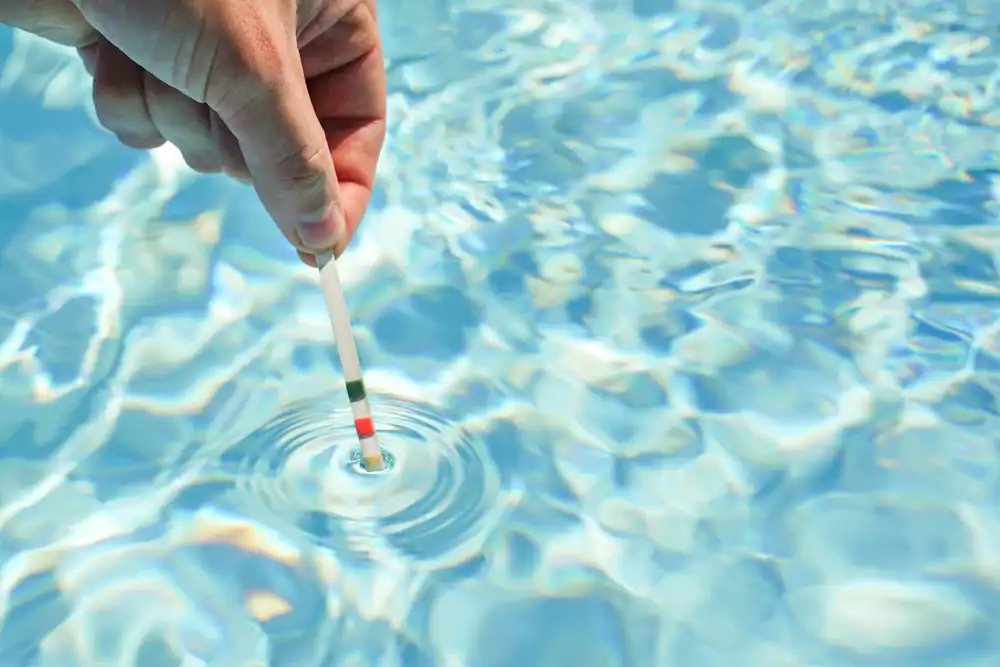
Most pool problems in Moultrie don’t start with neglect. They start with incomplete information. A test strip tells you chlorine is present it doesn’t tell you whether that chlorine is actually working. When pH climbs above 7.8, chlorine loses more than half its sanitizing power even when the reading looks normal. That’s how a pool tests “fine” on a Tuesday and turns green by Saturday.
Moultrie’s water supply comes from deep wells drawing through a limestone aquifer. That means your fill water is naturally high in calcium and every time you top off after evaporation or a splash-out, you’re adding more. Without a full calcium hardness check, that buildup quietly scales your pool walls, clogs your filter, and deteriorates your plaster long before you can see it. This is a Colquitt County problem, not a generic pool problem.
Then there’s pollen season. When the cotton and peanut fields around Moultrie are in full swing, the organic load hitting your pool surface is significant. That pollen dissolves into your water, spikes chlorine demand, and destabilizes pH fast enough to fuel an algae bloom before your next scheduled check. A complete pool chemistry analysis catches all of this calcium hardness, total alkalinity, cyanuric acid, metals, and more so you’re correcting the actual problem instead of chasing it with chemicals that don’t stick.
We’ve been building and servicing gunite and shotcrete pools across South Georgia since before the company had a name. Our principals spent over three decades in the field learning pool chemistry the way pool builders learn it, not the way a retail store does. That difference matters. When you understand how water interacts with a concrete shell, a plaster finish, and a circulation system, a water test becomes a diagnostic tool, not a product recommendation.
We serve Moultrie and Colquitt County with the same approach we’ve used across South Georgia on-site testing, plain-language reporting, and corrections that address root causes. If you’ve been relying on in-store testing at a local supply shop, you already know the routine: bring in a sample, get a readout, leave with a bag of chemicals. That process isn’t designed to solve your problem. It’s designed to sell you something. We don’t have a product shelf to fill.
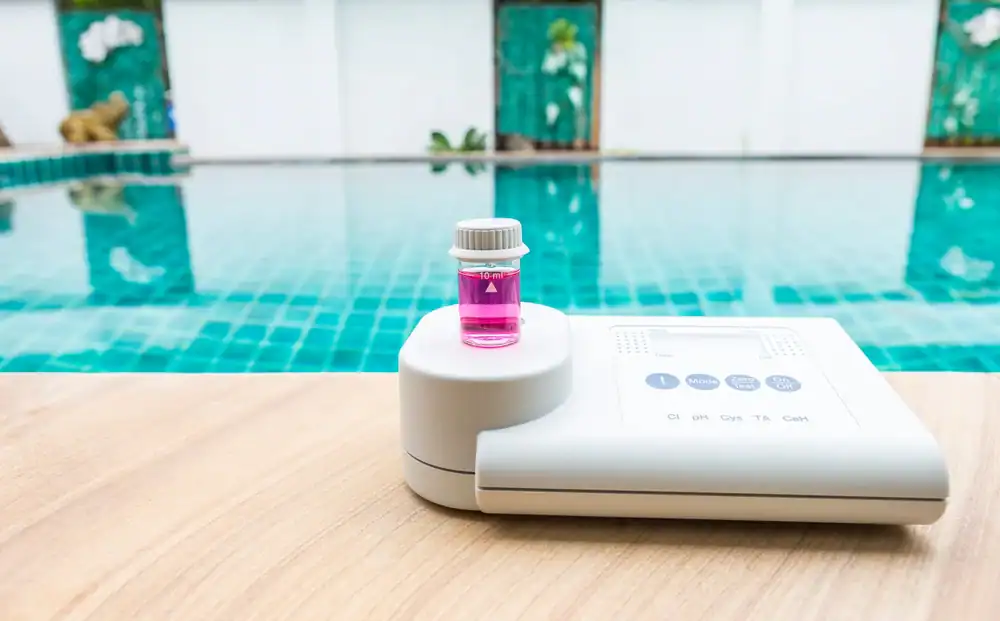
It starts at your pool, not at a store counter. We come to your property in Moultrie, pull a sample from the water as it’s actually circulating, and run a full digital analysis on-site. That means the reading reflects your pool’s real conditions not a sample that’s been sitting in a cup for two hours before anyone looks at it.
The analysis covers every parameter that matters: free chlorine, total chlorine, pH, total alkalinity, calcium hardness, cyanuric acid (CYA), total dissolved solids, and metals including copper and iron. Each one tells a different part of the story. CYA levels, for example, determine whether your chlorine is surviving Moultrie’s summer UV which peaks at an index of 7 or higher from May through August. Without adequate stabilizer, chlorine can degrade in under two hours of direct sun. That’s what happens in South Georgia every summer.
Once the full picture is in, you get a plain-language breakdown of what’s in range, what’s off, and why. No mystery chemicals added without explanation. No vague “your water needs treatment” conclusion. If your calcium hardness is climbing because of hard fill water from the city’s limestone aquifer system, you’ll know that’s the cause and you’ll know exactly what correction looks like. From there, adjustments are made, and you get a clear record of where everything landed.
Ready to get started?
The full water analysis we run in Moultrie covers the complete chemistry profile not just the basics. Free and total chlorine, pH, total alkalinity, calcium hardness, cyanuric acid, TDS, and metals. That last category matters more in this area than most people realize. Moultrie’s municipal supply has documented trace contaminants that can accumulate in pool water over time, and a metals test catches copper and iron levels before they stain your pool surface or interfere with your sanitizer.
Calcium hardness testing is especially critical for Colquitt County pools. The City of Moultrie delivers over two million gallons of water per day from seven deep wells through a limestone aquifer and limestone aquifer water is hard by nature. Every pool in the city is filling with elevated calcium from day one. The target range for calcium hardness in a plaster or pebble-finish pool is 200 to 400 ppm. Let it climb above that without correction, and you’re looking at white scale on your waterline tile, rough surfaces on your pool floor, and accelerated wear on your filter media. Let it drop too low and the water becomes corrosive it pulls calcium out of your plaster to balance itself.
Total alkalinity and pH level balancing work together, and both are affected by Moultrie’s afternoon summer thunderstorms. A significant rain event dilutes your chemistry, drops your pH, and introduces organic material all in one shot. We account for seasonal patterns like this when reviewing your results, not just the numbers in isolation.
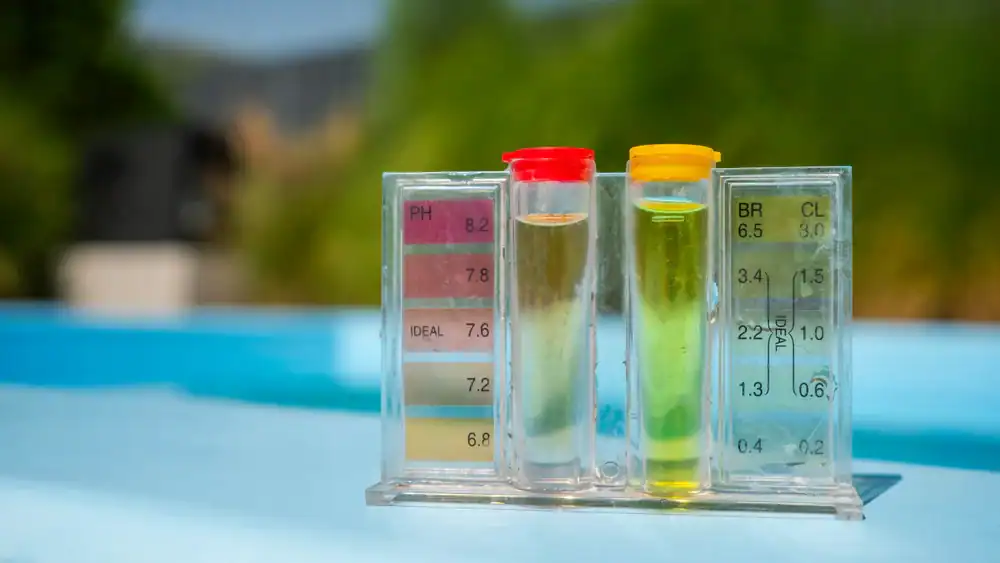
This is one of the most common frustrations pool owners in Moultrie bring to us, and the answer is almost never “you need more chlorine.” The real issue is usually one of two things: pH drift making your chlorine ineffective, or cyanuric acid levels that have climbed so high they’ve essentially locked your chlorine out of the water.
When pH rises above 7.8 which happens quickly in South Georgia’s heat, especially after a rain event dilutes your chemistry chlorine loses more than half its sanitizing power even when the reading looks normal on a basic test. You’re adding product, but the chemistry conditions won’t let it work. On the CYA side, if stabilizer has accumulated over multiple seasons without a partial drain and refill, your chlorine can become almost completely ineffective regardless of how much you add. A full digital water analysis identifies which of these is actually happening so you stop spending money on chemicals that aren’t solving anything.
At minimum, a complete professional water test should happen at the start of the season, mid-season, and before closing. But in Moultrie’s climate, that’s the floor not the ideal. From May through August, when UV index peaks above 7 and temperatures regularly hit 90°F or higher, your pool chemistry is under constant stress. Chlorine degrades faster, evaporation is higher, and afternoon thunderstorms can shift your pH and dilute your alkalinity overnight.
If you’re running your pool heavily during summer which most Moultrie families are monthly professional testing during peak season is a reasonable standard. The cost of a water test is a fraction of what you’ll spend on a shock treatment to recover from an algae bloom, or worse, a resurfacing job that could have been avoided with consistent calcium hardness management. Think of it as maintenance, not a luxury.
Moultrie’s municipal water comes from deep wells drawing through a limestone aquifer the same system delivering over two million gallons a day to the city. That water is naturally high in calcium carbonate, which means every time you top off your pool after evaporation or a splash-out, you’re adding calcium to an already-hard baseline.
Over time, without regular calcium hardness testing and correction, that calcium accumulates. The first visible sign is usually white scaling along your waterline tile and on the pool walls just below the surface. But the damage happening inside your filter and to your plaster finish starts long before you can see it. Calcium deposits clog filter media, reduce flow efficiency, and roughen plaster surfaces which then become better surfaces for algae to grip. Keeping calcium hardness in the 200 to 400 ppm range isn’t just about water clarity. It’s about protecting the physical structure of your pool, and in a hard-water market like Colquitt County, it requires consistent monitoring.
Yes, and it’s more significant than most people expect. Colquitt County is the most productive agricultural county in Georgia cotton, peanuts, corn, and soybeans surround Moultrie on all sides. During planting and growing season, the pollen load settling on an outdoor pool surface here is well above what you’d see in a suburban or urban market.
When agricultural pollen dissolves into your pool water, it increases the organic load significantly. Your chlorine has to work harder to oxidize that organic matter, which drives up chlorine demand and depletes your sanitizer faster than normal. At the same time, the organic acids in pollen can push your pH downward, creating the low-pH, low-chlorine conditions that algae thrive in. During peak pollen season in Moultrie typically March through June your pool chemistry needs more frequent attention than the rest of the year. A professional water analysis during this window can catch the shift before it becomes a visible problem.
The main difference is context. When you bring a water sample to an in-store testing system like the computerized setups available at local pool supply shops in Moultrie that sample has been sitting in a cup since you scooped it out of your pool. Water temperature, circulation, and real-time chemistry levels all change between your backyard and the store counter. The result is a snapshot that may not accurately reflect what’s happening in your actual pool at the moment it matters.
On-site digital testing captures your pool’s chemistry in real conditions the right temperature, the right circulation, the right time of day. It also removes the product sales dynamic. In-store testing systems are typically designed around a specific brand’s product line, which means the recommendations you receive are filtered through what that store carries. Our on-site professional testing is about your pool’s chemistry, not what’s on the shelf. You get the full picture all parameters, plain-language explanations, and corrections based on your specific water, not a generic protocol.
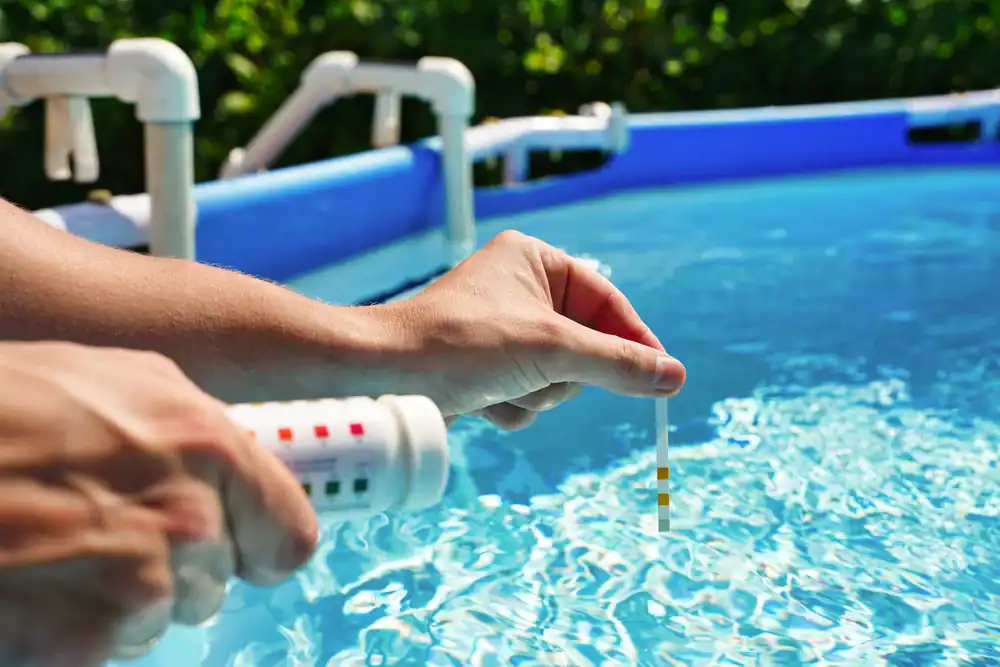
Home test strips and basic drop kits are useful for quick checks between professional visits, but they have real limitations. Most consumer test kits only measure two or three parameters usually free chlorine and pH and even those readings are less precise than digital analysis. They don’t measure calcium hardness, cyanuric acid, total dissolved solids, or metals. In Moultrie, where hard fill water from the limestone aquifer is steadily adding calcium to your pool and summer UV is burning through your stabilizer, those untested parameters are often exactly where the problem is hiding.
The other limitation is interpretation. Knowing that your calcium hardness is at 480 ppm is only useful if you understand what that means for your specific pool surface, your current alkalinity balance, and your fill water source. Professional testing gives you the numbers and the context what’s causing the reading, what it means for your pool’s surfaces and equipment, and what correction actually looks like. For Moultrie pool owners who’ve spent seasons chasing chemistry problems with chemicals that don’t stick, that context is usually the missing piece.