Your pool needs more than skimming and chlorine. This professional inspection checklist protects your investment and keeps your family safe in Douglas County, GA.
Weekly skimming and adding chlorine keeps your pool swimmable. Professional pool services keep it functional, safe, and compliant with Georgia regulations. There’s a real difference between the two.
You can handle surface-level tasks—testing water with strips, brushing walls, emptying skimmer baskets. These are manageable weekend chores. But water chemistry that actually protects your equipment? That requires understanding how pH, alkalinity, calcium hardness, stabilizer, and total dissolved solids interact. Miss one variable and you’re not just dealing with cloudy water. You’re looking at corroded pumps, etched plaster, and scaling that clogs your entire filtration system.
Then there’s equipment you can’t see working until it stops. Pumps running inefficiently because nobody’s checked the pressure in months. Filters clogged beyond what a simple backwash can fix. Heaters that quit the first cold morning of fall because small issues went unnoticed during the off-season. We catch these problems while they’re still minor and inexpensive to address.
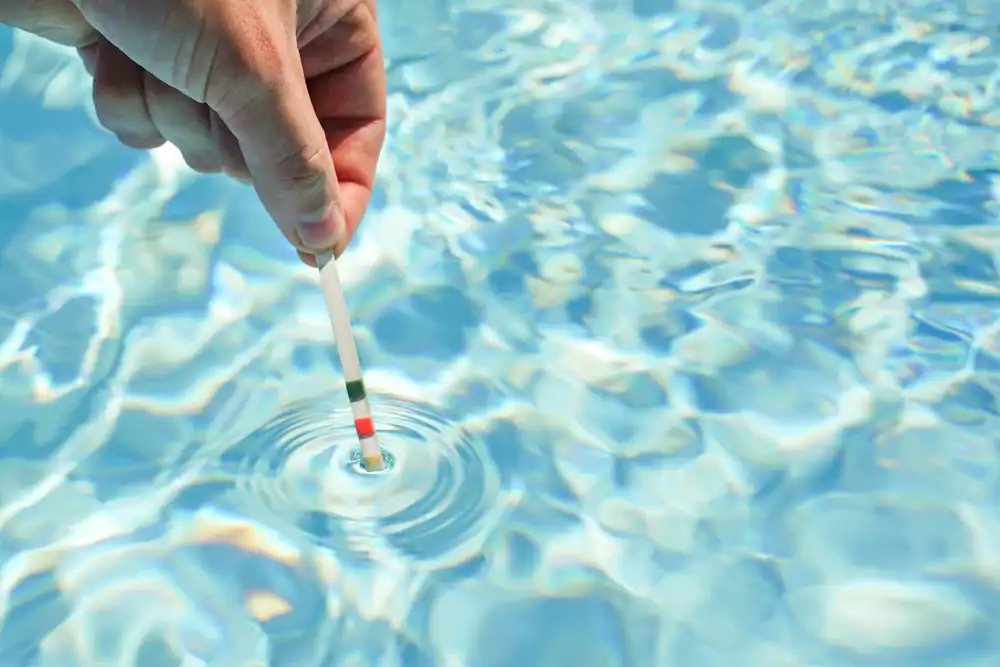
A real pool inspection isn’t someone glancing at your water color and checking a box. It’s a systematic review of everything that keeps your pool safe, functional, and compliant with Georgia codes.
Structural integrity comes first. We examine the pool shell for cracks, checking whether they’re superficial or structural. Hairline cracks under 1/8 inch wide are typically cosmetic—annoying but not dangerous. Anything wider, deeper, or actively growing? That signals a structural issue needing immediate attention. We inspect coping, tiles, and deck surfaces for separation, damage, or trip hazards. We verify proper drainage around the pool to prevent standing water and soil erosion that can undermine your pool’s foundation.
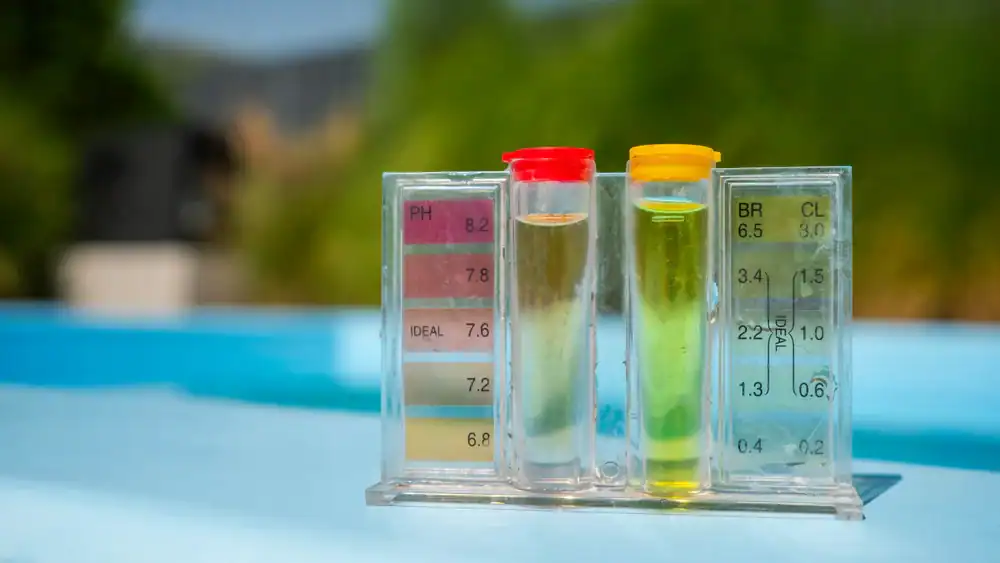
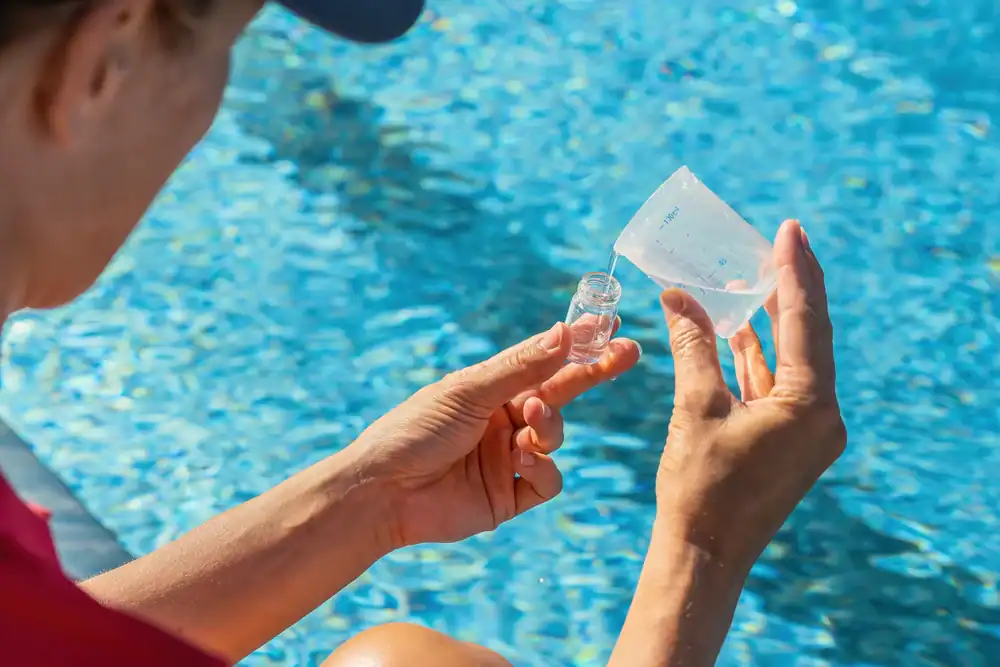
Water quality testing goes beyond what test strips can tell you. Professional-grade photometric testing measures free chlorine, pH, total alkalinity, calcium hardness, and cyanuric acid with precision that actually matters. The interaction between cyanuric acid and chlorine determines your water’s true sanitizing strength—not just whether it looks clear. Get that wrong and you’re either over-treating (wasting money, irritating skin and eyes) or under-treating (inviting bacteria and algae to set up camp).
Equipment inspection covers your filtration system, pump, heater, timers, and all electrical components. We verify your pump is properly sized for your pool volume. We check for leaks in plumbing connections, test valve operation, and confirm your filtration system is actually turning over your pool’s volume efficiently—not just moving water in circles. We look for the early warning signs of upcoming failures: motors running hot, unusual noises, pressure readings outside the normal range.
Safety compliance is non-negotiable in Georgia. We verify your pool meets state barrier requirements: fencing at least 48 inches high surrounding the entire pool area. Gates must be self-closing and self-latching with latches positioned at least 54 inches above ground level. We check for proper safety equipment, compliant anti-entrapment drain covers, adequate lighting around the pool area, and visible depth markers and warning signs.
Water that looks clear isn’t necessarily safe or balanced. That’s the fundamental problem with relying on appearance or basic test strips when you’re trying to protect a five-figure investment.
Balanced water means maintaining five critical parameters within their proper ranges simultaneously. pH should stay between 7.2 and 7.8. Drop below that and your water becomes acidic—corroding metal components, etching plaster surfaces, causing burning eyes and skin irritation for swimmers. Climb above and your water becomes scaling, forming calcium deposits on surfaces and inside pipes, reducing your sanitizer’s effectiveness, making the water feel slippery and uninviting.
Total alkalinity acts as your pH buffer, keeping it stable despite chemical additions or environmental changes. When alkalinity drops too low, pH swings wildly with every chemical you add or rainstorm that hits. When it climbs too high, pH becomes nearly impossible to adjust and scaling accelerates throughout your system. Calcium hardness prevents your water from becoming corrosive (too low) or scaling (too high). In Douglas County, GA with varying soil conditions and seasonal temperature swings, this balance shifts more than most pool owners expect.
Cyanuric acid stabilizes chlorine against UV degradation from Georgia sunlight. But most pool owners don’t realize high CYA levels reduce chlorine’s effectiveness dramatically. You might have plenty of chlorine showing on a test strip, but if your CYA has crept too high, that chlorine isn’t actually sanitizing your water. This is why algae can bloom even when your chlorine reading looks perfectly fine on paper.
Professional water testing uses photometric equipment that gives you actual numbers—not color comparisons that vary based on lighting conditions and individual interpretation. This precision lets you make accurate adjustments instead of guessing and hoping. Weekly testing catches problems early when they’re easy to fix. Monthly professional testing verifies your home testing is accurate and identifies trends you might miss when you’re looking at individual test results instead of patterns over time.
Unbalanced water doesn’t just affect swimmers. It’s the silent destroyer of pool equipment and surfaces. Acidic water corrodes pump housings, heat exchangers, and metal fittings from the inside out. Scaling water clogs filters, reduces flow rates, forces your pump to work harder (increasing energy costs), and shortens equipment life across the board. The cost of professional water testing and chemical balancing is a small fraction of what you’ll spend replacing corroded equipment or resurfacing an etched pool shell.
Want live answers?
Connect with a Deep Waters Pools expert for fast, friendly support.
Your filtration system is your pool’s circulatory system. When it’s not working efficiently, everything else suffers—water quality declines, equipment works harder, energy costs climb, and small problems compound into expensive failures.
A professional filtration system audit identifies whether your system is actually doing its job or just consuming energy while moving water in circles. The audit starts with turnover rate—how long it takes your system to filter your entire pool volume. Industry standard is 6 to 8 hours for complete turnover. If your system takes longer, you’re either undersized for your pool, clogged and struggling, or operating inefficiently. We measure actual flow rates, check pressure differentials across your filter, and verify your pump is correctly matched to your filter size and pool volume.
Energy efficiency becomes relevant when you realize pool pumps are typically the second-largest energy consumer in your home after HVAC systems. If you’re running an old single-speed pump, you’re likely wasting hundreds of dollars annually on electricity that’s not improving your water quality one bit.
A standard 1.5 horsepower single-speed pump running 12 hours daily can cost $270 or more annually just in electricity. That’s money you’re spending to move water at the same speed whether you’re filtering, running a cleaner, or operating water features—even though each task needs different flow rates.
Variable speed pumps solve this by adjusting motor speed to match what your pool actually needs at any given moment. Instead of running at 3,450 RPM constantly, they operate anywhere from 600 to 3,450 RPM depending on the task. Reducing speed by half uses just one-eighth the energy. ENERGY STAR certified variable speed pumps save up to $290 over their lifetime and typically pay for themselves in under two years through reduced electricity costs alone.
Beyond energy savings, variable speed pumps run quieter than single-speed models, require less maintenance, and last longer. The permanent magnet motors produce less friction and heat compared to traditional induction motors. Operating at lower speeds reduces strain on your entire filtration system—less vibration, less wear on bearings and seals, fewer plumbing connection failures.
Lower water velocity through your filter improves filtration effectiveness. Slower flow gives your filter media more contact time with the water, capturing smaller particles and producing clearer water. It also reduces stress on plumbing connections, lowering your risk of leaks and premature component failure.
Installation is usually straightforward if you’re replacing an existing pump. Most variable speed pumps are compatible with standard plumbing configurations. You may need to verify electrical requirements—many require 220-240 volt power instead of 110 volt service. If you’re upgrading, we can verify compatibility with your current filter and assess whether your plumbing configuration is optimized for variable speed operation.
The real value shows up in your utility bill and equipment longevity. Lower operating speeds mean less wear on every component in your system. Filters last longer because they’re not constantly slammed with high-pressure flow. Plumbing connections don’t vibrate loose over time. In Georgia’s climate where pools run much of the year, those savings compound quickly into real money.
Filters don’t last forever, but they last significantly longer when they’re properly maintained instead of run until failure. Most pool equipment breakdowns trace back to filtration systems that were neglected until something catastrophic broke.
Sand filters need backwashing when pressure rises 8-10 PSI above your clean operating pressure. But backwashing too frequently wastes water and actually reduces filtration effectiveness—slightly dirty sand filters better than completely clean sand because the trapped debris helps catch smaller particles. Most sand filters need complete sand replacement every 5-7 years as the sand becomes rounded and smooth, losing its sharp filtering edges. If your pool stays consistently cloudy despite proper water chemistry, old sand is often the hidden culprit.
Cartridge filters need regular cleaning—typically every 4-6 weeks during swim season in Douglas County, GA. Hosing them off removes surface debris and restores flow, but annual deep cleaning with proper filter cleaner removes oils, sunscreen residue, and embedded particles that water pressure alone can’t touch. Cartridges typically last 2-3 years with proper care. Running them too long between cleanings shortens their lifespan and forces your pump to work harder against increased resistance.
DE (diatomaceous earth) filters provide the finest filtration available but require the most hands-on maintenance. After backwashing, you need to add fresh DE powder through the skimmer to recoat the grids. The grids inside need annual inspection and cleaning to remove caked-on DE and check for tears or damage. Tears or holes in the grids let DE powder escape into your pool and significantly reduce filtration effectiveness.
Regardless of filter type, the biggest maintenance mistake is ignoring pressure readings. Your filter has a pressure gauge for a reason—use it. Know your clean operating pressure and monitor it weekly. Rising pressure means it’s time to clean or backwash. Dropping pressure can indicate a leak, broken internal component, or pump issue. Pressure that won’t drop after cleaning suggests the filter media needs complete replacement.
Multiport valves on sand and DE filters add significant restriction to water flow compared to slide valves or cartridge filters without valves. That restriction makes your pump work harder and increases energy consumption. If you’re upgrading your filter, consider this factor when choosing between filter types and valve configurations—sometimes the more convenient option costs you more in electricity over time.
Professional pool services aren’t an expense line item. They’re insurance against the expensive failures that happen when pools are maintained reactively instead of proactively—when you’re responding to problems instead of preventing them.
At minimum, schedule professional inspections at pool opening and closing each season. These catch developing issues before they become mid-summer emergencies and verify your pool meets current safety compliance standards in Georgia. Weekly or bi-weekly professional service during swim season keeps water chemistry balanced, equipment running efficiently, and small problems from escalating into big ones. Annual equipment inspections identify wear patterns before failures happen, letting you budget for replacements instead of scrambling for emergency repairs at premium prices.
The difference between a pool that enhances your property value and one that becomes a liability is consistent, knowledgeable attention from people who understand pool systems. You don’t need to become a pool expert yourself. You need to work with professionals who already are. We’ve been serving Douglas County, GA with hands-on experience, knowledge of local soil conditions, and understanding of Georgia compliance requirements. If your pool needs professional attention or you want to establish a service schedule that actually prevents problems, that’s the conversation worth having.
Summary:
Share: