Your pool might look perfect but hide dangerous chemical imbalances. Discover what your water is really telling you about safety.
Your nose and skin are actually pretty good at detecting pool water chemistry problems—if you know what you’re sensing. Most people misinterpret these signals, assuming they’re normal parts of pool ownership. They’re not. When your pool smells strongly of chemicals or makes your skin feel weird after swimming, it’s sending you a warning that something’s off with your water testing levels.
Let’s start with the most misunderstood sign: that sharp, eye-watering “pool smell” that hits you as soon as you step outside. If your first thought is “they must use a lot of chlorine,” you’re making the same mistake most pool owners make. That smell doesn’t mean too much chlorine. It means too little.
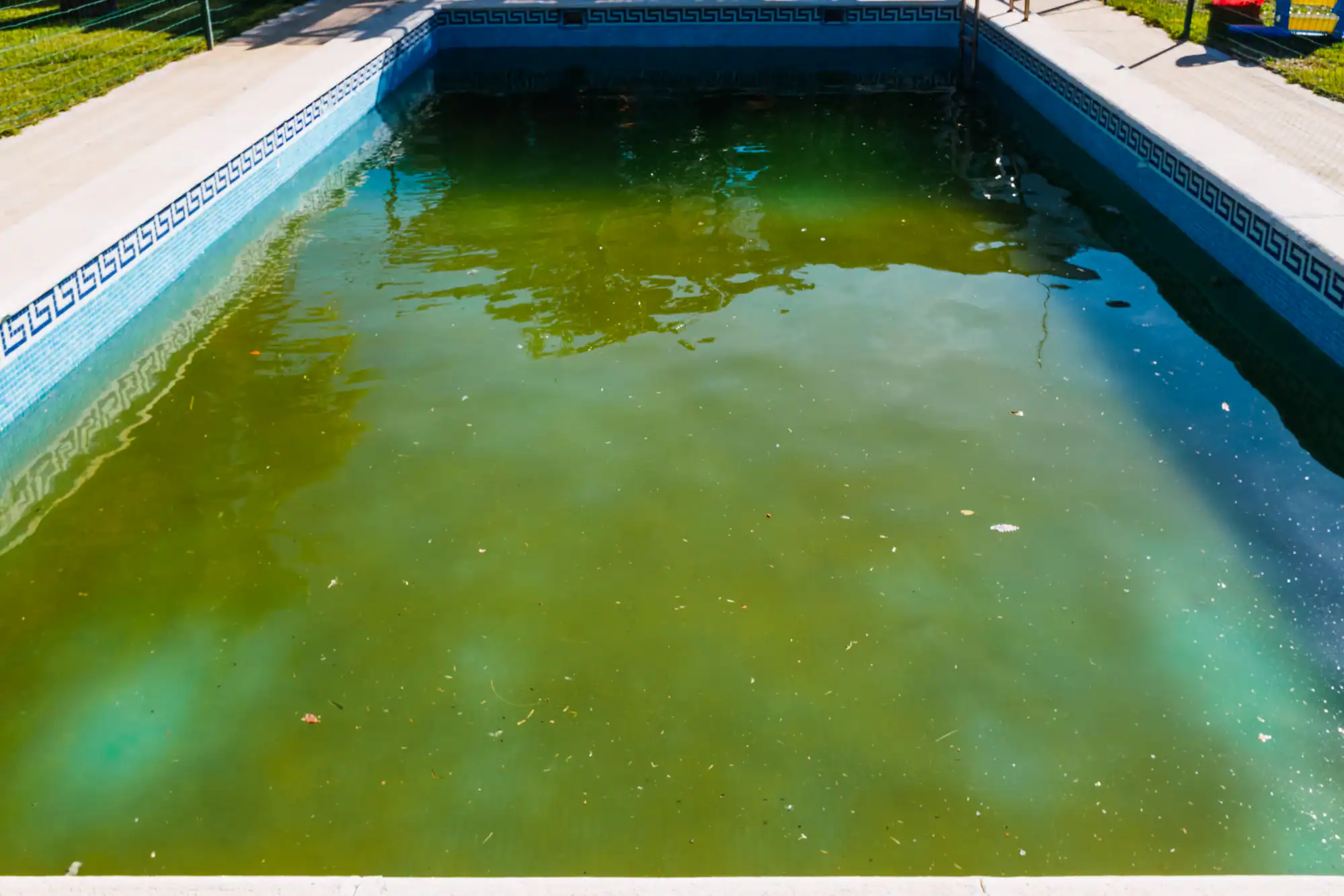
When you smell that harsh chemical odor around your pool, you’re actually smelling chloramines—not chlorine. Chloramines form when chlorine reacts with organic contaminants like sweat, urine, sunscreen, and body oils. Once chlorine bonds with these substances, it becomes “combined chlorine” that can’t sanitize your water anymore.
Here’s what’s really happening: your pool doesn’t have enough free available chlorine to handle the contaminant load. The chlorine you added is getting used up faster than you’re replacing it. What’s left behind are these irritating chloramine compounds that smell bad, sting your eyes, make your skin itch, and signal that your pool isn’t properly protected against waterborne bacteria.
The CDC reports that thousands of recreational water illnesses happen each year in pools with poor water chemistry. Many of these illnesses—stomach bugs, skin infections, ear infections—could be prevented by maintaining proper chlorine levels. When you smell chloramines, you’re smelling a pool that’s become a breeding ground for the exact pathogens that make people sick.
Douglas County pool owners deal with an extra challenge during Georgia’s hot, humid summers. High temperatures accelerate chlorine depletion. Heavy pool use during extended swimming season adds more contaminants. Afternoon thunderstorms dilute your chemicals. All of this means your chlorine levels can drop into the danger zone faster than you’d expect, especially if you’re only testing once a day or relying on how the water looks.
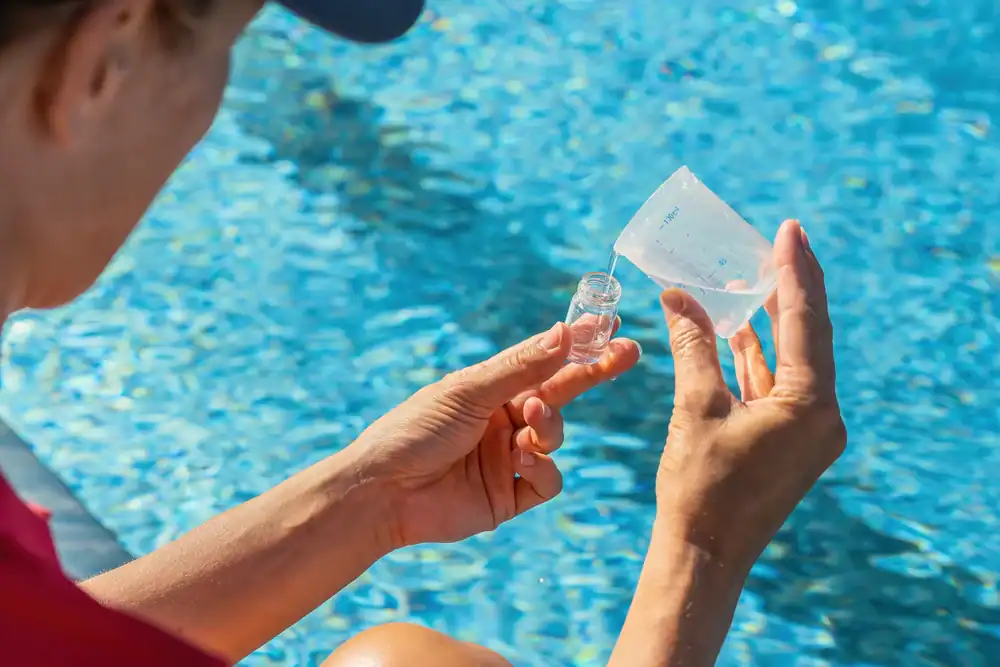
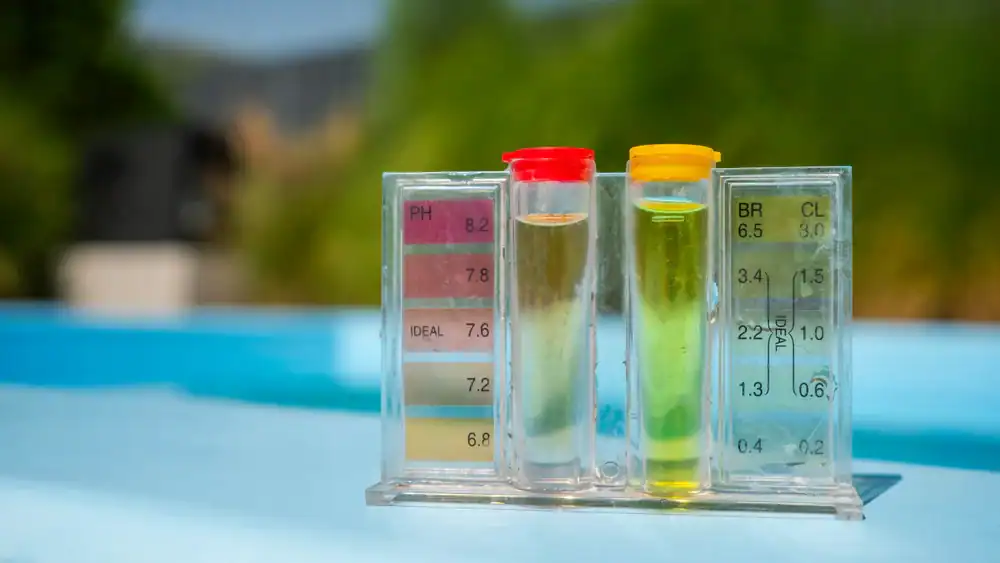
The fix starts with testing. Measure both your free available chlorine and your total chlorine. If total chlorine is more than 0.3 ppm higher than free chlorine, you’ve got chloramines. Shock your pool to break them down. Run your filter overnight. By morning, that smell should be gone and your water should be properly sanitized again. Then adjust your maintenance routine so you’re keeping free chlorine consistently between 2.0 and 4.0 ppm.
If you or your family members consistently step out of the pool with red, stinging eyes or dry, itchy skin, don’t write it off as normal. It’s not. It’s your pool telling you that pH balance is off.
Pool water should match the pH of human tears—right around 7.4. When pH stays in the ideal range of 7.2 to 7.8, your eyes don’t even notice you’re swimming in treated water. But when pH drifts outside that range, your eyes and skin definitely notice.
Low pH—below 7.0—makes water acidic. Acidic water stings. It irritates the mucous membranes in your eyes. It strips natural oils from your skin, leaving it dry and itchy. It can even damage your hair over time, making it brittle and discolored. If your pool consistently causes these symptoms, test your pH. You’ll likely find it’s dropped too low.
High pH—above 7.8—creates different problems but swimmers still feel them. The water feels slippery or slimy on your skin. Your eyes get red and irritated. Your bathing suit and goggles deteriorate faster than they should. And here’s the kicker: high pH also makes your chlorine less effective, which means even if your chlorine levels look fine on paper, they’re not actually sanitizing your water properly.
pH doesn’t stay stable on its own. Rain pushes it down. Chlorine tablets push it down. Heavy swimmer load pushes it up. Even your fill water can throw it off. In Douglas County, GA, where summer storms roll through regularly, you can’t just set pH once and forget about it. You need to test at least twice a week during swimming season, more often if your pool gets heavy use.
But here’s where it gets tricky: pH is controlled by something called total alkalinity. Think of alkalinity as pH’s shock absorber. When alkalinity is in the right range (80-120 ppm), pH stays relatively stable. When alkalinity is off, pH bounces all over the place no matter how much you try to adjust it. So if you’re constantly fighting pH swings, test your alkalinity. Get that stable first. Then pH becomes much easier to manage.
The bottom line: if swimming in your pool consistently causes physical discomfort, your water chemistry is trying to tell you something. Listen to it. Test it. Fix it. Your family’s comfort and health depend on it.
Want live answers?
Connect with a Deep Waters Pools expert for fast, friendly support.
Not all warning signs involve smell or physical discomfort. Some show up as subtle changes in how your pool looks or feels—changes so gradual that you might not even notice them until someone points them out or until the problem has progressed too far.
These visual and texture cues are your pool’s early warning system for issues with calcium hardness, algae prevention, and overall water balance. Catching them early can save you thousands of dollars in equipment repairs and prevent your pool from turning into a full-blown algae bloom that takes days to fix.
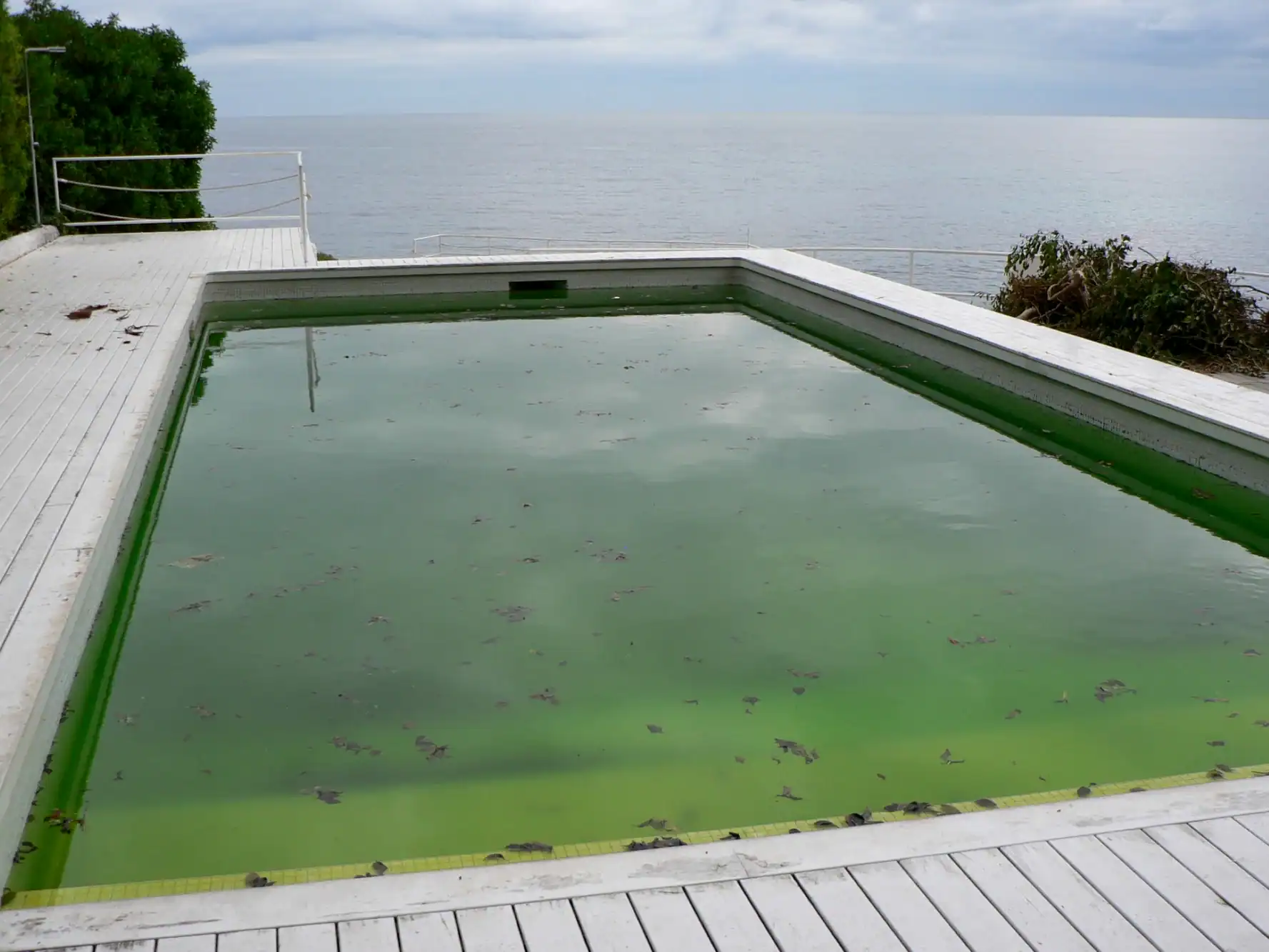
Your pool water should be so clear that you can see the drain at the deep end without any trouble. If the water looks even slightly hazy or cloudy, something’s wrong with your pool water chemistry.
Cloudiness has several possible causes, and they’re all bad. Low chlorine levels allow organic particles to accumulate. High pH causes calcium to precipitate out of solution. Algae spores start multiplying before they’re visible to the naked eye. Poor filtration lets contaminants build up. Any of these problems can make your water look less than crystal clear.
Here’s why cloudiness matters beyond aesthetics: murky water is dangerous. It reduces visibility, which increases drowning risk, especially for young swimmers. It signals that your sanitizer isn’t working properly, which means waterborne bacteria may be present. It indicates that your filter is either overwhelmed or not functioning correctly. And it often precedes bigger problems like full algae blooms or equipment failure.
The moment you notice your water isn’t as clear as it should be, test everything. Check your free chlorine—it should be between 2.0 and 4.0 ppm. Check your pH—it should be between 7.2 and 7.8. Check your filter pressure—if it’s high, you need to backwash or clean your filter. Check for algae by brushing your pool walls—if you see a cloud of particles come off, you’ve got early-stage algae that needs treatment before it takes over.
Don’t make the mistake of thinking slightly cloudy water is no big deal. It’s your pool’s way of telling you that multiple systems aren’t working together properly. Address it immediately, before it progresses to the point where you can’t see the bottom of your pool and you’re dumping in chemicals trying to fix a problem that’s gotten out of control.
Run your hand along your pool’s walls or steps. Does it feel slippery or slimy, even though the water looks clean? That’s biofilm—a layer of bacteria and algae starting to colonize your pool surfaces. It forms when chlorine levels drop or when pH is too high for chlorine to work effectively. It’s also one of the earliest signs of algae prevention failure, showing up days or even weeks before you see any green tint in your water.
Slippery surfaces are dangerous for two reasons. First, they’re literally slippery—people can fall getting in or out of the pool. Second, they indicate that your pool isn’t properly sanitized. If bacteria and algae are growing on your surfaces, they’re also floating in your water. You just can’t see them yet.
The fix is straightforward but needs to happen fast. Brush your entire pool thoroughly to break up the biofilm. Shock your pool with a heavy dose of chlorine. Run your filter continuously until the water clears. Then figure out why your chlorine wasn’t working in the first place—usually it’s a pH problem or you’re simply not adding enough chlorine for your pool’s size and usage.
On the opposite end of the spectrum, you might notice rough, chalky deposits forming on your tile line, around your pool fixtures, or inside your filter. That’s scale, and it forms when calcium hardness is too high. Calcium precipitates out of solution and deposits on any surface it can find. Left unchecked, scale clogs your filter, damages your heater, and creates rough spots that can scrape swimmers’ skin.
Scale also indicates that your overall water balance is off. High pH contributes to scale formation. So does high alkalinity. Even if you’re not seeing scale yet, if your calcium hardness is above 400 ppm, you’re headed in that direction. Test your calcium hardness monthly. If it’s climbing, you’ll need to partially drain and refill your pool with fresh water to bring it back down, since there’s no chemical that effectively removes excess calcium.
For Douglas County pool owners, calcium hardness can be particularly tricky because it depends on your source water. If your fill water is naturally high in calcium, you’ll fight scale formation constantly unless you’re proactive about partial water changes and keeping pH in the lower end of the acceptable range.
The key takeaway: your pool’s surfaces tell you a lot about what’s happening with your water chemistry. Slippery means sanitizer isn’t working. Rough and chalky means calcium is too high. Both problems are fixable, but only if you catch them early and address the underlying chemistry issues causing them.
The five hidden signs we’ve covered—strong chemical smell, skin and eye irritation, cloudy water, slippery surfaces, and scale formation—all point to the same underlying issue: your pool water chemistry is out of balance. Each sign tells you something specific about what’s gone wrong. Together, they give you a complete picture of your pool’s health before major problems develop.
Regular testing is the only way to catch these issues early. Test your free chlorine and pH at least twice a day during heavy use periods. Test alkalinity and calcium hardness weekly. Don’t rely on how your water looks or smells. By the time problems are obvious to your senses, they’ve already been developing for days.
When you do find chemistry problems, address them promptly. Small adjustments now prevent big headaches later. A few dollars worth of chemicals today saves thousands in equipment repairs or illness-related costs down the road.
If you’re in Douglas County, GA and need help understanding your pool’s water chemistry or want professional guidance on maintaining safe swimming conditions year-round, we at Deep Waters Pools have been serving local families for over 30 years. Sometimes the best investment you can make is getting experienced eyes on your pool before small chemistry issues turn into expensive problems.
Summary:
Share: