
Hear from Our Customers
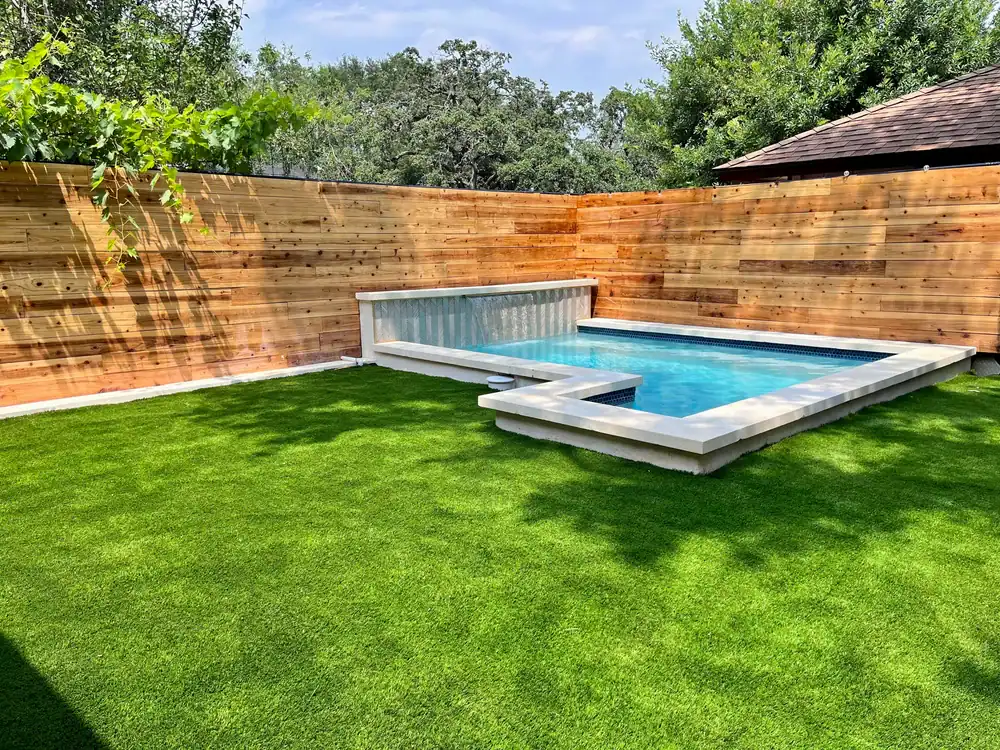
You’re not just adding water to your yard. You’re creating the place your family gravitates to on summer evenings instead of staring at screens indoors.
The pool becomes the reason your teenagers invite friends over. It’s where you cool off after yard work, where your kids learn to swim, where you host the neighborhood cookout everyone actually wants to attend.
But only if it’s built right. A pool that develops cracks within three years or a deck that settles unevenly doesn’t create memories—it creates regret. You need construction that accounts for Chapel Hill’s clay-heavy soil from day one, with proper engineering that prevents the shifting and settling that plague poorly planned installations. That’s what separates a backyard feature from a backyard liability.
We specialize in custom inground concrete pools throughout Douglas County. We’re not a franchise operation using one-size-fits-all designs—we’re inground pool contractors who understand that Chapel Hill’s ground conditions require specific engineering approaches.
Georgia soil isn’t uniform. The clay content in Douglas County expands when wet and contracts when dry, which means your pool structure needs to be designed with that movement in mind. We evaluate your specific site during the design phase and adjust our construction methods accordingly.
We’ve been building pools in this area long enough to know which shortcuts cause problems three years down the road. You’re hiring people who live with the results of their work in this community.
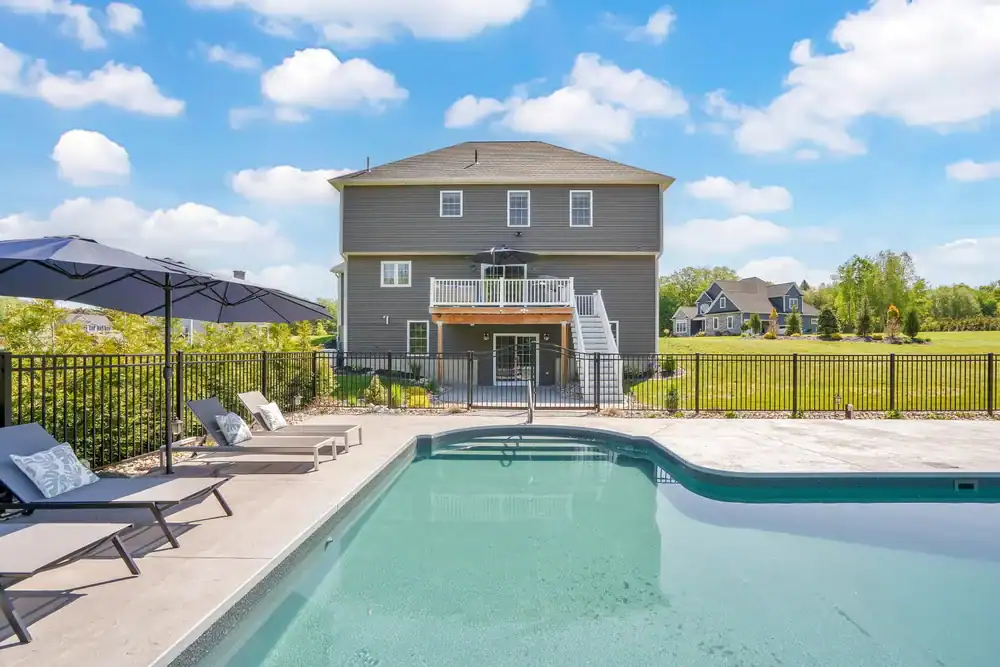
First, we come to your property for a site evaluation. We’re looking at soil conditions, drainage, access for equipment, utility locations, and how the pool will fit with your existing landscape. This isn’t a sales pitch—it’s a technical assessment that determines whether your yard is suitable and what challenges we’ll need to address.
Once you approve the design, we handle all permitting with Douglas County. Then excavation begins. We dig, set the steel framework, and install plumbing and electrical lines before any concrete goes in.
The concrete shell gets sprayed in one continuous application—that’s the structural integrity of your pool. After it cures, we install your filtration system, add the interior finish you selected, and build out any decking or patio areas. Finally, we install required safety barriers, fill the pool, balance the chemistry, and walk you through all the equipment operation and maintenance requirements.
Most projects take 8-12 weeks from permit approval to completion. Weather delays happen in Georgia, especially during summer storm season, so we build buffer time into schedules rather than rushing work to meet unrealistic deadlines.
Ready to get started?
You’re getting complete site evaluation, custom design, all necessary permits, professional excavation, concrete pool construction, electrical and plumbing installation, filtration system setup, your choice of interior finish, required safety barriers, thorough cleanup, and complete operational training.
We don’t subcontract the critical work. The concrete application, plumbing, and electrical are handled by our crew—people we’ve trained and who answer to us if something isn’t right.
In Douglas County, you’re also getting construction methods specifically adapted to local soil conditions. That means proper compaction of backfill material, adequate steel reinforcement in areas prone to movement, and drainage solutions that prevent water from pooling around your pool structure. These aren’t extras—they’re requirements for a pool that lasts.
Safety compliance is non-negotiable. Georgia requires barriers at least 48 inches high with self-closing, self-latching gates. We meet those codes and can discuss additional safety features like pool covers if you have young children.
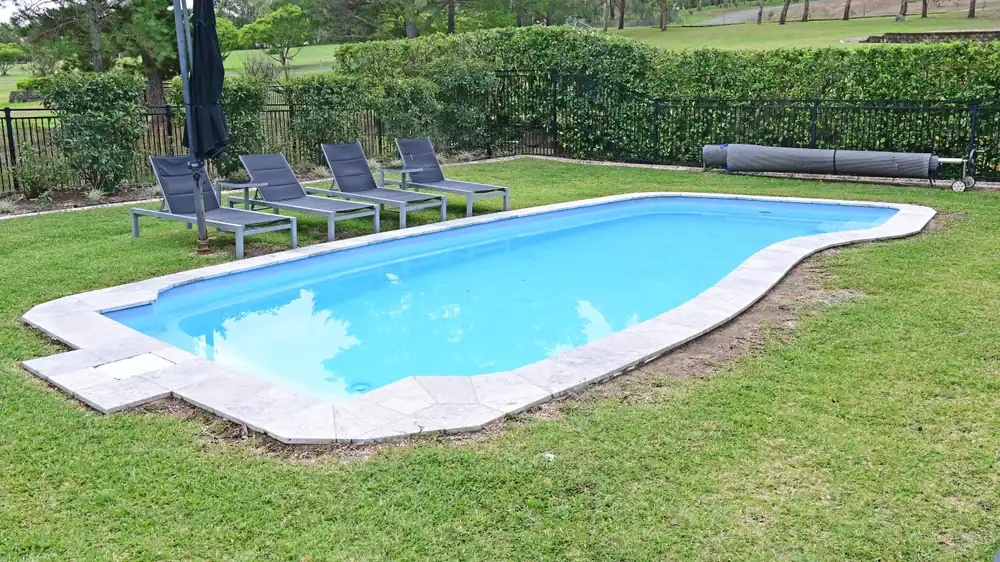
You’re typically looking at $35,000 to $65,000 for a custom concrete pool in Douglas County. That range accounts for size, shape complexity, finish materials, decking choices, and site-specific challenges.
The lower end gets you a straightforward rectangular pool with basic finishes and minimal decking. The higher end includes custom shapes, premium tile or aggregate finishes, extensive patio areas, upgraded equipment, and additional features like built-in benches or sun shelves.
Site conditions affect cost significantly. If your yard has poor access requiring smaller equipment, steep slopes requiring retaining walls, or high water tables requiring additional drainage work, expect costs toward the upper end of that range. We provide detailed estimates that break down every cost so you know exactly what you’re paying for before any work begins.
Plan on 8-12 weeks from permit approval to swimming. That’s the realistic timeline for custom gunite pool construction in Georgia when everything goes smoothly.
Permit processing with Douglas County typically takes 2-4 weeks depending on their current workload. Actual construction takes 6-8 weeks under normal conditions. Design complexity adds time—a simple rectangle installs faster than a custom freeform shape with multiple elevation changes.
Weather delays are common in Georgia, especially during summer storm season. We can’t pour concrete in heavy rain, and we won’t rush critical work just to meet an arbitrary deadline. If you’re planning a pool for summer use, start the process in late winter or early spring. If you contact us in May hoping to swim by July 4th, that’s probably not happening.
Concrete handles Georgia’s soil conditions better than other pool types. It’s the only option that can be engineered specifically for your site’s soil composition, drainage patterns, and ground movement characteristics.
Fiberglass pools are pre-manufactured shells that can’t be customized to your exact space or adjusted for site-specific soil challenges. They’re also limited in size and shape options. Vinyl liner pools are cheaper upfront but require liner replacement every 7-10 years at $4,000-$6,000 per replacement, and they’re more susceptible to damage from ground movement.
Concrete pools in Douglas County need proper engineering to handle the clay soil that expands and contracts with moisture changes. But when built correctly with adequate steel reinforcement and proper backfill compaction, concrete provides superior durability and longevity. You’re also getting complete design freedom—any shape, any size, any depth configuration that fits your property and usage needs.
Research shows professionally installed inground pools can increase home values by up to 7% in Georgia’s climate. But that’s not guaranteed, and it depends heavily on your neighborhood and the quality of the installation.
In Douglas County, pools are valuable because Georgia’s extended swimming season means you’ll actually use it 5-6 months per year, not just a few weeks. Buyers in this area expect outdoor living spaces, and a well-maintained pool with updated equipment and attractive decking appeals to families.
However, a poorly constructed pool with visible cracks, outdated equipment, or safety code violations can actually hurt your property value. And if you’re in a neighborhood where no one else has pools, you might not recoup your investment. The primary value should be your family’s enjoyment over the years you live there. Any financial return when you sell is a bonus, not the main reason to build.
You’re looking at weekly chemical testing and balancing, regular skimming and vacuuming, filter cleaning every few weeks, and equipment checks throughout the season. It’s not overwhelming, but it’s consistent.
Concrete pools require more attention to water chemistry than fiberglass because the concrete surface is porous and reactive. You’ll need to maintain proper pH, alkalinity, and calcium hardness levels to prevent surface etching or scaling. Test your water 2-3 times per week during swimming season and add chemicals as needed.
Every 10-15 years, you’ll likely need to resurface the interior—that means removing the old plaster or aggregate finish and applying a new one. Cost runs $5,000-$10,000 depending on the finish material you choose. Equipment like pumps and heaters typically last 8-12 years before replacement. We train you on all maintenance procedures when your pool is completed, and we’re available if you have questions as issues come up.
Start the process in late fall or winter if you want to swim the following summer. That gives you time to get estimates, finalize designs, secure permits, and schedule construction before the spring rush.
Spring and summer are busy seasons for inground pool builders in Douglas GA. Projects often book out weeks or even months in advance during peak season. If you contact us in April, we might not be able to start construction until July, which pushes completion into fall when you’re not swimming anyway.
Starting in November or December means we can often begin construction in February or March once weather permits. That puts completion in May or June—right when you want to be using the pool. You’re also potentially getting more attention to your project because we’re not juggling multiple simultaneous installations during the summer rush.