
Hear from Our Customers
Your backyard becomes the place your family actually wants to be. Not just another weekend—every weekend. Summer evenings that don’t end at sunset because the pool area feels like a resort, not an afterthought.
That’s what happens when custom swimming pool builders focus on your specific property, your soil conditions, and your actual lifestyle instead of rushing to the next job. You’re not dealing with callbacks for leaks or cracks that show up after the first winter. The pool holds up because the foundation work was done correctly from day one.
Kirkland homeowners deal with Georgia clay and shifting soil. Your pool needs to account for that, or you’ll be paying for it later. When the construction process handles drainage, proper excavation depth, and reinforced concrete work upfront, you’re looking at a pool that stays structurally sound for 30-plus years instead of needing major repairs in five.
We built Deep Waters Pools on 30-plus years of actual pool construction experience—not sales training or franchise models. The kind of experience that comes from personally handling concrete pours, plumbing systems, and custom builds across South Georgia since before 2014.
Kirkland sits in Douglas County, where most homeowners know their neighbors and expect local businesses to show up when they say they will. That’s exactly how we operate. You’re working with a licensed pool contractor in Georgia who understands the local building codes, soil conditions specific to this area, and what it takes to get permits processed without delays.
We focus on custom inground cement pools because that’s what holds up best in Georgia’s climate. Fiberglass cracks, liners need replacing—cement lasts when it’s installed correctly.
First, you’re walking the property with someone who’s actually built pools, not just sold them. You’ll talk through what you want, what fits your yard, and what makes sense for your budget. No pressure to upsell features you don’t need.
Next comes the design phase. You’ll see exactly what’s going in the ground before any digging starts—dimensions, depth, placement, equipment locations. Changes are easy now, expensive later, so this step matters.
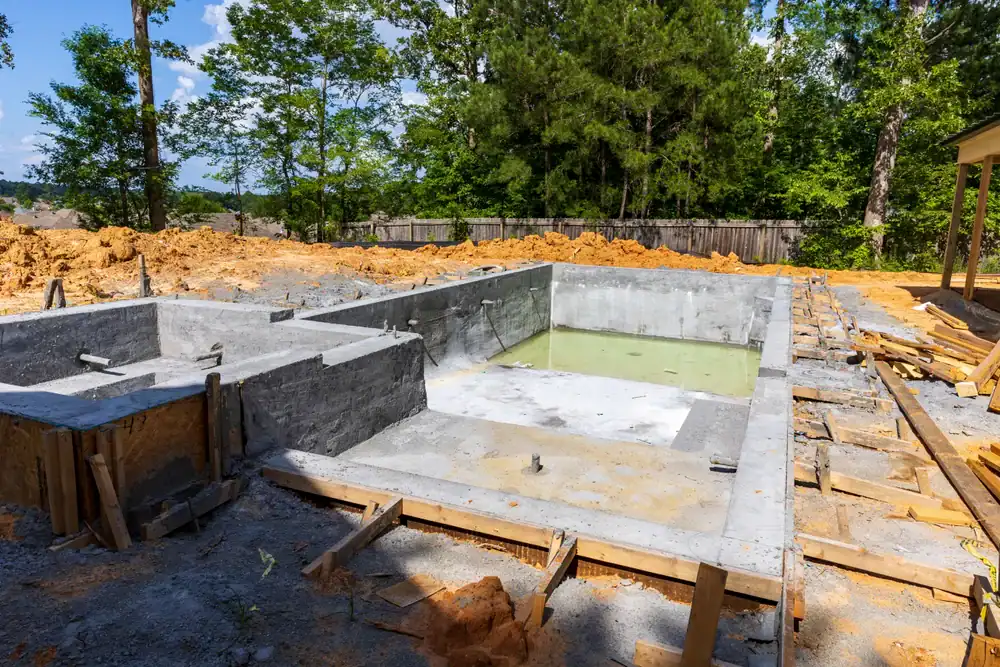
Once permits clear, excavation begins. Our crew digs to proper depth, accounting for drainage and base material. Then comes steel reinforcement, plumbing lines, and electrical conduit before any concrete gets poured. This is where most problems get prevented or created, depending on who’s doing the work.
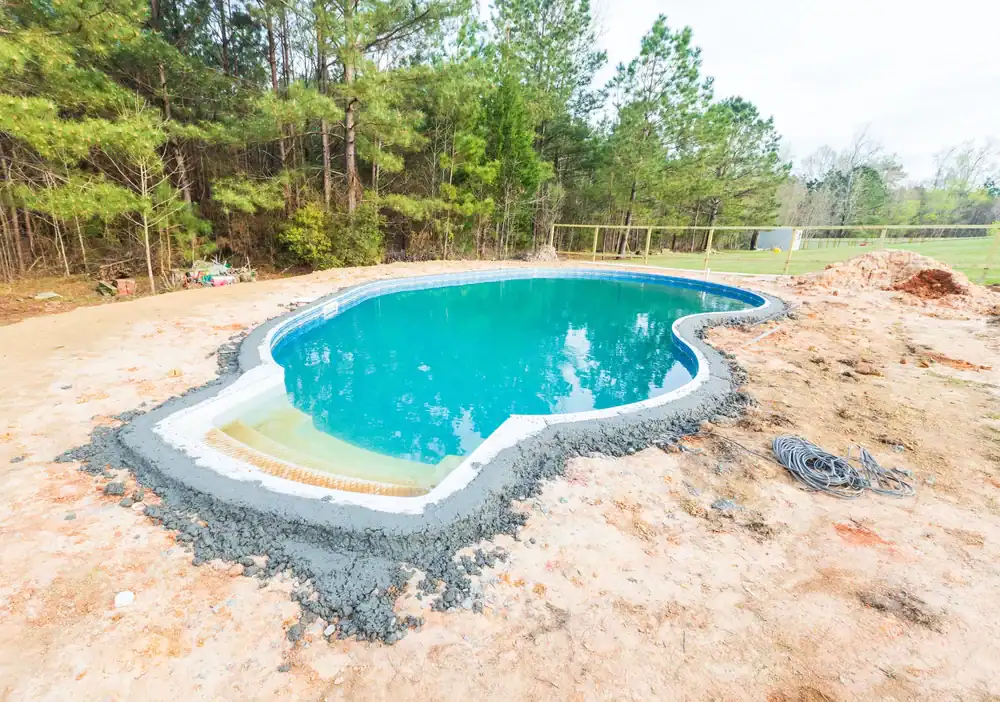
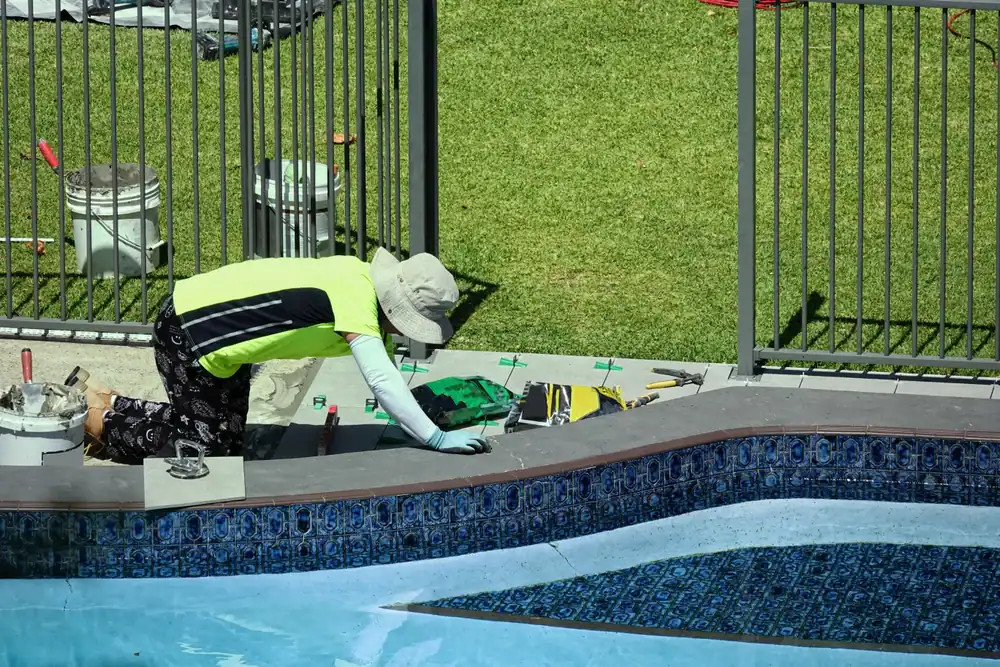
The concrete shell goes in, gets finished, and cures properly—not rushed. After that, you’re looking at tile work, coping, decking, equipment installation, and final finishes. The timeline depends on weather and inspection schedules, but you’ll know what to expect each week. When it’s done, you get a walkthrough on how everything operates, what maintenance looks like, and how to keep it running efficiently.
Ready to get started?
You’re getting a fully custom inground cement pool designed specifically for your property. That includes the initial consultation, site evaluation, custom design work, all permits, excavation, steel reinforcement, plumbing, electrical, concrete shell, interior finish, tile, coping, and decking.
We select equipment based on your pool size and usage—not whatever’s cheapest or earns the highest margin. You need a pump, filter, and heating system that actually match your setup. Undersized equipment works harder and fails faster. Oversized equipment wastes energy and money.
Kirkland properties vary widely—some have flat, easy access; others have slopes, trees, or limited equipment access. Your quote accounts for what your specific site requires. If we need smaller equipment to get through a gate or additional grading to manage drainage, that’s factored in upfront, not added later as a surprise.
Safety features matter, especially if you’ve got kids or pets. We build custom pool covers to fit your exact pool dimensions and provide real protection—not the flimsy tarps that blow off in wind. You’ll also get guidance on fencing requirements, compliant drain covers, and any local safety regulations that apply in Douglas County.
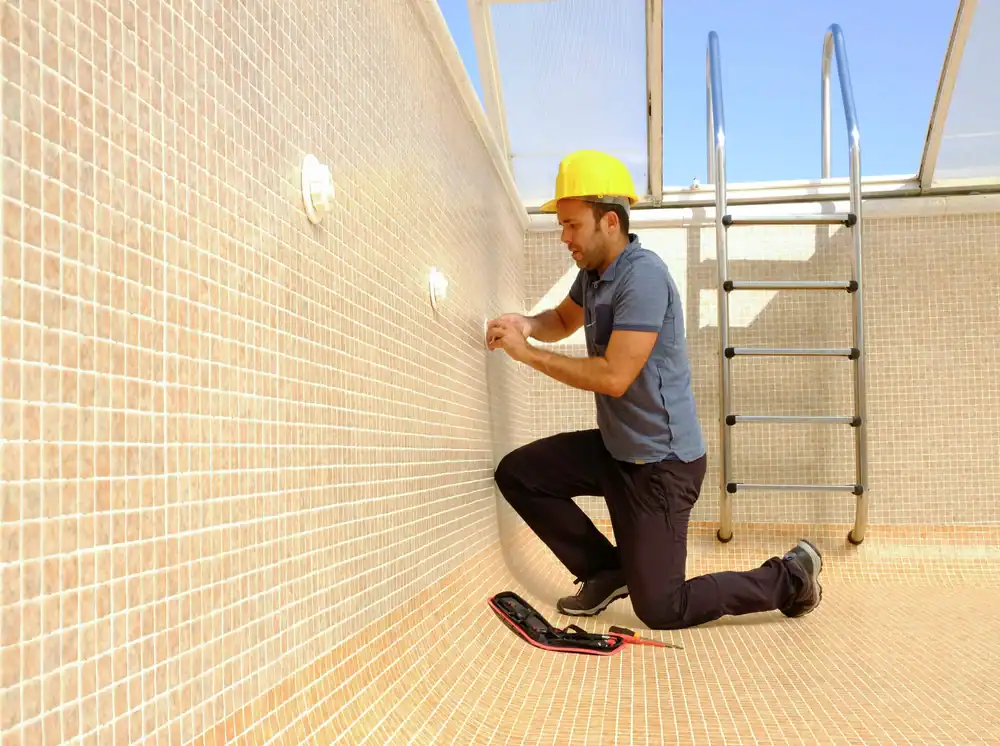
Most custom inground cement pools take 8 to 12 weeks from the day excavation starts to the day you’re swimming. That timeline assumes normal weather, no permit delays, and no major site complications.
Weather’s the biggest variable. Heavy rain stops concrete work. Freezing temperatures during winter months pause certain phases. If you’re starting a project in late spring, you’re typically swimming by mid-summer. Start in fall, and you’re looking at next season.
Permit processing through Douglas County usually takes 2 to 4 weeks, but that happens before construction starts. The actual build timeline includes excavation (2-3 days), steel and plumbing (3-5 days), concrete shell (1-2 days), curing time (7-10 days), and finishing work like tile, coping, decking, and equipment installation (3-4 weeks). Inspections happen at specific phases and can add a few days if scheduling doesn’t line up immediately.
Fiberglass pools often look cheaper upfront—sometimes $10,000 to $20,000 less than a comparable cement pool. But that’s not the full picture.
Fiberglass shells come in pre-made sizes and shapes. If the one you want fits your yard and your vision, great. If it doesn’t, you’re compromising on size, depth, or design. Cement pools get built to your exact specifications—any size, any shape, any depth.
The bigger difference shows up 10 to 15 years later. Fiberglass can crack, fade, or develop surface issues that require expensive repairs or resurfacing. Cement pools need resurfacing eventually too, but the structure itself lasts decades longer when built correctly. In Georgia’s clay soil with seasonal ground movement, cement’s flexibility and strength handle shifts better than a rigid fiberglass shell.
You’re also limited on features with fiberglass. Custom benches, beach entries, integrated spas, unique shapes—all easier and often only possible with cement construction.
If you have kids, pets, or want to reduce maintenance and heating costs, yes—you need a pool cover. But not all covers do the same thing.
Safety covers are built to hold weight and prevent accidental falls into the pool. They’re required by law in some areas and highly recommended everywhere else. A proper safety cover is anchored into the deck, fits your pool’s exact shape, and meets ASTM safety standards. The cheap mesh tarps you see at big-box stores aren’t safety covers—they’re debris covers that won’t stop a child or animal from going through.
Automatic covers offer convenience and safety but cost significantly more—usually $8,000 to $15,000 depending on pool size. They’re worth it if you’ll actually use them daily. If it’s a hassle, you won’t cover the pool, and you’ve wasted the investment.
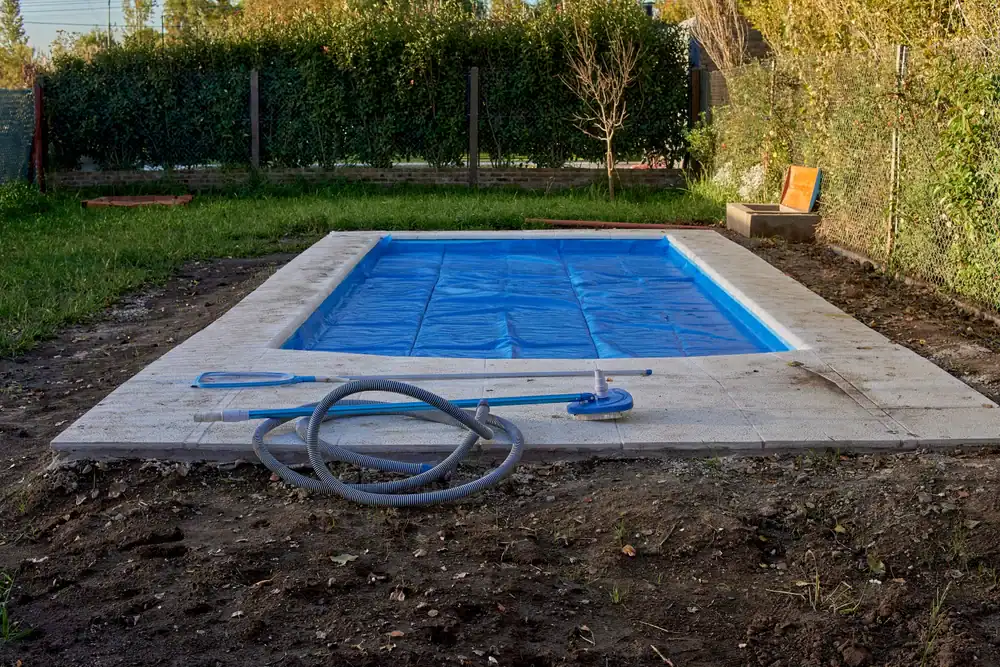
Solar covers reduce heat loss and evaporation but provide zero safety value. They’re useful for keeping your heating bill lower, not for protecting anyone. Most families in Kirkland benefit from a combination—a safety cover for off-season and a solar cover for daily use during swim season.
You’re looking at weekly water testing, chemical balancing, skimming debris, and brushing the walls. Monthly, you’ll need to check equipment, clean filters, and inspect for any obvious issues. It’s not complicated, but it’s consistent.
Water chemistry matters more than most people realize. If pH, alkalinity, or calcium hardness stay out of range for too long, you’ll damage the pool surface, equipment, and plumbing. Test strips are easy but less accurate. A good test kit or periodic professional testing keeps things dialed in.
Equipment maintenance is straightforward—clean or backwash your filter based on pressure readings, check pump baskets for debris, and make sure nothing’s leaking or making unusual noise. Catch small issues early, and they stay small.
Every 10 to 15 years, cement pools need resurfacing. The plaster or aggregate finish wears down over time from chemicals and use. Resurfacing costs $5,000 to $10,000 depending on the finish you choose, but it’s planned maintenance, not an emergency repair. If you stay on top of water chemistry, you’ll push that timeline closer to 15 years than 10.
Most yards in Kirkland can accommodate a pool, but some require more site work than others. The main factors are space, access, drainage, and soil conditions.
You need enough room for the pool itself plus the required setbacks from property lines, septic systems, and utilities. Douglas County has specific setback requirements—usually 10 feet from side and rear property lines, but it varies. A site evaluation confirms what’s possible on your lot.
Access matters because excavation equipment needs to get to your backyard. If you’ve got a wide side yard or rear access, no problem. If the only way back is through a narrow gate, we use smaller equipment, which can add time and cost. Sometimes that means removing a fence section temporarily.
Drainage is critical in Georgia. If your yard holds water after heavy rain, that needs addressing before a pool goes in. Poor drainage leads to hydrostatic pressure under the pool, which can crack the shell or push it out of the ground. Proper grading and drainage solutions get handled during site prep.
Soil conditions vary across Kirkland—some areas have heavy clay, others have more sand or rock. Clay requires more excavation precision and better compaction. Rock means additional equipment or blasting in extreme cases. A site evaluation identifies these issues upfront so there are no surprises once digging starts.
Experience with cement pools specifically, proper licensing and insurance, and a track record you can verify. Those three things eliminate most of the contractors you’ll regret.
Plenty of companies build pools, but not all of them specialize in custom inground cement construction. It’s a different process than fiberglass or vinyl liner pools. If they’re primarily doing one type and offering cement as a side option, you’re not getting their best work.
Licensing matters because it means they’ve met Georgia’s requirements for pool construction and they’re accountable to regulatory standards. Insurance protects you if something goes wrong on your property. Ask for proof of both, and verify them independently. If a contractor hesitates or makes excuses, walk away.
The track record shows up in how they handle the details. Do they provide a clear contract with specific timelines, materials, and costs? Do they explain the process without dodging questions? Can they show you recent projects and put you in touch with past clients? A builder who’s done quality work has no problem providing references. One who hasn’t will give you vague answers and change the subject.