
Hear from Our Customers
You’re not looking for a cookie-cutter setup that looks like every other pool on the block. You want something that makes sense for how you live—whether that’s a place for the kids to burn energy after school, a spot to cool off on those Georgia summer evenings, or a backyard that finally feels finished.
Custom concrete pools give you that flexibility. The shape works with your lot. The depth fits how you’ll actually use it. The features—whether it’s a tanning ledge, built-in seating, or something more elaborate—are there because you want them, not because they came standard.
And when it’s done right, you’re not dealing with liner replacements every few years or a structure that starts cracking because someone rushed the job. You’re getting something built to last, installed by people who know Red Bluff soil, local codes, and what holds up in this climate.
Deep Waters Pools is a local pool company that’s been building custom concrete pools across Douglas County for years. We’re licensed, insured, and we handle the permits, inspections, and everything in between so you don’t have to figure it out on your own.
Red Bluff sits in a growing part of the county where lot sizes vary and soil conditions matter. We’ve worked on properties throughout the area, so we know what to expect when we break ground. That means fewer surprises, realistic timelines, and a finished pool that’s built to code and built to last.
You’re not hiring a national chain that subcontracts the work. You’re working with a team that shows up, does the job, and stands behind it.
It starts with a consultation at your property. We look at your yard, talk through what you’re trying to accomplish, and give you a realistic idea of what’s possible within your budget. No pressure, no upselling—just a clear conversation about options.
Once you’re ready to move forward, we handle the design and engineering. You’ll see exactly what the pool will look like, where it’ll sit, and what features are included. Then we pull permits, schedule inspections, and coordinate the build.
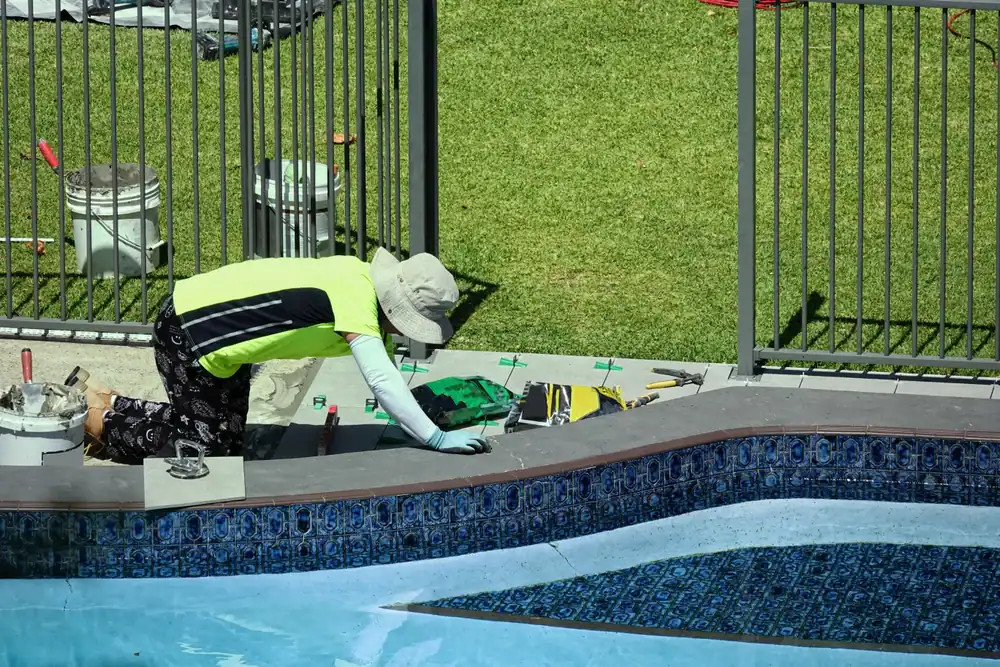
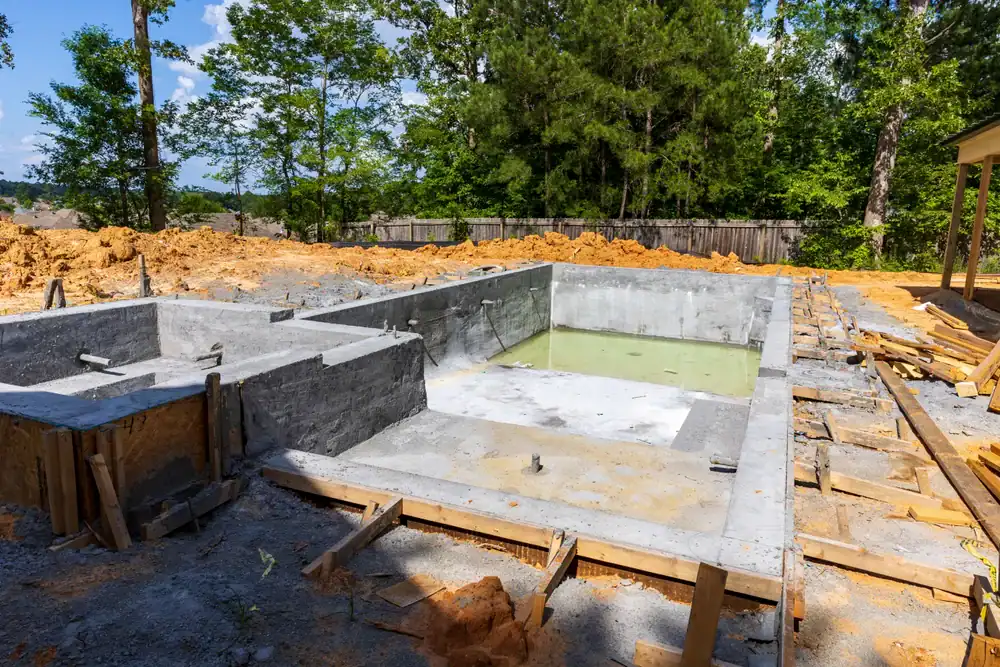
The actual construction involves excavation, steel reinforcement, plumbing and electrical rough-ins, then the concrete shell. After that comes the finish work—tile, coping, decking, and any water features or lighting you’ve chosen. We walk you through startup and maintenance so you know how to keep everything running smoothly.
From signing the contract to taking your first swim, the timeline typically runs 8 to 12 weeks depending on weather, inspections, and the complexity of the design. We keep you updated at every stage so you’re never guessing where things stand.
Ready to get started?
Every project includes site evaluation, custom design, permit acquisition, and full construction from excavation through final finishes. You’re getting the pool shell, plumbing, electrical, filtration system, and your choice of interior finish. Decking, coping, and tile are part of the package, along with any built-in features like benches, steps, or tanning ledges.
Red Bluff properties often have specific grading challenges or setback requirements that affect pool placement. We account for that during the design phase so your pool sits where it makes sense—not where it’s easiest to dig. If your lot slopes or drainage is a concern, we address it before construction starts.
Upgrades like heating systems, automation, LED lighting, waterfalls, or fire features are available depending on your budget and priorities. We’ll talk through what adds value for how you’ll actually use the pool versus what just looks good in a brochure. The goal is a finished product that fits your property and your expectations without unnecessary add-ons that inflate the cost.
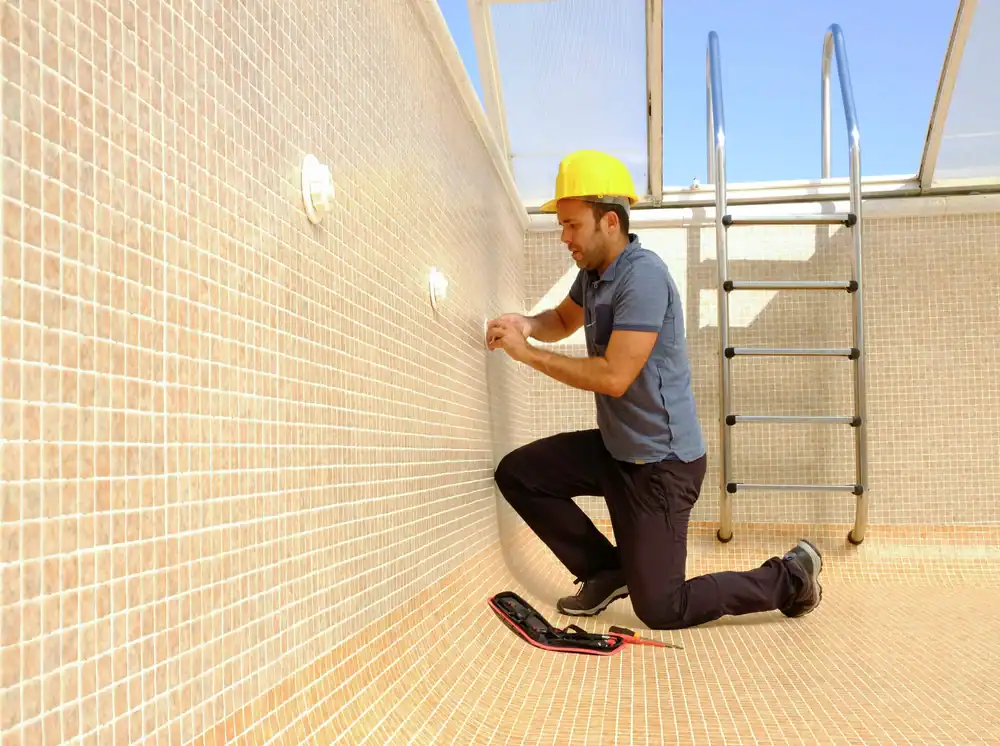
Most custom concrete pools in the Red Bluff area run between $40,000 and $70,000 depending on size, features, and site conditions. A basic rectangular pool with standard finishes and minimal features will land on the lower end. Add things like custom shapes, raised spas, water features, or high-end tile and you’re moving toward the upper range.
Your lot also affects cost. If we’re dealing with difficult access, significant grading work, or rocky soil, that adds to the excavation and prep time. Same goes for properties where we need to remove trees, relocate utilities, or build retaining walls to make the site work.
We give you a detailed estimate upfront that breaks down what’s included and what’s optional. No surprises halfway through the job. If your budget is firm, we’ll design around it and tell you what’s realistic before you sign anything.
Plan on 8 to 12 weeks from contract signing to completion. That includes design, permits, construction, and final inspections. Weather can push things back—heavy rain delays excavation and concrete pours. Permit approval times vary depending on how busy the county is.
The construction itself usually takes 4 to 6 weeks once we break ground. Excavation and steel installation happen in the first week or two. Plumbing and electrical rough-ins follow, then we shoot the concrete shell. After that, we’re waiting for the concrete to cure before we can start tile, coping, and decking. Final equipment installation and startup happen in the last week.
We’ll give you a projected timeline during the design phase and keep you updated if anything changes. Most delays come from weather or inspection scheduling, not the actual construction work.
Yes. Douglas County requires permits for all inground pool construction, and the process includes plan review, inspections during construction, and a final inspection before you can fill the pool. You’ll also need to meet setback requirements—pools typically need to be at least 10 feet from property lines, though that can vary depending on your lot and local zoning.
Georgia law also requires a barrier around residential pools. That means a fence, wall, or other approved enclosure that’s at least 4 feet high with a self-closing, self-latching gate. We’ll walk you through what’s required for your property during the design phase.
We handle the permit applications and coordinate inspections so you’re not dealing with the county directly. It’s part of the service. If there’s an issue with plan approval, we address it and resubmit. You’ll know what’s required before we start, and we make sure everything passes inspection before we call the job complete.
Concrete pools are fully customizable—any shape, any size, any depth. They’re built on-site, so the design fits your property instead of your property fitting a pre-made shell. The structure lasts decades if it’s built right, and you can refinish the interior or add features later without replacing the whole pool.
Fiberglass pools are manufactured off-site and dropped into an excavated hole. They’re faster to install and the smooth surface resists algae, but you’re limited to whatever shapes and sizes the manufacturer offers. If your yard has tight access or you want something unique, fiberglass won’t work.
Vinyl liner pools are the cheapest upfront but the liner needs replacement every 7 to 10 years, and that’s a $4,000 to $6,000 expense each time. The walls are typically steel or polymer panels, and if the liner tears or the ground shifts, you’re looking at repairs. Concrete costs more initially, but you’re not replacing major components every decade.
Expect to spend $1,200 to $1,800 per year on chemicals, electricity, water, and routine maintenance if you’re handling it yourself. That breaks down to about $100 to $150 per month during swim season and less in the off-season. If you hire a service to handle weekly cleaning and chemical balancing, add another $100 to $150 per month.
Your biggest ongoing costs are electricity for the pump and heater, chemicals to keep the water balanced, and occasional equipment repairs. A variable-speed pump cuts energy costs significantly compared to older single-speed models. An automated cover reduces water evaporation and heat loss, which lowers your heating bill if you’re running a heater.
Plan for equipment replacement over time. Pumps, heaters, and automation systems eventually wear out. A pump might last 8 to 10 years, a heater 10 to 15. Those aren’t annual expenses, but they’re part of owning a pool. We’ll walk you through what to expect during startup so you’re not caught off guard later.
It depends on your neighborhood and the buyer pool when you sell. In areas where pools are common and expected, you’ll likely see a return of 5% to 7% of your home’s value. In neighborhoods where pools are rare, it might not add much—or it could even narrow your buyer pool to families who specifically want a pool.
Red Bluff sits in a growing part of Douglas County with a mix of family-oriented subdivisions and larger lots. Homes in the $300,000 to $500,000 range often benefit from pools because buyers in that market are looking for finished outdoor spaces. If your home is on the lower end of the market, a $50,000 pool might not return its full cost at resale.
The real value is in how you use it. If you’re planning to stay in the house for years and you’ll get regular use out of the pool, the return on investment is in your quality of life, not just resale value. If you’re planning to sell within a few years, it’s worth having a conversation about whether the investment makes sense for your specific property and market.