
Hear from Our Customers
Douglas County is getting hotter. Over the next 30 years, you’re looking at a 171% increase in days over 104°F. That’s not a maybe—it’s coming.
A pool isn’t just about property value or entertaining guests. It’s about having a place to cool off when the Georgia heat becomes unbearable. It’s about your kids spending summer outside instead of glued to screens. It’s about not dreading July and August.
When you work with a custom swimming pool builder who understands local conditions, you get a pool that handles Georgia’s clay soil, survives storm season, and doesn’t crack or shift after the first year. You get something that lasts because it was built correctly from the start.
We’ve been serving Roper, GA and Douglas County since 2014, but the experience behind our company goes back over 30 years. That’s three decades of concrete work, plumbing, custom pool design, and dealing with Georgia’s unique challenges.
We’re licensed, insured, and fully compliant with Georgia regulations and the International Swimming Pool Code. We’re also members of the Douglas County Chamber of Commerce. We handle permits, site plans, safety barriers—the whole process—so you don’t have to figure it out yourself.
Roper homeowners deal with varied soil conditions and unpredictable weather. We’ve built enough pools in this area to know what works and what doesn’t.
First, we come to your property. We look at your yard, talk about what you want, and figure out what’s actually possible given your space, soil, and budget. No cookie-cutter designs—every pool is custom.
Next, we handle the permit process. In Georgia, every residential pool requires a building permit, site plan, and safety barrier documentation. We submit everything and work with local authorities so you’re not stuck navigating bureaucracy.
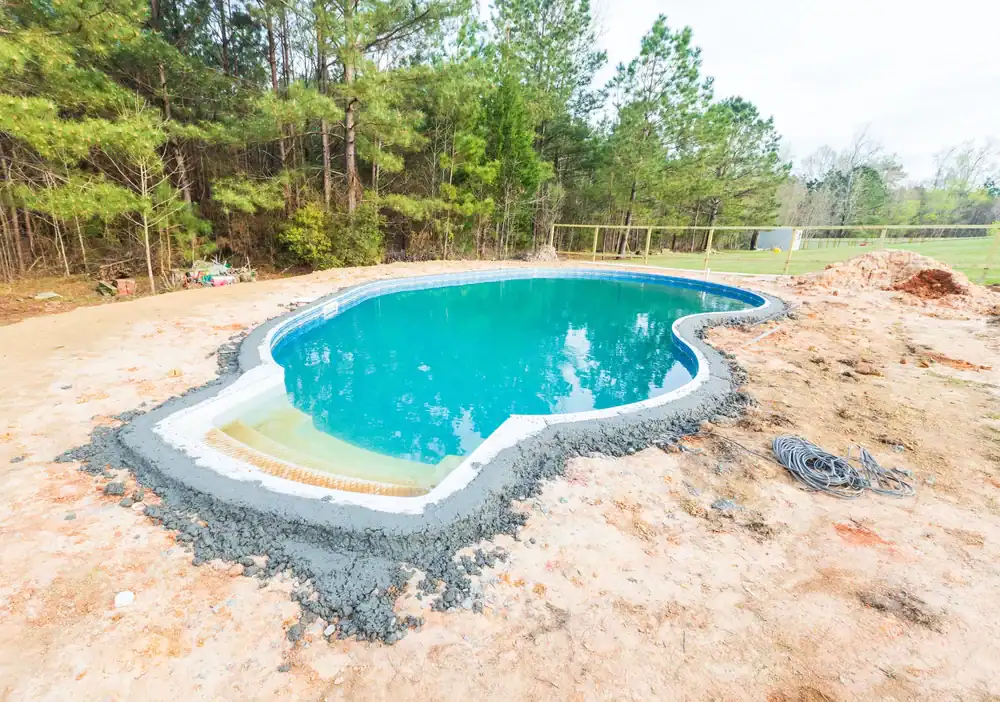
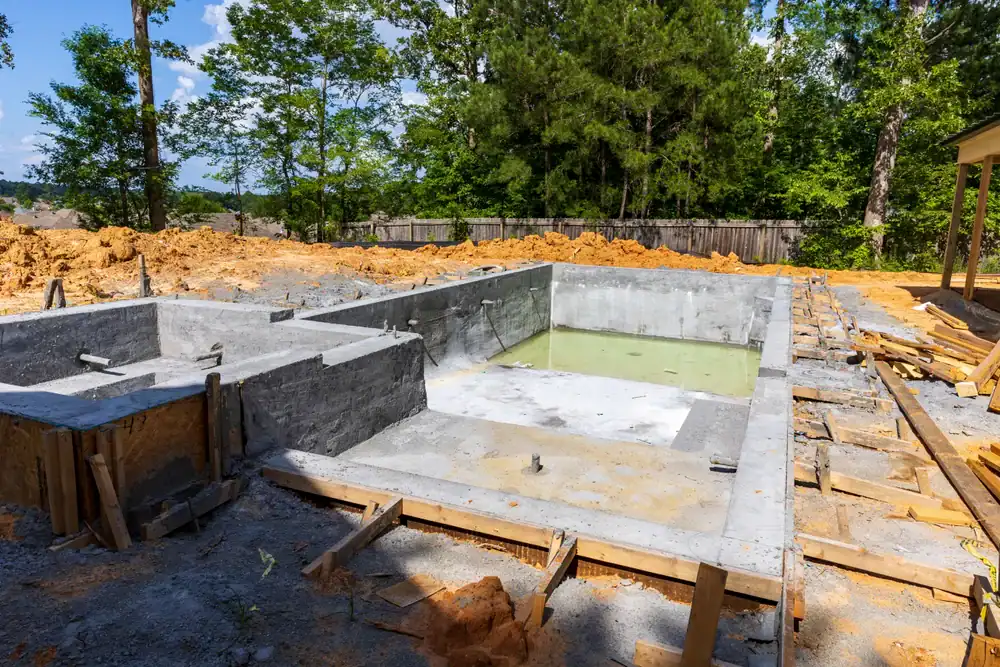
Once permits are approved, we start excavation and construction. Most projects take 8-12 weeks, but we build in buffer time for weather delays—summer storms are common here. We’re not rushing through your project to hit some arbitrary deadline. We’re building it right.
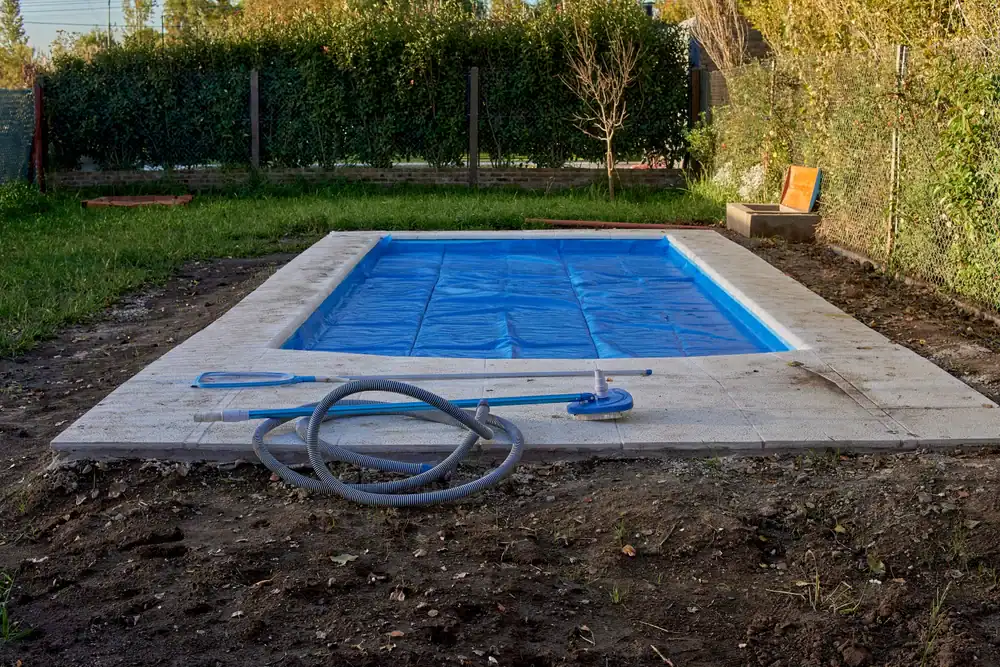
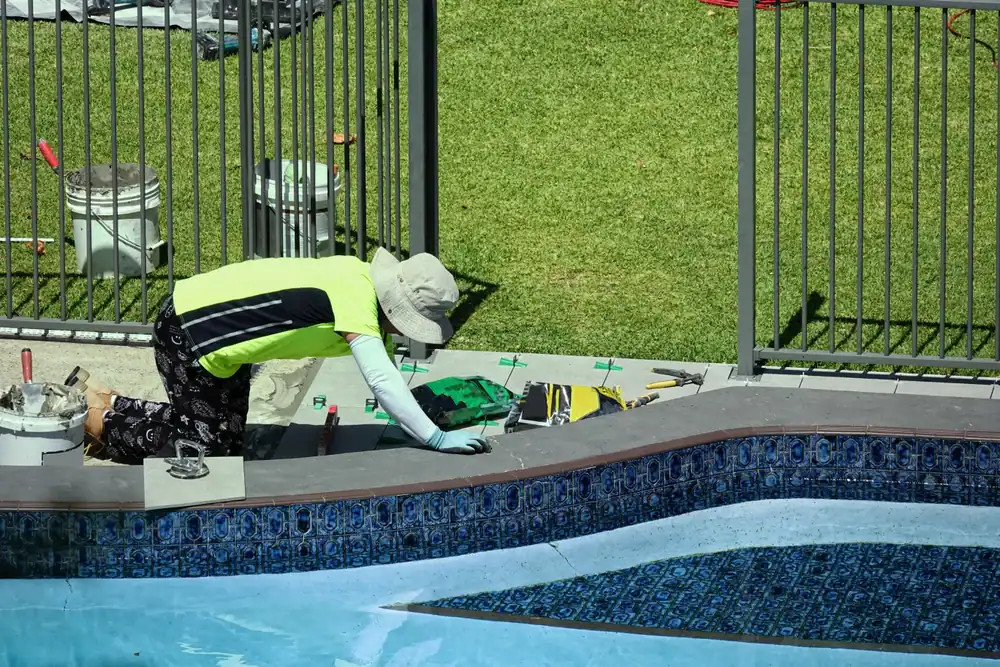
After construction, we install equipment, finish surfaces, and walk you through everything you need to know about operating and maintaining your pool. You’ll know exactly what to expect before we leave.
Ready to get started?
You get a custom inground cement pool designed specifically for your property. Not fiberglass. Not a prefab shell. Concrete that’s shaped, poured, and finished to match your vision and your yard.
We also build spas and patios as part of complete backyard transformations. If you want a space that’s more than just a rectangle of water, we can design that.
Douglas County’s soil ranges from clay to sandy, and both present challenges. Clay expands and contracts with moisture. Sandy soil shifts. We account for these conditions during excavation and construction so your pool doesn’t crack or settle unevenly after a few seasons.
You also get realistic timelines. We don’t promise six weeks and deliver in twelve. We tell you upfront what to expect, including weather delays, and we communicate throughout the process. Georgia summers bring heat and storms—we plan for both.
Most custom inground pools in this area run between $35,000 and $65,000, depending on size, features, and site conditions. That includes permits, excavation, construction, equipment, and finishing.
If your property has challenging soil, steep grades, or limited access, costs can go higher. Same goes if you want a spa, custom lighting, or high-end finishes. We provide detailed estimates that break down every cost so you know exactly where your money is going.
Keep in mind that annual maintenance typically runs $3,000 to $6,000. That includes chemicals, cleaning, equipment upkeep, and occasional repairs. A pool is an investment, and it’s worth knowing the full picture before you commit.
From permit approval to completion, most projects take 8-12 weeks. Permits alone can take 2-4 weeks depending on how backed up the county is.
Weather plays a big role. Summer storms can delay excavation and concrete work. We can’t pour in heavy rain, and we can’t finish surfaces in extreme heat. We build buffer time into our schedules because we’d rather give you a realistic timeline than overpromise and underdeliver.
If you’re planning a pool for summer, start the conversation in late winter or early spring. That gives us time to design, permit, and build before peak heat hits.
Concrete pools are fully customizable. You’re not limited to prefab shapes or sizes. If your yard is oddly shaped, sloped, or small, we can design a pool that fits. Fiberglass shells come in set dimensions—you get what’s available.
Concrete also handles Georgia’s soil movement better. Clay soil expands and contracts with moisture, and sandy soil shifts. A properly built concrete pool with the right foundation and reinforcement can handle that movement without cracking. Fiberglass shells can flex or pop out of the ground if soil shifts underneath.
Concrete lasts longer if maintained correctly. The surface can be refinished, repaired, or updated. Fiberglass can fade, stain, or develop gel coat issues over time, and repairs are harder to blend seamlessly.
Yes. Every residential pool in Georgia requires a building permit. You’ll need to submit an application, site plan, and documentation showing you’ll meet safety barrier requirements—that means fencing, gates, alarms, or pool covers depending on your setup.
Douglas County enforces these rules, and if you skip the permit, you’re looking at fines, forced removal, or issues when you try to sell your home. Unpermitted work also voids insurance coverage if something goes wrong.
We handle the entire permit process. We prepare the site plan, submit the application, and coordinate inspections. You don’t have to deal with the county or figure out code requirements on your own.
It can, but it’s not guaranteed. Pools typically add 5-7% to home value in markets where they’re desirable. In Douglas County, where summer heat is intense and homeownership is high, pools are a selling point for many buyers.
That said, not every buyer wants a pool. Some see it as added maintenance, liability, or cost. If you’re building a pool purely as a financial investment, it’s a gamble. If you’re building it because you’ll use it and enjoy it, the value is immediate.
A well-maintained pool with updated equipment and good landscaping will appeal to more buyers than a neglected one with cracked surfaces and outdated systems. If you do sell, condition matters as much as the pool itself.
You’ll need to test and balance water chemistry weekly—pH, chlorine, alkalinity. Georgia’s heat accelerates algae growth, so staying on top of chemicals is critical. You’ll also need to skim debris, brush surfaces, and vacuum regularly.
Equipment maintenance includes cleaning filters, checking pumps, and inspecting heaters or automation systems. Most of this is straightforward, but it takes time. If you’d rather not handle it yourself, maintenance services typically cost $100-$200 per month.
Expect to resurface concrete pools every 10-15 years depending on use and water chemistry. You’ll also replace equipment like pumps, heaters, and filters as they wear out. Budget a few thousand per year for upkeep and occasional repairs—it’s part of ownership.