
Hear from Our Customers
You’re probably spending too much on pool chemicals. Not because you’re careless, but because you’re guessing. Most home test strips expire after a few months, and expired strips give you bad readings. Bad readings lead to overcorrecting. Overcorrecting leads to more problems.
Professional pool water analysis changes that. You bring us a water sample, we test it with calibrated equipment, and you get a printout showing exactly what your pool needs. Not what we want to sell you. What your pool actually needs.
The difference shows up in your wallet and your pool. Balanced water means your equipment lasts longer, your chemicals work better, and your family swims in water that’s actually safe. You’ll know your chlorine is between 1-3 ppm, your pH is where it should be, and you’re not throwing money at problems that don’t exist.
Deep Waters Pools started with over 30 years of hands-on pool construction experience. We build pools, so we know what happens when water chemistry goes wrong. We’ve seen what unbalanced water does to equipment, surfaces, and your maintenance budget.
That’s why we offer free residential water test services in Beach and throughout South Georgia. Not as a sales tactic, but because proper water testing is the foundation of pool ownership. You can’t maintain what you can’t measure.
We’re local to Coffee County. We understand Georgia water, Georgia weather, and the specific challenges pool owners face here. When you test with us, you’re getting advice from people who’ve dealt with every water chemistry issue you can imagine.
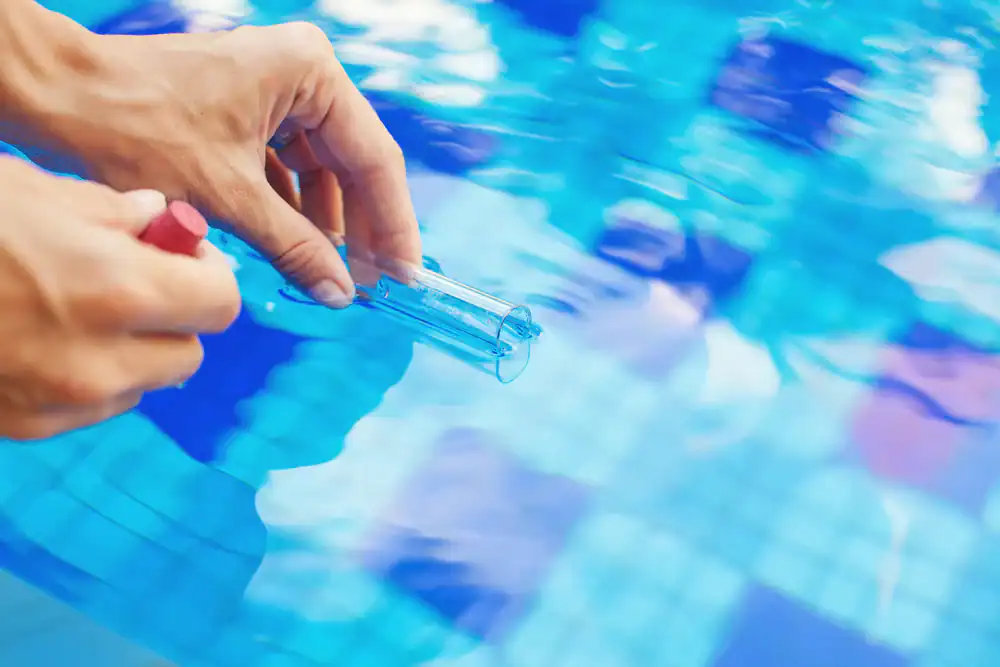
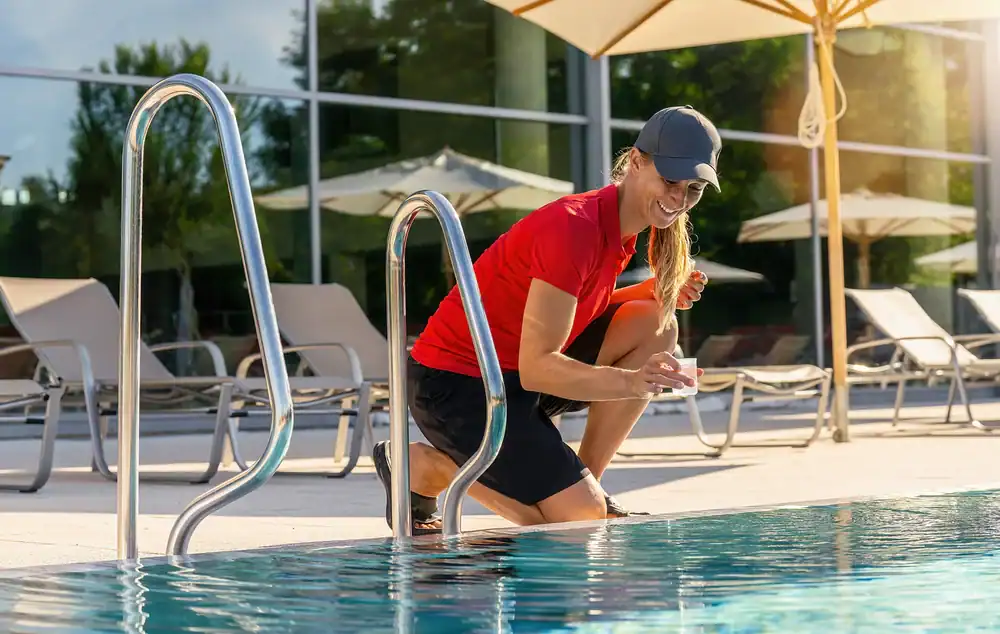
Bring us a water sample from your pool. Use a clean container and collect water from about elbow-deep, away from return jets. That gives us the most accurate reading of your pool’s actual condition.
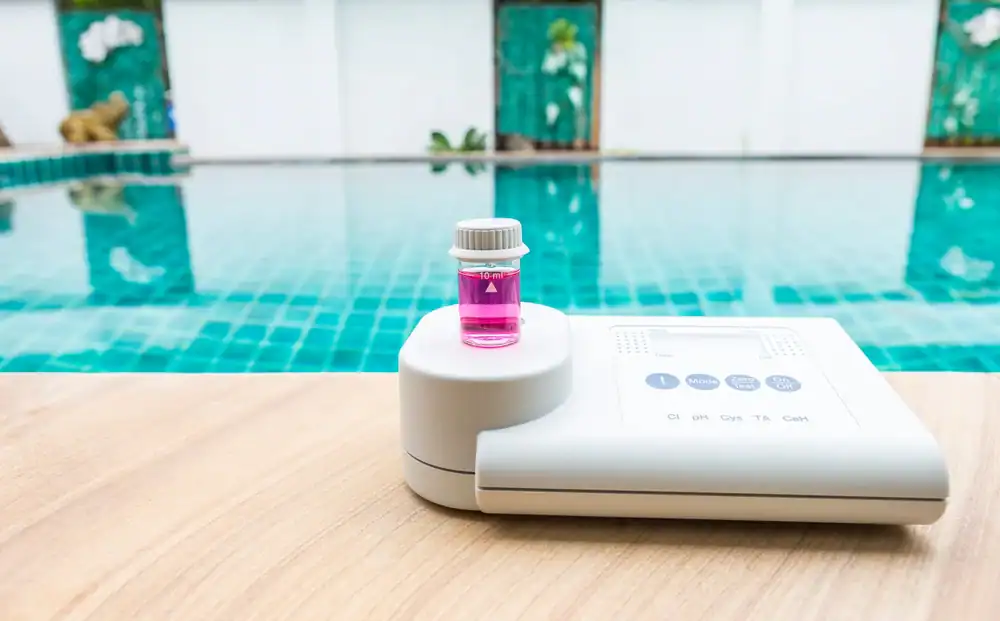
We run your sample through our testing equipment. Takes about 2-3 minutes. We’re checking chlorine levels, pH, total alkalinity, calcium hardness, and other parameters that affect how your pool performs. You get a full printout with all the numbers.
Then we walk you through what the results mean. If your pH is off, we’ll tell you exactly how much acid or base you need. If your chlorine is low, we’ll explain why and what to do about it. You leave knowing exactly what your pool needs and why it needs it. No upselling. No pressure. Just information you can actually use.
Ready to get started?
Chlorine keeps your pool safe from bacteria. Too little and you’re swimming in contaminated water. Too much and you’re irritating skin and eyes while wasting money. We measure free chlorine and combined chlorine to show you what’s actually disinfecting versus what’s just sitting there doing nothing.
pH affects everything else in your pool. When pH drifts outside the 7.2-7.8 range, your chlorine stops working efficiently, your water gets cloudy, and your equipment starts corroding or scaling. In Beach, GA, where summer heat and afternoon storms can swing your pH quickly, regular testing isn’t optional.
We also check total alkalinity, which buffers your pH and keeps it stable. Calcium hardness matters because Georgia water can be soft, and soft water will pull calcium from your pool surfaces and equipment. We look at stabilizer levels to make sure your chlorine isn’t burning off too fast in our intense sun.
Every parameter connects to the others. That’s why home test strips that only check two or three things don’t give you the full picture. Professional water quality testing shows you how everything in your pool is working together or fighting against each other.
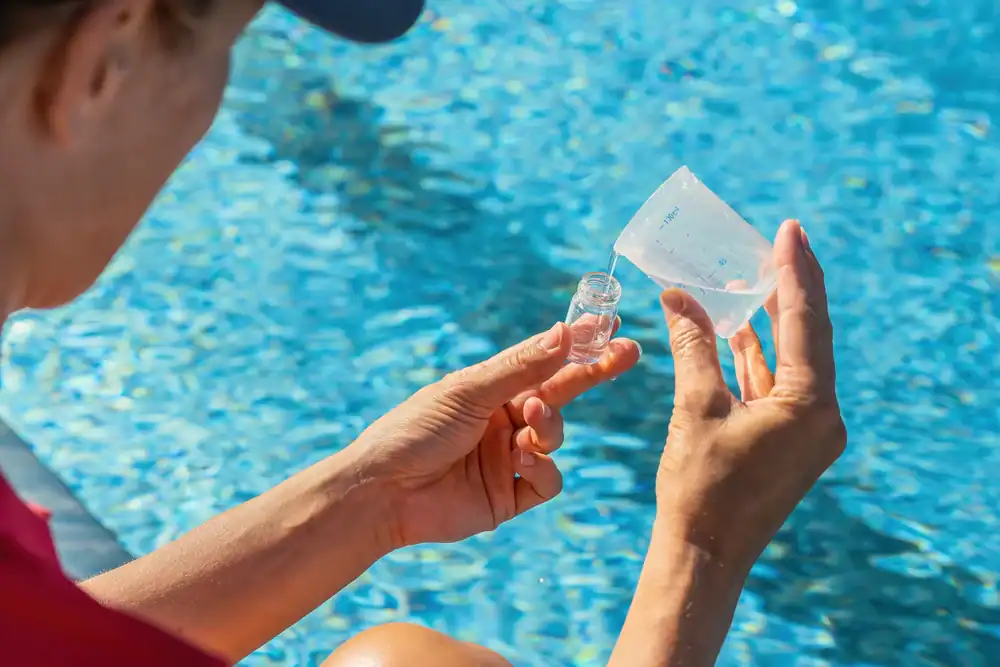
Because accurate water testing is how you maintain a pool correctly, and most pool owners don’t have access to professional-grade equipment. Home test strips are fine for quick checks, but they expire fast, they’re hard to read accurately, and they don’t test for everything that matters.
We offer free testing because we want pool owners in Beach, GA to actually know what’s happening with their water. Yes, we sell chemicals and pool supplies. But we’d rather you buy the right amount of the right products than guess and buy whatever seems like it might work.
When you test with us regularly, you spend less money overall because you’re not overcorrecting problems or creating new ones. You’re making informed decisions. That builds trust, and trust matters more to us than making a quick sale on chemicals you don’t need.
At minimum, test every two weeks during swimming season. If you’re getting heavy use, dealing with weather events, or noticing any water quality issues, test weekly.
Georgia summers are brutal on pool chemistry. Afternoon thunderstorms dump rainwater that dilutes your chemicals. High temperatures speed up chlorine consumption. Heavy swimmer load introduces contaminants. All of this changes your water balance faster than you think.
Testing frequently means you catch problems early when they’re easy to fix. Waiting until your water turns green or cloudy means you’re dealing with a much bigger chemical correction and potentially several days of a pool you can’t use. Bring us a sample every couple weeks, and you’ll stay ahead of problems instead of reacting to them.
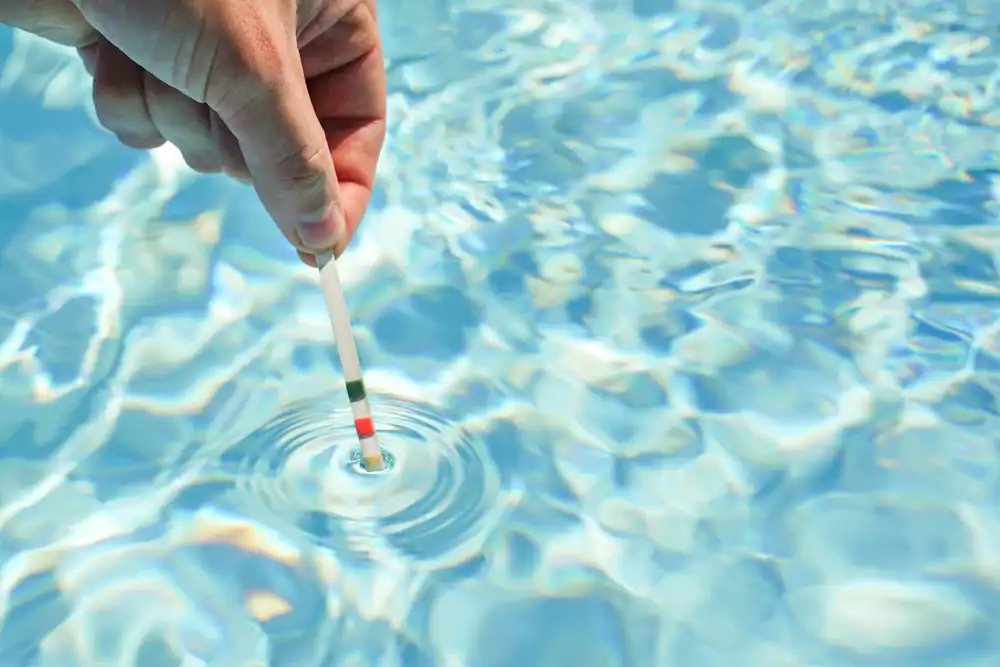
Check your chlorine level at home a couple times a week with test strips. You don’t need laboratory accuracy for daily monitoring, just a general sense of whether chlorine is holding steady or dropping. If it’s dropping fast, you know something’s consuming it and you should bring us a sample.
Skim debris daily and brush your pool weekly. Organic matter consumes chlorine, so the cleaner you keep your pool physically, the less your chemicals have to work. Run your filter according to manufacturer recommendations, usually 8-12 hours per day during summer.
Watch your water. If it starts looking cloudy, if you’re getting algae spots, or if it just doesn’t look right, don’t wait for your next scheduled test. Bring us a sample. Water problems compound quickly, and what takes five minutes to fix today might take days to fix next week.
You can, and strips are useful for quick checks between professional tests. But they have real limitations. Test strips expire within a few months of opening, and most people don’t realize they’re using expired strips that give false readings. The color matching is subjective. Two people looking at the same strip will often see different results.
Strips also don’t test for everything. Most check chlorine and pH, maybe alkalinity. They don’t measure calcium hardness, stabilizer, or combined chlorine. You’re getting partial information and making decisions based on an incomplete picture.
Our testing equipment is calibrated regularly and gives you precise numbers, not color approximations. You get a printed report showing every parameter that matters. Use strips at home for daily monitoring if you want, but get professional water analysis every couple weeks so you know what’s really happening in your pool.
We walk you through fixing them in the right order. Water chemistry has a sequence. You can’t just dump everything in at once and hope it balances out.
Typically, we’ll have you adjust total alkalinity first because it stabilizes pH. Then pH, because nothing else works right until pH is in range. Then we address chlorine, calcium hardness, and stabilizer. Sometimes you need to fix things over a few days, testing between adjustments to see how the water responds.
We’ll give you specific instructions: add this much of this chemical, wait this long, then do this next. If your water is really out of balance, we might ask you to bring another sample in a few days to verify everything’s moving in the right direction. The goal is getting your pool balanced correctly, not just selling you a bunch of chemicals and hoping for the best.
Collect your sample in the morning before the sun hits your pool if possible, but anytime works. Just make sure you’re collecting from about elbow-deep in the water, away from return jets and skimmers. That gives you a representative sample of your pool’s actual condition.
Use a clean container. An old water bottle is fine as long as it’s been rinsed out. Don’t use a container that had soap, juice, or anything else in it. Contamination will throw off your results.
Bring the sample to us as soon as you can after collecting it. Water chemistry can shift if the sample sits around for hours. If you can’t get to us right away, keep the sample out of direct sunlight and bring it within a few hours. The fresher the sample, the more accurate your results.
Other Services we provide in Beach