
Hear from Our Customers
You’ve bought the shock. You’ve added the algaecide. The water still looks off.
That’s because most pool problems aren’t chemical shortages. They’re balance issues. And you can’t fix what you can’t measure accurately.
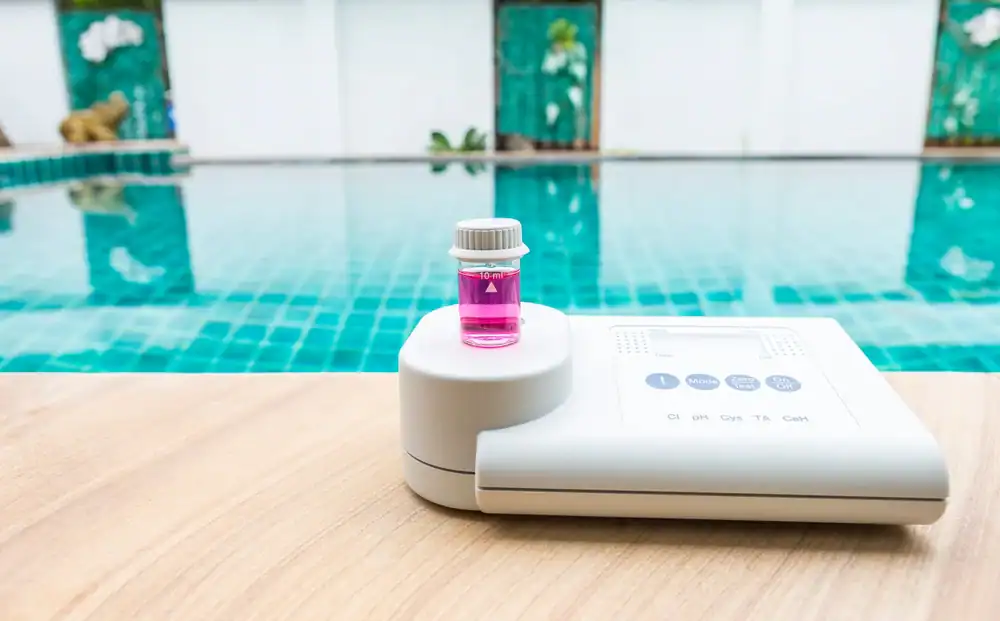
Our residential water test takes about three minutes. You get a full printout of your current water conditions—pH, chlorine, alkalinity, calcium hardness, stabilizer, everything. Then we walk you through what’s actually happening in your pool and what it needs to get back to clear.
No upselling. No pressure. Just real answers based on what the water’s telling us.
If your pool’s been cloudy for weeks, turning green after every rainstorm, or eating through chemicals faster than it should, the problem isn’t more chlorine. It’s knowing what’s out of balance and why.
We’re a family-owned business serving Bolen, GA and the surrounding South Georgia area. We’ve been building and maintaining pools for over a decade, with more than 30 years of combined hands-on experience in pool construction, plumbing, and water chemistry.
We’re not a franchise. We’re locals who’ve seen every kind of pool problem this climate throws at you—pollen storms in spring, afternoon downpours that tank your pH, heat waves that turn pools green overnight.
We offer free water testing because we know most pool issues start with bad information. When you understand what’s actually wrong, you fix it once instead of throwing money at it all summer.
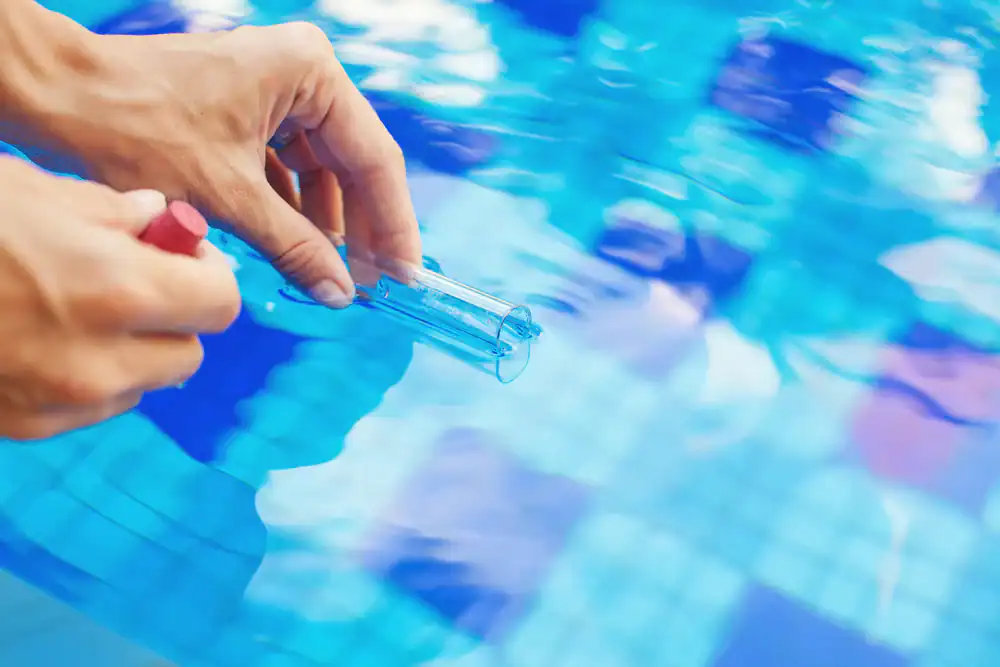
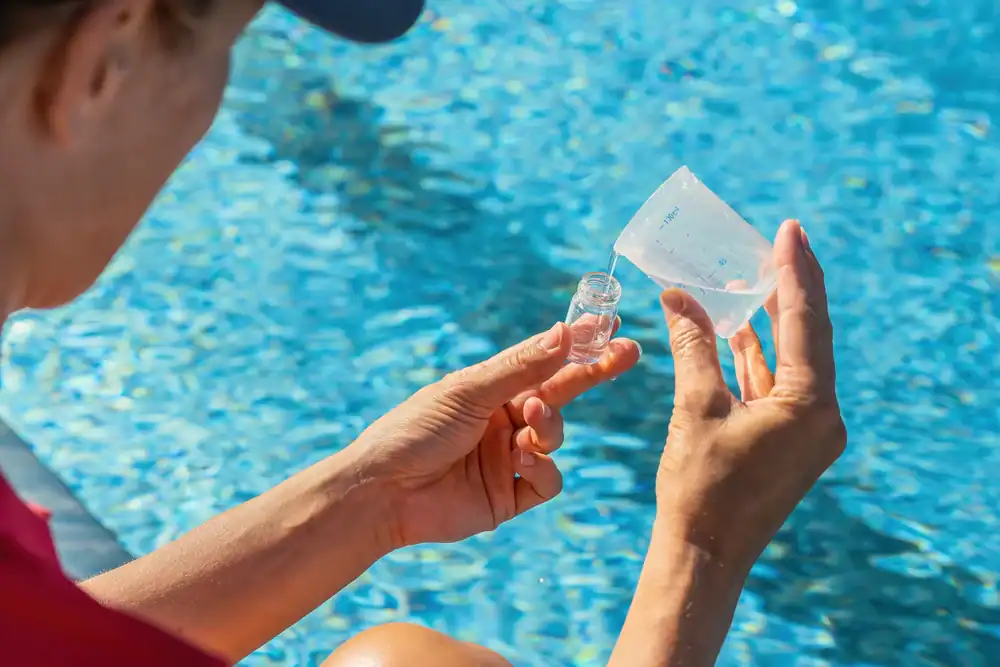
Bring us a water sample in a clean container—about 12 to 16 ounces is plenty. A plastic water bottle works fine. Try to pull the sample from elbow-deep in your pool, away from return jets, so we’re testing your actual pool water and not just what’s coming out of the filter.
We run it through our professional testing equipment. Takes two to three minutes. You’ll get a printout that shows every number—what it is now and what it should be.
Then we talk through it. If your pH is low, we’ll explain why that’s making your chlorine burn off too fast. If calcium’s high, we’ll show you why you’re seeing scale on the tile. If it’s algae, we’ll tell you what type and what kills it.
You walk out knowing what to buy, how much to add, and why it matters. If you want us to handle it, we can. If you’d rather do it yourself, the printout gives you everything you need.
Ready to get started?
Every test is free. No purchase required. No obligation.
You get a full analysis covering pH, total alkalinity, calcium hardness, free and total chlorine, stabilizer levels, and anything else affecting your water quality. The printout shows current levels, ideal ranges, and what’s out of balance.
We also give you treatment recommendations based on your specific pool size and conditions. Not generic advice—actual doses and products that match what your water needs right now.
This matters in Bolen because Georgia weather is rough on pools. Spring pollen clogs filters and drops clarity. Summer heat spikes chlorine demand. Afternoon thunderstorms dump acidic rainwater that crashes your pH to 5.5 or lower—way below the 7.4 to 7.6 your pool needs.
If you’ve been fighting the same problem for weeks, it’s usually because the water chemistry is off in a way test strips can’t catch. Our equipment reads everything, so you’re not guessing.
Every two weeks during swim season is a solid baseline. More often if you’re dealing with algae, cloudy water, or you just had a heavy rainstorm.
Georgia rain is acidic—pH around 5.5 to 6.0—so a big downpour can throw your whole pool off overnight. If your water looks different after weather, bring a sample in before you start dumping chemicals.
You should also test after opening your pool in spring, before closing in fall, and anytime you’re adding a lot of people or dealing with something that won’t clear up. If you’re using a home test kit or strips in between, that’s fine. But those miss things like stabilizer and calcium, which cause long-term problems if they drift too far.
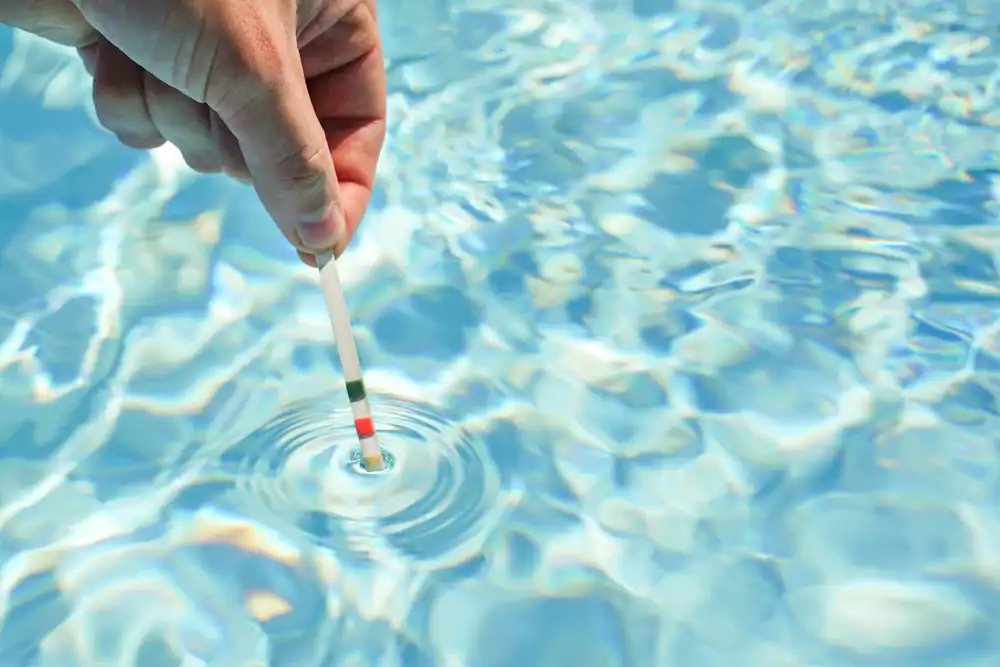
Test strips give you a rough idea. Professional testing gives you exact numbers.
Strips are fine for a quick chlorine check or to see if pH is in the ballpark. But they don’t test for stabilizer, calcium hardness, or total dissolved solids—all of which affect how well your chemicals work and whether your pool’s damaging itself over time.
Our equipment measures everything down to the decimal. That matters when you’re trying to figure out why chlorine isn’t holding, why the water’s cloudy even though the numbers “look fine,” or why you’re seeing scale on your tile. Small imbalances add up. If your calcium is 50 points too high, strips won’t catch it. Our test will, and we’ll tell you what it means before it becomes expensive.
Usually because your pH or stabilizer is off, and the chlorine isn’t actually working even though you’re adding it.
If pH is too high—above 7.8 or so—chlorine loses most of its killing power. You can dump in shock all day and the algae won’t care. Same thing happens if your stabilizer level is too high. Stabilizer protects chlorine from the sun, but too much locks it up so it can’t sanitize.
The other common culprit is phosphates. If your pool’s getting a lot of pollen, leaves, or runoff, phosphates build up and feed algae faster than chlorine can kill it. A water test will show us what’s actually going on. Once we fix the underlying issue—whether it’s pH, stabilizer, or something else—the chlorine starts working again and the green goes away.
Yes. Low pH or low calcium will eat away at plaster, grout, and metal parts. High calcium or high pH will cause scaling that clogs filters, coats heaters, and leaves white crust on everything.
Acidic water is corrosive. It’ll pull calcium out of your pool surface to try to balance itself, which pits plaster and etches tile. It also corrodes metal—ladders, pump parts, heater elements. You’ll see rust, pinholes, and premature equipment failure.
On the flip side, water that’s too alkaline or calcium-heavy starts depositing scale. Your filter runs harder. Your heater works less efficiently. You’ll see buildup on the tile line and inside plumbing. All of that costs money to fix or replace. Keeping your water balanced isn’t just about clarity and comfort—it’s about protecting what you’ve invested in the pool itself.
Fix them in the right order, or you’ll chase your tail. We’ll walk you through it.
Generally, you adjust total alkalinity first. That stabilizes your pH. Then you adjust pH. Then calcium, then chlorine, then everything else. If you try to fix pH before alkalinity, the pH will just swing back.
When you get your printout from us, we’ll tell you exactly what to add and in what order. If everything’s a mess—pH is low, alkalinity’s high, calcium’s through the roof—we’ll give you a step-by-step plan so you’re not dumping ten things in at once and making it worse.
Some situations are complicated enough that it’s worth having us handle it. If you’ve got algae, bad chemistry, and equipment issues all at the same time, trying to DIY it usually costs more in wasted chemicals than just letting someone who’s done it a thousand times take care of it.
You bring the sample to us. It’s faster, and our testing equipment is here.
Grab a clean plastic bottle—doesn’t need to be sterile, just rinsed out. Fill it with 12 to 16 ounces of pool water from about elbow-deep, away from the jets and skimmer. Cap it and bring it in.
We’ll test it while you wait. Takes a few minutes. You get the printout and the explanation right there, and you can ask whatever questions you have. If you need chemicals, you can grab them on your way out. If not, you’ve still got the info you need to fix it yourself.
Testing on-site at your house adds travel time and doesn’t change the results. This way is quicker for you, and you’re not waiting around for us to drive over and pull the sample ourselves.
Other Services we provide in Bolen