
Hear from Our Customers
You’re spending money on chemicals. You’re following the instructions on the bottle. But your water still looks off, or your eyes burn after swimming, or you’re dealing with algae that won’t quit.
Here’s the thing: home test strips only tell you part of the story. They miss the nuances that cause most of the problems pool owners deal with—like total alkalinity, calcium hardness, and stabilizer levels that throw everything else out of balance.
Professional pool water analysis gives you the full picture. You’ll know exactly what’s wrong, what’s causing it, and what to add to fix it. No more trial and error. No more buying chemicals you don’t need. Just clear water that’s safe to swim in and easier to maintain.
We test your water for free because we’ve been building and maintaining pools in South Georgia for over 30 years. We know what balanced water looks like, and we know how to get you there.
Deep Waters Pools was built on 30+ years of hands-on pool construction and maintenance experience right here in South Georgia. We started in concrete and plumbing, moved into custom pool builds, and eventually opened our own company in 2014 because we saw too many pool owners getting bad advice and wasting money.
We’re not a franchise. We’re local to Bridgetown and the surrounding Coffee County area, which means we understand how Georgia’s heat, humidity, and heavy summer rains affect your pool chemistry. We’ve seen what works and what doesn’t in this climate.
When you bring your water sample in, you’re talking to someone who’s actually built pools, not just sold chemicals. That makes a difference in the advice you get.
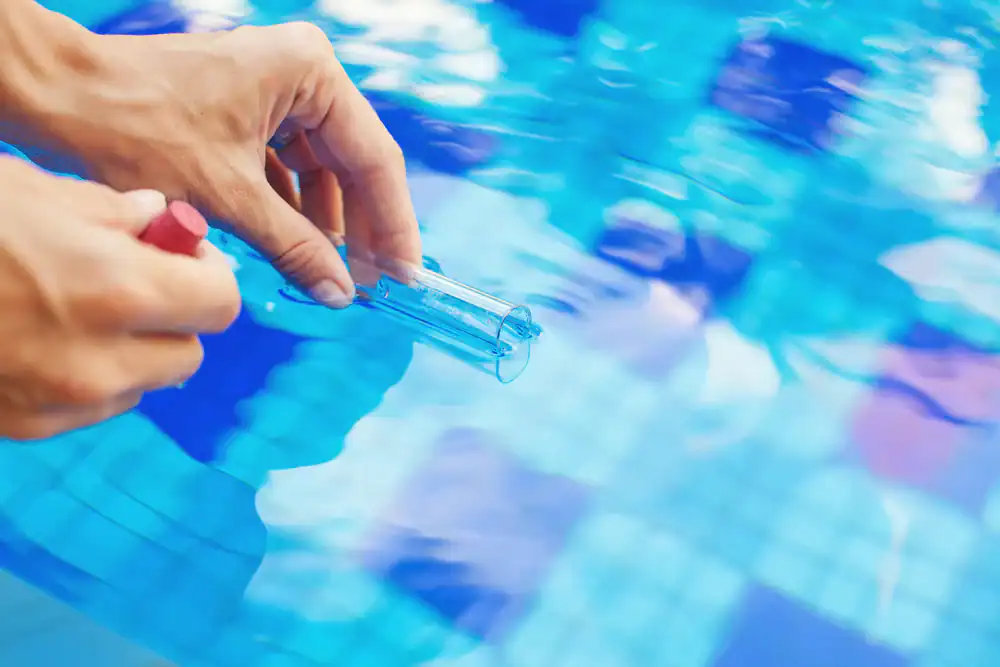
Grab a clean plastic bottle or container. Fill it with water from about elbow-deep in your pool—not right at the surface, and not from near a return jet. Bring it to us.
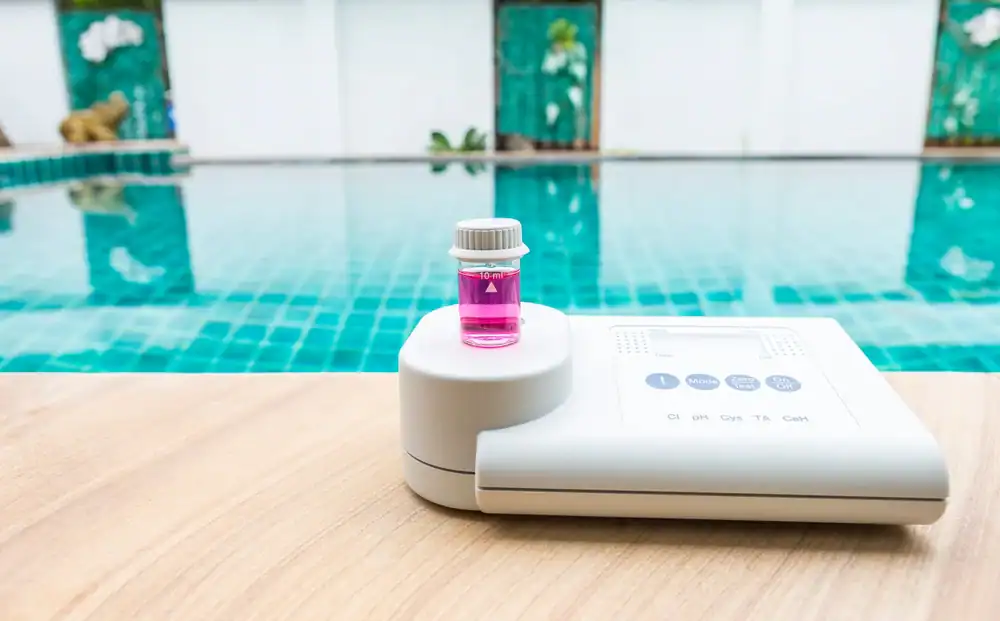
We’ll run a full water quality testing panel that checks pH, chlorine, total alkalinity, calcium hardness, stabilizer, and anything else that might be causing issues. This takes a few minutes, and you’re welcome to wait or drop it off.
Once the test is done, we’ll walk you through what we found. If your pH is low, we’ll explain why that’s making your chlorine less effective and irritating swimmers’ eyes. If your calcium is high, we’ll tell you what that means for your pool finish and equipment. You’ll leave with a printout that lists exactly what to add, how much, and in what order.
No sales pitch. No pressure to buy from us. Just straightforward information so you can take care of your pool the right way.
Ready to get started?
Our residential water test covers the parameters that actually matter: pH, free chlorine, total chlorine, total alkalinity, calcium hardness, cyanuric acid (stabilizer), and total dissolved solids. These are the numbers that determine whether your water is safe, comfortable, and protecting your equipment.
In Bridgetown and across South Georgia, we see the same patterns every summer. Heavy afternoon thunderstorms dilute your chemicals and drop your chlorine levels. High heat accelerates algae growth. Hard water from wells increases calcium buildup. If you’re not testing for all of this, you’re only fixing half the problem.
We also check for metals like copper and iron, which can stain your pool surface and turn your water green or brown—even when your chlorine is fine. This is especially common in well water, which a lot of homes around Coffee County rely on.
After testing, you’ll get a printed report with current levels, ideal ranges, and specific product recommendations with dosages. If something’s way off, we’ll explain what likely caused it and how to prevent it from happening again.
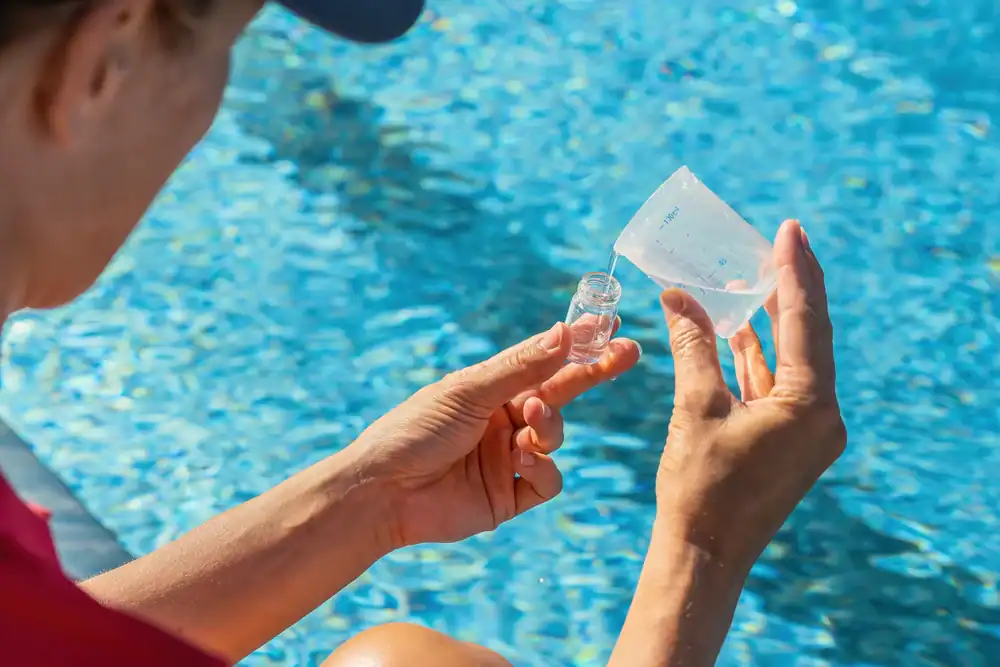
At a minimum, bring in a sample once a month during swimming season. If you’re using your pool heavily, dealing with algae, or we’ve had a stretch of storms, test it every two weeks.
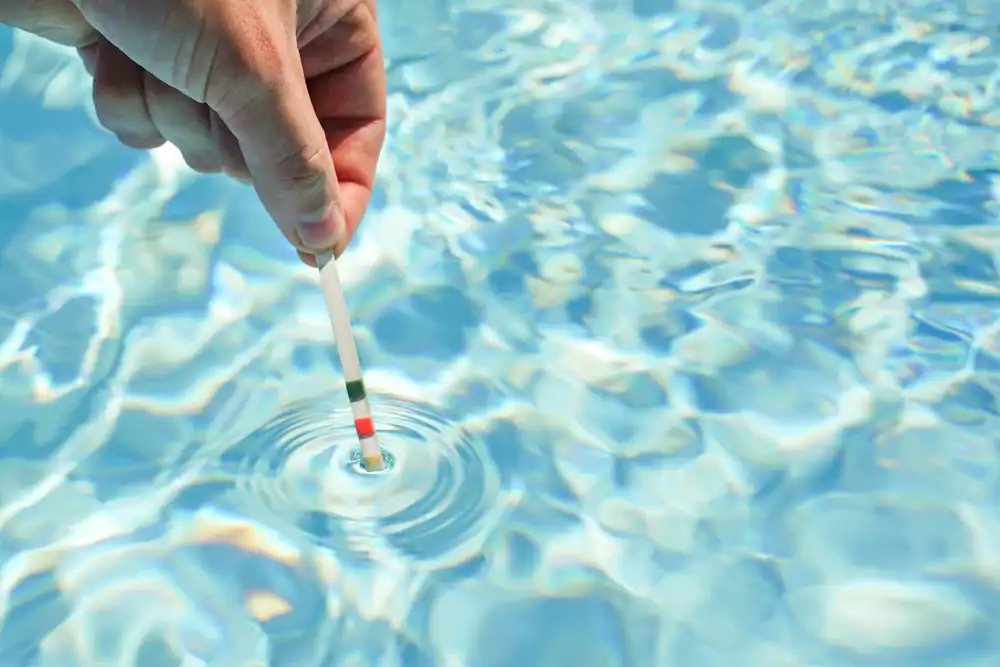
Home test strips are fine for checking chlorine and pH between professional tests, but they don’t catch the slower-moving problems like rising stabilizer levels or calcium buildup. Those issues sneak up on you, and by the time your water looks bad, it takes a lot more work and money to fix.
If you just opened your pool for the season, get it tested before you add anything. If you’re closing it for winter, test it beforehand so you’re not starting next spring with a chemistry nightmare. And if your water looks clear but swimmers are complaining about burning eyes or itchy skin, that’s a sign something’s off that a test strip won’t catch.
Home test strips check two or three things: usually pH, chlorine, and sometimes alkalinity. They give you a rough idea, but they’re not precise, they expire quickly, and they don’t test for the things that cause long-term problems.
Professional pool water analysis tests eight to ten parameters using calibrated equipment. We’re measuring total alkalinity, calcium hardness, cyanuric acid, and metals—things that directly affect how well your chlorine works, whether your water stays clear, and whether your equipment lasts or corrodes.
For example, if your stabilizer (cyanuric acid) gets too high, your chlorine stops sanitizing effectively. You’ll keep adding more chlorine, wondering why your water’s still cloudy or algae keeps coming back. A test strip won’t tell you that. A professional test will, and we’ll tell you how to fix it without draining your whole pool.
Chlorine level is only part of the equation. Cloudy water usually means your pH or alkalinity is off, your filter isn’t running long enough, or you have high calcium or metals in the water.
If your pH is too high—above 7.8—your chlorine can’t sanitize properly, even if the test says you have plenty of it. The chlorine is there, it’s just not active. If your total alkalinity is too low, your pH will swing all over the place, and your water will never stabilize.
Calcium hardness also plays a role. If it’s too low, your water will pull calcium from your pool surface, causing etching. If it’s too high, it’ll cloud the water and leave scale on your tile and equipment. We see this a lot in Bridgetown because of the local water supply. A professional water test will show you exactly what’s out of range and what to adjust first.
No appointment needed. Bring your sample by during business hours, and we’ll test it while you wait or you can drop it off and pick up the results later the same day.
The process takes about 10 minutes if you’re waiting. We’ll run the test, print your results, and go over what everything means. If you’re in a hurry, just leave the sample with your name and phone number, and we’ll call you when it’s ready.
Make sure the sample is fresh—ideally collected the same day you bring it in. Don’t leave it sitting in a hot car for hours, and don’t collect it right after you’ve added chemicals. You want an accurate snapshot of what your water actually looks like on a normal day.
No. This is a free service, and there’s no obligation to purchase anything from us. We’ll give you the test results and recommendations, and you can buy what you need wherever you want.
We do carry pool chemicals, and a lot of customers find it convenient to grab what they need while they’re here. But we’re not testing your water to make a sale—we’re doing it because balanced water prevents bigger problems down the road, and we’d rather help you avoid those than fix them later.
If you do buy from us, we’ll make sure you’re getting the right product in the right amount. We’ve seen too many pool owners buy the wrong chemical or add way too much because the bottle says “add until clear.” That usually makes things worse, not better.
Don’t try to fix everything at once. There’s an order to water balancing, and if you add the wrong thing first, you’ll end up chasing your tail.
Start with total alkalinity. Get that in range first—between 80 and 120 ppm—because it stabilizes your pH. Once alkalinity is set, adjust your pH to between 7.2 and 7.8. After that, you can address chlorine, calcium hardness, and stabilizer.
We’ll walk you through the order and the dosages when we go over your test results. Most of the time, fixing one or two things brings everything else into line. If your water’s really out of whack—like if you haven’t tested it in a year or you’re opening a pool that sat all winter—it might take a few days of adjustments and a retest to get it dialed in. But once it’s balanced, it’s much easier to maintain.
Other Services we provide in Bridgetown