
Hear from Our Customers
You’re not guessing anymore. Bring in a water sample and walk out with a complete analysis of your pool’s chemistry—pH, chlorine, alkalinity, calcium hardness, and stabilizer levels. All tested professionally, all explained clearly, all at zero cost to you.
Here’s what that means for your pool. Balanced water protects your equipment from corrosion and scaling. It keeps your liner from deteriorating years before it should. It prevents algae blooms that turn your pool green overnight and cost hundreds to fix.
More importantly, it keeps your family safe. Improperly balanced water irritates eyes and skin. It allows bacteria to thrive. Testing catches these issues before anyone notices them the hard way.
Chapel Hill’s water comes with its own challenges. Georgia’s red clay minerals—iron and manganese—affect pH and can stain surfaces if levels drift. Recent findings of naturally occurring contaminants in South Georgia groundwater mean your starting water quality varies more than you’d think. Professional water testing accounts for these local factors that DIY test strips miss entirely.
We’ve been serving families across South Georgia since 2014, built on over 30 years of hands-on pool construction and maintenance experience. That’s three decades of understanding how Georgia’s water behaves, how seasonal weather affects chemistry, and what actually works in this climate.
You’re working with people who’ve built pools from the ground up. We know what damages equipment because we’ve replaced it. We know what causes liner failure because we’ve seen it happen when water chemistry gets ignored.
Chapel Hill sits in Douglas County, where homeownership rates hit nearly 78% and pools are a real investment in your property. Your neighbors trust us because we’re local, we’re established, and we don’t charge you for basic water testing. That’s not a promotion—it’s how we do business.
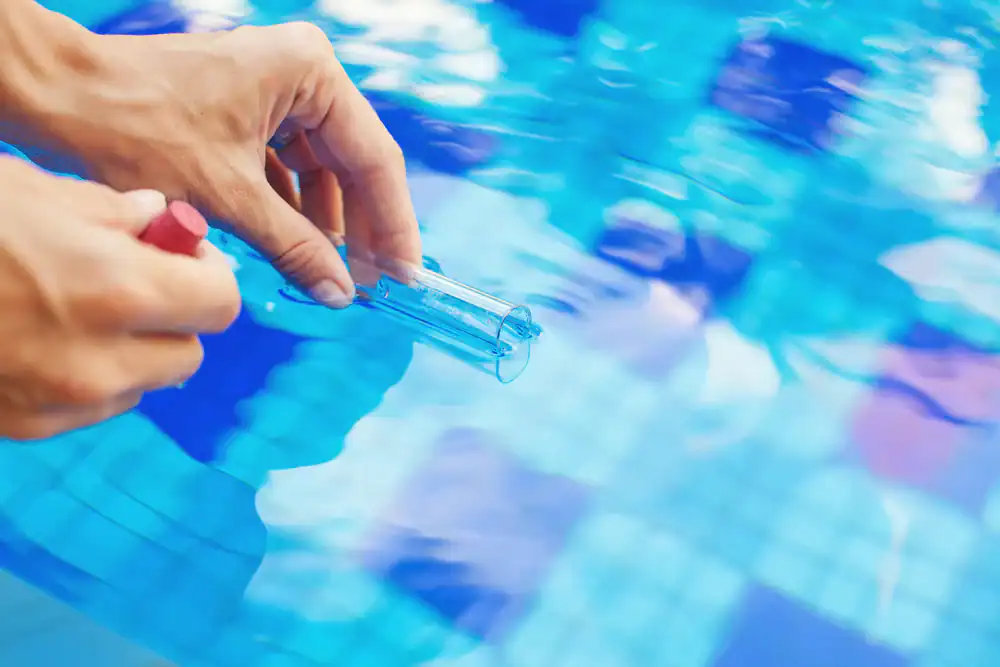
Bring in a water sample from your pool. Use a clean plastic bottle and collect water from elbow-deep—not from the surface where debris floats and not from the bottom where sediment settles. About 16 ounces is plenty.
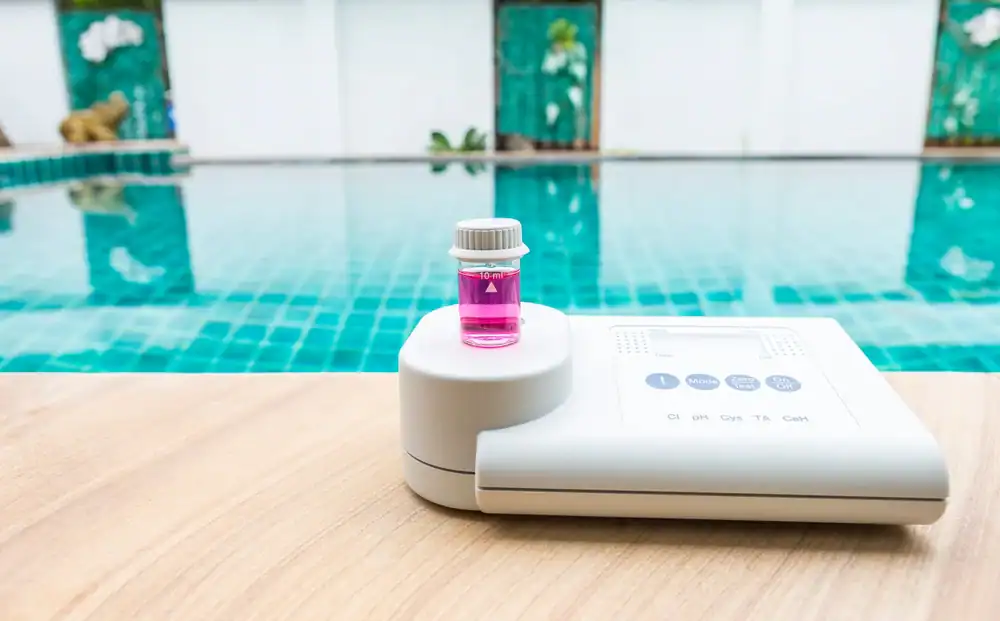
We run a complete analysis right there. You’re not waiting days for lab results. The test measures pH levels, free and total chlorine, total alkalinity, calcium hardness, and cyanuric acid (your stabilizer). Each reading tells us something specific about your water’s balance and what’s happening chemically.
Then we explain what the numbers mean for your specific pool. If your pH is climbing because of Chapel Hill’s mineral-heavy water, you’ll know why and what to add. If your chlorine is burning off too fast because stabilizer levels are low, we’ll tell you exactly how much to use.
You leave with a printed report and clear instructions. No upselling, no pressure to buy chemicals you don’t need. If you want to purchase treatment products from us, that’s your call. The testing itself costs you nothing whether you buy or not.
This matters during Georgia’s intense summer months when high temperatures accelerate algae growth and chlorine depletion. It matters after heavy rains that dilute your chemicals and throw off pH balance. Regular testing—every week or two during swim season—keeps you ahead of problems instead of reacting to them.
Ready to get started?
Every water analysis service covers the six critical measurements that determine whether your pool is safe and properly balanced. pH tells us if your water is acidic or alkaline—too far either direction and you’re corroding metal parts or scaling up surfaces. Free chlorine shows your active sanitizer level that’s actually killing bacteria right now. Total chlorine includes both active and used-up chlorine, and the gap between the two numbers reveals if you have contamination issues.
Total alkalinity acts as your pH buffer. When alkalinity is right, pH stays stable. When it drifts, you’re constantly chasing pH problems and adding more chemicals than necessary. Calcium hardness prevents your water from becoming corrosive or scaling—low calcium eats away at plaster and grout, high calcium leaves white deposits on everything. Cyanuric acid protects chlorine from burning off in Georgia’s intense sunlight, but too much blocks chlorine effectiveness entirely.
Chapel Hill pool owners face specific challenges that make professional testing more valuable than DIY strips. Agricultural runoff from surrounding areas can introduce phosphates that feed algae. Aging infrastructure means some neighborhoods deal with higher mineral content in fill water. Georgia’s naturally occurring arsenic in some South Georgia wells isn’t something a basic test strip detects, but it’s something we’re aware of and watching for.
You get all this information in one visit, interpreted by someone who understands what these numbers mean together, not just individually. That’s the difference between data and actionable information.
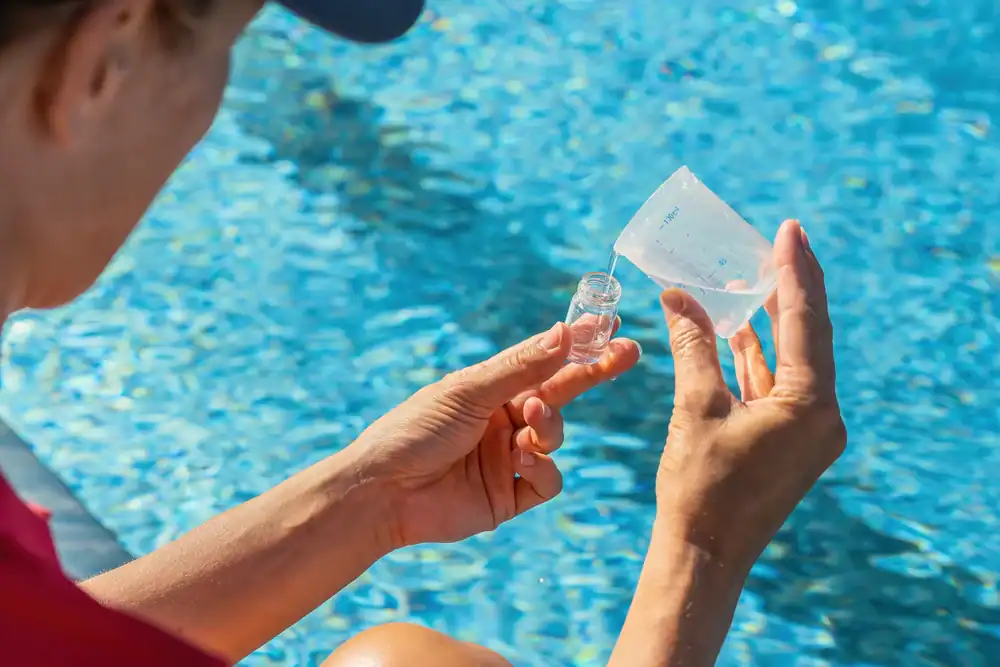
Test every week during active swim season—roughly May through September in Georgia. That’s when heat, sunlight, swimmer load, and afternoon thunderstorms change your water chemistry fastest.
During cooler months when the pool sees less use, every two to three weeks works fine. You’re still checking that chemistry hasn’t drifted, but changes happen slower when temperatures drop and nobody’s swimming.
After heavy rain, test immediately. A significant downpour dilutes your chemicals and can drop chlorine to unsafe levels within hours. After hosting a pool party with lots of swimmers, test within a day or two—body oils, sunscreen, and organic matter consume chlorine quickly and throw off balance.
If you notice anything off—cloudy water, strong chlorine smell, eye irritation, or algae starting to form—test right away regardless of your schedule. These are signs chemistry has already shifted, and the sooner you know the numbers, the easier the fix.
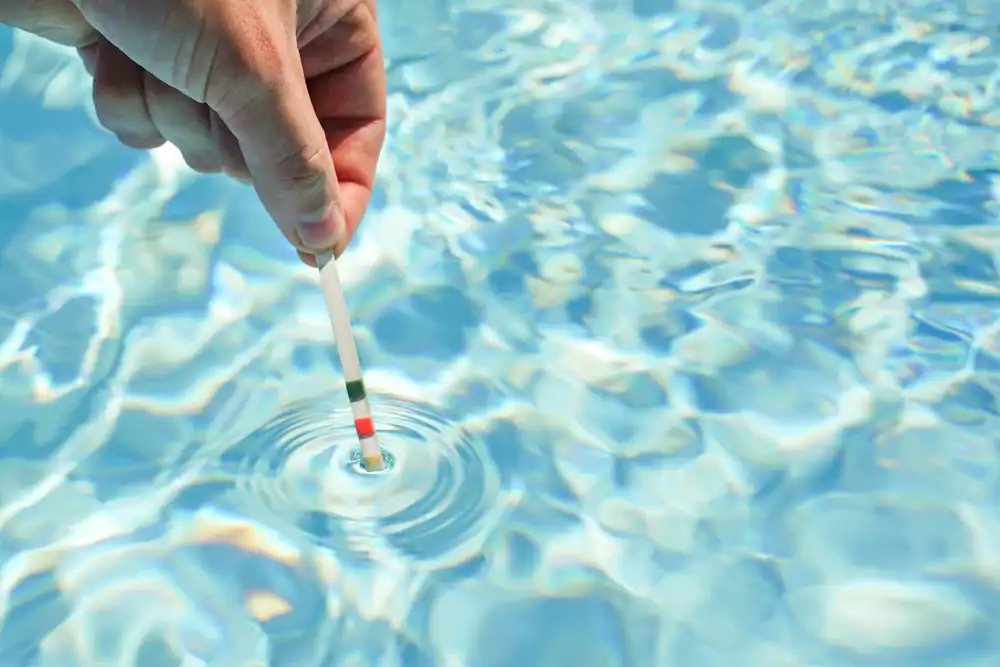
Test strips give you a rough estimate. They’re better than nothing, but they’re not precise enough to catch problems early or dial in perfect balance.
Professional testing uses liquid reagents and calibrated equipment that measure exact values, not color approximations. When your pH reads 7.8 on our equipment, it’s actually 7.8. With strips, you’re squinting at a color chart trying to decide if that’s 7.6 or 8.0—and that difference matters for how much acid you add.
We test for all six critical parameters every time. Most homeowner strips only check pH and chlorine, maybe alkalinity. You’re missing calcium hardness, stabilizer levels, and total chlorine—the measurements that prevent long-term equipment damage and explain why your chlorine isn’t working like it should.
The bigger difference is interpretation. Numbers without context don’t help much. We explain what your specific readings mean together, how they’re affecting each other, and what to adjust first. That’s 30+ years of experience reading water chemistry, not just a color-matched strip.
Because it’s the right way to build trust with pool owners in Chapel Hill and across South Georgia. You shouldn’t have to pay to find out if your water is safe.
Free testing gets you in the door with accurate information about your pool’s needs. If you choose to buy chemicals or services from us after seeing the results, great. If you take the test results and handle it yourself, that’s fine too. We’re not holding the information hostage.
This approach works because most people who get reliable, professional advice tend to come back. You remember who gave you straight answers without a sales pitch. When you need actual pool work—repairs, equipment replacement, renovation—you think of us first.
Other companies tie free testing to purchases or only offer it to existing customers. We don’t. Bring in your water, get your results, make your own decision. That’s how we’ve operated for years, and it’s why families across Douglas County keep coming back.
Start with pH and alkalinity—they’re your foundation. If total alkalinity is off, adjust that first because it stabilizes pH. Once alkalinity is in range (80-120 ppm), then correct pH to 7.4-7.6. These two work together, so fixing them in order prevents you from chasing your tail.
Next address sanitizer levels. If free chlorine is low, you need to add chlorine. If it’s high but you’re still seeing algae or cloudiness, check your stabilizer (cyanuric acid)—too much blocks chlorine effectiveness even when levels look good. If stabilizer is above 80 ppm, you’ll need to dilute by draining some water and refilling.
Calcium hardness adjustments come last unless readings are severely out of range. Low calcium (under 200 ppm) means adding calcium chloride. High calcium (over 400 ppm) requires dilution—there’s no chemical that removes it.
We give you specific product recommendations and dosage amounts based on your pool’s volume and current readings. Follow those instructions, run your pump for at least 8 hours to circulate everything, then retest in a day or two to confirm levels have corrected. Don’t dump multiple chemicals in at once and hope for the best—that’s how you overshoot and create new problems.
Absolutely. Georgia’s red clay is loaded with iron and manganese, and those minerals affect your water in ways that aren’t immediately obvious. They can cause pH to rise steadily, meaning you’re adding acid more often than pool owners in other regions. They also create staining issues if metal levels get high—those rust-colored marks on pool surfaces aren’t always from old equipment.
Chapel Hill’s groundwater varies by neighborhood depending on well depth and local geology. Some areas have higher mineral content, others deal with harder water naturally. That affects your starting chemistry every time you add fill water, which you’re doing regularly in Georgia heat where evaporation is significant.
Recent testing across South Georgia has identified naturally occurring arsenic in some wells and heightened awareness of agricultural runoff introducing phosphates and nitrates. These contaminants don’t show up on standard pool tests, but they affect water quality and algae growth patterns.
Professional testing accounts for these local factors. We’ve worked with Chapel Hill water for years. We know what “normal” looks like here and what readings suggest you’re dealing with regional water quality issues versus standard pool chemistry drift. That local knowledge is something you don’t get from a generic test kit or online calculator.
Stop by during regular business hours—no appointment needed for water testing. The analysis takes just a few minutes, and we’ll go over results with you right there.
Bring your sample in a clean plastic bottle. Avoid using old chemical containers or anything that held soap, juice, or other liquids—residue throws off readings. Collect water from elbow-deep in your pool, away from return jets and skimmers. Surface water and bottom water don’t represent what’s actually happening in the bulk of your pool.
If you’re coming during peak summer season—weekends in June, July, and August—expect a short wait. Pool owners across South Georgia are testing frequently during those months. But we move through water tests quickly, so you’re rarely waiting long.
You can also call ahead if you want to confirm we’re available or if you have specific questions about your pool before coming in. We’re here to make this easy for you, not add another complicated errand to your week.
Other Services we provide in Chapel Hill