
Hear from Our Customers
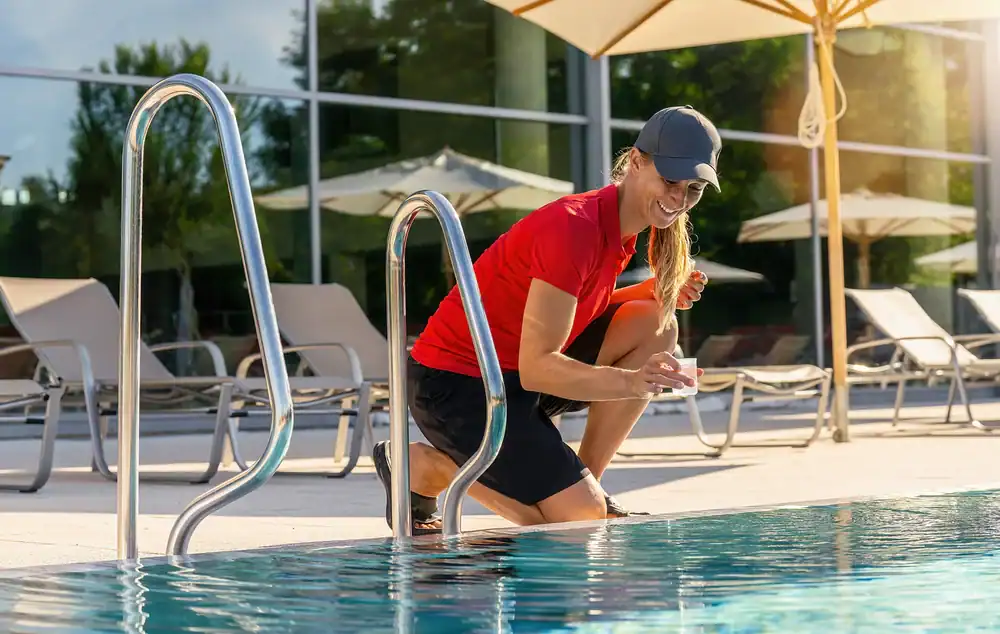
You shouldn’t have to guess whether your pool is safe to swim in. When you bring a water sample to us, you get a complete analysis of pH, chlorine levels, alkalinity, calcium hardness, and stabilizer—the stuff that home test strips either miss entirely or read inaccurately.
We’ll tell you what’s off, by how much, and exactly what to add to fix it. No vague recommendations. No upselling chemicals you don’t need.
Most pool owners in Chatterton deal with the same frustrations: cloudy water after heavy rain, algae that keeps coming back, or stinging eyes even when chlorine levels seem fine. These aren’t random problems. They’re chemical imbalances that professional pool water testing catches early, before you’re draining half your pool or replacing a corroded heater.
You’ll leave with a printed report and a straightforward plan. If your water’s balanced, we’ll tell you that too.
Deep Waters Pools has been serving South Georgia since 2014, but our hands-on experience goes back over three decades. We’ve built custom in-ground pools, repaired equipment in Georgia’s humid summers, and tested thousands of water samples from Chatterton to Douglas and beyond.
We’re not a franchise following a script. We know how South Georgia weather affects pool chemistry—the way summer heat burns through chlorine faster, or how afternoon thunderstorms throw off pH overnight.
When you come in for a residential water test, you’re working with people who’ve seen what happens when water balance gets ignored. Scaled-up heaters. Etched plaster. Green pools in July. We’d rather help you avoid all that with a free water analysis and five minutes of straight talk.
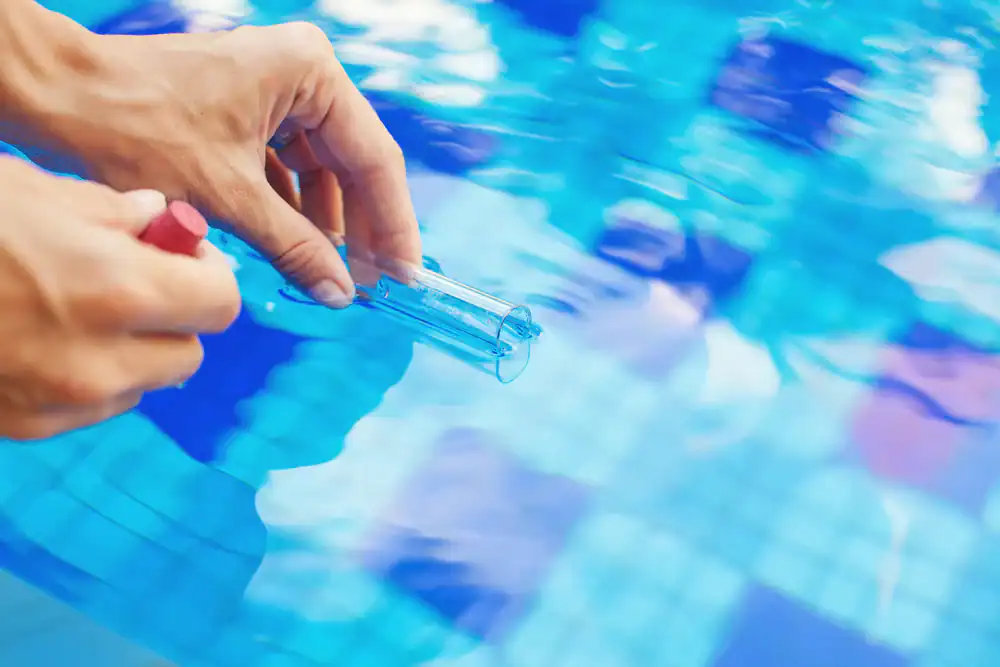
Grab a clean plastic bottle—a water bottle works fine—and collect a sample from elbow-deep in your pool, away from the return jets. Bring it to us at Deep Waters Pools. The fresher the sample, the more accurate the results, so try to test it the same day.
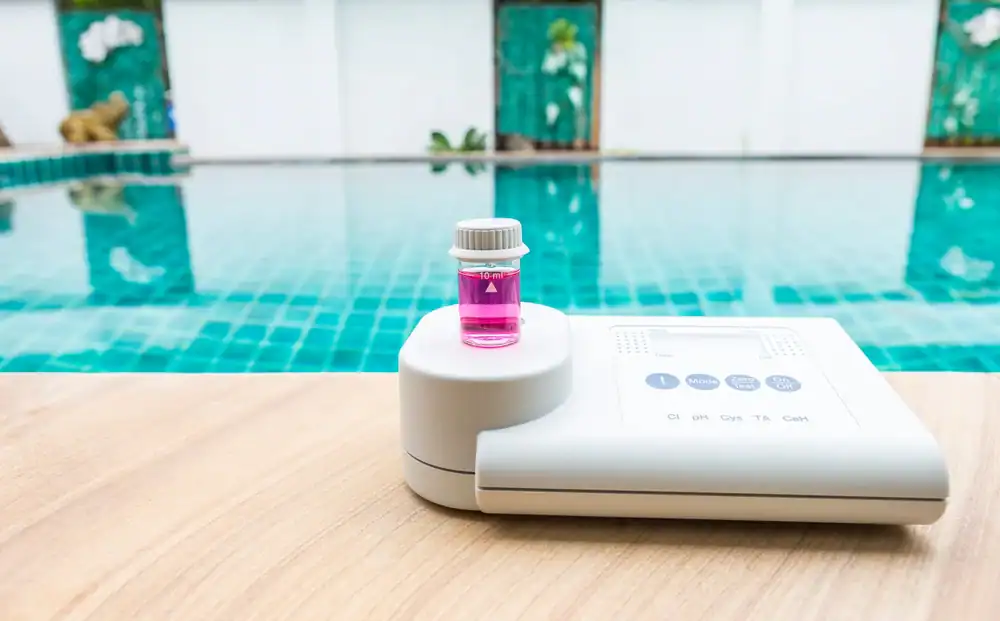
We’ll run it through our professional testing system, which measures seven key factors: free chlorine, combined chlorine, pH, total alkalinity, calcium hardness, cyanuric acid, and sometimes metals like copper or iron if your water looks discolored. This takes about ten minutes.
Then we’ll walk you through the results. If your pH is sitting at 7.8 and your calcium hardness is climbing toward scaling territory, we’ll explain what that means for your pool and what to do about it. If everything’s dialed in, you’ll know that too.
You’ll get a printed breakdown you can take home. No pressure to buy anything. No signup sheets. Just clear information so you can make the right call for your pool.
Ready to get started?
Our water analysis service covers the full spectrum of chemical balance: pH levels, free and combined chlorine, total alkalinity, calcium hardness, and cyanuric acid. We also check for phosphates and metals if your water’s showing signs of staining or persistent algae.
In Chatterton and the surrounding South Georgia area, we see specific patterns. High calcium hardness from well water. Low pH after heavy rains. Chlorine depletion during the summer when temperatures stay above 90 for weeks. These aren’t just numbers on a chart—they’re issues that affect how your pool looks, how your equipment holds up, and whether your family’s actually safe swimming in it.
Georgia’s warm, humid climate accelerates algae growth and bacteria faster than cooler regions. That’s why testing twice a week during summer isn’t overkill—it’s maintenance. But most people don’t have time for that, which is why catching problems early with professional pool water testing matters.
We’ll also walk you through what’s normal for your specific pool. Saltwater systems run different ranges than traditional chlorine pools. Plaster pools need different calcium levels than vinyl. If you’ve been chasing the same problem for weeks, there’s usually a reason, and it shows up in the water test.
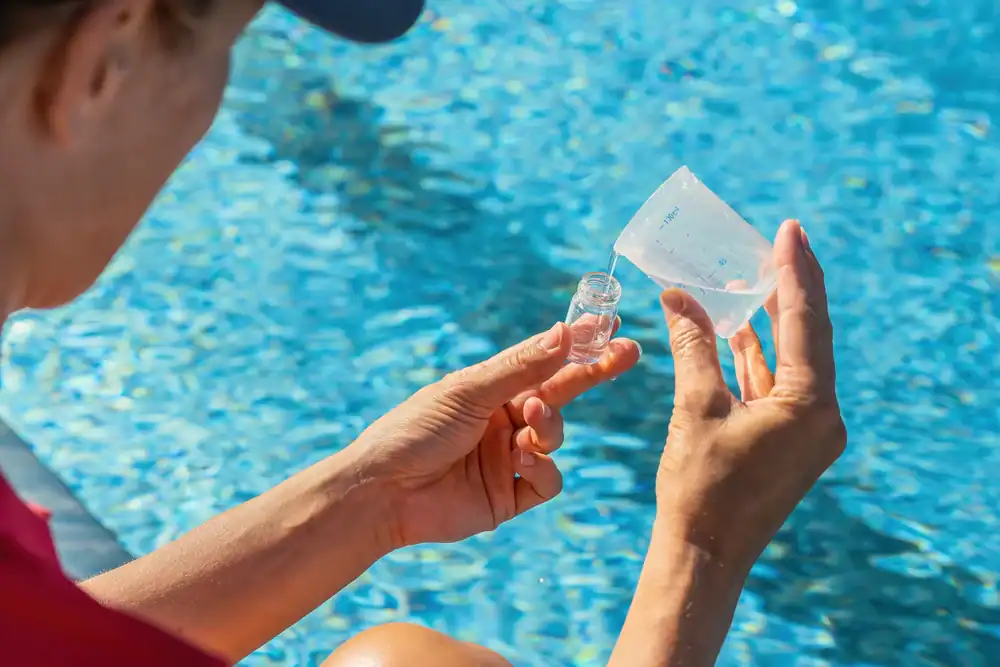
At minimum, test your water every two weeks during swim season. If you’re getting heavy use—kids in the pool daily, weekend parties, that kind of thing—test weekly. After major rainstorms, test within a day or two because rainwater dilutes your chemicals and throws off pH balance fast.
Summer in South Georgia is hard on pools. When it’s consistently hot and humid, chlorine burns off faster and algae finds every opportunity to take hold. Testing more frequently during June through August isn’t excessive, it’s smart maintenance.
If you’re seeing cloudy water, algae spots, or your pool just doesn’t look right, don’t wait for your regular schedule. Bring a sample in. The sooner you catch an imbalance, the easier and cheaper it is to correct. Waiting a week when your water’s already turning can mean you’re buying three times the chemicals to fix what could’ve been handled with a simple adjustment.
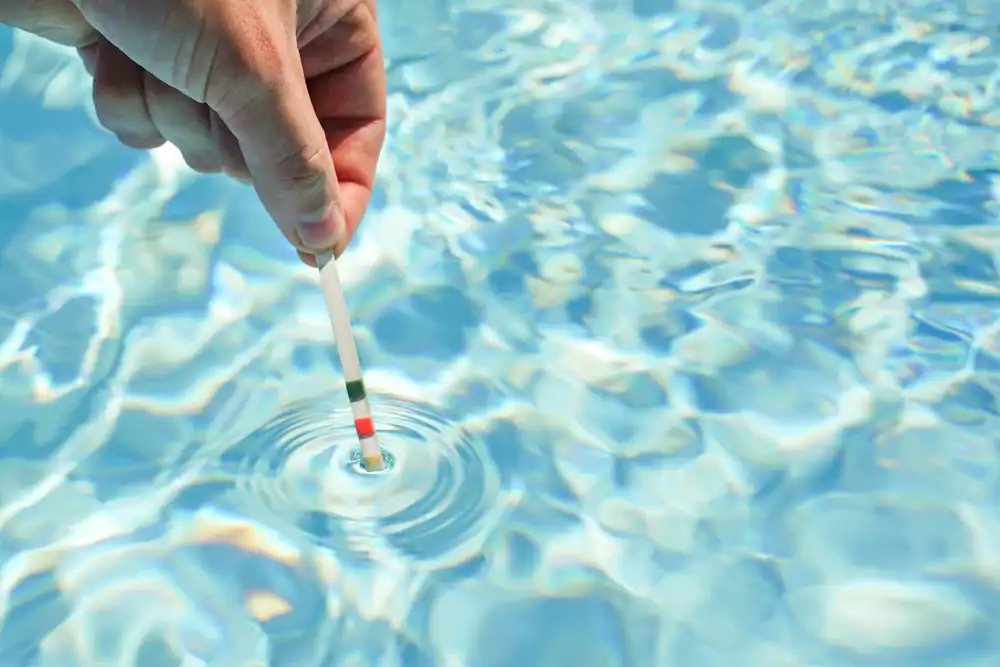
Test strips give you a rough idea, but they’re not precise enough for real problem-solving. They’re fine for a quick check between professional tests, but they miss important details and they’re easy to misread, especially in bright sunlight or if the strip’s been sitting in your pool shed for six months.
Professional water testing uses calibrated equipment that measures exact levels of free chlorine versus combined chlorine, total alkalinity down to the specific ppm, and calcium hardness that test strips don’t even attempt to read accurately. We’re also checking for metals, phosphates, and stabilizer levels that affect how well your chlorine actually works.
Here’s the practical difference: a test strip might tell you your chlorine is “okay” when it’s actually at 0.5 ppm—well below the safe range of 1-3 ppm. Or it’ll show your pH as fine when it’s really at 7.9, which is high enough to make your chlorine less effective and start scaling your equipment. Those small differences add up to big problems. Professional testing catches them before they cost you money.
Rainwater dilutes your pool’s chemical balance, especially pH and chlorine levels. Even a moderate afternoon storm in Chatterton can drop your chlorine by half and push your pH out of the ideal 7.2-7.8 range. When pH climbs too high, your chlorine stops sanitizing effectively, and that’s when water starts looking hazy.
Rain also brings in contaminants—dust, pollen, organic debris—that your filtration system has to process. If your chlorine’s already diluted and your pH is off, your pool can’t handle that extra load. The result is cloudy water, sometimes within hours of a storm.
The fix is straightforward: test your water after any significant rain, adjust your pH back into range, and shock the pool if needed to restore chlorine levels. Don’t just assume it’ll clear up on its own. South Georgia gets enough summer rain that this becomes a regular maintenance issue, not a one-time thing. Stay ahead of it with testing, and you’ll avoid the frustration of a cloudy pool every time the weather turns.
Absolutely. Low pH makes water acidic, which corrodes metal components in your heater, pump, and filter system. High pH causes calcium scaling that clogs pipes, coats heating elements, and reduces efficiency across your entire system. Both extremes cost you money in repairs that are completely preventable.
Calcium hardness is another big one. If it’s too low, the water pulls calcium from your plaster or grout, etching surfaces and weakening the pool structure. If it’s too high, you get scaling on everything—tile lines, inside pipes, on your salt cell if you have one. A $1,200 heater repair or a $600 salt cell replacement could’ve been avoided with regular water testing and minor chemical adjustments.
Combined chlorine—chloramines—is what causes that strong “chlorine smell” people associate with pools. It’s also corrosive to equipment and irritating to skin and eyes. When we test your water, we’re measuring free chlorine versus combined chlorine specifically so you can shock the pool when needed and break down those chloramines before they damage anything. Equipment lasts longer when water stays balanced. It’s not complicated, it just requires attention.
Your pH should stay between 7.2 and 7.8. That range keeps water comfortable for swimmers, protects your equipment, and allows chlorine to work at full strength. Outside that range, things start breaking down—literally.
When pH drops below 7.2, water becomes acidic. You’ll notice eye irritation, itchy skin, and over time, corrosion on metal parts and etching on plaster surfaces. Acidic water is aggressive. It’s trying to balance itself by pulling minerals from whatever it touches, which means your pool structure and equipment take the hit.
When pH climbs above 7.8, water turns alkaline. Chlorine loses effectiveness—at 8.0 pH, your chlorine is only about 35% as effective as it should be, even if levels look fine on a test. You’ll also see calcium scaling, cloudy water, and that slippery feeling on pool surfaces. High pH is one of the most common issues we see in Chatterton, especially in pools using well water or after heavy chemical adjustments. It’s easy to fix if you catch it early with regular water quality testing, but it compounds fast if ignored.
It’s free. No purchase required, no strings attached. Bring in a water sample, we’ll test it, explain the results, and send you home with a printed report. What you do with that information is entirely up to you.
We offer this service because we’ve been in the pool business long enough to know that most water problems start small and get expensive when people don’t have access to accurate testing. If you need chemicals, we carry them. If you want to buy them somewhere else, that’s fine too. The testing itself costs you nothing.
Some pool stores advertise “free testing” but require a purchase or push products you don’t need. We’re not interested in that. You’ll get honest feedback about what’s actually wrong with your water—if anything—and straightforward advice on how to fix it. If your water’s balanced, we’ll tell you to leave it alone. We’d rather build trust with Chatterton pool owners than make a quick sale on chemicals you don’t need.
Other Services we provide in Chatterton