
Hear from Our Customers
You shouldn’t need a lab coat to know if your pool is safe to swim in. Most test strips from the store give you a ballpark guess at best. At worst, they tell you there’s zero chlorine when you’re actually sitting at dangerous levels—so you add more, and now you’ve got a caustic soup that burns eyes and eats through equipment.
Professional pool water testing gives you actual numbers. We’re talking precise chlorine levels, accurate pH readings, calcium hardness, alkalinity—the stuff that keeps your water balanced and your pool running right. When you know exactly what’s in your water, you stop over-treating. You stop under-treating. You stop replacing pumps and resurfacing plaster years earlier than you should.
This isn’t about making pool care complicated. It’s about making it work. Balanced water means fewer algae blooms, less skin irritation, no more cloudy mornings after you shocked it the night before. It means your kids can jump in without you second-guessing whether the chemistry is right.
We’ve been in Douglasville since 2014, built on over 30 years of hands-on pool experience. We’ve seen what happens when water chemistry goes wrong—the equipment failures, the surface damage, the frustrated homeowners who’ve spent hundreds trying to fix a problem they can’t diagnose.
We offer free water analysis because we know it’s the foundation of everything else. You can’t maintain a pool properly without knowing what you’re working with. Douglasville’s water has its own quirks—mineral content, seasonal shifts, the way Georgia heat affects evaporation and chemical burn-off. We account for that.
You’re not getting a quick dip-and-read from someone who learned pools last month. You’re getting tested results from people who’ve built pools, serviced pools, and fixed pools that other companies walked away from.
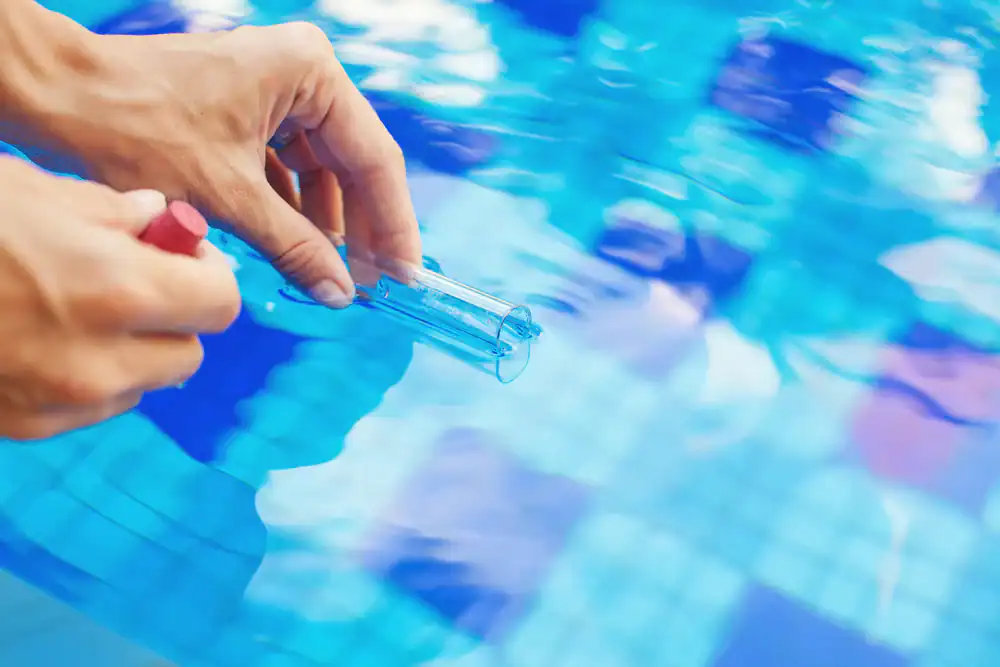
Grab a clean plastic bottle—nothing that held soap or chemicals. Reach elbow-deep into your pool, away from returns and skimmers, and fill it up. Cap it tight. That’s your sample.
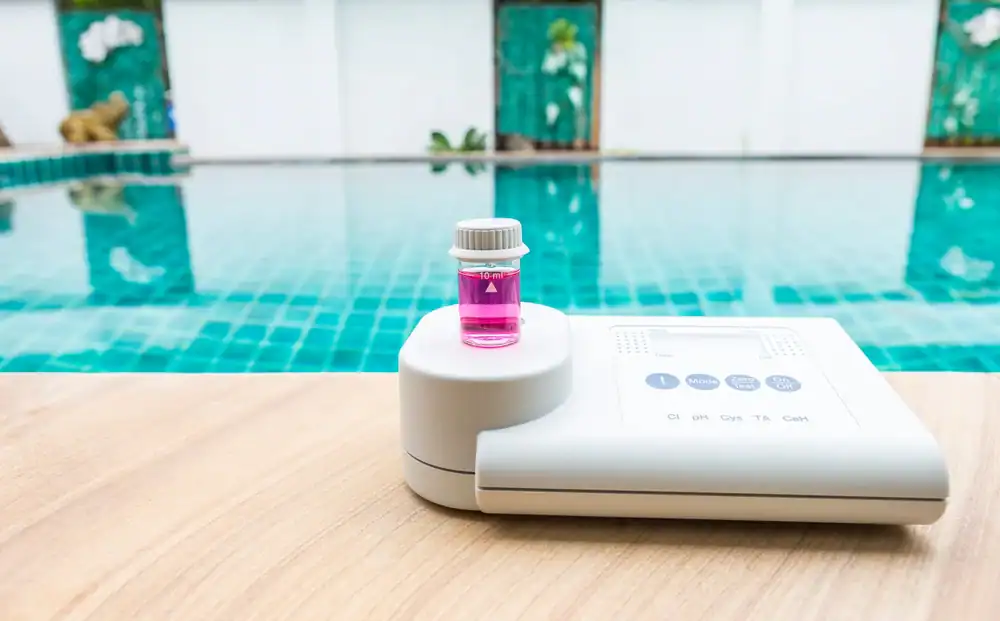
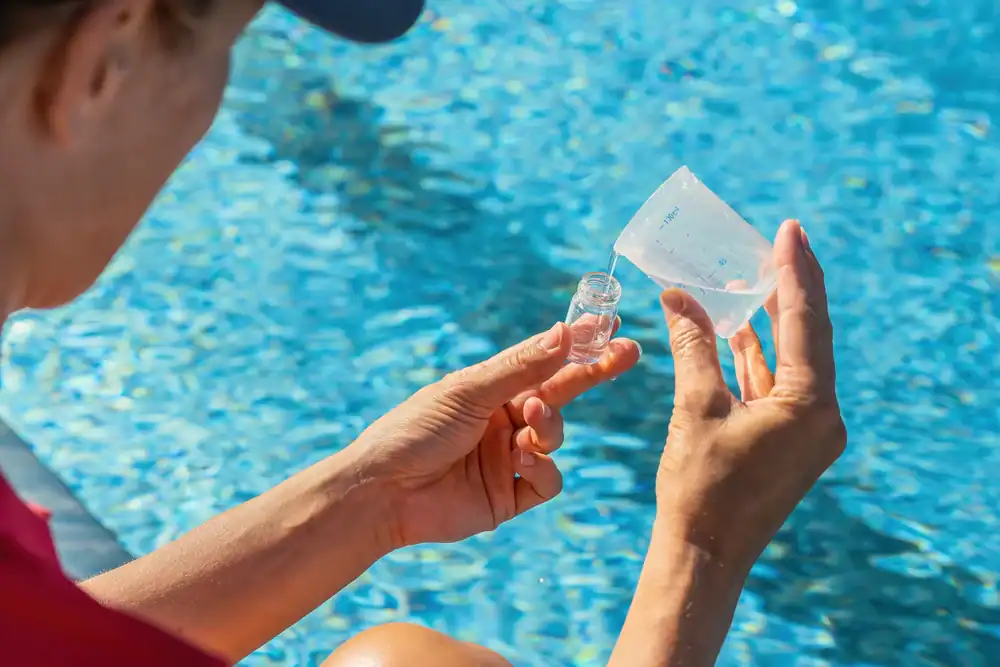
Bring it to us in Douglasville. We run it through professional-grade testing equipment—not test strips, not color-matching guesswork. We’re measuring free chlorine, combined chlorine, pH, total alkalinity, calcium hardness, and stabilizer levels. Takes a few minutes.
Then we walk you through what we found. If your pH is low, we’ll tell you how much you need to raise it and why it matters. If your calcium is creeping up, we’ll explain what that’s doing to your heater and filter before it becomes an expensive problem. You’ll leave with a printed report and a clear plan. No upselling. No pressure. Just the information you need to keep your pool in shape.
If you’d rather have us handle the chemicals and balancing, we can do that too. But the testing itself? Always free.
Ready to get started?
Every water analysis service we run covers the six core factors that determine whether your pool is balanced or headed for trouble. Free chlorine tells us if you’ve got enough sanitizer to kill bacteria. Combined chlorine shows us if you’re building up chloramines—that’s the stuff that smells like chlorine and irritates eyes. pH affects everything from how well your chlorine works to whether your water is eating away at metal parts.
Total alkalinity keeps your pH stable. Calcium hardness prevents scaling on your tile and corrosion in your pipes. Stabilizer protects your chlorine from burning off in Georgia sun, but too much and your chlorine stops working altogether.
Douglasville pool owners deal with hard water more often than not. That means calcium buildup is a real issue if you’re not monitoring it. We’ve seen filters clogged, heaters destroyed, and pool surfaces pitted because calcium levels crept up unnoticed for months. A simple water quality testing routine catches that early.
We test for free because we’d rather help you prevent a $3,000 repair than sell you $50 in chemicals you don’t need. That’s how we’ve stayed in business for a decade in this area—by being straight with people about what their pool actually needs.
Once a week minimum if your pool is getting regular use. If you’re in the middle of summer, hosting pool parties, or dealing with a string of afternoon thunderstorms, bump it to two or three times a week. Weather and usage throw your chemistry off faster than you’d think.
Georgia heat accelerates chemical burn-off. A balanced pool on Monday can be out of whack by Friday if you’ve had 95-degree days and a dozen kids swimming every afternoon. Storms dump debris and dilute your chemicals. Heavy use introduces oils, sweat, and sunscreen that your sanitizer has to work through.
Testing more frequently doesn’t mean you’ll always need to add chemicals. Sometimes your water is fine and you save yourself from over-treating. But you won’t know unless you test. Most pool equipment damage and water quality problems happen because small imbalances went unnoticed for too long.
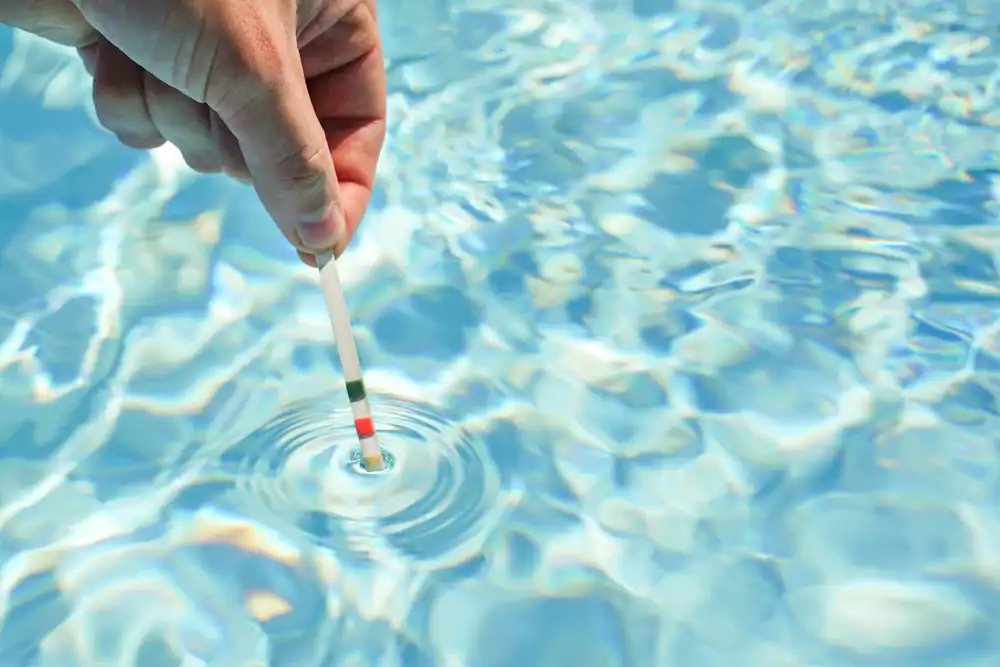
Accuracy. Store test strips give you a color range. You dip, wait, and try to match your strip to a chart in whatever lighting you’ve got. Maybe your pH is somewhere between 7.2 and 7.8. That’s a pretty wide gap when the CDC recommends keeping it between 7.0 and 7.8 for safety.
Professional water testing uses calibrated equipment that gives you exact numbers. Not a range. Not a “close enough” guess. We’re talking 7.4 pH, 2.5 ppm free chlorine, 220 ppm calcium hardness. Precision matters because pool chemistry is cumulative. Small errors add up to big problems.
The other issue with strips is user error. If you don’t hold them underwater long enough, don’t shake off excess water, or wait too long to read them, your results are off. And if you’re testing in bright sunlight or dim garage light, good luck matching those colors accurately. Professional testing removes the guesswork so you’re making decisions based on real data.
Absolutely. Low pH turns your water acidic, which corrodes metal parts, etches plaster, and dissolves grout. We’re talking about ladders, pump housings, heat exchangers—anything metal touching that water. High pH does the opposite. It causes calcium to fall out of solution and scale up on your tile, in your filter, and inside your heater. Scaled-up heaters run inefficient and burn out faster.
High calcium levels create the same scaling problem even if your pH is fine. Your filter clogs. Your pool surface gets rough. Your water turns cloudy no matter how much you shock it. Fixing that means acid washing or draining and refilling—both expensive and time-consuming.
Chlorine that’s too high eats through vinyl liners and fades plaster. Chlorine that’s too low lets algae take hold, and once you’ve got an algae bloom, you’re looking at days of shocking, scrubbing, and filtering to get it back. All of this is preventable with regular water analysis and proper balancing. A $0 test now saves you thousands in repairs later.
Because it’s the right way to start a relationship with a pool owner. You can’t give good advice without accurate information. If we’re going to recommend chemicals or service, we need to know what’s actually happening in your water. Testing for free means you’re more likely to come in regularly, catch problems early, and keep your pool in good shape.
It also removes the barrier. A lot of people put off testing because they assume it’ll cost them, or they’ll get pressured into buying a bunch of products they’re not sure they need. We’d rather you come in, get your results, and make an informed decision. If you want to handle the chemicals yourself, great. If you’d rather have us take care of it, we can do that too.
We’ve been doing this in Douglasville for over a decade because we focus on long-term relationships, not one-time sales. Free professional pool water testing is part of that. It builds trust, keeps pools healthier, and honestly, it just makes sense.
First, don’t panic and dump a bunch of chemicals in all at once. That’s how you overcorrect and create a new problem. We’ll walk you through what needs to happen and in what order. Some adjustments need to be made in stages over a few days.
If your pH is way off, that’s usually the first thing to fix because it affects how well everything else works. If your alkalinity is out of range, that needs adjusting before you try to stabilize pH. If you’ve got high calcium, you might need to partially drain and refill. If your stabilizer is through the roof, same thing—there’s no chemical fix, you have to dilute it with fresh water.
We’ll give you a printed breakdown of your results and a clear plan. You can handle it yourself if you’re comfortable with that, or we can take care of the balancing for you. Either way, you’re not guessing. You’ve got a roadmap based on real numbers, and you can call us if something doesn’t respond the way you expected.
Yes, but not as often. Even if you’re not swimming, your water chemistry doesn’t just freeze in place. pH can drift. Algae can start growing in warmer winter weeks we get here in Georgia. Leaves and debris break down and throw off your balance.
Test once every two to three weeks during the off-season. It takes five minutes and saves you from opening a swamp in the spring. If your pool is covered and you’ve winterized it properly, you’ve got more leeway. But if it’s uncovered or you’ve got a screen enclosure that still lets in debris, stay on top of it.
Winter is also when a lot of equipment damage happens because people assume everything is fine and stop checking. Calcium keeps building. pH keeps shifting. Corrosion keeps happening. A little attention during the cold months means your pool is ready to go when the weather warms up, instead of needing a week of shock treatments and scrubbing before anyone can swim.
Other Services we provide in Douglasville