
Hear from Our Customers
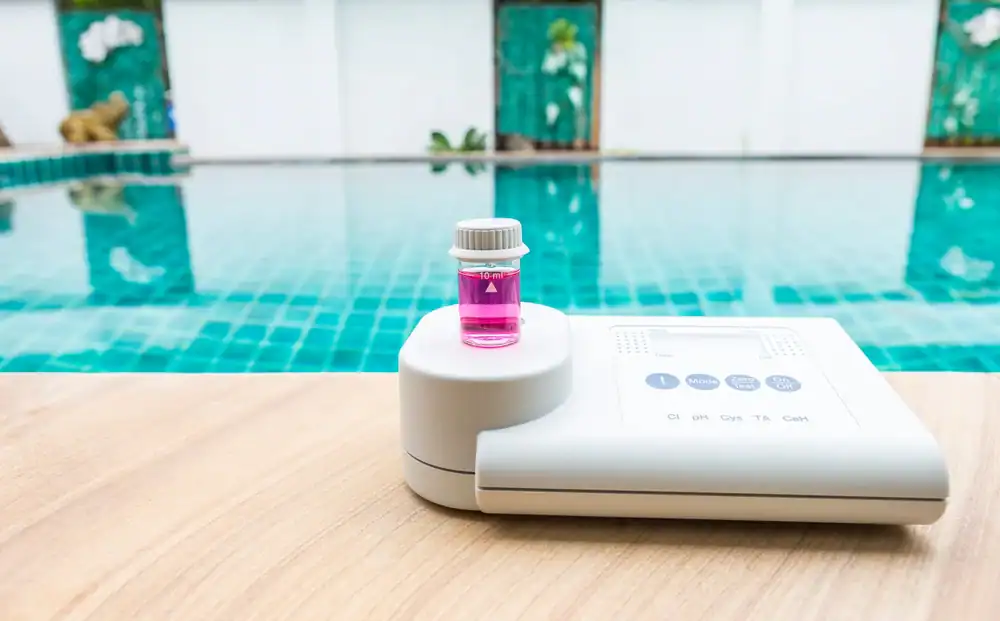
You bring in a water sample. We run it through our testing equipment. You leave with a printout that tells you exactly what your pool needs.
No more standing in the pool aisle trying to figure out if you need pH up or pH down. No more adding chemicals and hoping it works. You get precise measurements for chlorine, pH, alkalinity, calcium hardness, and everything else that affects how your water looks and feels.
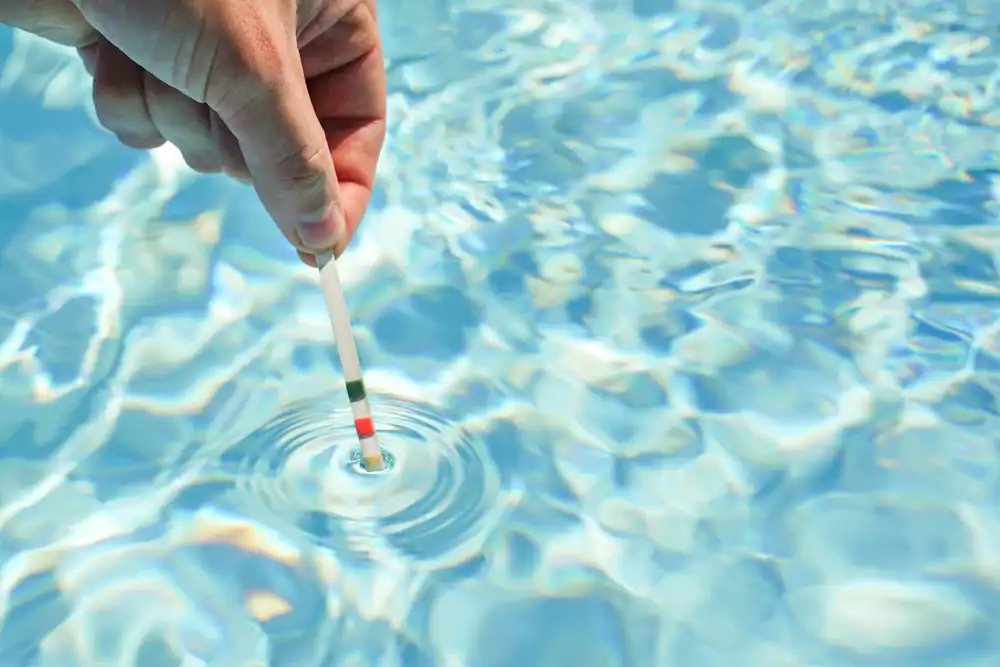
This matters because South Georgia weather doesn’t play nice with pool water. Heavy rain dilutes your chemicals. Hot sun burns off chlorine faster. Pollen season dumps debris that throws off your balance. When you’re testing at home with strips, you’re getting rough estimates. When your water’s actually off, you won’t catch it until you’ve got cloudy water or algae starting to take hold.
Our water analysis service gives you the real numbers. You’ll know if your pH is sitting at 7.8 when it should be 7.4. You’ll see that your alkalinity is low before it starts causing problems. You’ll catch calcium buildup before it damages your equipment.
Deep Waters Pools started with over 30 years of hands-on pool construction experience. We’ve built custom inground pools across South Georgia, and we know what happens when water chemistry goes wrong.
We’ve seen pumps corrode from low pH. We’ve seen heaters fail from calcium buildup. We’ve seen beautiful pools turn green because the chlorine level dropped and nobody caught it in time.
That’s why we offer free water testing. You shouldn’t have to pay to find out what your pool needs. You’re already spending money on chemicals and maintenance. The least we can do is give you accurate information so you’re not wasting time or money on the wrong fix.
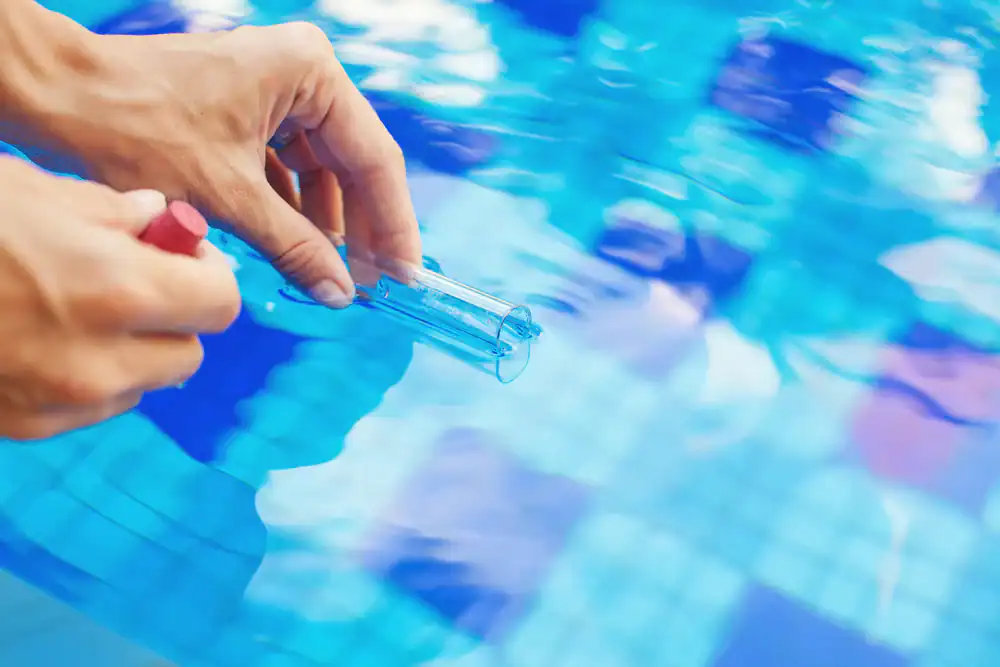
Grab a clean plastic bottle and collect a water sample from your pool. You want water from about elbow-deep, away from the return jets. Bring it to us within a few hours of collecting it.
We’ll run your sample through our computerized testing system. It measures ten different factors that affect your water quality and safety. The machine gives us precise readings, not the rough ranges you get from test strips.
You’ll get a printed report that shows where each level currently sits and where it should be. We’ll walk you through what needs adjusting. If your pH is high, we’ll tell you exactly how much acid to add based on your pool size. If your chlorine is low, you’ll know precisely how much shock or tablets you need.
The whole thing takes about five minutes. You walk out knowing exactly what to buy and how much to use. No guesswork involved.
Ready to get started?
Our water quality testing covers everything that affects how your pool performs. We measure free chlorine and combined chlorine to make sure you’ve got enough sanitizer working and not too much that’s already used up. We check pH because it affects everything from how well your chlorine works to whether your water irritates skin and eyes.
Total alkalinity gets tested because it’s what keeps your pH stable. When alkalinity is off, your pH bounces around no matter what you add. We measure calcium hardness because too little causes etching and too much causes scaling. Both will damage your pool surface and equipment over time.
We also test for cyanuric acid, which protects your chlorine from burning off in the sun. In Fairfax, where we get intense summer heat, this matters more than you’d think. Too little and you’re burning through chlorine. Too much and your chlorine stops working effectively.
The test also picks up on total dissolved solids and checks for metals that can stain your pool. In South Georgia, we deal with well water in some areas, and iron or copper can show up and cause problems if you’re not watching for it.
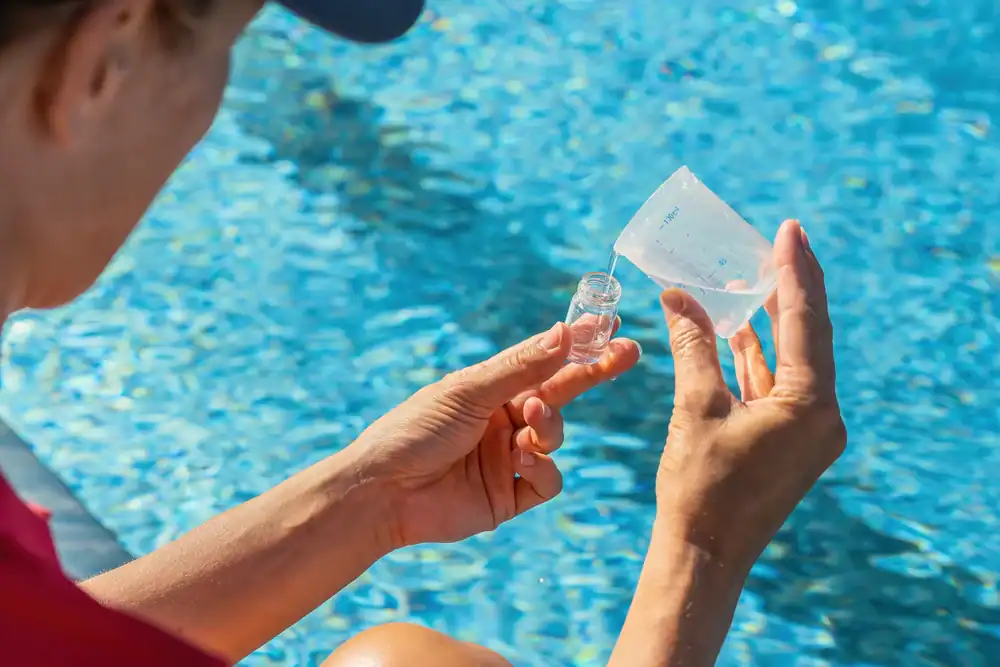
Bring in a sample every two weeks during swimming season. That’s often enough to catch problems before they become expensive or time-consuming to fix.
If you’re dealing with algae, cloudy water, or you just opened your pool for the season, test weekly until everything stabilizes. After heavy rain or a pool party with lots of swimmers, it’s worth bringing in a sample even if you just tested recently.
Some pool owners test monthly and wonder why they’re always chasing problems. Two weeks is the sweet spot. It’s frequent enough to stay ahead of issues but not so often that you’re making unnecessary trips.
Test strips give you a range. Professional testing gives you an exact number. That difference matters when you’re trying to fix a problem.
A test strip might show your pH is somewhere between 7.2 and 7.8. Our equipment will tell you it’s 7.6. When you’re adding acid or base to adjust it, you need to know the actual number or you’ll overshoot and create a new problem.
Strips also degrade over time, especially in South Georgia humidity. You might be getting inaccurate readings and not even know it. Our testing equipment is calibrated and maintained, so you’re getting reliable results every time.
Because you shouldn’t have to pay to find out what your pool needs. You’re already investing in chemicals and maintenance. Charging you for basic information doesn’t make sense.
We built our business on pool construction, and we know how important proper water chemistry is for protecting that investment. When your water is balanced, your equipment lasts longer and your pool looks better. That benefits everyone.
Offering free water analysis also means you’re more likely to test regularly, which means you’re less likely to end up with major problems that require expensive fixes. It’s preventive maintenance that costs us a few minutes and saves you potential headaches.
Fix them in the right order or you’ll waste time and chemicals. We’ll walk you through the sequence when we go over your results.
Generally, you adjust total alkalinity first because it affects pH stability. Then you adjust pH because it affects how well your chlorine works. Then you handle chlorine levels. Calcium hardness and cyanuric acid can usually be adjusted after you’ve got the main three dialed in.
If you try to fix everything at once or in the wrong order, you’ll end up chasing your tail. Adjusting one thing affects another, and you need to let each adjustment settle before moving to the next. We’ll give you a clear plan for what to add first and when to retest.
Just stop by during business hours. No appointment needed. The test takes about five minutes, so we can usually run it right away.
If you’re coming during a busy time, you might wait a few minutes while we help other customers. But we’re not talking about a long wait. Bring your sample in a clean plastic bottle, and make sure you collected it within a few hours of bringing it in.
The fresher the sample, the more accurate the results. If water sits around too long, the chemistry can shift and you won’t get a true picture of what’s happening in your pool.
We’ll tell you exactly what needs to happen and in what order. Severe imbalances usually mean adding larger amounts of chemicals in stages rather than all at once.
If your pH is extremely high or low, shocking the pool won’t work until you fix that first. If your alkalinity is way off, your pH will keep drifting no matter what you add. We’ll give you a step-by-step plan that might involve adjusting one thing, waiting 24 hours, then retesting before moving to the next step.
In extreme cases, you might need to partially drain and refill your pool. That’s rare, but it happens when total dissolved solids get too high or if you’ve got a metal problem that can’t be fixed with chemicals alone. We’ll be straight with you about what’s realistic to fix and what’s not.
Other Services we provide in Fairfax