
Hear from Our Customers
You’re not guessing anymore. No more trips to the pool store with a water sample, waiting in line, then trying to decode what the printout actually means.
When your pool water gets tested here, you’re getting a full analysis of pH levels, chlorine balance, and the stuff that matters for South Georgia pools—hardness minerals, iron, manganese. The things that show up in well water and make your pool harder to maintain than it should be.
You’ll know if your water is safe for your kids. You’ll know if something’s about to damage your equipment. And you’ll know exactly what to do about it—no trial and error, no wasted chemicals, no cloudy water three days later because the balance was off.
This is what proper water quality testing does. It removes the uncertainty and gives you a clear path forward.
Deep Waters Pools started with over 30 years of hands-on pool experience and a simple idea: do the work right, treat people fairly, and build something that lasts. That was 2014. We’re still here, still local, still family-owned.
We’re not the biggest pool company in South Georgia. But we know this area—the water, the weather, the way pools behave here. Coffee County isn’t Atlanta. Your water doesn’t act the same, and your pool doesn’t either.
When you bring your water to us or we come to you, it’s getting tested by people who’ve seen what happens when water chemistry goes wrong. And we’d rather catch it early than watch you deal with stained surfaces, corroded equipment, or worse—water that’s not safe to swim in.
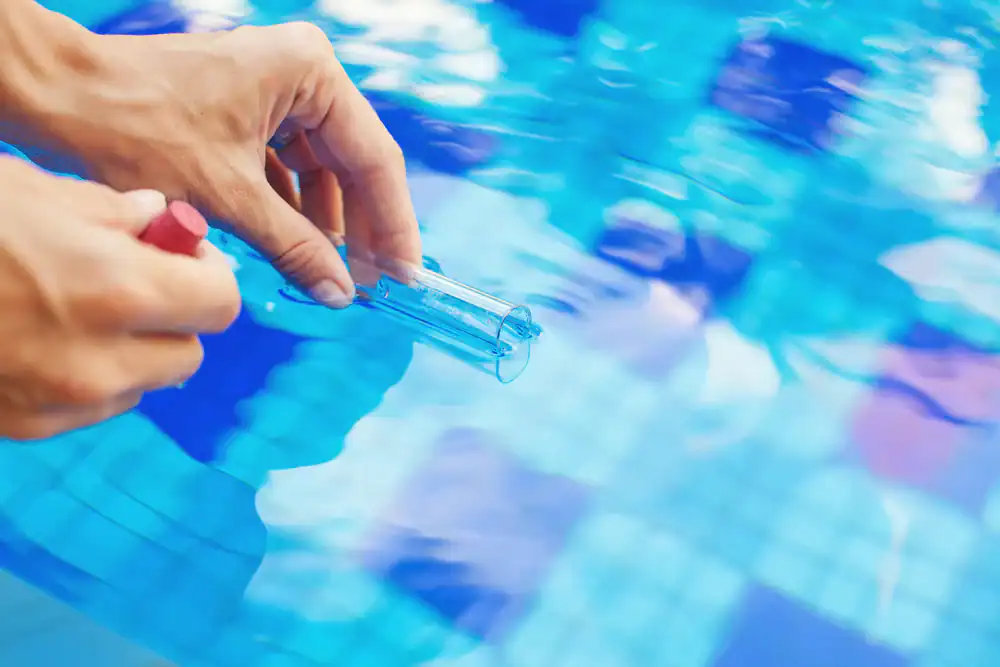
Bring us a sample or we’ll come to you. Either way works.
We test your water for the basics—pH, chlorine, alkalinity—and the stuff that’s specific to this area. South Georgia water has its quirks. Iron and manganese show up more than they should. Hardness minerals throw off your chemical balance. If you’re on well water, there’s even more to watch for.
The test takes a few minutes. We’re checking where your levels are, where they should be, and what’s causing problems if something’s off. Then we walk you through it. Not in technical jargon—in plain terms. What’s wrong, why it matters, and what you need to do.
You leave with a clear plan. If you need chemicals, we’ll tell you which ones and how much. If your water’s fine, we’ll tell you that too. No upselling, no runaround. Just honest answers about your pool.
Ready to get started?
This isn’t a quick dip-strip test. You’re getting a full residential water test that covers pH balance, sanitizer levels, total alkalinity, calcium hardness, and anything else that affects how your pool performs.
For Fouts Mill pool owners, that means we’re also looking at the contaminants common to this area. Iron staining. Manganese deposits. Hardness that eats through your chlorine faster than it should. These aren’t problems everywhere, but they’re problems here—and if we don’t test for them, you won’t know until it’s too late.
You’re also getting recommendations based on what we find. Not generic advice—specific steps for your pool, your water source, your situation. If your pH is too low, we’ll tell you how much soda ash to add. If your chlorine’s getting burned off by metals in the water, we’ll tell you how to fix that before you waste money on more chlorine that won’t work.
And again—this service is free. You’re not paying for the test, the analysis, or the consultation. You’re getting professional pool water analysis at no cost because we’d rather you have good information than bad water.
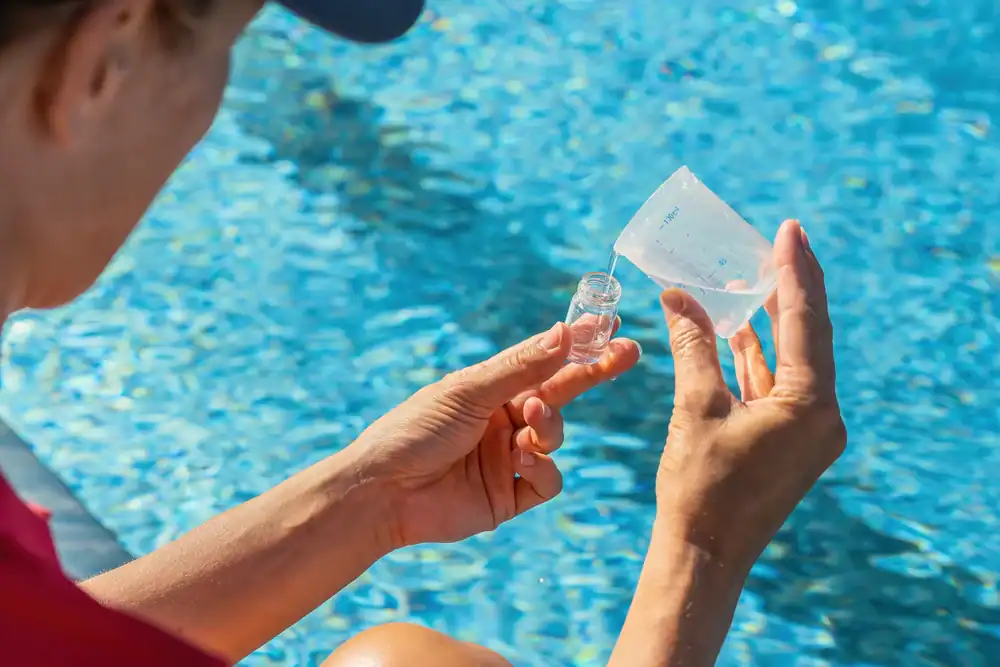
At minimum, once a week during swim season. That’s the baseline for keeping your water safe and balanced.
But there are times you need to test more often. After heavy rain, your water chemistry shifts—especially if you’re dealing with runoff or a lot of debris in the pool. After a pool party or weekend where the pool got heavy use, you’ll want to check it. And if you’re opening your pool for the season or closing it down, testing before and after makes sure you’re starting and ending in good shape.
South Georgia weather doesn’t help. Heat accelerates chemical breakdown. Afternoon storms dilute your water. If your pool sits in full sun all day, your chlorine’s working overtime. All of that affects your balance, and the only way to know where you stand is to test regularly.
A few things, and none of them are good. If your pH is off, your chlorine stops working the way it should—even if your chlorine levels look fine. Too high, and you’re looking at scaling on your surfaces and equipment. Too low, and the water turns corrosive. It’ll eat away at metal components, damage your pool finish, and irritate anyone who swims in it.
Low chlorine means bacteria and algae start growing. You’ll see cloudy water first, then green. High chlorine burns skin and eyes, and it’s a sign you’re overcompensating for another problem—usually pH or alkalinity that’s out of range.
Then there’s the stuff specific to this area. If you’ve got high iron or manganese and you shock the pool, you’ll end up with brown or black stains on your walls and floor. Hardness minerals cause scaling that clogs filters and damages heaters. These aren’t quick fixes. You’re looking at extra chemicals, extra work, and in some cases, equipment replacement. Testing catches it before it gets there.
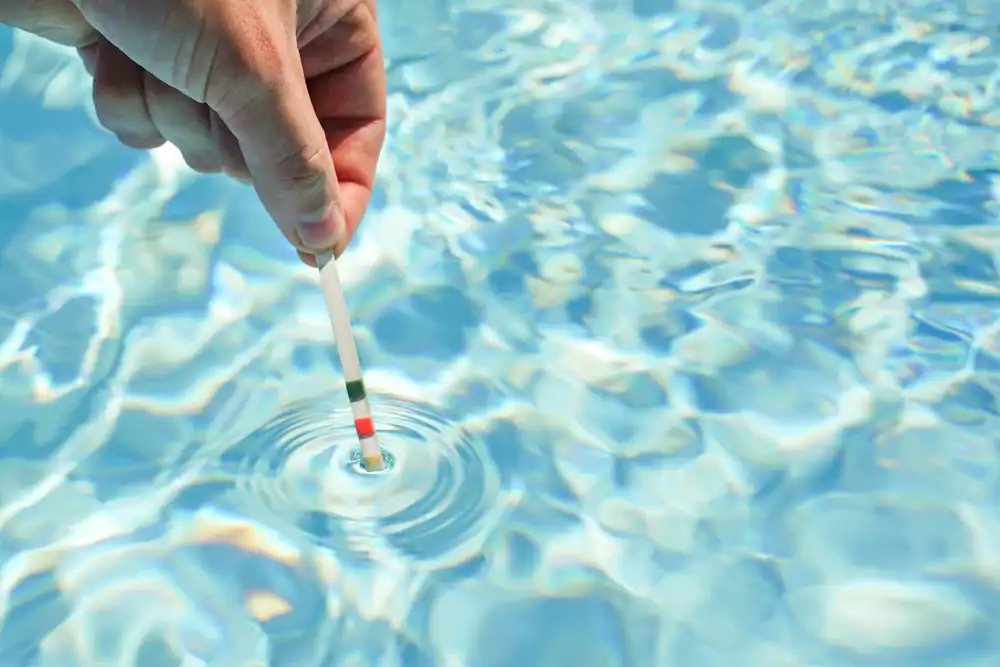
You can, but they’re not going to give you the full picture. Test strips are fine for a quick check, but they’re not accurate enough to catch the problems that cost you money.
They’ll tell you if your pH and chlorine are roughly in range, but “roughly” isn’t good enough when you’re dealing with water chemistry. A pH reading of 7.6 versus 7.8 might not look like much, but it changes how effective your chlorine is. Test strips won’t catch that. They also won’t tell you anything about metals, hardness, or other contaminants that show up in South Georgia water.
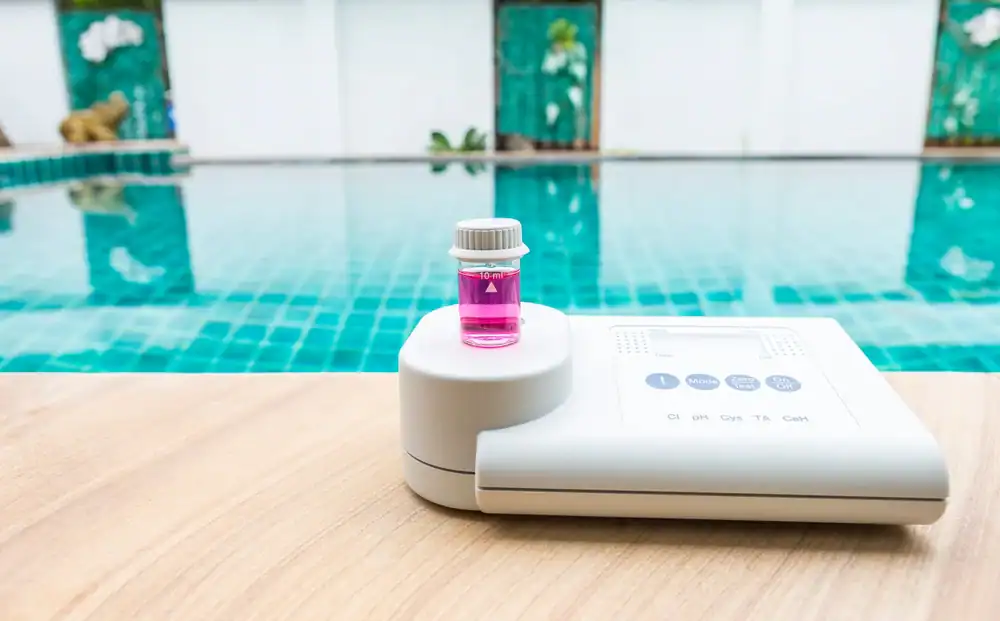
Professional water quality testing uses better equipment and gives you precise numbers. You’re not interpreting a color on a strip and hoping you’re reading it right. You’re getting exact measurements and recommendations based on those measurements. If you’re serious about keeping your pool in good shape and avoiding expensive problems, test strips aren’t enough.
Because we’d rather you have good information than deal with a problem that could’ve been prevented. It’s that simple.
A lot of pool owners don’t test their water as often as they should because it’s one more thing to pay for, one more errand to run. We removed that barrier. Bring us your water, and we’ll test it at no charge. If you need chemicals, great—we’ll point you in the right direction. If you don’t, that’s fine too.
We’ve been doing this long enough to know that educated customers take better care of their pools, have fewer emergencies, and don’t end up with damage that could’ve been avoided. Free testing means you’re more likely to stay on top of your water chemistry, and that benefits everyone. You get a safer, cleaner pool. We build trust with someone who might need us down the road for something bigger. It’s not complicated.
First, don’t shock your pool. That’s the mistake most people make, and it’s what causes the staining. When you shock water that has high iron or manganese, you oxidize those metals and they fall out of solution—straight onto your pool surfaces as brown or black stains.
What you need is a metal sequestrant. It binds to the iron and manganese and keeps them suspended in the water so your filter can remove them. You’ll add the sequestrant, run your filter continuously for at least 24 hours, and backwash or clean the filter afterward to get rid of the metals it’s captured.
If you’re on well water in Fouts Mill, this is something you’ll probably deal with more than once. Iron and manganese are common here, and they’re going to keep showing up in your water. The key is testing regularly so you catch it before it becomes a staining problem. Once the stains are there, you’re looking at acid washing or stain removal treatments—and that’s a much bigger hassle than preventing it in the first place.
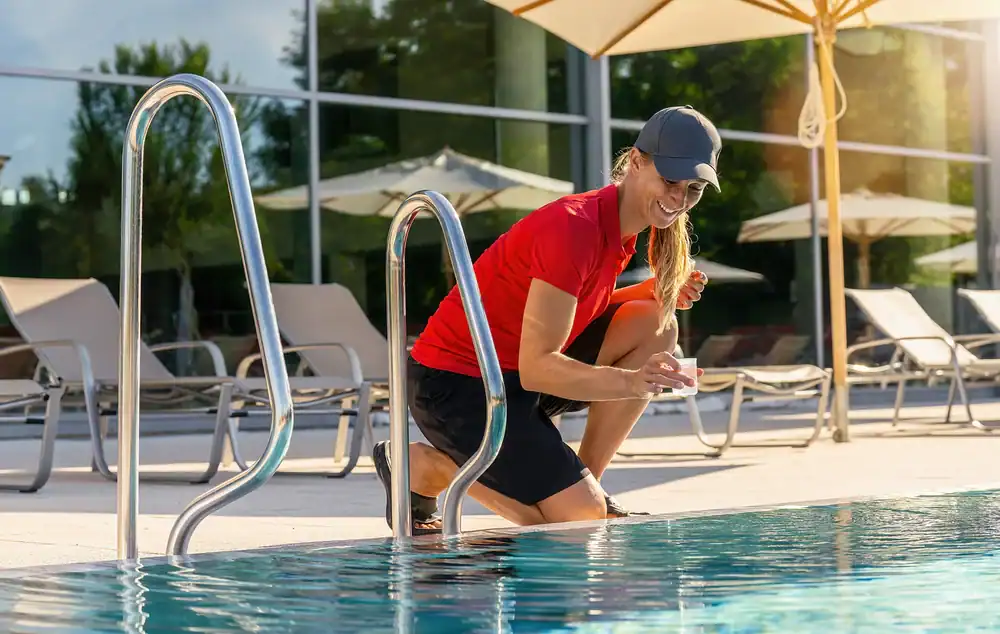
Both. If you’re nearby, you can bring a sample to us and we’ll test it while you wait. Takes just a few minutes, and you’ll leave with results and a clear plan.
If you’d rather have us come to you, we can do that too. On-site testing makes sense if you’ve got specific concerns or if you want us to see the pool in person—sometimes there are visual clues that explain what’s going on with your water. Algae starting to form, staining on the walls, equipment that’s not running right. Those things matter, and they give us more context for the test results.
Either way, you’re getting the same level of service and the same detailed analysis. It’s just a matter of what’s more convenient for you. If you’re in Fouts Mill or anywhere in the Coffee County area, we’ll make it work.
Other Services we provide in Fouts Mill