
Hear from Our Customers
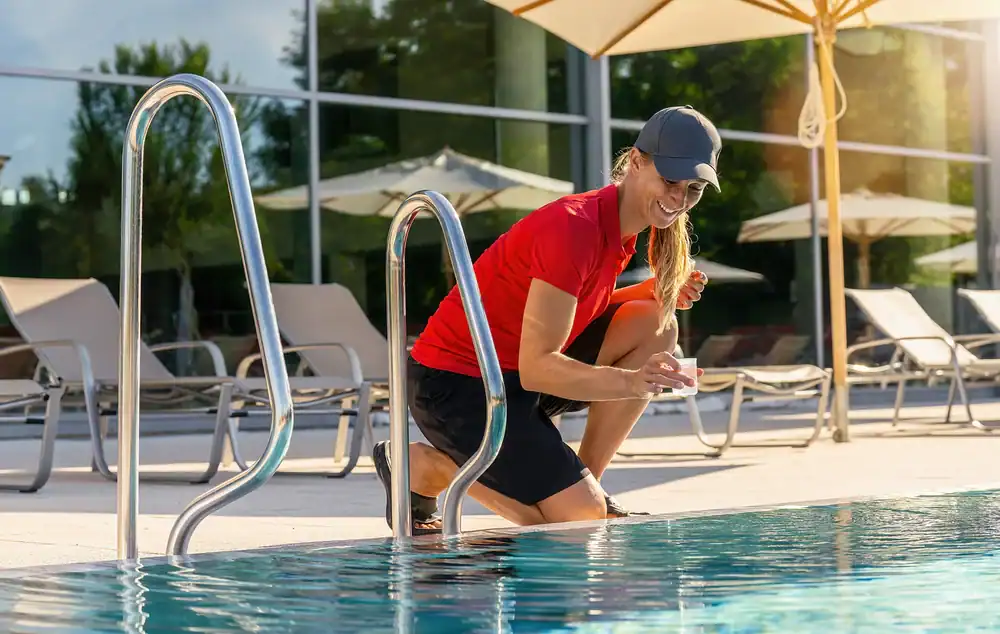
Most chemical problems don’t show up until they’ve already damaged something. Your pump. Your heater. The surface itself. By then, you’re looking at repairs that could’ve been avoided with a simple water test.
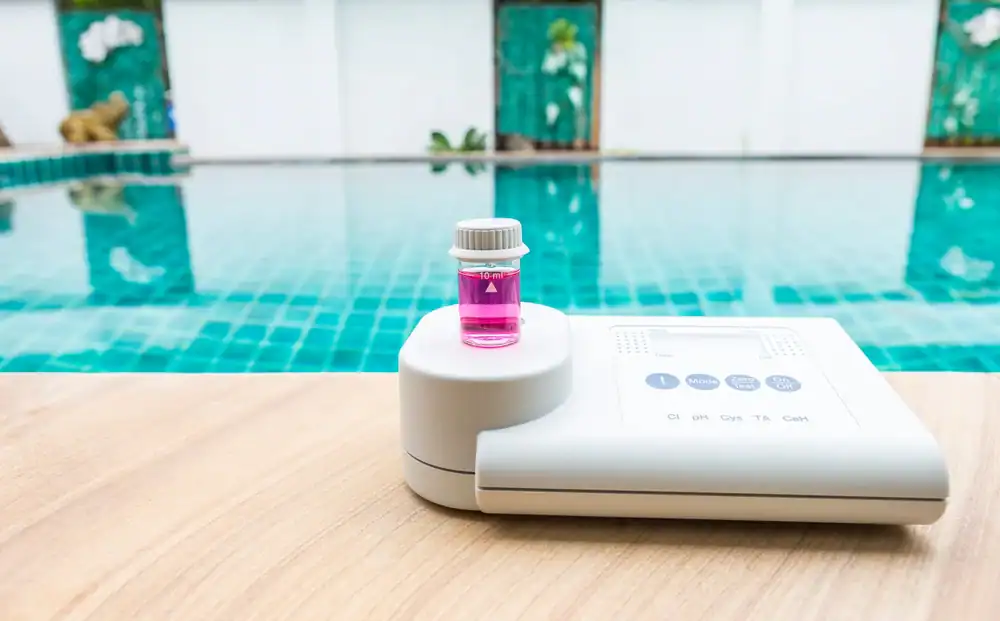
That’s where professional pool water testing makes a difference. You get real numbers on pH, chlorine, alkalinity, hardness—the levels that actually matter. Not a color-matched guess from a strip that’s been sitting in your garage since last summer.
When your water’s balanced right, everything works better. Your chemicals last longer because you’re not over-treating. Your equipment runs cleaner because there’s no scale buildup or corrosion eating away at metal parts. And your pool stays clear without that constant cycle of shock, algaecide, and hoping for the best.
We’ve been serving families across South Georgia since 2014, built on more than three decades of hands-on pool construction and maintenance experience. We’re not a franchise following a script—we’re local pool people who’ve seen what works and what doesn’t in this climate.
Gladys sits in a part of Georgia where heat and humidity create the perfect conditions for algae, bacteria, and phosphate buildup. Your pool faces different challenges than one in Arizona or Michigan. We test water here every day, so we know what to look for and how to fix it before it becomes a bigger problem.
When you come in for water testing, you’re working with people who understand Georgia pools. That matters more than you’d think.
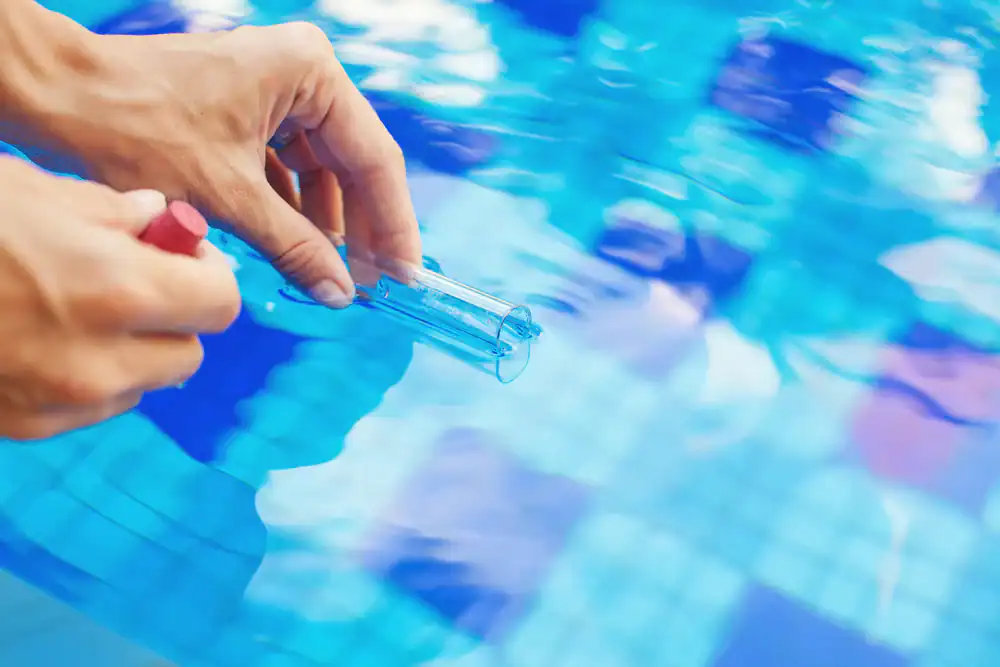
Grab a clean plastic bottle and take a water sample from about elbow-deep in your pool—not right at the surface, not off the steps. Bring it to us in Gladys, and we’ll run it through our testing equipment while you wait.
We check the levels that matter: pH, free chlorine, total chlorine, alkalinity, calcium hardness, and stabilizer. If something’s off, we’ll also look for metals like copper or iron that can stain your pool, plus phosphates that feed algae even when your chlorine looks fine.
Once the test is done, we’ll walk you through the results. Not in technical jargon—just plain talk about what’s high, what’s low, and what you need to add. We’ll write down the exact products and amounts so you’re not guessing at the store. If your water’s in good shape, we’ll tell you that too.
This whole process takes maybe ten minutes. You leave with a clear plan, and your pool gets what it actually needs instead of what the internet thinks it needs.
Ready to get started?
This isn’t a sales pitch disguised as a service. You get a complete water quality testing analysis at no cost, whether you buy anything from us or not. We test the same parameters a paid service would: pH balance, sanitizer levels, total alkalinity, calcium hardness, cyanuric acid, and we’ll check for metals and phosphates if your water looks off.
In Gladys and the surrounding South Georgia area, we see a lot of the same issues. High pH from fill water. Low chlorine because the heat burns through it faster than you’d expect. Phosphates from pollen, rain, and debris that turn your pool green no matter how much shock you add. Calcium buildup that clouds the water and leaves that white ring around the tile.
We test for all of it, then give you a printed report with the numbers and a treatment plan. You’ll know exactly what to add, how much, and in what order. If you want to buy the chemicals here, great. If you want to take the list somewhere else, that’s fine too. The goal is to get your water right so you’re not throwing money at a problem that keeps coming back.
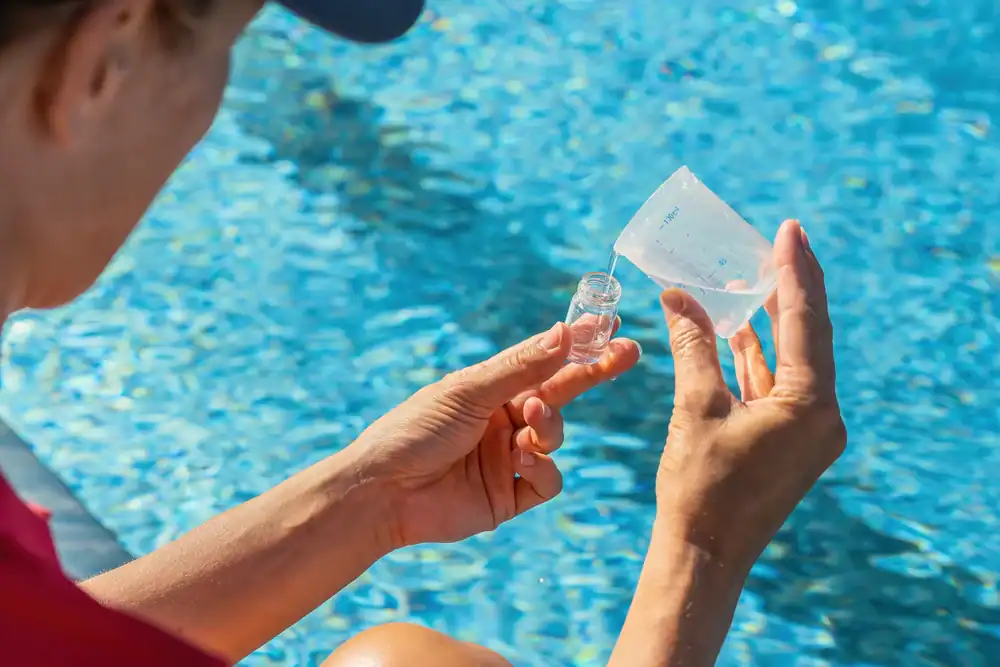
At minimum, bring in a sample once a month during swim season. If you’re using your pool heavily—kids in and out all day, pool parties, lots of sunscreen and debris—test it every two weeks.
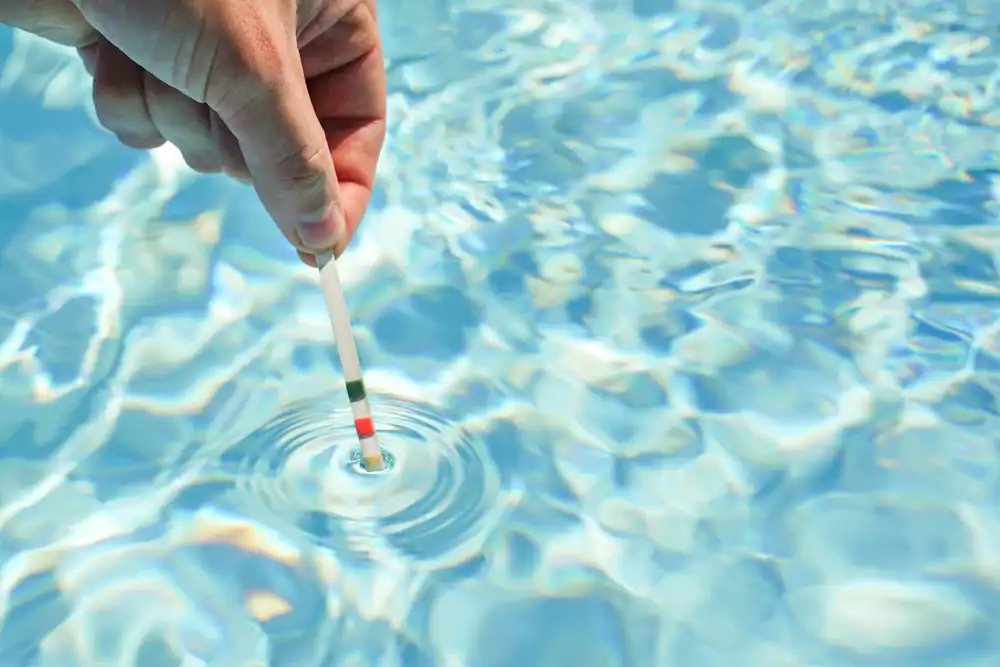
You should also test after heavy rain, after you’ve added a significant amount of fill water, or anytime the water looks off even though your home test kit says everything’s fine. Those drugstore test strips lose accuracy over time, especially if they’ve been exposed to heat or moisture. A professional water analysis catches things a basic kit misses.
In South Georgia, heat accelerates chemical consumption. Your chlorine burns off faster, pH drifts higher, and algae gets a foothold quicker than it would in cooler climates. Regular testing helps you stay ahead of problems instead of reacting to green water or equipment damage after the fact.
Free chlorine is the active sanitizer in your pool—the part that’s actually killing bacteria, algae, and other contaminants. Total chlorine includes both free chlorine and combined chlorine, which is chlorine that’s already done its job and bonded with waste like sweat, oils, and organic matter.
When total chlorine is significantly higher than free chlorine, that gap represents chloramines—the stuff that makes your eyes burn and gives off that strong “chlorine smell” people complain about. Ironically, that smell means you don’t have enough active chlorine, not too much.
If your pool smells like chlorine or irritates swimmers’ eyes, you likely need to shock it to break down those chloramines and restore free chlorine levels. A proper water test shows you exactly where you stand so you’re not just guessing and dumping in chemicals. We measure both numbers and tell you if you need to shock or if your free chlorine just needs a boost.
Usually it’s one of three things: phosphates, low stabilizer, or your chlorine’s getting used up faster than you’re adding it. Phosphates are algae food. They come from lawn fertilizer, pollen, leaves, and rain. Even if your chlorine level looks okay, high phosphates let algae grow back almost immediately after you shock.
Low stabilizer is another common issue. Stabilizer (cyanuric acid) protects chlorine from being destroyed by sunlight. Without enough of it, your chlorine burns off in a few hours, leaving your pool unprotected by mid-afternoon. If you’re adding chlorine daily and it’s still not holding, that’s a red flag.
The third issue is simply not using enough shock or not keeping chlorine consistent between treatments. Algae grows fast in warm water, and if you’re only shocking once then letting chlorine drop for a week, you’re giving it time to come back. A water test tells us which problem you’re dealing with so you’re not wasting money on the wrong fix.
Yes, and it happens more often than most pool owners realize. When pH climbs above 7.8, your water becomes scale-forming. Calcium starts precipitating out of the water and depositing on your heater elements, pump seals, filter grids, and inside your plumbing lines.
That white crusty buildup you see on the tile line? That’s calcium scale, and it’s doing the same thing inside your equipment where you can’t see it. Heaters are especially vulnerable—scale buildup makes them work harder, run hotter, and fail sooner. A heater repair or replacement can easily cost over a thousand dollars.
High pH also makes your chlorine less effective, so you end up adding more chemicals while getting worse results. The ideal range is 7.4 to 7.6. If your pH keeps drifting high, it’s usually your fill water or something in your pool environment pushing it up. We can test for that and recommend a plan to keep it stable without you having to adjust it every other day.
First, stop adding chlorine or shock until you treat the metals. Oxidizers react with metals like copper and iron, causing them to precipitate out and stain your pool surface. You’ll see green, brown, or black stains depending on which metal is present.
The fix is a metal sequestrant or chelating agent, which binds to the metals and keeps them suspended in the water so your filter can remove them. You’ll need to run your filter continuously for a few days and possibly backwash or clean your filter media more often during treatment.
Metals usually come from well water, old copper plumbing, or certain algaecides that contain copper. If your fill water is the source, you’ll need to treat every time you add a significant amount of water. If it’s your plumbing, that’s a bigger issue that might need a professional to assess. Either way, catching metals early with regular water testing prevents permanent staining that’s expensive or impossible to remove later.
It’s actually free. You don’t have to buy anything. We test your water, give you the results, and tell you what it needs. If you want to purchase chemicals from us, we’re here. If you’d rather take the report and handle it yourself somewhere else, that’s your call.
We offer free testing because it’s good for pool owners and it’s good for business. You get accurate information that helps you maintain your pool correctly. We build a relationship with people in Gladys and South Georgia who might need us down the road for repairs, renovations, or a new pool build.
There’s no pressure, no upselling, no “you have to buy this package or we won’t help you” nonsense. We’ve been doing this since 2014, built on more than 30 years of pool experience. We’re not worried about making a sale on every water test. We’re focused on being the place you trust when you actually need pool help.
Other Services we provide in Gladys