
Hear from Our Customers
You’ve probably stood in the pool aisle staring at test strips, wondering if that color is “close enough” to the chart. Or maybe you’ve added chemicals based on a hunch, only to deal with cloudy water or stinging eyes a few days later.
Here’s what changes when you get accurate water testing. You know exactly what your pool needs before you spend a dime on chemicals. You stop over-treating or under-treating your water, which means you’re not burning through products that don’t fix the actual problem.
Your pool stays clearer longer. Your equipment lasts longer because the pH isn’t slowly eating away at seals and surfaces. And your family can swim without red eyes or itchy skin because the chemistry is actually balanced—not just “probably fine.”
That’s what professional pool water analysis does. It removes the guesswork so you can enjoy your pool instead of constantly troubleshooting it.
We’ve been serving families across South Georgia since 2014, built on over 30 years of hands-on pool experience. We’re not a franchise following a script. We’re locals who understand how Glory’s soil, weather, and water conditions affect your pool.
That means when we test your water, we’re not just reading numbers off a chart. We’re factoring in what we know about pools in this area—how the heat affects evaporation and chemical burn-off, how local fill water tends to run, and what problems we see most often in Douglas County.
You get testing that’s both accurate and relevant to your specific situation. And because we offer this service for free, there’s no pressure—just honest information about what your pool actually needs.
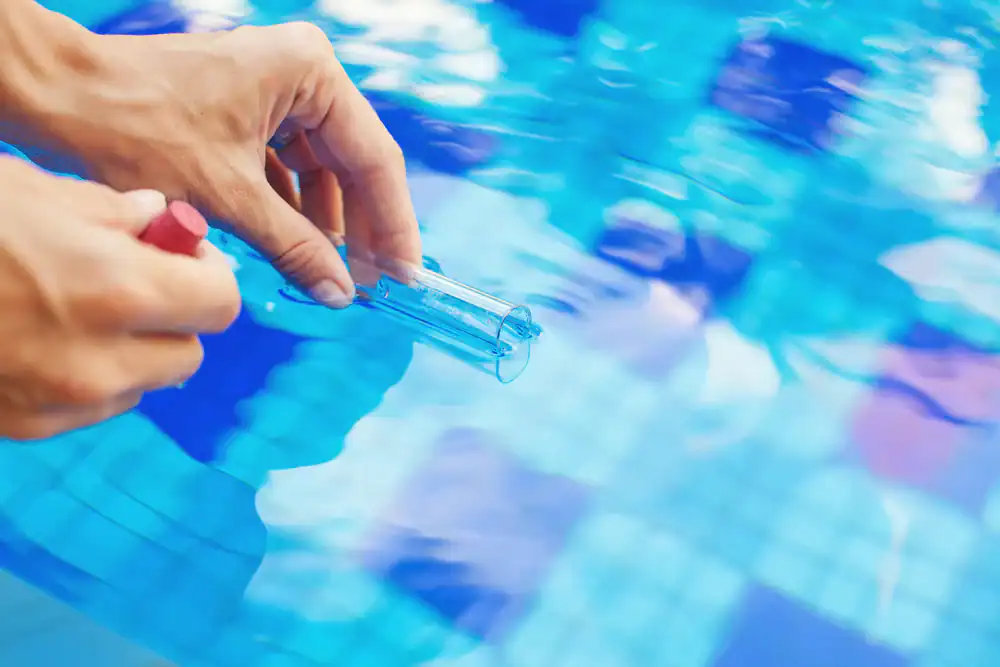
Bring us a water sample in a clean container—about 12 to 16 ounces is plenty. If you can, collect it from elbow-depth in the middle of your pool, away from returns and skimmers. That gives us the most accurate read of your overall water chemistry.
We run a complete analysis that checks pH, chlorine levels, alkalinity, calcium hardness, and cyanuric acid. These aren’t just random numbers. Each one affects how the others work, and when they’re out of balance, you get algae growth, equipment damage, or water that just doesn’t feel right.
Once we have your results, we walk you through what they mean in plain terms. No jargon, no upselling. Just a clear explanation of where your water sits and what adjustments will get it where it needs to be. You’ll leave with specific product recommendations and dosing instructions based on your pool’s size and current chemistry.
Ready to get started?
This isn’t a quick dip-and-read test strip situation. You get a full professional water quality testing that measures the levels that actually matter for safe, comfortable swimming.
We’re checking total alkalinity, which keeps your pH stable. We’re measuring calcium hardness so your water doesn’t get aggressive and start etching plaster or corroding metal parts. We’re testing cyanuric acid because too much blocks chlorine from working, and too little means the sun burns it off before it can sanitize.
In Glory, GA, we see a lot of pools struggle with pH drift during summer because of how fast water evaporates and gets refilled. We also see calcium build-up from local water sources. When we test your water, we’re looking at it through that lens—what’s normal for this area, and what’s a red flag that needs attention.
You walk away knowing exactly what’s going on in your pool and what to do about it. No sales pitch, no pressure to buy anything you don’t need. Just useful information from people who’ve been doing this for decades.
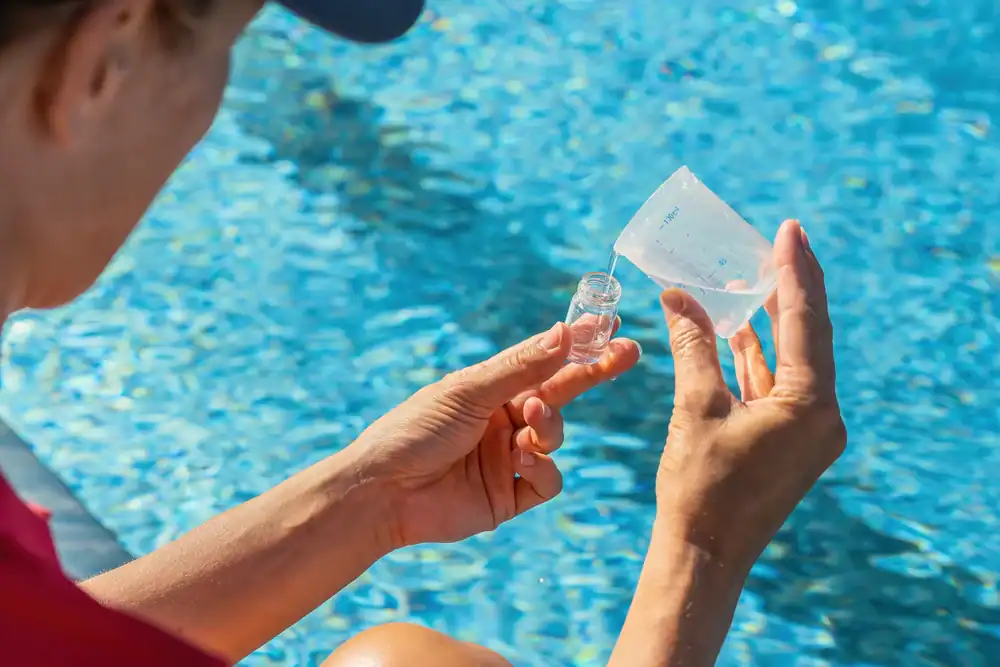
Every two to four weeks during swimming season is the sweet spot for most pools. That’s frequent enough to catch problems before they turn into expensive headaches, but not so often that you’re wasting time on unnecessary trips.
If you’re opening your pool for the season or dealing with heavy use—like hosting pool parties or having kids in the water daily—test more often. Same goes if you’ve had a lot of rain, which dilutes your chemicals, or if you’re battling algae or cloudy water.
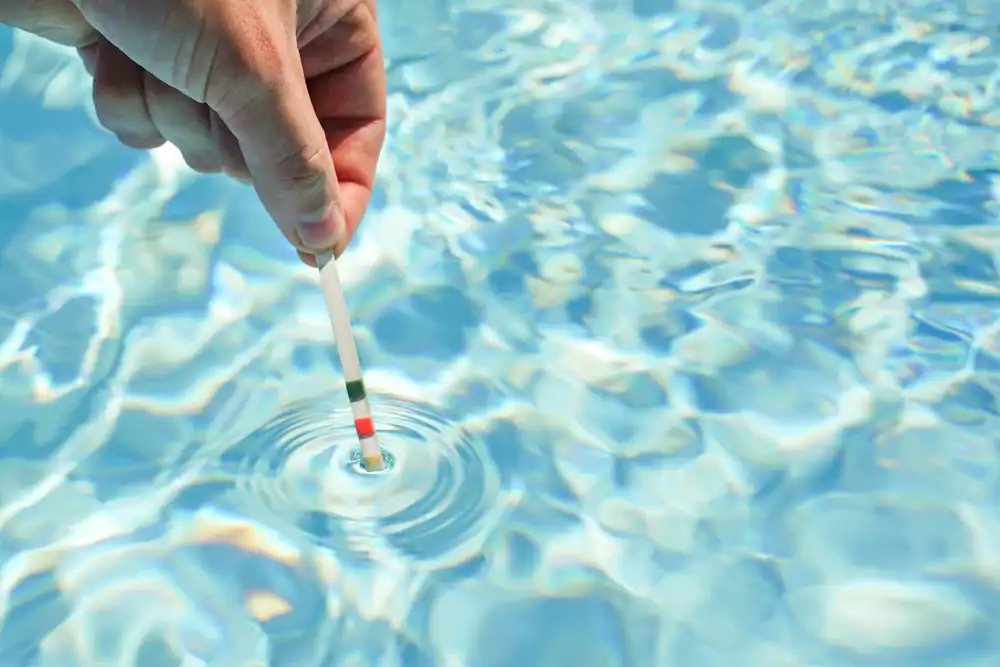
Between professional tests, you can use test strips at home for quick checks on chlorine and pH. But strips have limitations. They’re affected by lighting, water temperature, and how you read them. They’re fine for a general sense of where things are, but when accuracy matters—like when you’re trying to fix a persistent problem—professional testing catches what strips miss.
Home test kits typically check five to ten parameters at best, and they’re prone to user error. You’re comparing colors in different lighting, dealing with strips that might be expired or exposed to humidity, and interpreting results that fall somewhere between two shades on a chart.
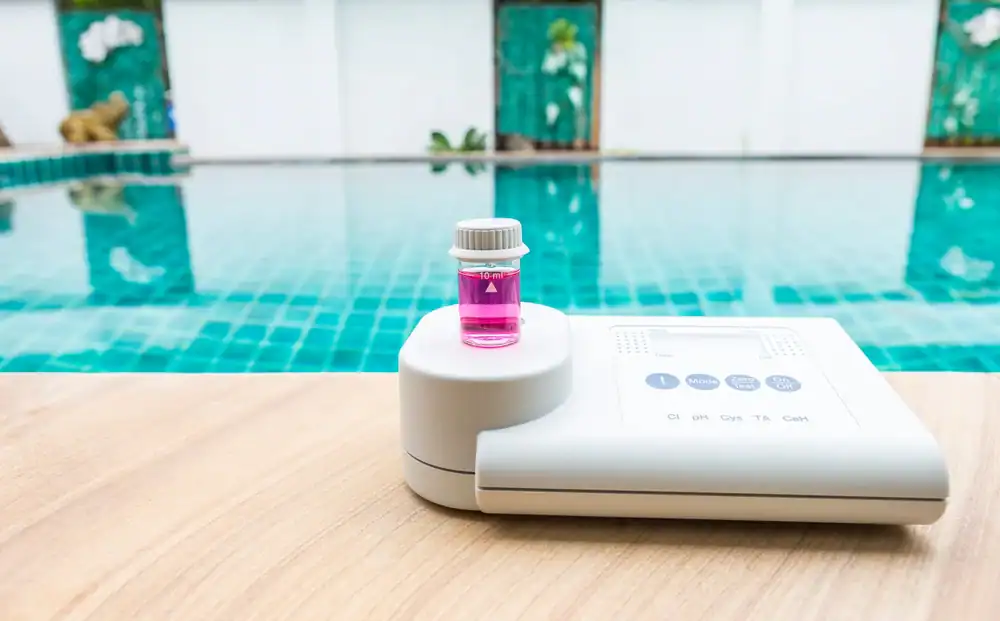
Professional testing uses calibrated equipment that measures exact levels, not approximate ranges. We’re testing for things most home kits don’t even check—like cyanuric acid, which directly affects how well your chlorine works, or calcium hardness, which determines whether your water is slowly damaging your pool surfaces.
The other issue with DIY testing is that it doesn’t tell you what to do with the results. You might know your pH is high, but do you know how much acid to add for your specific pool size? Or whether you should adjust alkalinity first? Professional testing gives you the numbers and the action plan, so you’re not guessing your way through chemical adjustments.
First, we’ll tell you exactly what’s off and why it matters. If your pH is too low, it’s turning your water acidic, which eats away at metal components and pool surfaces. If it’s too high, your chlorine stops working effectively, and you’ll start seeing algae even though you’re adding sanitizer.
We’ll give you a step-by-step plan to bring everything back into range. Sometimes that’s a simple one-chemical fix. Other times, you need to adjust alkalinity first, then pH, then reassess chlorine levels. The order matters, and doing it wrong just creates more problems.
In Glory’s heat, imbalanced water degrades fast. What starts as slightly cloudy water can turn into a full-blown algae bloom in a few days if the chemistry isn’t corrected. The good news is that most imbalances are fixable quickly when you know what you’re dealing with. We’ll make sure you have clear instructions and the right products to get your pool back to swimmable condition.
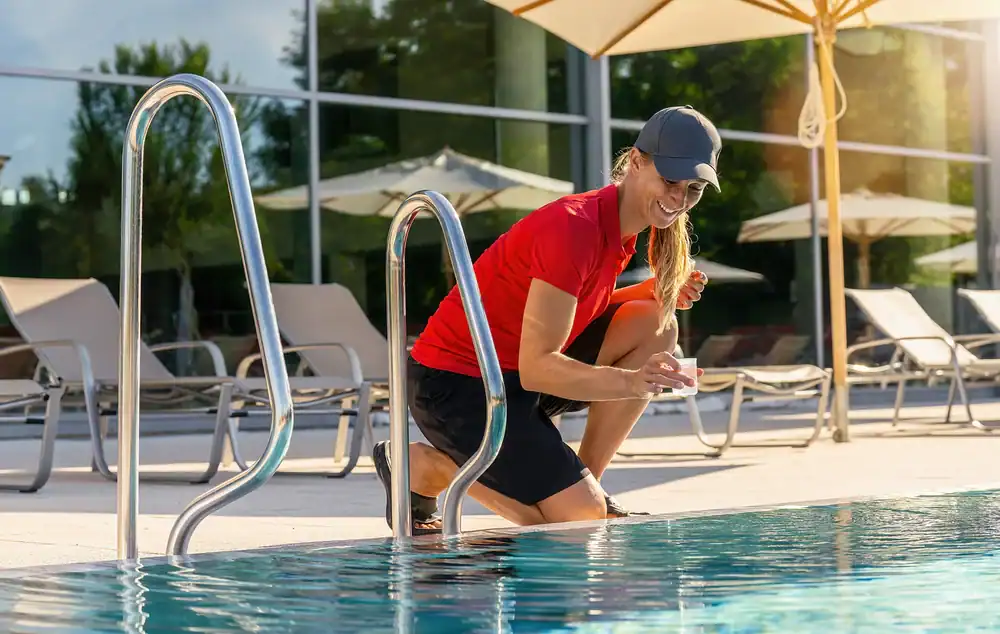
Yes, just bring in a clean sample during our business hours. Use a container that hasn’t had soap or other chemicals in it—a clean plastic bottle works fine. Collect about 12 to 16 ounces from elbow-depth in the center of your pool, away from return jets and skimmers.
Try to test your water within a few hours of collecting it if possible. The longer water sits in a container, especially in heat, the more the chemistry can shift. If you can’t make it in right away, keep the sample out of direct sunlight and bring it as soon as you can.
We’ll run the test while you wait or have results ready quickly, depending on how busy we are. Either way, you’ll get a printed report with your levels and our recommendations for what to adjust. And because this is a free service, there’s no appointment needed and no obligation to buy anything—though we’re happy to help you get what you need if you want to handle the adjustments yourself.
Chlorine testing just tells you whether you have enough sanitizer in the water to kill bacteria and algae. That’s important, but it’s only one piece of the puzzle. You can have perfect chlorine levels and still have problems if your pH is off, your alkalinity is too low, or your calcium hardness is out of range.
Full water analysis looks at how all these factors work together. Your pH affects how well chlorine sanitizes. Your alkalinity affects how stable your pH stays. Your calcium hardness affects whether your water is aggressive or scale-forming. When one thing is off, it throws everything else off too.
That’s why we test the complete picture. You might come in thinking you need more chlorine because your water’s cloudy, but the real issue could be high pH blocking the chlorine you already have from working. Without full analysis, you’d just keep dumping in sanitizer and wondering why nothing’s improving. With it, you fix the actual problem and stop wasting money on chemicals that aren’t addressing the root cause.
Absolutely. Local fill water in Glory tends to run on the harder side, meaning it has higher calcium and mineral content. Every time you top off your pool after evaporation or backwashing, you’re adding those minerals back in. Over time, that builds up and can cause scaling on your tile line, cloudy water, or rough surfaces.
We also see pH drift more often here because of how fast water evaporates in South Georgia heat. As water evaporates, it leaves behind dissolved solids that affect your chemistry. If you’re constantly adding fresh water to compensate, you’re fighting a moving target with your chemical balance.
When we test your water, we factor in these local patterns. We know what Glory pool owners typically deal with, and we can spot trends that might not be obvious if you’re just looking at numbers on a chart. That local knowledge helps you stay ahead of problems instead of constantly reacting to them.
Other Services we provide in Glory