
Hear from Our Customers
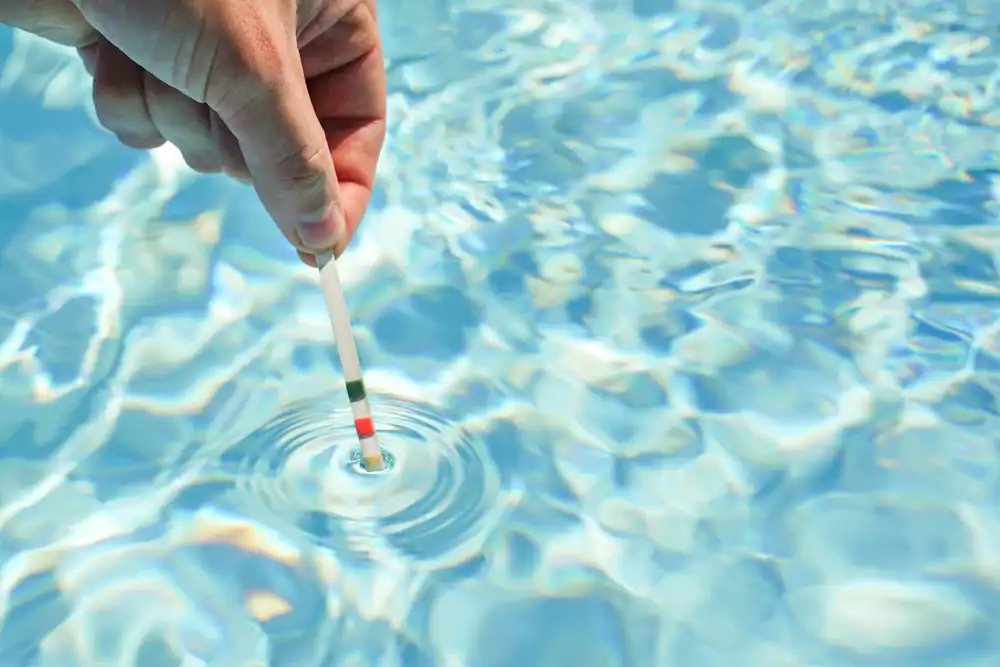
You’ve been there. Dipping test strips into your pool, squinting at faded colors, wondering if that’s really “ideal” or if you’re about to dump in way too much chlorine. Those strips expire, they spoil in humidity, and half the time you’re making decisions based on a guess.
Professional water testing removes that uncertainty completely. You bring in a sample, we run it through advanced testing equipment, and in under three minutes you walk out with a printout showing your exact pH, chlorine, alkalinity, calcium hardness, and stabilizer levels. No interpretation needed. No wondering if you read it right.
When your water chemistry is dialed in, you’re not dealing with algae blooms on Tuesday or cloudy water by the weekend. Your family swims without red eyes or itchy skin. Your pump and filter aren’t getting corroded by water that’s too acidic or scaled up by water that’s too basic. You’re using the right amount of chemicals instead of throwing money at problems you’re creating by guessing.
We’ve been serving Douglas County families since the early 1990s. We’ve built custom inground cement pools across Hannah and the surrounding area, and we’ve seen every water chemistry issue you can imagine—green pools, purple pools, water so cloudy you couldn’t see six inches down.
That experience matters when you’re standing at our counter with a water sample. We’re not reading off a chart. We’re telling you what actually works in South Georgia, where summer heat and afternoon thunderstorms can swing your chemistry overnight.
We’re licensed, insured, and we’ve been members of the Douglas-Coffee County Chamber for years. This isn’t a side hustle. It’s what we do, and we do it because we know that a pool is only as good as the water in it.
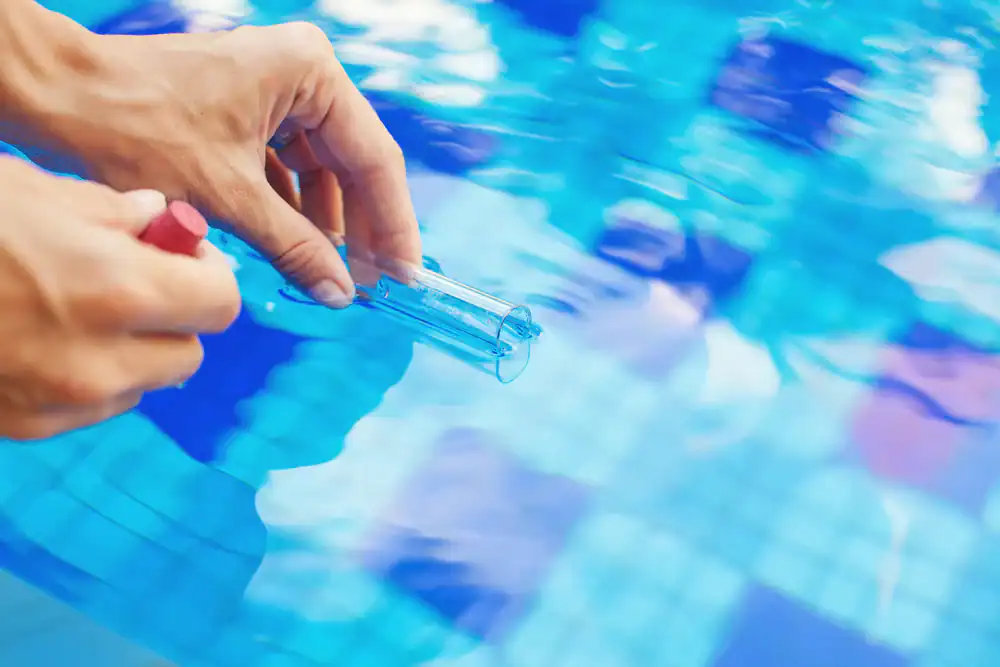
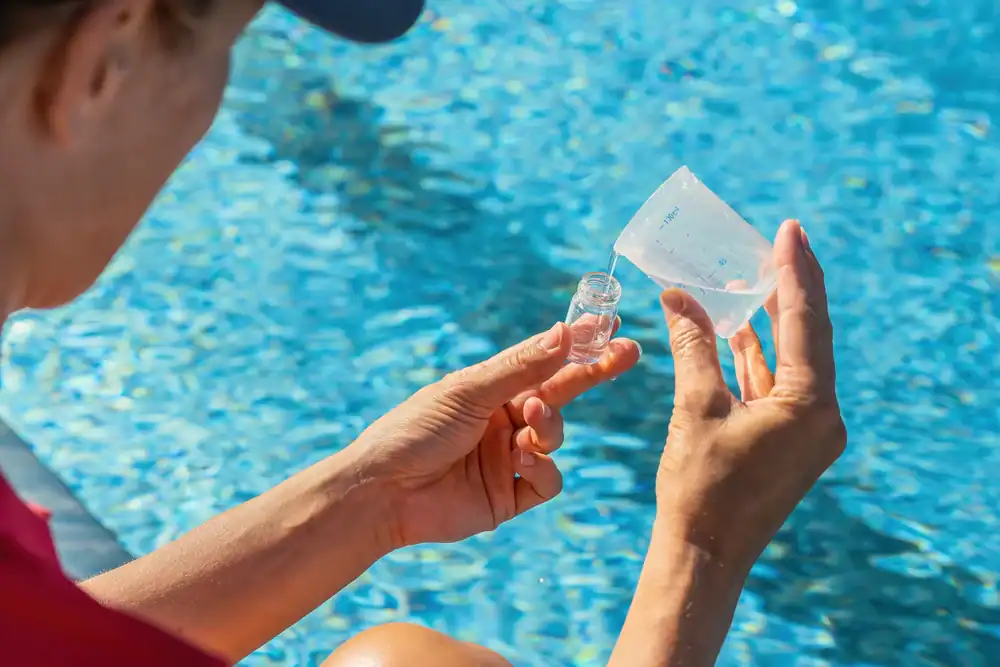
Grab a clean plastic bottle or use one of the sample containers we provide. Fill it with water from elbow-deep in your pool—not from the surface where debris floats, and not from the bottom where sediment sits. Screw the cap on tight and bring it to us.
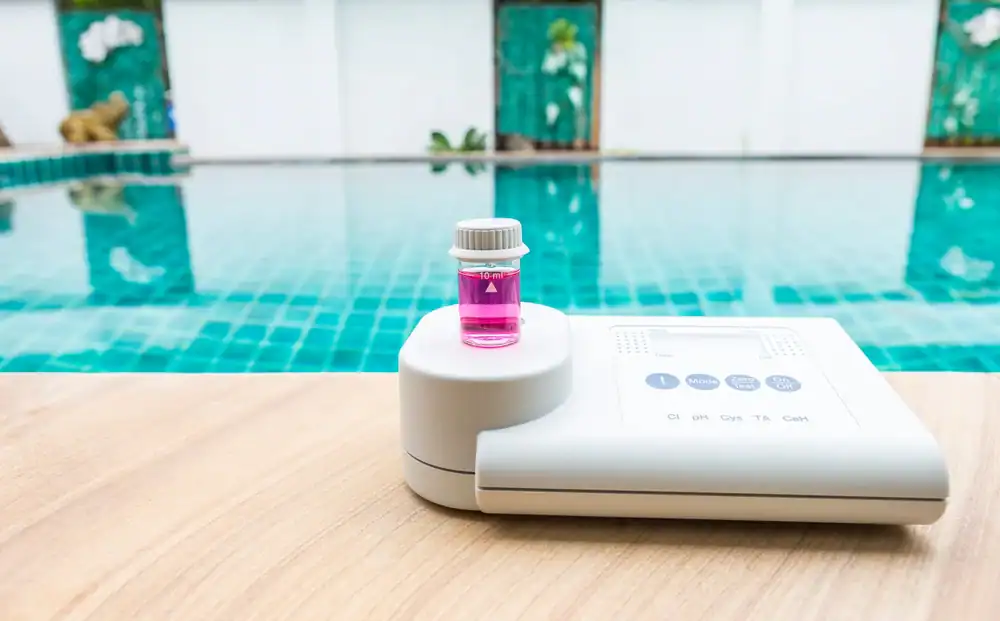
We run your sample through our testing equipment, which measures pH, free and total chlorine, alkalinity, calcium hardness, cyanuric acid, and a few other levels that matter. The whole process takes two to three minutes. You’re not waiting around.
You leave with a printed report that shows where each level currently sits and where it should be. We’ll tell you exactly what to add, how much, and in what order. If something’s way off, we’ll explain why it happened and how to prevent it next time.
This is a free service. No purchase required. No obligation. You can take our recommendations to any store you want. We offer it because we’d rather see pools in Hannah maintained correctly than watch people struggle with bad water all summer.
Ready to get started?
Every water analysis service we run covers the critical levels that determine whether your pool is safe and comfortable. pH tells us if your water is acidic or basic—too far either direction and you’re looking at equipment damage and irritated skin. Chlorine levels show whether you’ve got enough sanitizer to kill bacteria and prevent algae without overdoing it and creating that harsh chemical smell.
Alkalinity acts as a pH buffer, keeping your levels stable instead of bouncing around every time it rains. Calcium hardness prevents your water from becoming corrosive or forming scale on your tile and equipment. Cyanuric acid protects your chlorine from burning off in the sun, which matters a lot during South Georgia summers.
In Hannah, we see a lot of well water used to fill pools, and that can bring in metals and minerals that affect chemistry differently than city water. We also see how afternoon storms dump rain into pools and dilute chemical levels fast. Our testing accounts for those local factors, so the recommendations you get actually work for your specific situation.
You’re not just getting numbers on a page. You’re getting a roadmap to clear water that stays clear, based on what we’ve learned from decades of maintaining pools in this area.
Bring a sample in once a week during swim season, especially if you’re new to pool ownership. Once you understand how your pool behaves—how fast it uses chlorine, how your pH drifts, how rain affects your levels—you can stretch it to every two weeks if things stay consistent.
After heavy rain, after a pool party with a dozen kids in the water, or anytime your water looks off, bring in a sample regardless of your schedule. Those are the moments when your chemistry can swing hard, and catching it early prevents bigger problems.
If you’re only opening your pool seasonally, test it right after you open, then weekly through the summer, and once more before you close. That cadence keeps you ahead of issues instead of reacting to them.
Test strips give you a ballpark reading, and sometimes that ballpark is wrong. They expire, they degrade if the container gets exposed to moisture or sunlight, and the color matching is subjective. You’re comparing a wet strip to a printed chart and hoping you’re seeing the right shade.
Professional testing uses calibrated equipment that measures exact levels digitally. There’s no guessing. When we tell you your pH is 7.8, it’s 7.8—not “somewhere between 7.6 and 8.0.” That precision matters when you’re adding chemicals, because the difference between the right amount and too much can be a quarter cup.
We also test for levels that most home kits skip, like cyanuric acid and calcium hardness. Those aren’t optional—they directly affect how well your chlorine works and whether your equipment stays intact. You can’t manage what you don’t measure, and strips don’t measure enough.
Don’t try to fix everything at once. Water chemistry has an order, and if you add chemicals in the wrong sequence, you can make things worse or waste product.
Start with pH and alkalinity. Get those into range first, because they affect how well every other chemical works. If your pH is way off, your chlorine isn’t sanitizing effectively no matter how much you add. Once pH and alkalinity are stable, adjust your chlorine. Then handle calcium hardness and stabilizer if needed.
We’ll walk you through the sequence when you pick up your test results. If your water is seriously out of balance—like you’ve got algae growing or the water’s cloudy—we’ll also tell you if you need to shock the pool or take other steps beyond regular chemical adjustments. The goal is to get you back to clear, balanced water without wasting time or money on the wrong approach.
No appointment needed. Bring your sample by during business hours and we’ll test it while you wait. The process takes two to three minutes from the time you hand us the bottle to the time you’re walking out with your printed results.
If you’re in a rush, call ahead and let us know you’re coming. We can have your results ready by the time you arrive if you’re dropping off and coming back. But most people just wait—it’s faster than a drive-through.
Bring your sample in a clean container with a tight lid. An old water bottle works fine as long as it’s rinsed out and doesn’t have soap residue. If you don’t have anything, we’ve got sample bottles here you can take with you.
Collect your sample in the morning before the sun’s been beating down on your pool for hours, and before anyone’s been swimming. That gives you the most accurate baseline reading of where your chemistry actually sits.
If you test right after you’ve added chemicals, or right after a rainstorm, or while the pump’s been off all day, you’re getting a snapshot of an unusual moment—not your pool’s normal state. You want to know what your water looks like under typical conditions so the adjustments we recommend actually solve the problem instead of chasing a temporary spike or dip.
Scoop the sample from about elbow-deep, away from return jets and skimmers. Surface water can have pollen, sunscreen, and debris that skew results. Water at the bottom can have sediment. Middle depth, middle distance from the edges—that’s your most representative sample.
No. This is a free service with no strings attached. We’ll test your water, print your results, explain what you need to do, and you can take that information anywhere you want.
We offer the testing because we’ve been in the pool business in Douglas County for over 30 years, and we’d rather see pools maintained right than watch people struggle. If you want to buy chemicals from us, great. If you’d rather go somewhere else, that’s fine too.
What matters is that you’re making decisions based on accurate information instead of guessing with strips that might be expired or reading them wrong. Bad water chemistry costs you more in the long run—wasted chemicals, damaged equipment, algae treatments, resurfacing—than any single chemical purchase ever would. We’re trying to help you avoid that.