
Hear from Our Customers
You’re not sure if your water’s actually balanced. Those test strips at home give you colors that could mean three different things, and you’re buying chemicals based on a hunch. Meanwhile, your eyes burn after 20 minutes in the pool, or the water’s cloudy again by Thursday.
Here’s what changes when you get real water testing. You walk in with a sample, and in about three minutes, you’re holding a printout that shows exactly where your pH sits, how much chlorine is actually working, whether your alkalinity is throwing everything off, and what your mineral levels are doing to your equipment.
No more throwing money at algaecide that doesn’t work because your pH was the problem. No more replacing a pump that died early because your water was eating it from the inside. You get a clear plan, you follow it, and your pool stays clear.
We’ve been working with South Georgia pool owners since 2014, but the experience behind Deep Waters Pools goes back more than 30 years. We’ve built pools, fixed them, and maintained them through every kind of Georgia summer—the ones where it rains for a week straight and tanks your chlorine, and the ones where it’s 98 degrees and your algae blooms overnight.
We’re based in Douglas and we know what Hasty water does. We know how the heat accelerates chemical loss and how a single afternoon storm can throw off your balance for days. That’s why we offer completely free water testing using advanced lab-grade equipment—not because we’re trying to upsell you, but because we’d rather you fix the right problem the first time.
You’re not getting a sales pitch. You’re getting accurate numbers and honest recommendations from people who’ve seen it all.
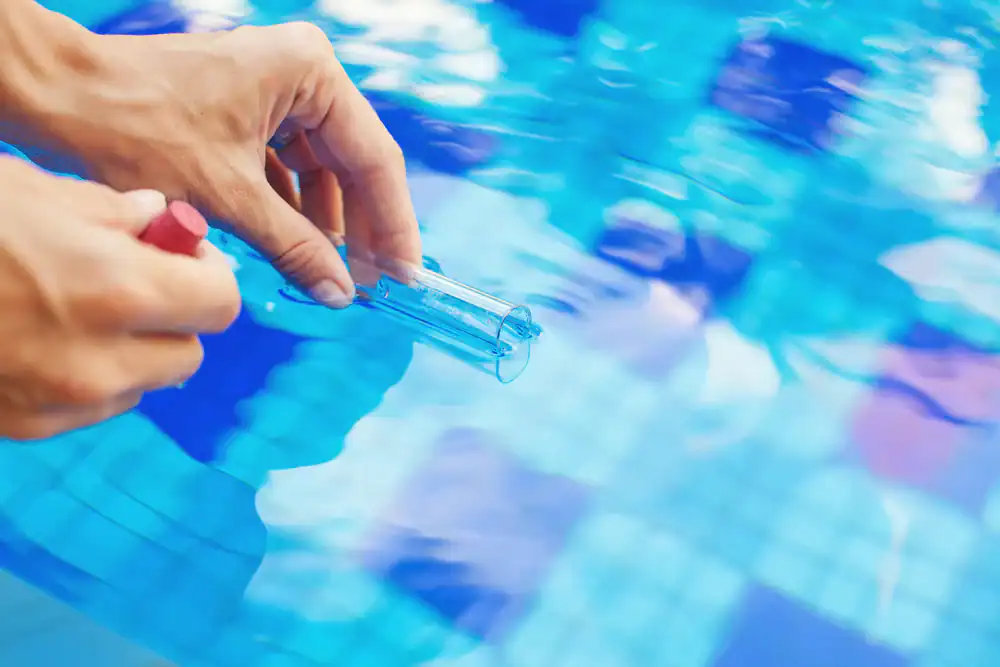
Grab a clean plastic bottle or use one of ours. Fill it with water from about elbow-deep in your pool—not right at the surface, not from the skimmer. Bring it in.
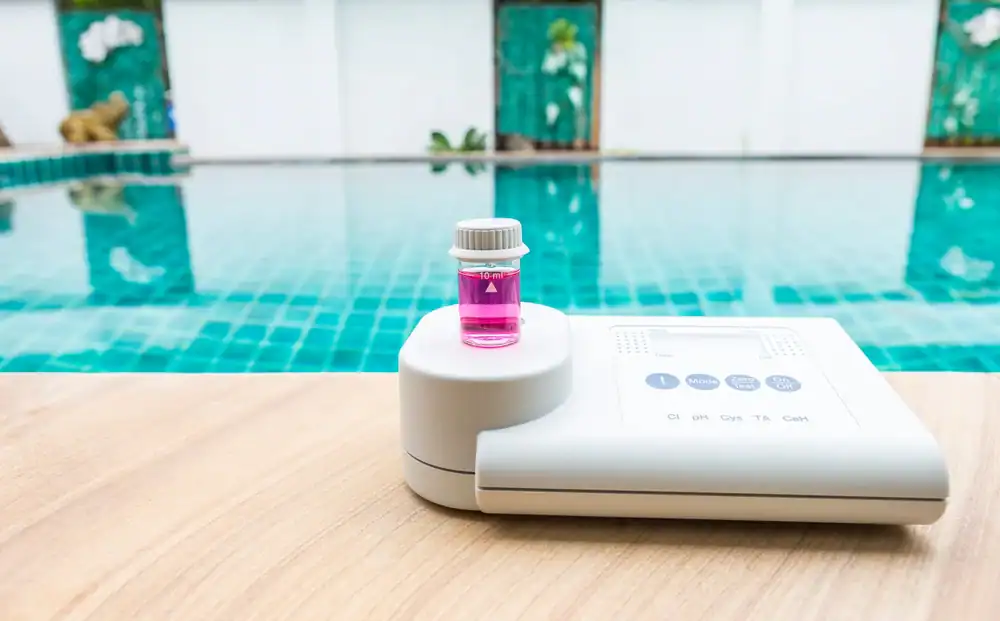
We run it through our testing system, which checks pH, free chlorine, total chlorine, alkalinity, calcium hardness, cyanuric acid, and other minerals that affect your water and your equipment. The whole process takes two to three minutes. You’re not waiting around.
You get a printed report that breaks down every number, shows you what’s out of range, and tells you exactly what to add and how much. If your pH is sitting at 7.9 and your chlorine isn’t doing its job because of it, you’ll know. If your calcium hardness is low and your plaster is starting to pull minerals from itself, you’ll see it before it becomes a refinishing job.
Walk out with the printout. Buy what you actually need. Fix what’s actually wrong.
Ready to get started?
This isn’t a three-panel strip that turns pink or yellow. You’re getting a full residential water test that measures everything that matters.
pH tells you if your water is acidic or basic—it should sit between 7.2 and 7.8. Outside that range, your chlorine stops working right, your water irritates skin and eyes, and your pool surfaces start to corrode or scale. Free chlorine shows how much sanitizer is actually available to kill bacteria—you want 1 to 3 ppm. Total alkalinity keeps your pH stable, calcium hardness protects your plaster and equipment, and cyanuric acid shields your chlorine from the Georgia sun.
In South Georgia, you’re dealing with heat that burns through chlorine faster than most places and summer storms that dilute everything overnight. Your water chemistry doesn’t behave like it does in a textbook. Our testing accounts for that. We’ve spent years watching how Hasty pools respond to the weather, the well water, the city water, and the brutal summer sun.
You’re not just getting numbers. You’re getting context that actually applies to your pool.
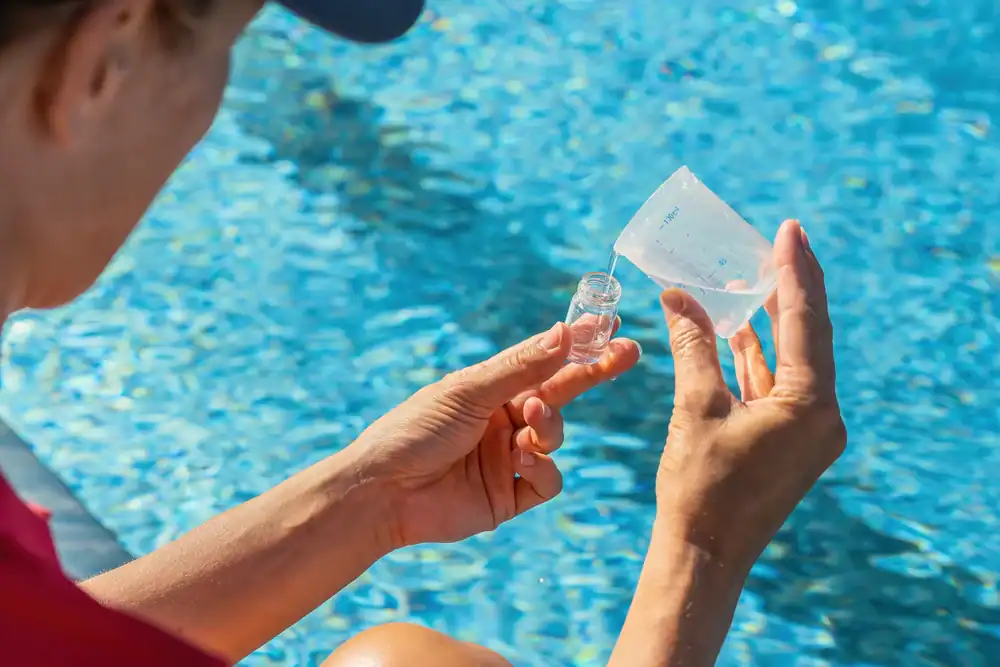
Once a week during swim season is the standard, but that changes based on how you’re using the pool. If you had a party with 15 people in the water all afternoon, test it the next day. If a thunderstorm rolls through and dumps two inches of rain in your pool, test it after. Heavy use and weather events throw off your balance faster than anything else.
Between professional tests, you can use strips at home to keep an eye on chlorine and pH. But strips don’t catch everything, and they’re not nearly as accurate. If your water looks off or feels off, don’t wait for your weekly schedule. Bring a sample in. It’s free, and it’s faster than guessing your way through three different chemical adjustments.
Most people who stay on top of weekly testing spend less on chemicals and repairs over the course of a year. You’re catching small problems before they become expensive ones.
Add muriatic acid or dry acid to bring it down. Your test printout will tell you exactly how much based on your pool’s volume. High pH means your chlorine isn’t sanitizing effectively, even if your chlorine reading looks fine. It also means you’re more likely to see scaling on your tile and equipment, and swimmers are going to complain about cloudy water.
Don’t just dump acid in and hope. Follow the dosage on your printout, add it slowly with your pump running, and retest in a few hours. If you overcorrect and drop your pH too low, you’ll create a different problem—corrosion. You want it between 7.2 and 7.8, ideally around 7.4 to 7.6.
High pH is common in South Georgia, especially if you’re dealing with well water or if your pool’s getting a lot of sun. It’s not a one-time fix. You’ll likely need to monitor it and adjust it throughout the season, which is why regular testing matters.
Because clear doesn’t mean safe or balanced. Your water can look perfect and still have a pH that’s way off, chlorine that’s too low to kill bacteria, or alkalinity that’s about to crash your whole system. You’re not seeing the chemistry—you’re seeing light passing through water.
This is why people get caught off guard. They skip testing because the pool looks fine, then suddenly they’ve got algae blooming or their pump starts making noise or someone gets an ear infection. The problems were building under the surface the whole time.
A water test catches what your eyes can’t. It shows you that your free chlorine is sitting at 0.5 ppm when it should be at least 1, or that your calcium hardness is so low that your plaster is starting to dissolve into the water. By the time you can see those problems, they’re already costing you money. Test regularly, even when everything looks good.
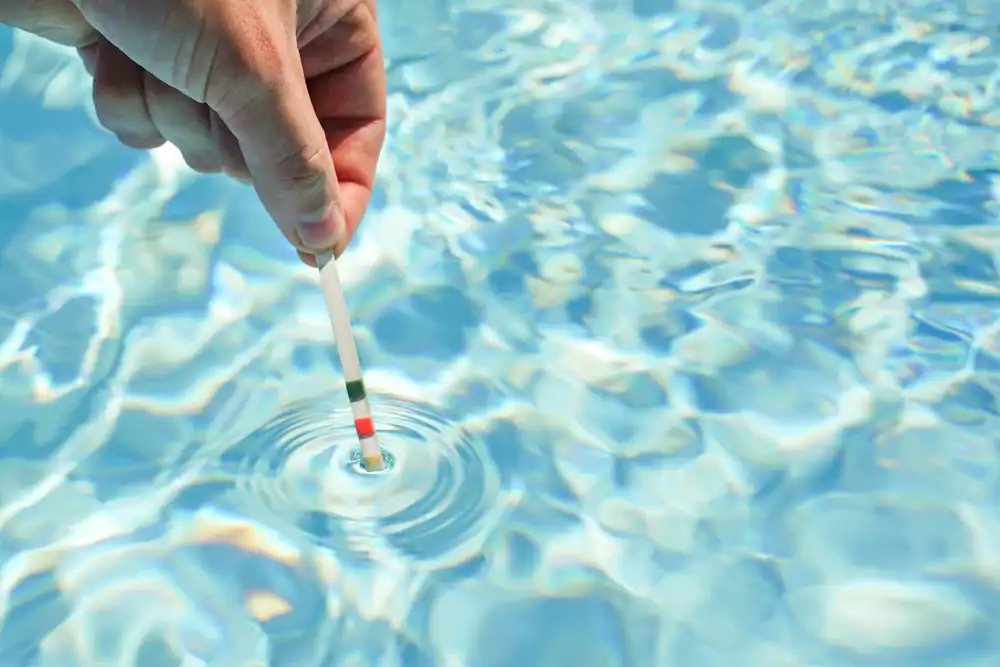
You can, but you’re working with less information and a lot more room for error. Test strips give you a rough idea of pH and chlorine, but they don’t test for everything that affects your pool. They won’t show you calcium hardness, cyanuric acid, or the difference between free chlorine and combined chlorine. And they’re hard to read accurately—is that square yellow-green or green-yellow? It matters.
Professional water testing uses lab-grade equipment that measures exact levels, not color ranges. You’re getting a printout with numbers, not a strip you’re holding up to a chart in bad lighting. That precision matters when you’re trying to fix a problem or prevent one.
Use strips between professional tests if you want to keep an eye on things. But don’t rely on them as your only source of information. They’re a tool, not a replacement for real testing. And since our testing is free, there’s no reason not to get the accurate version.
You end up fixing problems that could’ve been prevented, and you spend more money doing it. Unbalanced water eats through equipment. Low pH corrodes metal fittings, heater elements, and pump seals. High pH causes scaling that clogs filters and builds up on tile. Both extremes make your chlorine less effective, which means bacteria and algae get a foothold.
Then there’s the health side. Water that’s not properly sanitized can harbor E. coli, Pseudomonas, and other pathogens that cause skin infections, ear infections, and stomach issues. You’re not going to see them, but they’re there. And if your pH is off, swimmers are going to deal with red eyes, itchy skin, and irritated throats—even if your chlorine level looks okay.
Regular testing costs you nothing here. Skipping it costs you a new pump, a replaster job, or a pool that no one wants to swim in. It’s not about being paranoid. It’s about maintaining what you’ve invested in so it lasts and stays safe.
Yes, especially in South Georgia where summer storms are heavy and frequent. Rainwater dilutes everything in your pool—chlorine, pH balancers, alkalinity, all of it. A couple inches of rain can drop your chlorine level low enough that you’re basically swimming in untreated water. It also lowers your pH and alkalinity, which throws off your entire balance.
On top of that, rain brings in contaminants. You’re getting dirt, pollen, leaves, and whatever else was sitting on your deck or in the air. That organic material feeds algae and uses up whatever chlorine you have left. If you don’t test and adjust after a storm, you’re giving algae the perfect conditions to bloom.
After any significant rain, bring in a water sample. We’ll tell you what got diluted and what you need to add back. It takes a few minutes and saves you from spending the next week fighting green water. Georgia weather doesn’t cooperate with pool maintenance, so you’ve got to stay ahead of it.
Other Services we provide in Hasty