
Hear from Our Customers
You’re not a chemist. You shouldn’t have to be one just to keep your pool safe for your family.
Georgia’s sun breaks down chlorine faster than you can add it. One heavy rain dumps acidic water that throws your pH off completely. You test with strips that give you vague colors, add chemicals based on a guess, and hope it works.
That’s exhausting. And it’s expensive when you get it wrong.
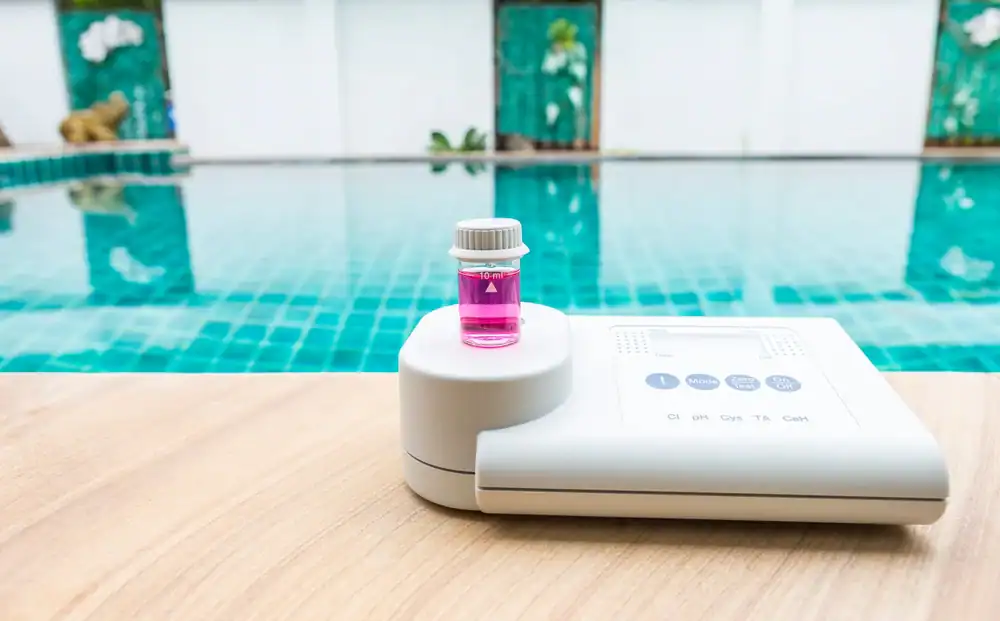
Professional pool water analysis takes the guesswork out. You get exact numbers for chlorine, pH, alkalinity, calcium hardness—everything that matters. You know what’s actually happening in your water, not what a faded test strip suggests. You fix problems before they become expensive repairs or unsafe swimming conditions.
Your pool stays balanced. Your equipment lasts longer. Your family swims without skin irritation or red eyes. You stop throwing money at chemicals that might not even be the right fix.
We serve pool owners throughout Henderson Still and Coffee County. We understand what South Georgia weather does to pool chemistry because we deal with it every single day.
We’ve seen what happens when pH drifts all winter. We know how fast algae takes over in July heat. We understand why your chlorine disappears faster some weeks than others.
That’s why we offer free water testing. Not free if you buy something—just free. You bring in a water sample, we test it properly, and we tell you exactly what it needs. If you want us to handle the chemicals, great. If you want to do it yourself, that’s fine too. Either way, you get accurate information you can actually use.
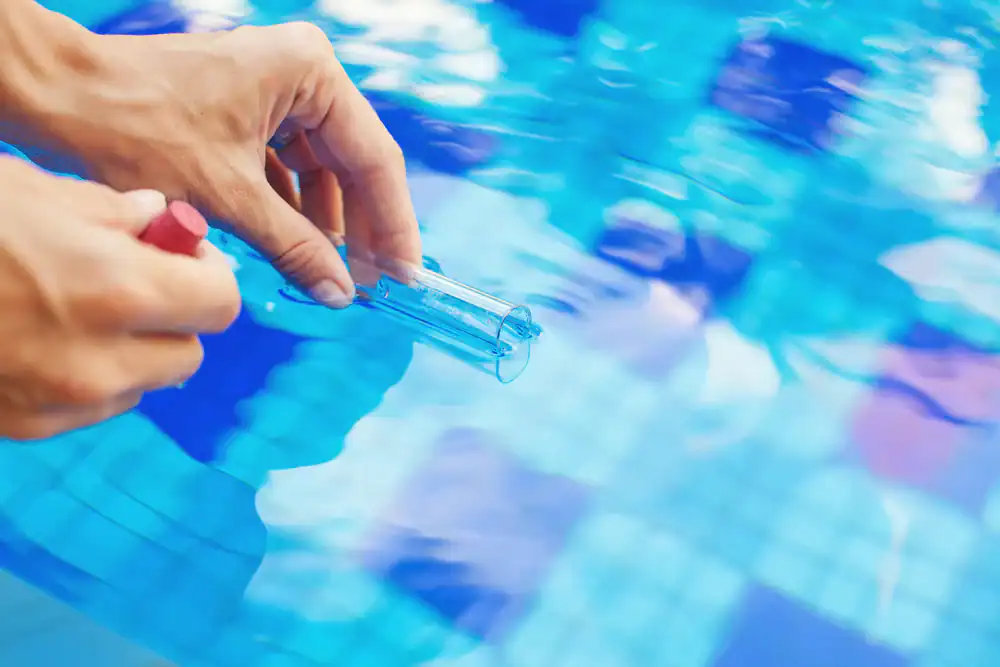
Grab a clean plastic bottle or container. Doesn’t need to be anything fancy—a water bottle works fine.
Take your sample from about elbow-deep in your pool, away from return jets and skimmers. You want water that represents the whole pool, not just what’s near the surface or by the equipment.
Bring it to us. We test it using professional-grade equipment that measures chlorine levels, pH, total alkalinity, calcium hardness, and stabilizer. Takes just a few minutes.
You get a printout with exact numbers and clear instructions. We’ll explain what each reading means and what needs adjusting. If your pH is 7.8 and needs to come down to 7.4, we tell you exactly how much acid to add based on your pool size. If your chlorine is low, we explain whether you need shock, regular chlorine, or stabilizer.
No guessing. No vague color matching. Just real numbers and a clear plan.
Ready to get started?
Every residential water test covers the six critical factors that determine whether your pool is safe and properly balanced.
Chlorine keeps bacteria and algae from growing. Too little and you’re swimming in a petri dish. Too much and you’re dealing with chemical burns and bleached swimsuits. We measure free chlorine and total chlorine to make sure you have enough protection without overdoing it.
pH affects everything else. Georgia’s rain is naturally acidic—usually around 5.5 to 6.0—which pulls your pool’s pH down fast. When pH drops below 7.2, your water becomes corrosive and eats away at equipment. When it climbs above 7.8, chlorine stops working and you get cloudy water. We measure it precisely so you can keep it in the sweet spot.
Alkalinity acts as a pH buffer. It’s what keeps your pH from bouncing all over the place every time it rains or someone jumps in. Henderson Still pool owners need to watch this closely because our weather changes constantly.
Calcium hardness protects your pool surfaces. Too low and water pulls calcium from plaster or grout. Too high and you get scaling on tiles and equipment. We test it so you can prevent damage before it starts.
Stabilizer protects chlorine from UV rays. South Georgia sun is brutal on chlorine—it breaks it down in hours without proper stabilizer levels. But too much stabilizer and your chlorine stops working entirely. We measure it so you know whether you need to add more or drain some water to bring it down.
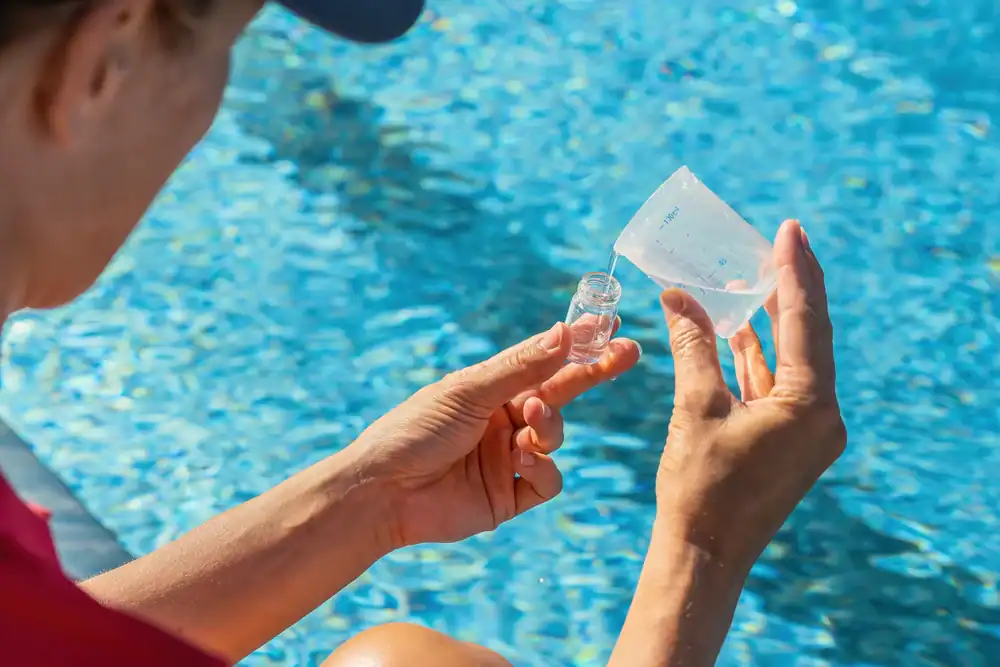
Test at least once a week during swimming season. Twice a week is better if you’re using your pool heavily or if we’re in the middle of summer heat.
Georgia weather throws your chemistry off constantly. A thunderstorm dumps acidic rain that lowers pH and dilutes chlorine. A week of 95-degree days burns through chlorine faster than normal. A bunch of swimmers in one weekend adds oils, sweat, and sunscreen that mess with your balance.
Weekly testing catches problems while they’re still easy to fix. You add a little acid or a bit of chlorine and you’re done. Wait two or three weeks and you’re dealing with algae blooms, cloudy water, or equipment damage that costs real money to fix.
Bring a sample by whenever it’s convenient. We test it while you wait and you’re back home in minutes.
Test strips give you a ballpark guess. Professional testing gives you exact numbers you can actually use.
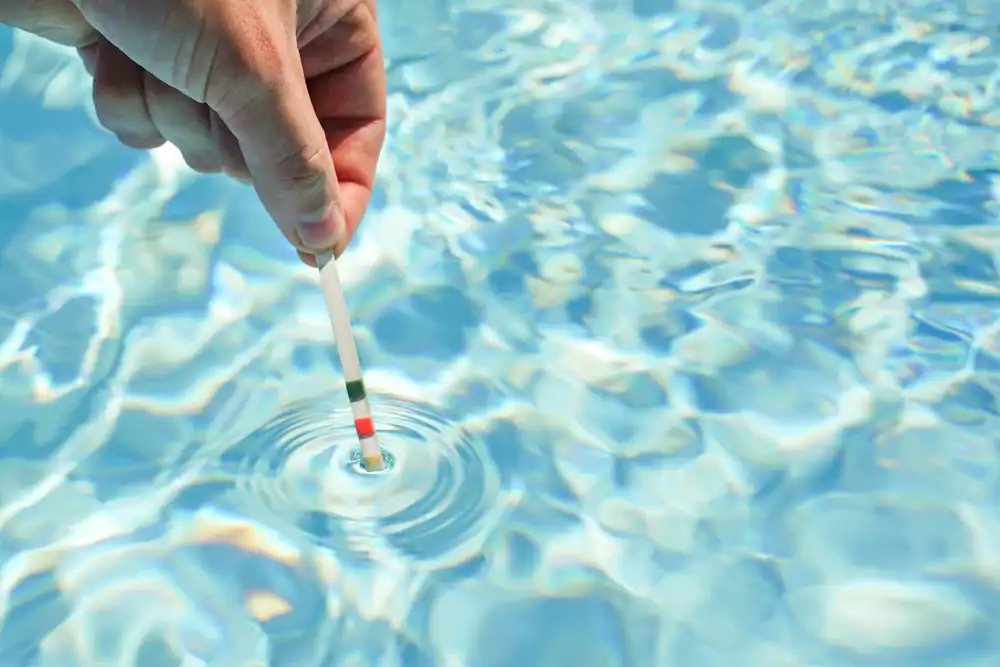
Strips rely on color matching. You dip it in, wait a few seconds, and try to match the colors to a chart. Problem is, the colors fade in sunlight. Your eyes interpret shades differently depending on lighting. The strips themselves lose accuracy over time, especially in Georgia humidity.
You might think your pH is 7.4 when it’s actually 7.8. That difference matters. At 7.4, your chlorine works efficiently. At 7.8, it’s only about 50% effective, which is why you’re adding chlorine constantly and still fighting algae.
Professional water quality testing uses calibrated equipment that measures exact levels. You get a printout that says your pH is 7.82, your chlorine is 1.2 ppm, your alkalinity is 95 ppm. No guessing. No squinting at colors. Just accurate data that tells you precisely what to add and how much.
Georgia’s climate is tough on pool chemistry. You’re fighting intense UV exposure, temperature swings, and acidic rain all at once.
The sun breaks down chlorine through a process called photodegradation. UV rays literally destroy chlorine molecules, which is why your chlorine level drops faster in July than it does in April. Without enough stabilizer (cyanuric acid), you can lose most of your chlorine in a single sunny afternoon.
Rain in Henderson Still typically has a pH between 5.5 and 6.0—that’s acidic. When it rains, you’re dumping acidic water into your pool, which lowers pH and alkalinity immediately. Heavy rain also dilutes all your chemicals, so everything drops at once.
Heat speeds up chemical reactions and biological growth. When water temperature climbs into the mid-80s and higher, algae and bacteria multiply faster. Chlorine gets used up faster fighting that growth. Everything happens quicker in hot water.
That’s why professional pool water testing matters here. You’re not just maintaining a pool—you’re constantly adjusting for weather that’s actively working against you.
Yes. Bring a sample whenever you need one tested. No appointment necessary, and there’s no charge.
Use a clean container—a water bottle, plastic cup, whatever you have. Take the sample from about elbow-deep in your pool, away from jets and skimmers. That gives you water that represents your whole pool, not just surface water or water that just came out of your filter.
We test it while you wait. Takes maybe five minutes. You get a printout with all your levels and clear instructions on what needs adjusting.
If you want us to add the chemicals, we can do that. If you’d rather handle it yourself, that’s fine too. Either way, you walk out knowing exactly what your water needs. No sales pitch, no pressure—just accurate information.
Bring samples as often as you want. Once a week is smart during summer. Before and after big pool parties. After heavy rain. Whenever something looks off. It’s free, so use it.
We tell you exactly what it needs and help you decide the best way to fix it. Some problems you can handle yourself with the right chemicals. Others need professional attention.
If your pH is a bit high or your chlorine is low, that’s straightforward. Add some acid to bring pH down. Shock the pool to raise chlorine. We give you the exact amounts based on your pool size and current levels.
If you’ve got algae growth, severely low chlorine, or multiple things wrong at once, you’re looking at a more involved fix. You might need to shock heavily, brush thoroughly, and retest in 24 hours. Or you might need to partially drain and refill if stabilizer levels are through the roof.
We walk you through what’s happening and why. You understand the problem, you know what fixes it, and you can decide whether to handle it yourself or have us take care of it. No surprises, no confusion—just a clear plan to get your water back where it should be.
The key is catching problems early through regular water testing. Fix a small imbalance today and it takes five minutes. Ignore it for three weeks and you’re dealing with green water and a weekend of work.
No. We test water for any pool owner in Henderson Still and the surrounding area. You don’t need to be a regular service customer to bring in a sample.
This isn’t a bait-and-switch where testing is only free if you buy something. It’s actually free. You bring water, we test it, we give you results and recommendations. That’s it.
Some pool owners prefer to handle their own maintenance but want accurate testing they can trust. That’s completely fine. Bring samples whenever you need them tested.
Other pool owners realize they’d rather have someone else handle the chemistry and maintenance. Also fine. We’re here if you decide you want help.
The point is to give Henderson Still pool owners access to professional water analysis without games or gimmicks. Your pool needs proper testing to stay safe and clear. We provide that testing. How you use the information is up to you.
Other Services we provide in Henderson Still