
Hear from Our Customers
You’re not sure if your chlorine is too high or your pH is off. The test strips you bought give you colors that don’t quite match the chart, and you’re second-guessing every chemical you add. One week the water looks cloudy, the next it’s burning your kids’ eyes.
Here’s what changes when you know your water quality is dialed in: you stop wasting money on chemicals you don’t need. Your equipment lasts longer because the water isn’t eating away at metal parts or scaling up your heater. Your family swims without red eyes or itchy skin. And you’re not spending Saturday afternoons trying to fix a problem you can’t see.
Professional pool water testing gives you the actual numbers. We check chlorine levels, pH balance, alkalinity, calcium hardness, and stabilizer—the stuff that matters. Then we tell you what to adjust and why. You’re not guessing anymore.
We’ve been working with pools in this area since before we opened our doors in 2014. Our team brings over 30 years of hands-on experience building and maintaining in-ground pools across South Georgia. We know what Kirkland’s water does to pools because we’ve seen it hundreds of times.
You’re dealing with well water or city water that’s already got its own chemistry. Then you add heat, humidity, pollen, and heavy summer use. We’ve dialed in water chemistry for pools in every condition this region throws at you. That’s why we offer free water testing—it’s how we help you keep your pool right without the trial-and-error that costs you time and money.
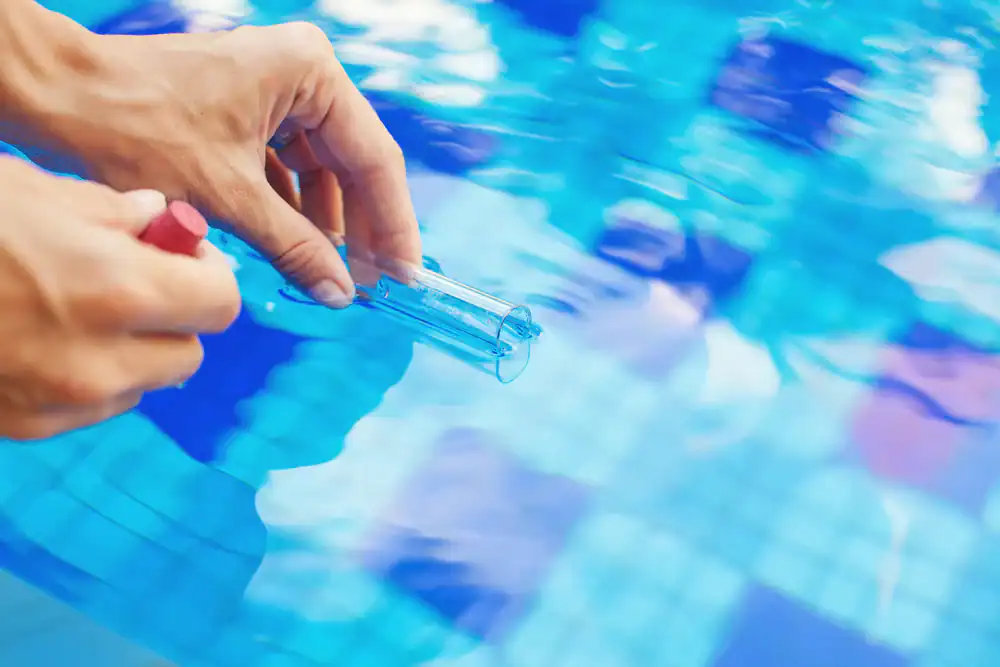
Grab a clean plastic bottle and collect a water sample from about elbow-deep in your pool—not right at the surface, not off the bottom. Bring it to us in Kirkland, and we’ll run it through our testing equipment while you wait or drop it off if you’re in a hurry.
We’re checking six key levels: free chlorine, pH, total alkalinity, calcium hardness, cyanuric acid, and any metals that might be present. These aren’t the same tests you get from a drugstore strip. Our equipment gives us precise readings so you’re not working with rough estimates.
Once we have your results, we’ll walk you through what they mean in plain terms. If your pH is low, we’ll explain why that’s causing your eyes to burn and what it’s doing to your pool’s surface. If your calcium is high, we’ll show you how that leads to scaling. Then we’ll write down exactly what you need to add, how much, and in what order. You leave with a clear plan, not a sales pitch.
Ready to get started?
You get a complete residential water test that covers the six essential parameters every pool owner needs to monitor. We’re testing for sanitizer levels to make sure your water is safe, pH to prevent equipment corrosion and skin irritation, alkalinity to keep your pH stable, calcium hardness to avoid etching or scaling, and stabilizer to protect your chlorine from burning off in Georgia sun.
South Georgia’s climate makes water chemistry tricky. The heat accelerates evaporation, which concentrates your chemicals. Afternoon thunderstorms dump phosphates and nitrates into your pool, feeding algae. High humidity means your pool gets used more, which burns through chlorine faster. If you’re on well water around Kirkland, you might be starting with iron or manganese that turns your water brown the second you add chlorine.
We account for all of that when we analyze your water. You’re not getting a generic printout—you’re getting advice based on what we’ve learned from years of maintaining pools in this exact area. And because this service is free, you can come back weekly during peak season or monthly in the off-season without worrying about testing costs eating into your maintenance budget.
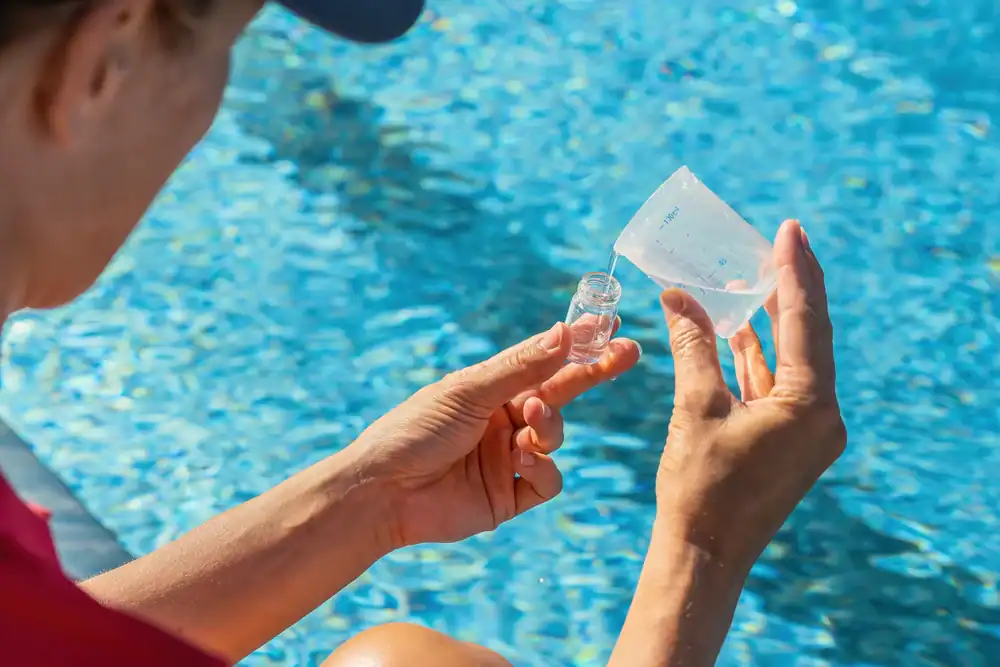
Test your water weekly during swimming season—roughly May through September in South Georgia. That’s when heat, heavy use, and afternoon storms throw your chemistry off faster than you can keep up with it. You’re adding chlorine, your kids are swimming every day, and rain is washing pollen and debris into the pool. All of that changes your water balance.
In the off-season, you can stretch it to every two to four weeks, depending on whether you’re keeping the pool open or you’ve closed it down. If you’re running your pump and maintaining the water through winter, monthly testing keeps you ahead of any issues. If you’ve winterized and covered it, you can test less frequently—but you should still check it before you start adding chemicals in the spring.
After heavy rain, a pool party, or if you notice the water looks off, bring in a sample even if it hasn’t been a full week. Waiting too long means small problems turn into expensive ones.
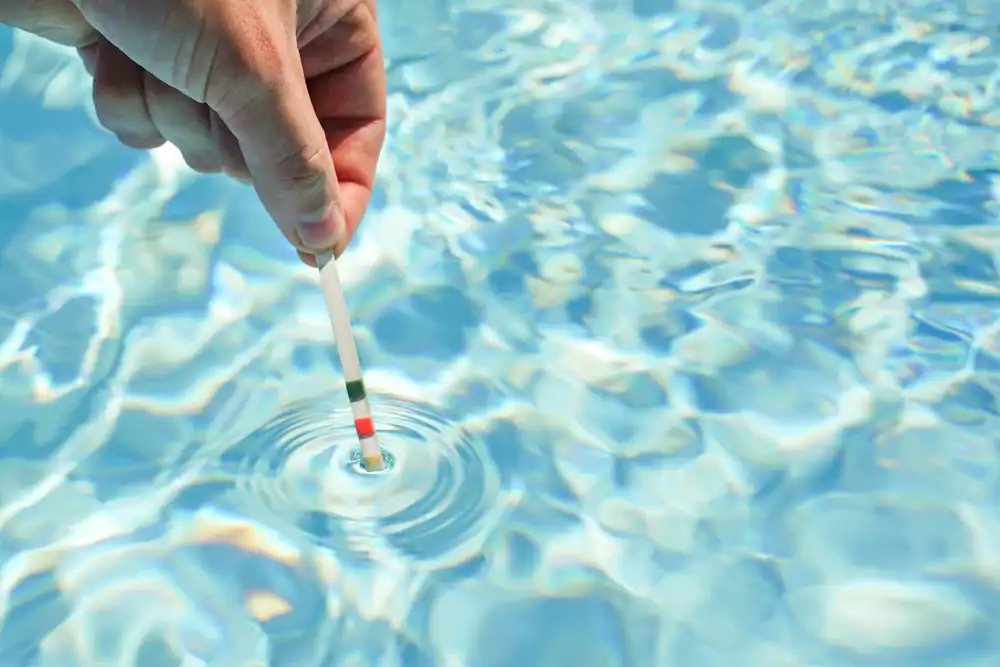
Test strips give you a ballpark range. They’re useful for a quick check between professional tests, but they’re not precise enough to dial in your chemistry when something’s wrong. The color matching is subjective, the strips degrade if they get humid, and they don’t test for everything that matters—most strips skip calcium hardness and cyanuric acid entirely.
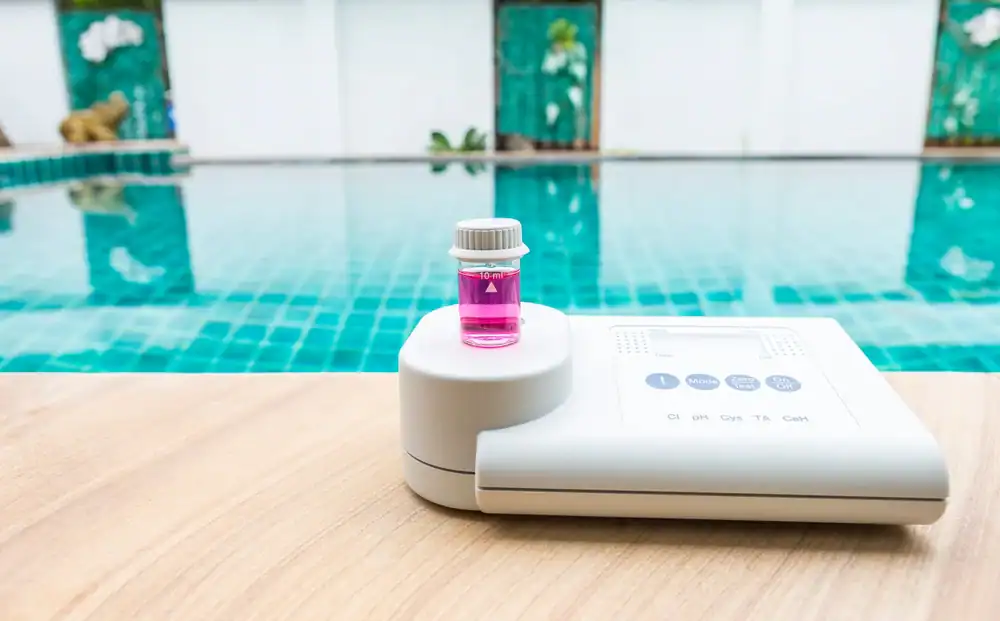
Professional water analysis uses calibrated equipment that measures exact parts per million. We’re not eyeballing a color and guessing if it’s closer to 7.2 or 7.6—we’re giving you a precise pH reading so you know exactly how much acid or base to add. We’re also testing for metals, phosphates, and other contaminants that strips won’t catch but that cause real problems in South Georgia pools.
The biggest difference is what happens after the test. Strips tell you something’s off, but they don’t tell you why or what to do about it. We explain what’s causing the issue, how it’s affecting your pool, and what steps to take to fix it. You’re not left guessing.
Cloudy water usually means your filtration isn’t keeping up, your chemistry is out of balance, or you’ve got contaminants the chlorine can’t handle on its own. If your pH or alkalinity is off, chlorine doesn’t work efficiently—it’s in the water, but it’s not doing its job. If your calcium hardness is too low, the water pulls calcium from your pool’s surface, creating a haze. And if your filter is clogged or your pump isn’t running long enough, you’re not circulating and filtering out the fine particles that make water look cloudy.
In Kirkland, we also see cloudiness from phosphates and nitrates that wash into pools during storms. These feed algae and create a breeding ground for bacteria, which overwhelms your chlorine. You can dump in more sanitizer, but if the underlying issue is phosphates or poor circulation, the cloudiness comes right back.
Bring in a water sample and we’ll pinpoint what’s causing it. Most of the time it’s a combination of two or three small issues that are easy to fix once you know what you’re dealing with. Cloudiness isn’t something you have to live with.
Absolutely. Low pH is acidic, and acidic water corrodes metal components in your pump, heater, and filter. It also etches plaster and eats away at grout lines. You’ll see pitting on your pool’s surface, and metal parts start failing years before they should. High pH does the opposite—it causes calcium to precipitate out of the water and form scale on your tile, inside your heater, and on your filter grids. Once scale builds up, your heater works harder and less efficiently, and your filter can’t do its job.
Low calcium hardness makes your water aggressive, meaning it’s looking for calcium wherever it can find it—usually from your pool’s plaster or concrete. High calcium leads to cloudy water and crusty deposits that are tough to remove. And if your chlorine or stabilizer levels are off for too long, you’re either damaging your pool’s finish with over-chlorination or letting algae take hold, which stains surfaces and clogs filters.
We’ve seen pools in South Georgia need replastering or equipment replacement years early because the water chemistry was ignored. A free water test every week or two is a lot cheaper than resurfacing your pool or replacing a heater.
Bring a clean plastic water bottle or container—something that held water or soda, not chemicals or milk. Rinse it out with pool water first so you’re not contaminating your sample with whatever was in there before. Collect the sample from about 12 to 18 inches below the surface, away from return jets and skimmers. You want water that’s representative of the whole pool, not just what’s sitting on top or getting pushed around by your circulation system.
If you’ve added chemicals in the last four hours, wait before collecting your sample. You want the water to circulate and mix thoroughly so we’re testing what’s actually in the pool, not a concentrated pocket of whatever you just poured in. And if you can, bring the sample in the same day you collect it—water chemistry can shift if it sits in a hot car or in sunlight for too long.
That’s it. No appointment needed. Just bring the sample to our location in Kirkland, and we’ll get you results and a treatment plan while you wait or within a few hours if you need to drop it off.
It’s free. No purchase required, no service contract, no catch. We test your water, give you the results, and tell you what your pool needs. If you want to buy the chemicals from us, great. If you’d rather pick them up somewhere else, that’s fine too—we’ll still give you the same information and the same level of service.
We offer free testing because it’s how we help pool owners in Kirkland maintain their pools correctly. We’ve seen too many people waste money on chemicals they don’t need or damage their equipment because they were guessing at what to add. When you know what your water actually needs, you spend less, your pool stays cleaner, and your equipment lasts longer. That’s good for you, and it builds trust with us.
We’ve been doing this for over 30 years. We’re not trying to upsell you or push products you don’t need. We’re here to give you accurate information so you can make the right call for your pool. That’s the whole point.
Other Services we provide in Kirkland