
Hear from Our Customers
Those test strips from the pool store? They’re giving you rough estimates at best. And when your water chemistry is off by even a little, you’re looking at cloudy water, burning eyes, corroded equipment, and a lot of money spent fixing problems that didn’t need to happen.
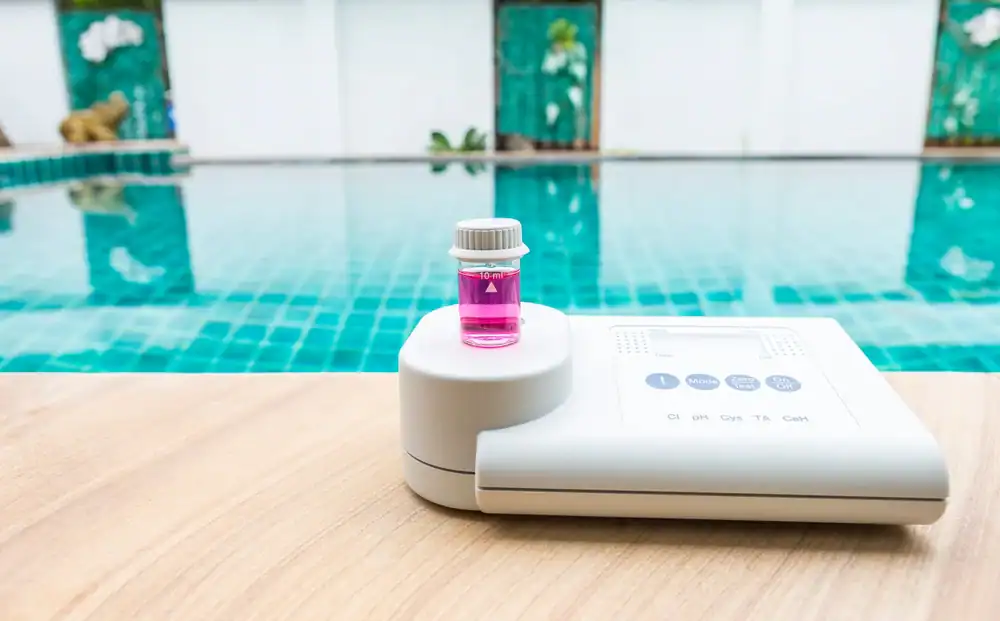
Professional pool water analysis uses the same technology you’d find in medical labs. We’re measuring pH, chlorine levels, alkalinity, calcium hardness, and other factors that determine whether your water is safe, comfortable, and protecting your investment. The test takes about three minutes. You get a full printout of what’s happening in your water right now and what it needs.
Here’s what balanced water actually does for you: swimmers don’t get out with red eyes or itchy skin. Your pool finish doesn’t pit or stain. Your pump, heater, and filter last longer because they’re not fighting corrosive or scaling water. You use fewer chemicals because you’re treating the right problems instead of guessing. And your water stays clear between cleanings because everything is working the way it should.
We’ve been working with pool owners in Leliaton, GA and throughout Douglas County since the early 1990s. We’ve built custom inground pools, repaired equipment, and tested thousands of water samples. We’re licensed, insured, and we know how South Georgia weather affects your water chemistry.
Summer heat in Leliaton means your chlorine burns off faster. Heavy rains dilute your chemicals. Well water in parts of Douglas County can introduce minerals that throw off your balance. We account for all of it because we’ve seen it all. When you bring us a water sample, you’re getting recommendations based on decades of local experience, not a generic chart.
This service is free because we’d rather help you maintain your pool correctly than watch you struggle with problems that could’ve been prevented. That’s how we’ve stayed in business here for 30 years.
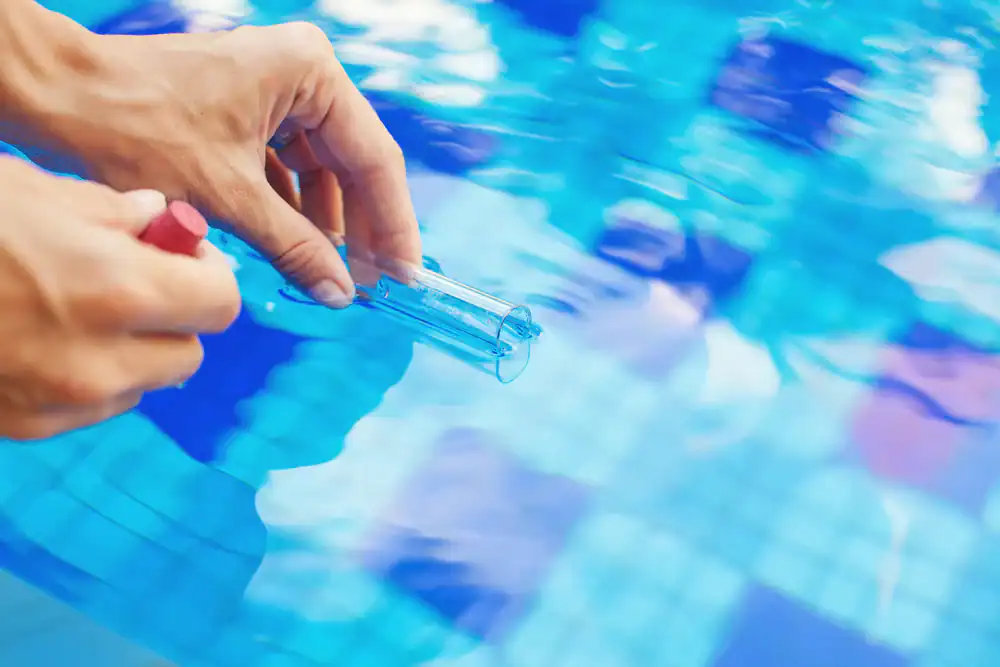
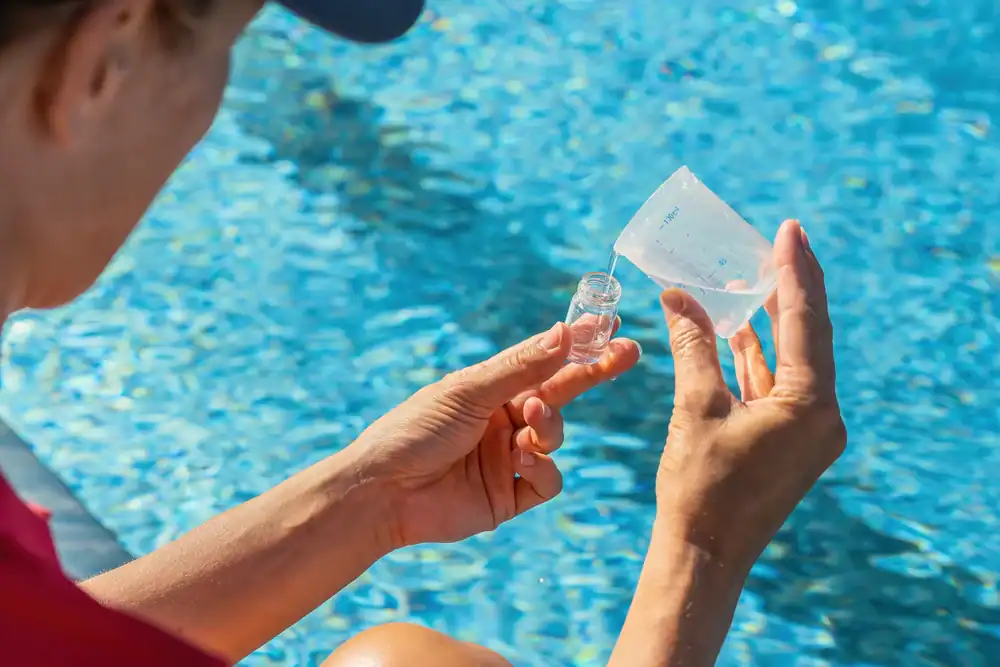
Grab a clean plastic bottle—a water bottle works fine. Reach down about elbow-deep into your pool, away from the skimmer and any return jets, and fill it up. Cap it and bring it to us. That’s it.
We run your sample through our testing equipment, which measures the levels of every chemical and mineral that matters. This isn’t a color-matching test strip situation. We’re getting precise numbers: your pH down to the decimal, your calcium hardness in parts per million, your chlorine levels, stabilizer, alkalinity, all of it.
The whole process takes two to three minutes. You’ll get a printout showing exactly where your water stands right now and what needs to be adjusted. If your pH is low, we’ll tell you how much pH increaser to add. If your calcium is high, we’ll explain what that means for your equipment and how to manage it. You walk out knowing exactly what to do, and you didn’t pay a dime for the service.
Ready to get started?
We’re measuring everything that affects how your water looks, feels, and performs. pH tells us if your water is acidic or basic—too low and it’s corrosive, too high and your chlorine stops working. Total alkalinity acts as a pH buffer, keeping things stable. Calcium hardness protects your pool surface and equipment from damage. Free chlorine is what’s actually sanitizing your water right now. Total chlorine includes chlorine that’s already done its job. Cyanuric acid protects your chlorine from UV breakdown but too much makes chlorine ineffective.
In Leliaton and Douglas County, we also watch for issues specific to South Georgia. Some well water here contains elevated minerals that affect water balance. Summer sun is intense, burning through chlorine faster than you’d expect. Afternoon thunderstorms are common, diluting your chemicals and introducing contaminants. We factor in these local conditions when we give you recommendations.
You’re not just getting numbers on a page. You’re getting context for what those numbers mean for your specific pool in this specific area, plus clear instructions on how to fix what needs fixing. That’s the difference between professional water testing and doing it yourself with a kit.
Bring us a sample every two weeks during swimming season, and once a month in the off-season if you’re keeping your pool open. That’s the baseline for staying ahead of problems.
If you’re dealing with cloudy water, algae, or anything that doesn’t look right, test immediately. After heavy rain, test within a day or two because your chemical levels just got diluted. If you’ve added a large amount of any chemical, test again in 24 hours to make sure you hit the target. When you first open your pool for the season, test before you do anything else so you know what you’re working with.
Home test strips are fine for a quick check between professional tests, but they’re not accurate enough to base treatment decisions on. They fade in sunlight, they expire, and they give you a color range instead of a precise number. That’s why we offer free testing—so you can get real data as often as you need it without worrying about the cost.
Low pH turns your water acidic, which corrodes metal fixtures, etches plaster, and makes eyes burn. High pH makes your water basic, which causes scaling on your tile and equipment, turns your water cloudy, and makes chlorine less effective at killing bacteria.
Low alkalinity means your pH will swing wildly with every chemical you add. High alkalinity makes it nearly impossible to adjust your pH. Low calcium pulls calcium from your pool surface, causing pitting and roughness. High calcium creates scale buildup that clogs your filter and coats your heater elements.
Chlorine that’s too low means bacteria and algae start growing within days. You’ll see green water, slimy walls, and unsafe swimming conditions. Chlorine that’s too high irritates skin and eyes and bleaches swimsuits. Every one of these problems costs you money—in chemicals, in repairs, in replastering, in equipment replacement. Keeping your water balanced isn’t optional maintenance. It’s protecting everything you’ve invested in your pool.
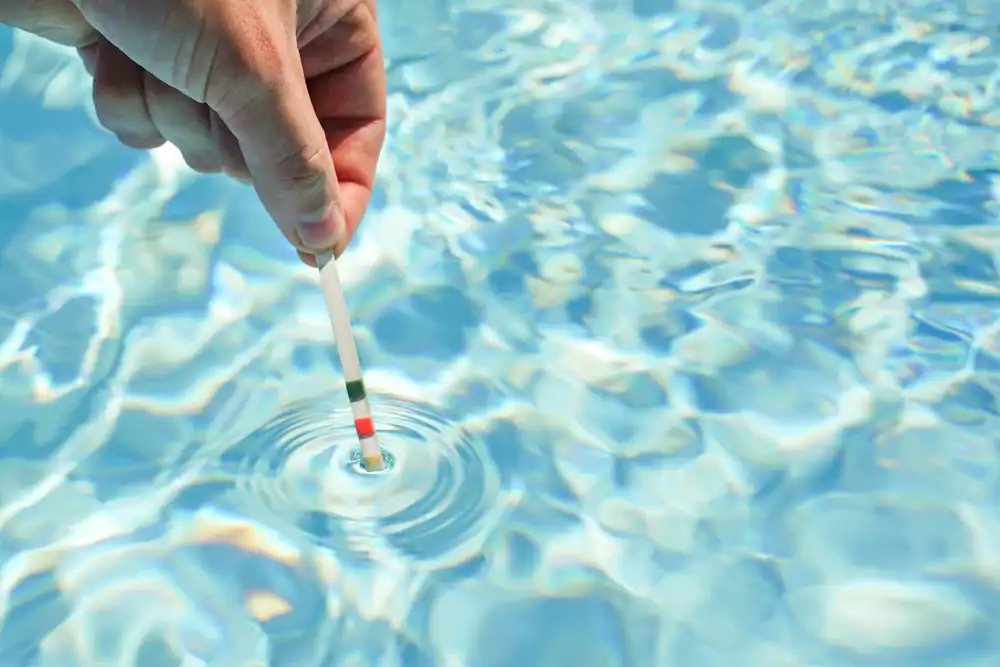
Test strips give you a rough idea, but they’re not precise enough to prevent problems. You’re matching colors to a chart, and that color changes based on lighting, how long you wait, and whether the strips are fresh or expired.
Our testing equipment measures your water the same way a chemistry lab does. We’re getting exact numbers, not color ranges. That precision matters because small differences in pH or alkalinity can cause big problems over time. A pH of 7.2 is ideal. A pH of 6.8 is actively damaging your pool. Test strips can’t tell you the difference.
The other issue is that strips only test a few parameters. We’re testing everything that affects your water quality and giving you a complete picture. You might think your chlorine is fine based on a strip, but if your cyanuric acid is too high, that chlorine isn’t working. We catch those relationships because we’re looking at the whole system. And since this service is free, there’s no reason to rely on less accurate methods.
Test your water within a few hours of collecting it for the most accurate results. Water chemistry can shift in the bottle, especially if it sits in a hot car or in direct sunlight.
Collect your sample in a clean bottle—rinse it with pool water first if you’re not sure it’s clean. Don’t use a bottle that had soap, juice, or anything else in it because residue will affect the test. Reach down about elbow-deep into your pool, away from the skimmer and return jets, so you’re getting water that represents the whole pool, not just the surface.
Cap it tight and bring it to us the same day if possible. If you can’t make it in right away, keep the sample in a cool, dark place—not outside, not in your car. The faster we test it, the more accurate your results will be. And if you’re dealing with a problem like cloudy water or algae, test immediately so we can tell you what’s actually happening instead of guessing.
Your pH should sit between 7.2 and 7.6, with 7.4 being ideal. That’s the range where chlorine works efficiently, water feels comfortable, and your pool surfaces stay protected. Total alkalinity should be between 80 and 120 parts per million to keep your pH stable. Calcium hardness should be between 200 and 400 ppm—lower and your water pulls calcium from your pool surface, higher and you get scaling.
Free chlorine should be between 1 and 3 ppm for regular maintenance, or higher if you’re shocking the pool. Cyanuric acid should be between 30 and 50 ppm to protect your chlorine from the sun without making it ineffective. If you have a saltwater pool, your salt level should be between 2700 and 3400 ppm depending on your system.
These ranges work for most pools in Leliaton, GA, but your specific pool might need slight adjustments based on your surface type, equipment, and how you use it. That’s why we don’t just hand you a printout and send you on your way. We explain what your numbers mean for your pool and give you specific treatment recommendations. You’re not left wondering if you’re in the right range or what to do if you’re not.
Because we’d rather help you maintain your pool correctly than profit from problems that could’ve been prevented. We’ve been serving Douglas County pool owners for over 30 years, and we’ve built our reputation on doing right by people.
Free water testing gets you in the door, sure. But it also means you’re more likely to test regularly, catch problems early, and keep your pool in good shape. That benefits you, and it benefits us because you’re not dealing with major repairs or equipment failures that could’ve been avoided. We’re playing the long game here.
We also know that when you need chemicals, equipment, or service work, you’re going to remember who helped you out when you needed accurate information. We’re confident enough in our testing service and our recommendations that we don’t need to charge for it. You get reliable water analysis, we build trust with pool owners in Leliaton, and everyone’s pool stays cleaner and safer. That’s how we’ve stayed in business here for three decades.