
Hear from Our Customers
Most pool problems don’t announce themselves until they’ve already cost you time and money. Algae doesn’t show up overnight—it builds when your sanitizer drops too low or your pH drifts out of range. Equipment corrosion happens slowly, then all at once.
Professional pool water testing catches those shifts early. You get accurate readings on pH, chlorine levels, alkalinity, and other parameters that home test strips often miss or misread. That means you’re treating the actual problem, not guessing at it.
In Lithia Springs, where summer heat accelerates chemical depletion and afternoon storms dilute your water overnight, regular testing isn’t optional. It’s how you avoid spending hundreds on algae treatments or replacing corroded equipment that could’ve lasted years longer. You’re not just maintaining water—you’re protecting what you’ve already invested in.
We’ve been building and maintaining custom inground pools across South Georgia since 2014, backed by over 30 years of hands-on construction and water chemistry experience. We’ve seen what Georgia’s climate does to pool water—the way humidity accelerates algae growth, how heavy spring rains throw off chemical balance, and why your chlorine disappears faster in July than it does in October.
We’re not a franchise following a corporate script. We’re local pool specialists who understand Douglas County water conditions and the specific challenges Lithia Springs pool owners face. When you bring in a water sample, you’re getting advice from people who’ve been managing Georgia pool water for longer than most companies have been in business.
That experience matters when the difference between clear water and a green pool comes down to half a point of pH or 2 ppm of chlorine.
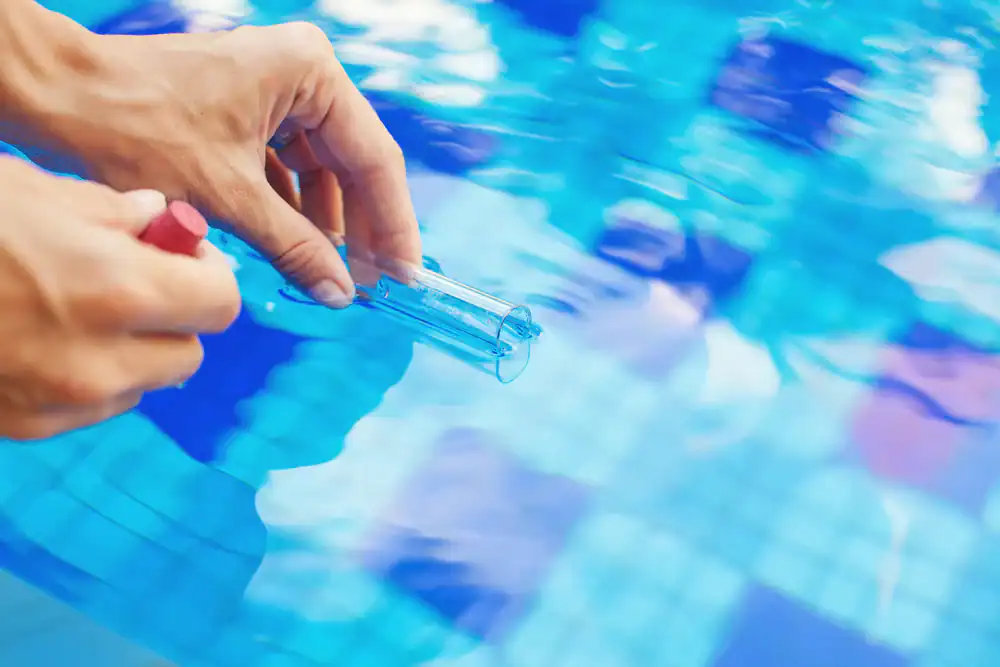
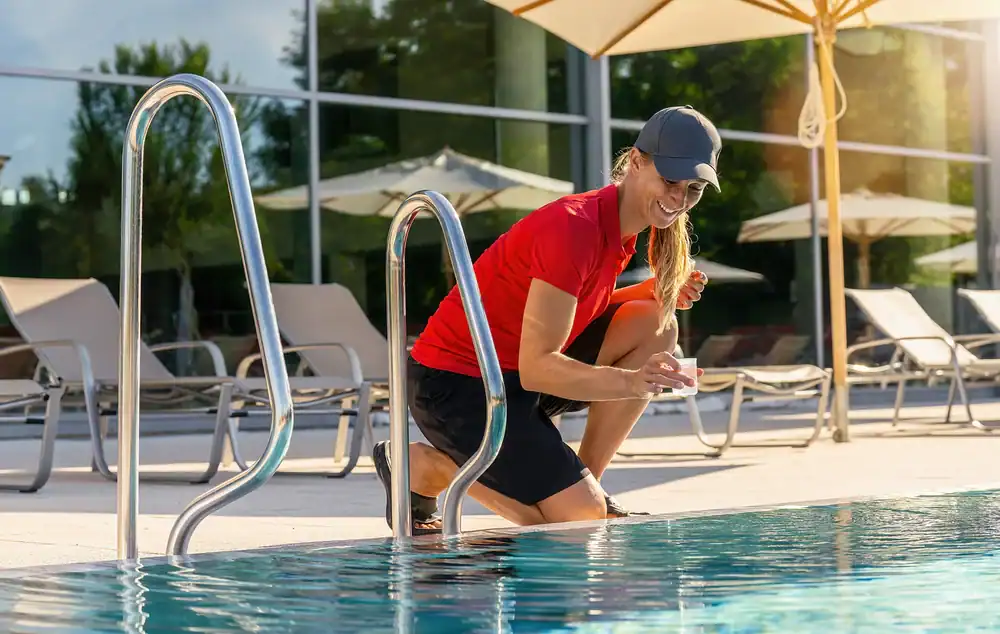
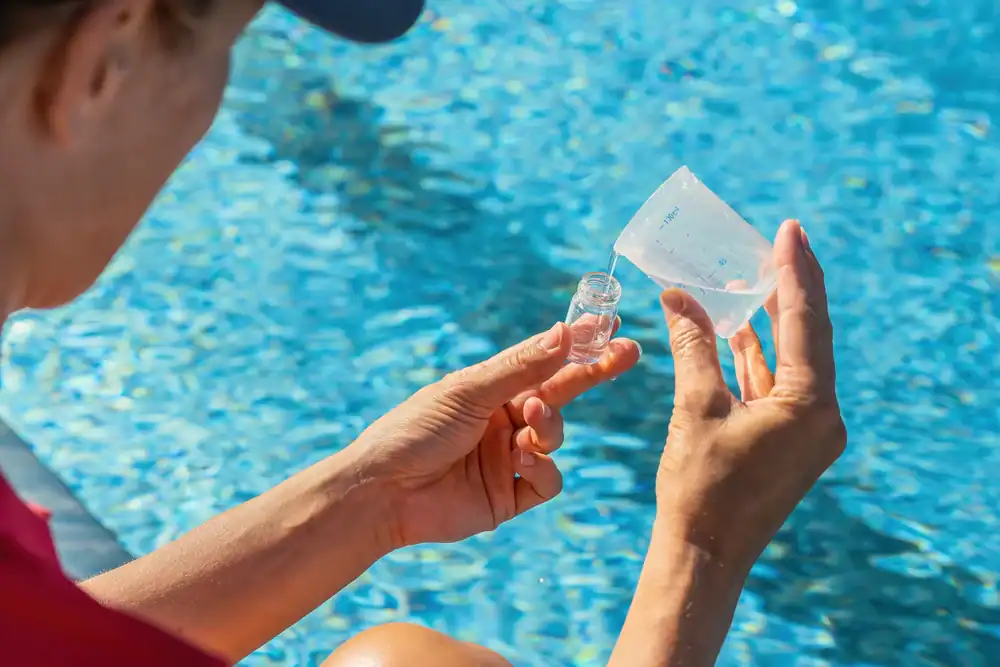
Bring us a water sample from your pool—about 16 ounces in a clean container, taken from elbow-depth, away from return jets. That’s it for your part.
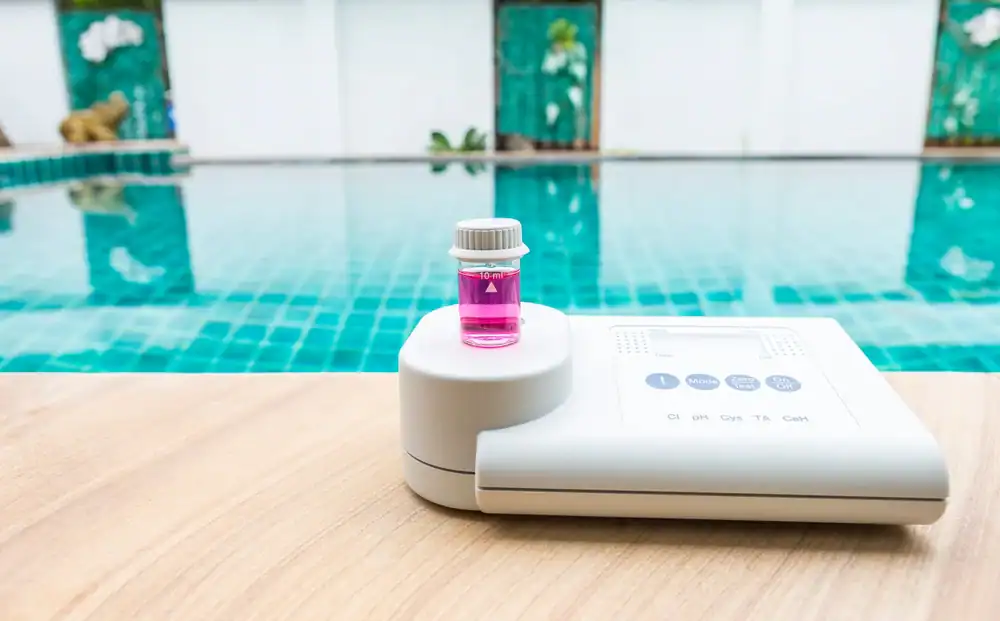
We run the sample through professional-grade testing equipment that measures pH levels, sanitizer concentration, total alkalinity, calcium hardness, and other parameters that affect water quality and equipment longevity. This isn’t a quick dip-and-read. We’re looking at the full picture of your water chemistry.
Once testing is complete, we walk you through the results in plain terms. What’s out of balance, why it matters, and what specific chemicals or adjustments will fix it. You’ll leave with written recommendations you can follow yourself or have us handle—your choice, no obligation either way.
The whole process takes about 10 minutes. You’re not waiting around for lab results or dealing with confusing charts. Just real answers about what’s happening in your pool and what to do about it.
Ready to get started?
Our residential water test covers the parameters that actually affect your pool’s health and your family’s safety. We measure pH balance, which controls how effectively your sanitizer works and whether your water will corrode metal components or scale your tile. We test chlorine or alternative sanitizer levels to confirm you’re maintaining safe bacteria control without overdosing.
Total alkalinity gets checked because it stabilizes pH and prevents the wild swings that make water management feel impossible. We look at calcium hardness to protect your pool surface from etching or scaling. And we evaluate cyanuric acid levels, which shield chlorine from UV breakdown—critical in Georgia’s intense summer sun.
In Lithia Springs specifically, we’re watching for the effects of local water chemistry and seasonal weather patterns. Spring storms here can drop two inches of rain in an afternoon, diluting chemicals and dropping sanitizer levels into the danger zone. Summer heat pushes water temperatures into the high 80s, which accelerates chlorine consumption and creates ideal conditions for algae. Our testing accounts for these local realities, not just textbook ranges.
You get specific treatment recommendations based on what we find—not generic advice, but the exact products and amounts your pool needs right now.
Every two weeks during swimming season, and monthly during cooler months when the pool sees less use. That’s the baseline for catching problems before they escalate.
If you’re dealing with heavy pool traffic, recent storms, or visible water quality issues, test more frequently. A pool that hosts weekend gatherings needs more attention than one used occasionally. Same goes for the week after a major rainstorm—Georgia downpours can dump enough water to significantly alter your chemistry overnight.
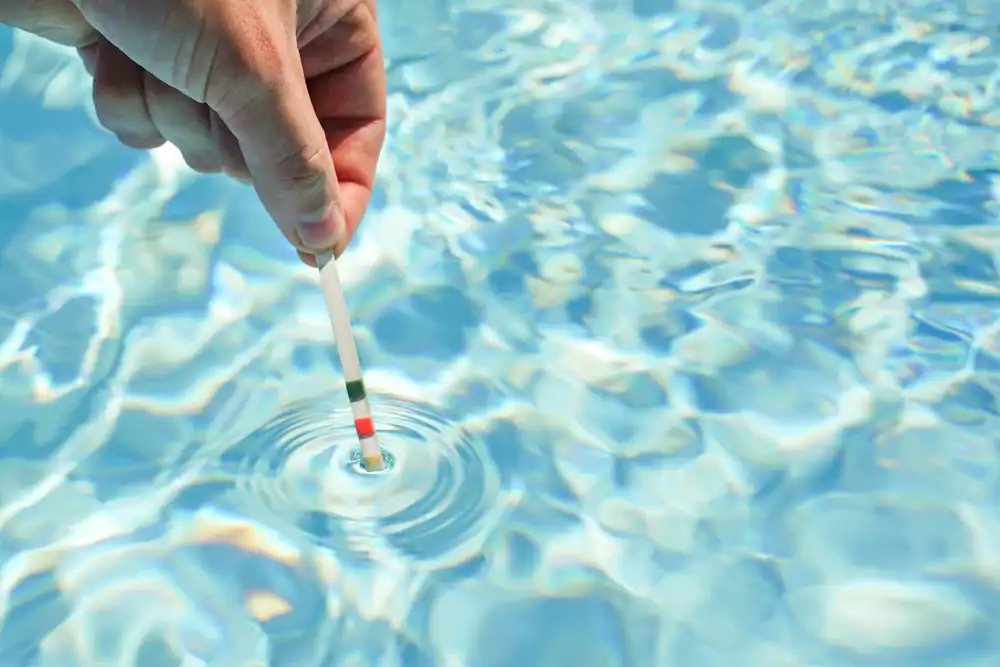
Home test strips between professional tests are fine for monitoring, but they’re not a replacement. Strips give you a general idea, but they’re less accurate and they don’t test for everything that matters. Think of them as a check-engine light—they tell you something might be wrong, but they don’t diagnose the actual problem.
Accuracy and completeness. Test strips give you approximate ranges—your pH is “somewhere between 7.2 and 7.8.” Professional equipment gives you exact numbers—your pH is 7.4. That precision matters when you’re trying to dial in your chemistry.
Strips also degrade over time, especially in Georgia humidity. Leave the bottle open for a few weeks and your readings become unreliable. You might be treating problems that don’t exist or missing ones that do.
Professional testing covers more parameters with better accuracy. We’re measuring things most home kits skip entirely, like cyanuric acid levels or calcium hardness—both of which directly impact how well your other chemicals work. You’re getting a complete picture of your water chemistry, not just a snapshot of pH and chlorine. That complete picture is what prevents expensive mistakes.
Improper water chemistry destroys pool equipment faster than age or use. Low pH creates acidic conditions that corrode metal components—heaters, pump housings, ladder anchors, and anything else touching the water. High pH causes scaling that clogs filters, reduces circulation, and forces your equipment to work harder than it should.
Calcium levels matter too. Too little calcium and your water pulls it from plaster or grout, etching your pool surface. Too much and you get scale buildup on tile, in pipes, and on heating elements. Either extreme shortens equipment life and increases repair costs.
In Lithia Springs, where summer heat already stresses pool systems, adding chemical imbalance to the mix accelerates wear significantly. A heater that should last 10 years might fail in 5 if it’s constantly fighting corrosive water. A pump that could run for 8 years starts struggling at 4 because scale buildup is choking flow. Regular testing catches these issues while they’re still adjustable, before they become expensive replacements.
Yes. Low sanitizer levels allow bacteria and pathogens to thrive—E. coli, pseudomonas, cryptosporidium, and other organisms that cause skin infections, ear infections, respiratory issues, and gastrointestinal illness. You can’t see these contaminants. The water might look fine while hosting dangerous bacteria levels.
High sanitizer levels cause their own problems—eye irritation, skin rashes, respiratory irritation, and that harsh chemical smell people associate with pools. That smell isn’t actually chlorine doing its job. It’s chloramines, which form when there’s not enough free chlorine to properly sanitize organic matter.
pH imbalance compounds both issues. High pH reduces chlorine effectiveness, meaning you’re not getting the sanitation you think you are even if chlorine levels look adequate. Low pH makes chlorine more aggressive but also irritates eyes, skin, and mucous membranes. Georgia’s heat and humidity already create ideal conditions for bacterial growth—unbalanced water just makes it worse. Professional testing ensures you’re maintaining the safe zone where water is both sanitized and comfortable.
Address pH and alkalinity first, then adjust sanitizer levels. pH and alkalinity affect how every other chemical performs, so fixing them first makes your other treatments actually work.
If pH is off by more than 0.4 points or alkalinity is outside the 80-120 ppm range, correct those before doing anything else. Use pH increaser or decreaser as needed, and sodium bicarbonate for alkalinity. Retest after 24 hours of circulation to confirm the adjustment worked.
Once pH and alkalinity are stable, address sanitizer levels. If chlorine is low, shock the pool and establish a maintenance schedule that prevents future drops. If it’s high, stop adding chlorine and let sunlight naturally reduce it—don’t drain water unless levels are dangerously high. For other imbalances like calcium or cyanuric acid, we’ll give you specific treatment protocols based on severity. Some fixes are quick, others take days. We’ll tell you exactly what timeline to expect and whether you need to keep people out of the pool while you’re correcting things.
Yes. Bring in a water sample, we test it, explain the results, and give you treatment recommendations. No charge, no purchase required, no pressure to use our services for anything else.
We offer free testing because we’ve been in the pool business long enough to know that educated customers make better decisions and have fewer emergencies. When you understand what’s happening in your pool and how to maintain it, you’re less likely to end up with a green swamp in July or corroded equipment in year three.
If you want to handle the treatment yourself, the recommendations we give you are detailed enough to do that. If you’d rather have us manage it, we can discuss that too—but that’s your call to make, not ours to push. We’re not using free testing as a bait-and-switch. We’re using it to build relationships with Lithia Springs pool owners who value straight answers and professional expertise. Thirty years in this business taught us that approach works better than high-pressure sales tactics ever could.
Other Services we provide in Lithia Springs