
Hear from Our Customers
You’re not looking for a science lesson. You want to know if your pool is safe to swim in, why it looks cloudy, or what’s eating away at your equipment.
That’s what professional pool water testing actually does. It tells you what home test strips can’t catch—phosphate levels that feed algae, metal content that stains your liner, alkalinity that throws everything else off balance. When you know what’s actually happening in your water, you stop guessing and start fixing the right problems.
Most pool owners in Coffee County test their water maybe once a month with a strip from the hardware store. That works until it doesn’t. Then you’re dealing with green water, irritated skin, or a pump that’s corroding from the inside. A real water analysis catches that stuff early, before it turns into a weekend project or a service call that costs more than it should.
We’ve been working with pools in South Georgia since before we opened our doors in 2014. Our experience comes from over 30 years in concrete, plumbing, and custom pool construction—the kind of background that teaches you what actually breaks, what actually works, and what pool owners really need.
We’re not a franchise. We’re local to Coffee County, and we know how Georgia heat, summer storms, and heavy pollen affect your water chemistry. That’s not something you learn from a manual.
We offer free water testing because we’d rather you catch a problem early than call us later for an expensive fix. It’s straightforward, it’s honest, and it keeps pools running the way they should.
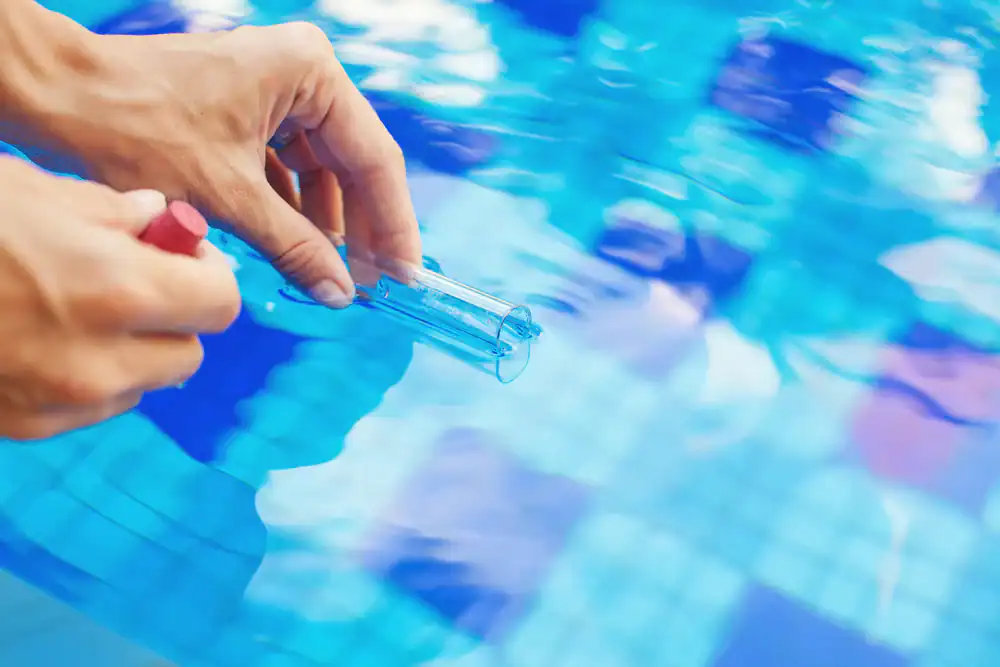
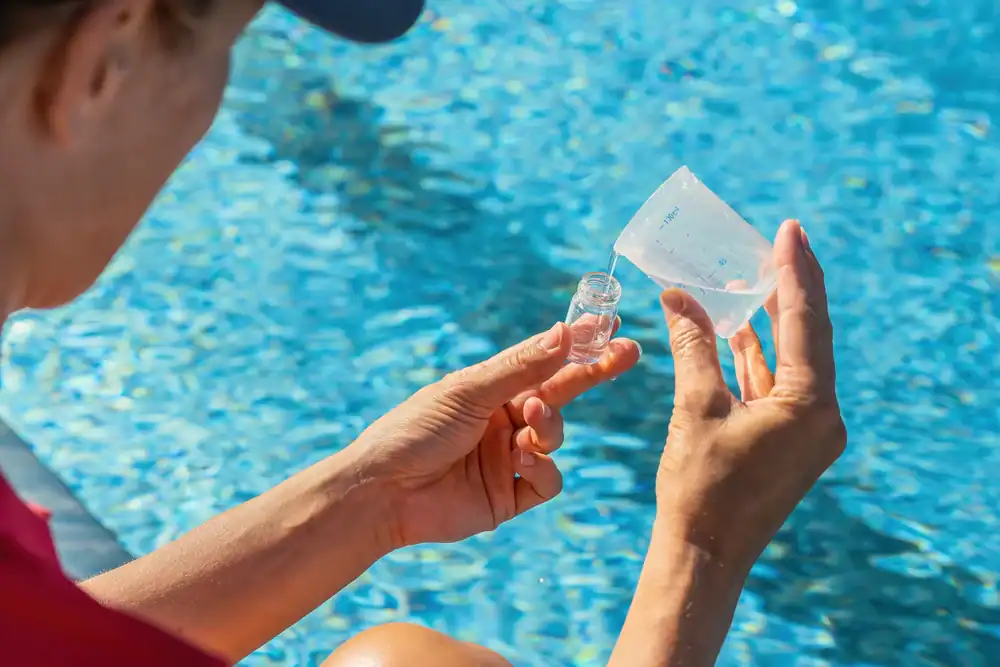
You don’t need an appointment. Just grab a clean plastic bottle—something that held water or soda, not chemicals or juice—and collect about 12 to 16 ounces from elbow-deep in your pool. Not from the surface, not from the skimmer. Mid-depth, away from the return jets.
Bring that sample to us within a few hours if you can. Water chemistry shifts as it sits, so fresher is better. We’ll run it through a full analysis that checks chlorine, pH, alkalinity, calcium hardness, stabilizer, phosphates, and metals. Takes about ten minutes.
Then we walk you through what we found. If your pH is low, we’ll tell you why that matters and what it’s doing to your pool. If phosphates are high, we’ll explain how that’s feeding algae even when your chlorine looks fine. You’ll leave with a printed report and a clear plan—what to add, how much, and in what order. No upselling, no runaround.
Ready to get started?
A complete residential water test covers the chemistry that actually affects your pool. Chlorine levels tell you if your water is sanitized or if bacteria have room to grow. pH affects everything—how well chlorine works, how your skin feels, whether your equipment corrodes or scales up. Alkalinity keeps pH stable. Calcium hardness prevents etching or buildup. Stabilizer protects chlorine from burning off in the sun, which matters a lot during South Georgia summers.
We also test for phosphates, which most home kits ignore. Phosphates are algae food, and they come from lawn fertilizer, pollen, and rain runoff—all things Coffee County pools deal with constantly. If phosphates are high, you’ll fight algae all season no matter how much chlorine you dump in.
Metals like iron and copper show up from well water or old plumbing, and they stain your pool surfaces. Catching that early saves you from discoloration that’s hard to reverse. This is the kind of water quality testing that prevents problems instead of just reacting to them. And again, we do this for free when you pick up what you need to balance your water.
At least once a week during swim season, and twice a week if you’re getting heavy use or we’re in the middle of a hot stretch. South Georgia summers are tough on pool chemistry—heat burns off chlorine faster, and afternoon storms dump debris and dilute your chemicals.
If you’ve had a big pool party, a few days of heavy rain, or you’re opening the pool for the season, bring in a sample even if it hasn’t been a full week. Same goes if the water looks off or you’re adding chemicals and not seeing results. Catching an imbalance early is a lot easier than trying to fix it after algae takes hold.
Home test strips are fine for a quick check between professional tests, but they don’t give you the full picture. They’ll tell you if chlorine and pH are in range, but they won’t catch phosphates, metals, or stabilizer levels that are creeping up. That’s where a real water analysis makes the difference.
We test for seven key factors: free chlorine, pH, total alkalinity, calcium hardness, cyanuric acid (stabilizer), phosphates, and metals. Each one plays a role in keeping your water safe, clear, and balanced.
Free chlorine is your sanitizer—it kills bacteria and keeps the water safe to swim in. pH affects how well that chlorine works and whether your water is corrosive or scaling. Alkalinity acts as a pH buffer, keeping it from swinging wildly every time you add chemicals. Calcium hardness protects your plaster and equipment from etching or buildup.
Cyanuric acid shields chlorine from UV rays, but too much of it makes chlorine lazy. Phosphates feed algae, and metals cause staining. Home test kits usually only check chlorine and pH, maybe alkalinity if you’re lucky. A professional test catches everything, so you’re not blindsided by a problem that’s been building under the surface.
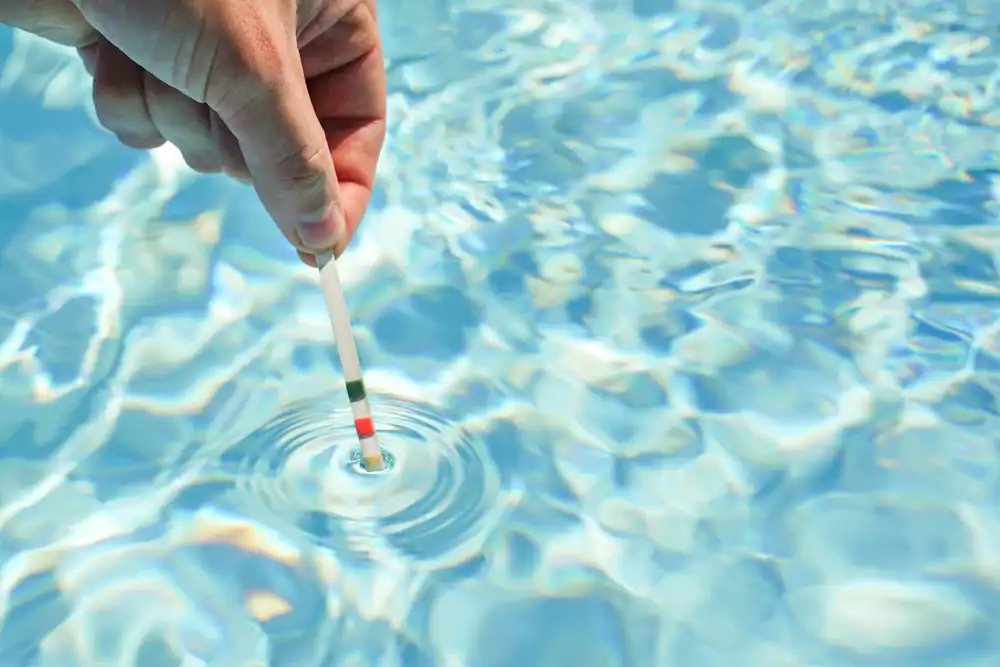
Test strips are convenient, but they’re not accurate enough to catch the problems that cost you money. The color matching is subjective, the results fade fast, and they only test a few basics. You might think your water is fine when phosphates are spiking or your stabilizer is so high that your chlorine isn’t working.
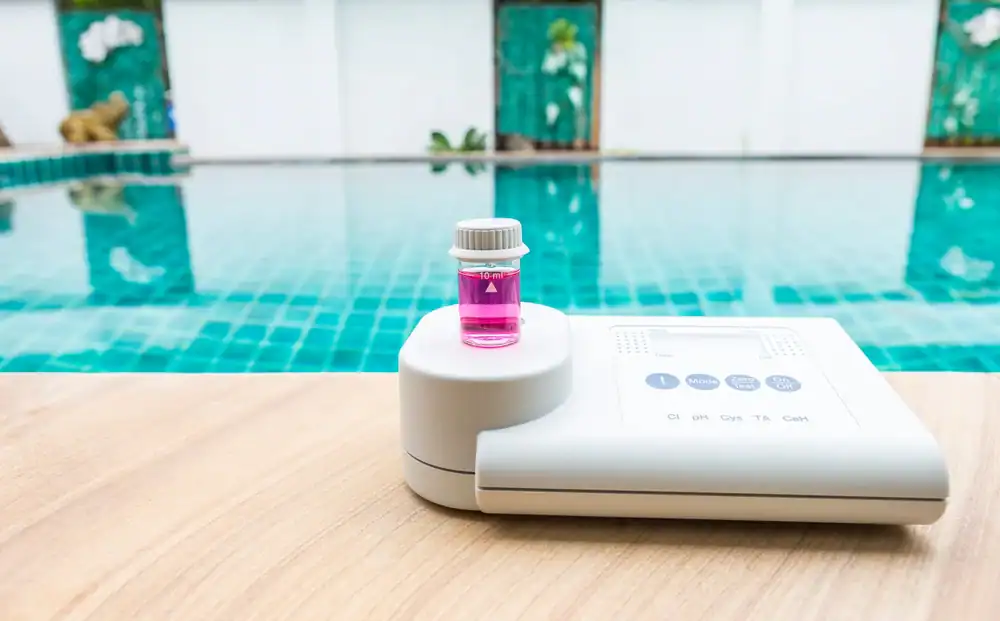
Professional testing uses calibrated equipment and fresh reagents, so the readings are precise. We’re testing for things that strips don’t even measure—phosphates, metals, and exact stabilizer levels. Those details matter when you’re trying to figure out why your pool won’t stay clear or why your heater has scale buildup.
The other advantage is interpretation. We’ve seen thousands of water tests, so we know what combinations of readings mean and how to fix them in the right order. You’re not just getting numbers—you’re getting a plan that actually works. And since we offer this for free, there’s no reason to settle for guesswork when you can get real answers.
High phosphates mean algae has food, and no amount of chlorine will starve it out. You need to remove the phosphates with a phosphate remover—it’s a specific chemical that binds to phosphates and drops them out of the water so your filter can catch them.
After you add the remover, run your pump for at least 24 hours and clean your filter. Then bring in another water sample to confirm the phosphates are down. Once they’re under control, your regular chlorine routine will actually keep algae away instead of just slowing it down.
Phosphates are common in Coffee County because of lawn fertilizers, pollen, and organic debris. If your pool is near trees or your yard gets fertilized regularly, you’re going to deal with this. The key is testing for it regularly so you can treat it before the algae blooms. Most pool owners don’t even know phosphates are a problem until they’re scrubbing green off the walls.
No appointment needed. Just bring in a fresh sample during business hours and we’ll test it while you wait. The whole process takes about ten minutes from start to finish.
Make sure the sample is fresh—collected within a few hours of bringing it in—and taken from elbow-deep in the pool, away from returns and skimmers. Use a clean bottle that didn’t have anything harsh in it, like bleach or juice. A water bottle or soda bottle works fine.
We’ll run the test, print the results, and go over what everything means. If you need chemicals to balance things out, we’ll tell you exactly what to get and how much to use. If your water is dialed in, we’ll tell you that too. No pressure, no sales pitch—just honest information so you can take care of your pool the right way.
South Georgia weather throws everything at your pool. Summer heat burns through chlorine faster, so you’ll need to add it more often or your sanitizer levels will drop below safe ranges. Afternoon thunderstorms dilute your chemicals and drop debris into the water, which throws off pH and introduces organic matter that feeds algae.
Pollen is another big one here—spring and early summer coat everything in yellow dust, and that includes your pool. Pollen contains phosphates, which means more algae fuel. If you’re not testing and treating for phosphates regularly, you’re fighting an uphill battle.
Humidity and warm nights mean your water stays warm, and warm water is a breeding ground for bacteria and algae. That’s why weekly testing matters so much in this climate. What’s balanced on Monday might be off by Friday, especially in July and August. Knowing what’s happening in your water and adjusting quickly keeps you ahead of problems instead of reacting to them after your pool turns green.
Other Services we provide in Lotts