

Hear from Our Customers
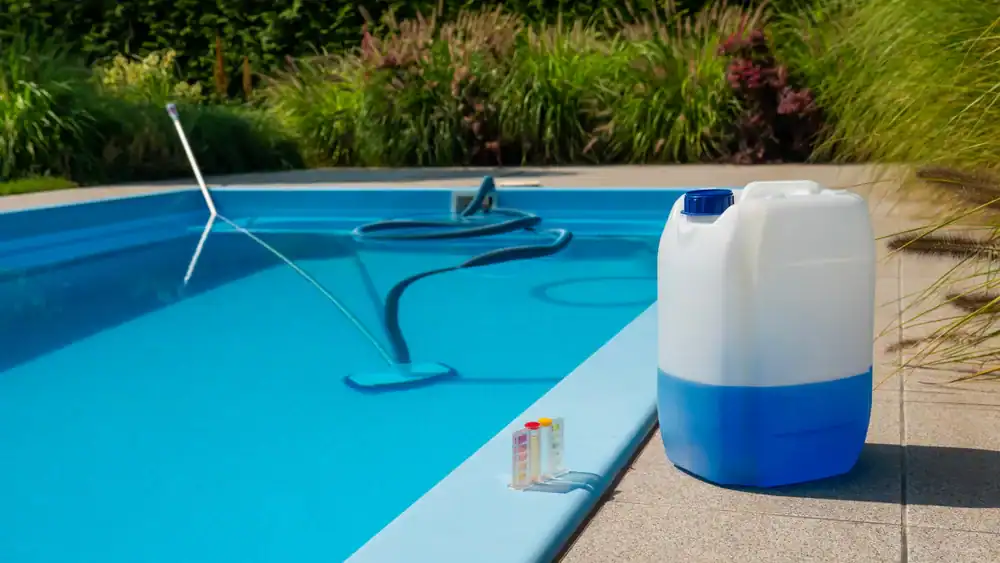
If you’ve been managing your pool with test strips and store-bought chemicals, you already know the frustration. The strips say it’s fine. The water says otherwise. That disconnect isn’t bad luck it’s what happens when the tools you’re using can’t actually measure what matters.
In Lumber City, your pool is up against more than just summer heat. The pine timber country surrounding Telfair County dumps heavy pollen loads into your water every spring, spiking chlorine demand and throwing off pH faster than any national pool guide accounts for. Add in the mineral-rich groundwater that’s been part of this area’s identity since it was called Artesian City, and you’ve got fill water that starts at a chemistry disadvantage before a single swimmer gets in.
Professional water testing catches all of it the calcium hardness creeping toward a scaling problem, the cyanuric acid buildup that’s quietly making your chlorine useless, the pH drift that cuts sanitizing power in half without changing how the water looks. When the numbers are right, your pool stays clear, your equipment lasts longer, and your family isn’t swimming in something that just looks clean.
We’re based in Douglas, Georgia about 30 miles west of Lumber City on US 341, the same highway that runs straight through town. That proximity matters. The South Georgia corridor along 341 is the market we know, and Telfair County is part of it.
We were formally established in 2014, but the experience behind us goes back more than 30 years. That means the people testing your water in Lumber City have been working with gunite and shotcrete pools in this climate through the pollen seasons, the tropical systems, the Ocmulgee flood cycles long before most competitors existed. It’s not textbook knowledge. It’s field knowledge, earned pool by pool across South Georgia.
Licensed and insured, with a track record built on straight talk and honest assessments, we don’t test your water to sell you chemicals. We test it to tell you what’s actually going on.
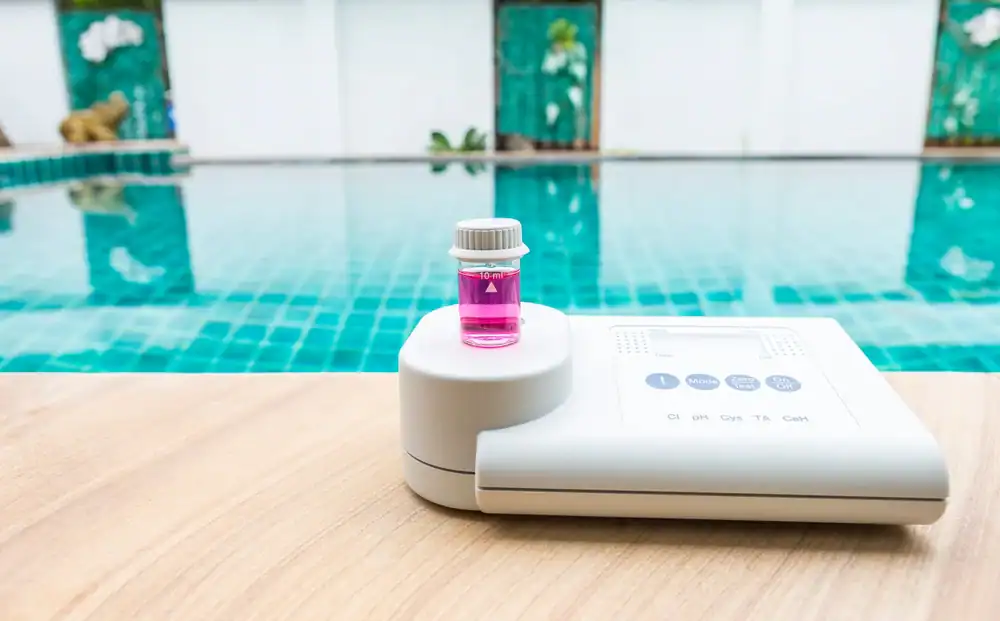
It starts with a full digital water analysis not test strips. Every critical parameter gets measured with precision: free chlorine, total chlorine, pH, total alkalinity, calcium hardness, cyanuric acid, and metals including iron and manganese. For Lumber City pool owners filling from a private well, that metals test matters more than most people realize. Elevated iron is one of the most common sources of staining on concrete pool surfaces, and it’s invisible until the damage is already showing.
Once the numbers are in, you get a clear explanation of what each one means not a printout to figure out on your own. If your pH has drifted, you’ll understand why. If your calcium hardness is trending toward a scaling problem, you’ll know it before it shows up on your plaster. If your cyanuric acid has built up to the point where your chlorine is largely inactive, that gets addressed before it becomes a green water situation.
From there, we make corrections in the right order, with the right products, in the right amounts. That sequencing matters adding chemicals in the wrong order can lock out the very parameters you’re trying to fix. After a storm system rolls through or a heavy pollen week settles in, that process is what gets your pool back to balanced instead of leaving you guessing.
Ready to get started?
Pool chemistry isn’t a single reading. It’s a system, and every parameter in that system affects the others. When total alkalinity is low, pH swings wildly and won’t hold a correction. When calcium hardness is too low, the water becomes corrosive and slowly pulls minerals from your pool’s plaster surface a problem that’s silent until you’re looking at a resurfacing bill. When cyanuric acid climbs too high from repeated stabilizer additions, your chlorine loses its ability to sanitize even when the concentration looks normal on a test.
We test all of it pH level balancing, free and total chlorine, total alkalinity, calcium hardness, cyanuric acid, and metals using digital analysis equipment that gives accurate readings across every parameter. For pools in Telfair County where well water is common, that metals panel is part of every test, not an add-on.
There are no named packages here because the service isn’t tiered by what you can afford to know about your water. Every test is a full test. What changes is what corrections are needed based on what the numbers actually show. If your pool is balanced, you’ll know it and you won’t be sold something you don’t need. If something’s off, you’ll understand exactly what it is and why it matters before anything is added to your water.
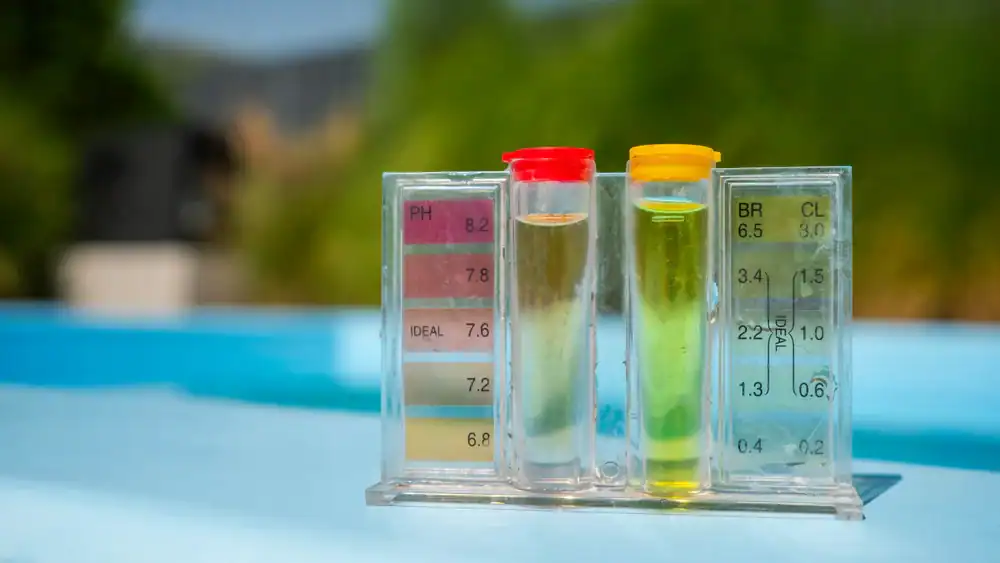
In South Georgia’s summer heat, once a week is the minimum and after any significant weather event, you should test before you swim. When water temperatures climb above 85°F, which happens routinely along the Ocmulgee corridor from June through September, algae growth accelerates and chlorine demand increases fast. A pool that tested balanced on a Saturday morning can be growing algae by Monday evening if a heat wave hit over the weekend and bather load was heavy.
The bigger issue for Lumber City specifically is storm frequency. Telfair County has been directly affected by 7 hurricanes, multiple tropical storms, and repeated flooding events. Every one of those weather systems dilutes your pool’s chemistry simultaneously dropping chlorine concentration, shifting pH, and stripping alkalinity buffers in a single event. After any storm that brought significant rainfall, test before you assume the water is still safe. What looked balanced before the rain almost certainly isn’t after it.
Rainfall does several things to your pool chemistry at the same time, and none of them are good. It dilutes your chlorine concentration, pushes pH toward acidic or neutral depending on your starting point, strips alkalinity buffers that keep pH stable, and introduces organic debris, pollen, and surface runoff that spike chlorine demand. The result is a pool that’s simultaneously under-sanitized and chemically unstable the exact conditions algae need to bloom.
In Lumber City, that process is faster than most pool guides account for because of the pollen load. The pine timber landscape surrounding Telfair County produces heavy pollen seasons, and pollen that settles into your pool is an organic fuel source for algae. A major rain event washes more of it in, drops your chlorine, and the algae that was waiting for an opening gets one. The fix isn’t just adding chlorine after the rain it’s testing every parameter and correcting them in the right order so the chlorine you add actually works.
Yes, and it’s one of the most common issues for rural pool owners in Telfair County. Well water in this part of Georgia commonly carries elevated levels of calcium, iron, and manganese. When you fill or top off your pool from a private well, you’re introducing those minerals directly into the water. High iron content is the most visible problem it causes brown or rust-colored staining on pool surfaces and can discolor the water itself. High calcium hardness from mineral-rich well water accelerates scaling on pool walls, equipment, and especially on gunite and shotcrete surfaces.
The challenge is that test strips can’t reliably detect iron or manganese, and they don’t give accurate calcium hardness readings at elevated levels. You can have a serious mineral problem building in your pool and never see it on a strip test until the staining has already started. Digital water analysis catches these issues early before they’ve etched into your plaster or scaled your heater. For anyone filling from a well in Lumber City or the surrounding Telfair County area, a metals panel should be part of every water test from the start.
The first thing is to test before you add anything. It’s tempting to shock the pool after a storm and assume that covers it, but adding chemicals without knowing your starting numbers is how you create a new problem while trying to fix the original one. Flooding and heavy rain events reset multiple parameters at once, and the correction sequence matters if your pH is out of range, for example, chlorine additions won’t be effective until it’s corrected first.
After a significant storm system in Lumber City especially anything involving Ocmulgee River flooding or heavy regional rainfall you should expect to correct at least three to four parameters. Chlorine concentration, pH, total alkalinity, and calcium hardness are all affected by heavy dilution. If the storm brought debris or surface runoff into the pool, organic load will be high and chlorine demand will spike further. A professional water test after every major weather event isn’t extra caution in Telfair County. Given the county’s documented history with hurricanes, tropical storms, and flooding, it’s just practical maintenance.
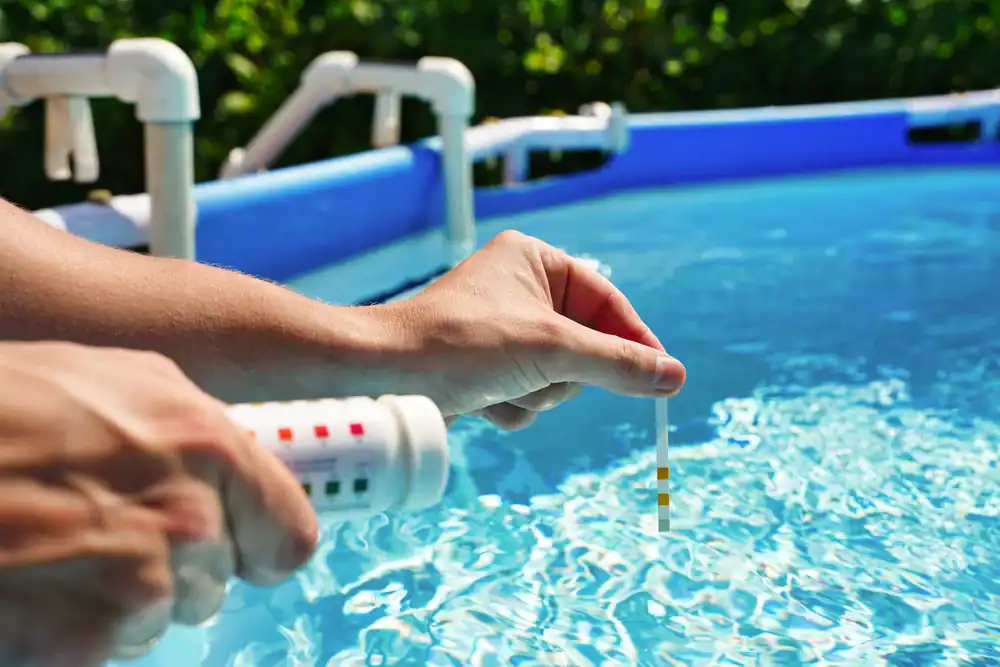
Test strips give you a rough directional reading they’re better than nothing. But there are several parameters they either can’t measure or measure unreliably, and those are often the ones that cause the most expensive problems. Combined chlorine, which tells you how much of your sanitizer is bound up and inactive, isn’t something strips detect accurately. Cyanuric acid buildup one of the most common long-term problems in pools that use stabilized chlorine can’t be reliably tracked with strips. Iron and manganese aren’t measured at all.
The practical result is that you can be dosing your pool consistently, watching your strip readings look reasonable, and still have water that’s corroding your plaster, growing algae beneath the surface, or not actually sanitizing the way you think it is. Professional digital testing fills those gaps. For a Lumber City pool owner who’s already spending money on chemicals, knowing that those chemicals are actually doing what they’re supposed to do is what makes the investment worthwhile. One professional test that catches a calcium hardness problem early costs a fraction of what a resurfacing job runs.
We’re based in Douglas, Georgia, which is roughly 30 to 35 miles west of Lumber City via US 341 the same highway that runs directly through town. That route is a straightforward drive with no interstate required, and Telfair County falls naturally within our service area along the South Georgia corridor we’ve been working for more than three decades.
There are no local pool service providers or pool supply stores operating in Lumber City or Telfair County based on current market availability. That means if you’ve been managing your pool chemistry alone driving to Hazlehurst or McRae-Helena for supplies, or ordering online and guessing at the rest professional service from us is a realistic option, not a long-distance call. The drive on 341 is the same road our technician travels to reach you, and for a market that’s been without a dedicated pool service provider, having someone who actually comes to your pool with the right equipment changes the entire maintenance equation.