
Hear from Our Customers
You’ve bought test strips. You’ve squinted at color charts under your porch light. You’ve dumped in chemicals based on what the guy at the store said might work.
And your pool still looks off.
Here’s what most pool owners in McWhorter don’t realize: home test kits miss things. They can’t measure total alkalinity accurately. They don’t catch phosphate buildup. They can’t tell you if your cyanuric acid levels are creeping up and making your chlorine useless.
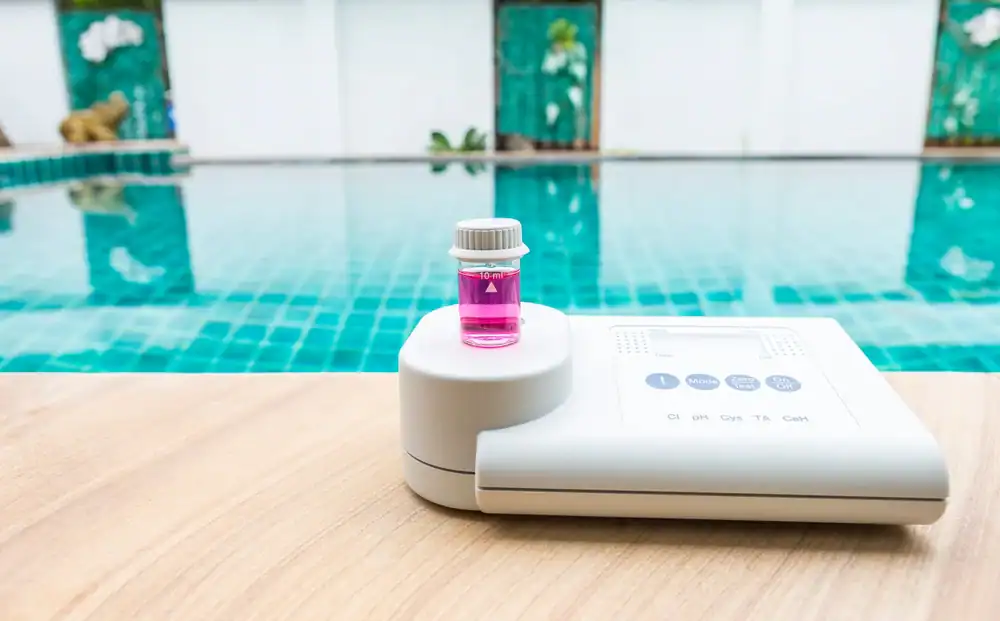
Professional water testing catches what you can’t see. We test for pH, free chlorine, total alkalinity, calcium hardness, cyanuric acid, and more. You get a full picture of what’s happening in your water—and a clear plan for fixing it.
No more throwing money at chemicals that don’t work. No more skin irritation or cloudy water that won’t clear up. Just a straightforward answer about what your pool actually needs.
We’ve been serving families across South Georgia since 2014, built on more than three decades of hands-on pool construction and maintenance experience. We’re not a franchise. We’re local.
That matters in McWhorter because we understand how Georgia’s heat affects chlorine depletion. We know what heavy summer rains do to your pH balance. We’ve seen what happens when calcium hardness gets ignored in our water.
We offer free water testing because we’d rather you spend money on the right chemicals than waste it on the wrong ones. That’s how we’ve built our reputation here—quality work, honest answers, and treating your pool like it’s our own.
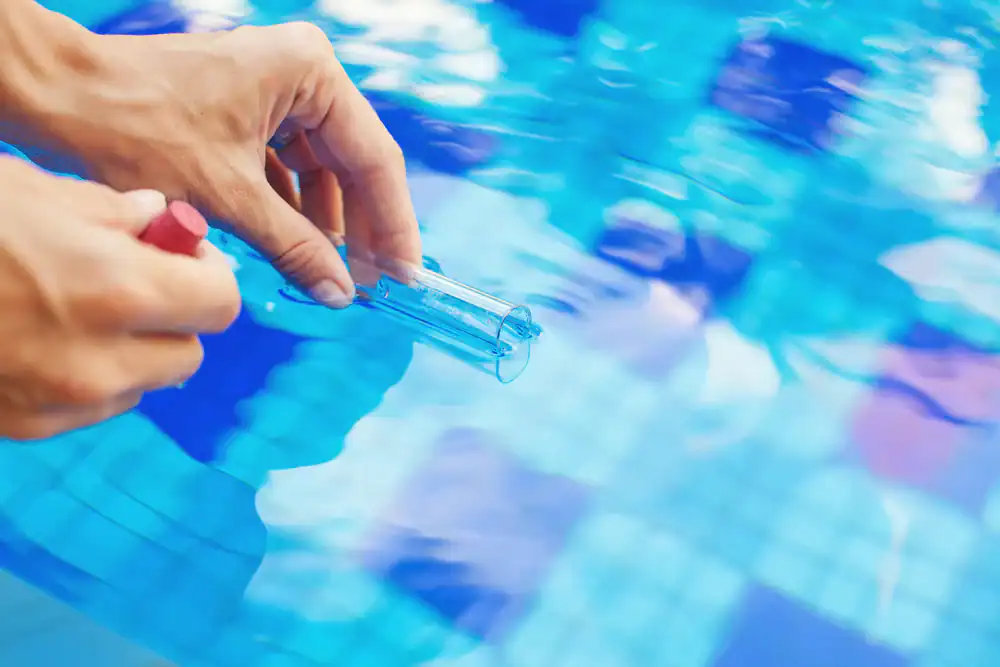
Bring us a water sample in a clean container. A standard water bottle works fine—just make sure it’s rinsed out and filled from about elbow-deep in your pool, away from return jets.
We run a comprehensive analysis that tests pH levels, free chlorine, total chlorine, alkalinity, calcium hardness, and cyanuric acid. This takes about 10 minutes. We’re looking at the full chemistry picture, not just whether your chlorine is “close enough.”
Then we walk you through the results. You’ll see exactly where your levels are, where they should be, and what needs adjusting. We’ll tell you which chemicals to add, how much, and in what order.
You leave with a printed report and a clear game plan. No upselling. No pressure. Just the information you need to get your water balanced and keep it that way.
If you’d rather have us handle the treatment, we can do that too. But the testing is free either way.
Ready to get started?
Every water test includes a full analysis of the parameters that actually matter for your pool’s health and safety. We measure pH to make sure your water isn’t corrosive or scale-forming. We check free chlorine levels to confirm you’ve got enough sanitizer to kill bacteria and algae.
We test total alkalinity because it’s your pH buffer—when it’s off, your pH swings all over the place. We measure calcium hardness to prevent equipment damage and surface etching. And we check cyanuric acid, which protects your chlorine from UV breakdown but can build up over time and make your sanitizer ineffective.
In McWhorter’s climate, these levels shift constantly. Summer heat burns through chlorine faster. Afternoon thunderstorms dilute your chemicals and drop your pH. Without regular testing, you’re always reacting to problems instead of preventing them.
You’ll get a printed breakdown of every parameter we test, the ideal range for each one, and specific instructions for bringing your water into balance. If your pool needs phosphate removal, salt level adjustment, or stabilizer reduction, we’ll tell you that too.
This is the same water quality testing we’d do on our own pools. You’re getting commercial-grade analysis for free.
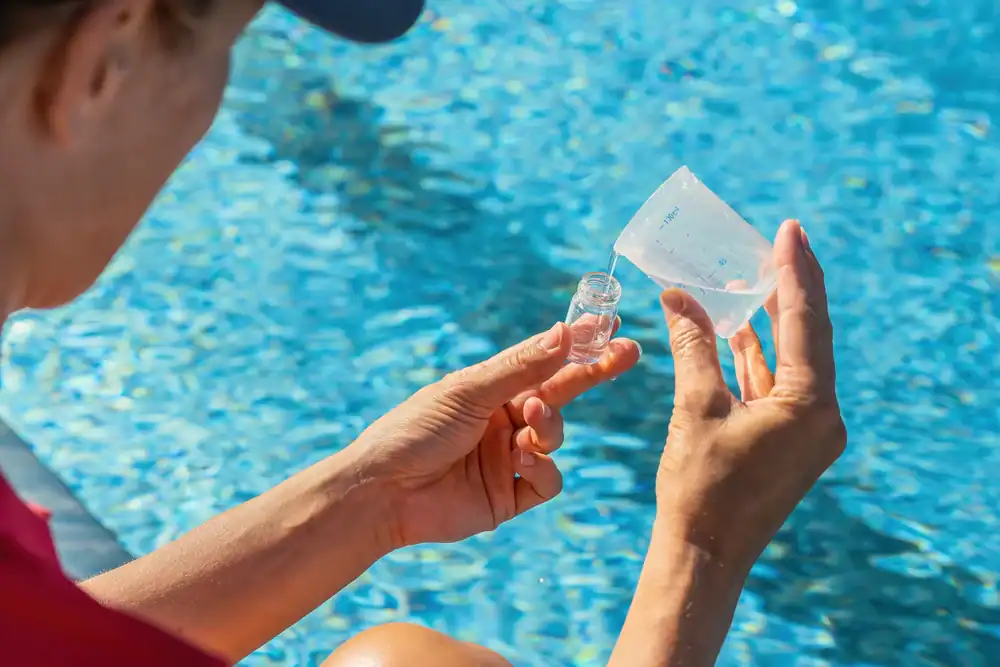
Every two weeks during swim season is the standard recommendation for residential pools in McWhorter. That’s frequent enough to catch problems before they get expensive.
If you’re getting heavy use—kids in the pool every day, regular pool parties—test weekly. More swimmers means more organic contamination, which throws off your chlorine demand and pH balance faster than you’d think.
After major storms, test immediately. Georgia’s summer rains dilute your chemicals and can drop your pH significantly in just one afternoon. Same goes for after you’ve added a large amount of any chemical—test a day later to make sure you hit your target and didn’t overshoot.
In the off-season, once a month is usually enough. Your water still needs attention even when you’re not swimming. Algae doesn’t care if it’s cold outside.
Because cloudiness isn’t always a chemical problem. Sometimes it’s a filtration problem, a circulation problem, or a phosphate problem that your test strips can’t detect.
If your pH and chlorine are in range but the water’s still hazy, you’re likely dealing with dead algae that needs to be filtered out, calcium buildup from high hardness levels, or inadequate filtration time. Your filter might need backwashing or a deep clean. Your pump might not be running long enough each day.
Phosphates are another common culprit in South Georgia. They’re algae food, and they get into your pool from lawn fertilizer runoff, leaves, and even some pool chemicals. Standard test kits don’t measure phosphates—you need a professional test to catch them.
Bring in a water sample and we’ll figure out what’s actually causing the cloudiness. Most of the time it’s a quick fix once you know what you’re dealing with.
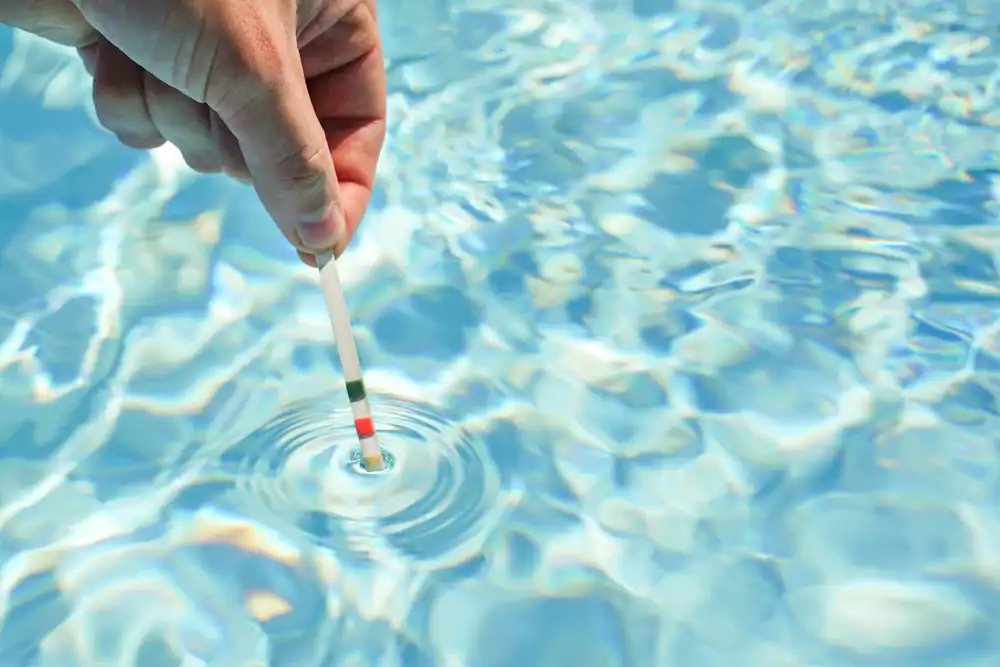
You can, but they’re not giving you the full story. Test strips are fine for a quick check between professional tests, but they’re not accurate enough to dial in your chemistry precisely.
Strips fade in sunlight and humidity, which means the ones sitting in your shed might already be giving you false readings. They’re hard to read accurately—is that pink or is it more purple? They also don’t test for everything that matters, like cyanuric acid levels or calcium hardness.
Liquid test kits are better than strips, but they still require you to match colors under whatever lighting you’ve got. And if the reagents are old or contaminated, your results are off.
Professional testing uses calibrated equipment that measures exact values, not color approximations. We’re testing for more parameters, with better accuracy, and we’re doing it with fresh reagents and proper technique. That’s why the results are reliable enough to base treatment decisions on.
Use strips to keep an eye on things day-to-day. But get professional water testing regularly to make sure you’re actually where you think you are.
Between 7.2 and 7.8, with 7.4 to 7.6 being the sweet spot. That range keeps your water comfortable for swimmers and prevents equipment damage.
Below 7.2 and your water becomes acidic—it’ll corrode metal fixtures, etch plaster, and irritate eyes and skin. It also makes your chlorine more aggressive, which sounds good but actually causes it to dissipate faster, meaning you’re adding chlorine more often.
Above 7.8 and your water becomes basic, which causes scaling on your tile and equipment, makes your water cloudy, and reduces chlorine effectiveness. High pH is one of the most common reasons pools in McWhorter stay cloudy even when chlorine levels look fine.
Georgia’s water tends to run alkaline, and chlorine products push pH up over time. That means most pools here drift high rather than low. Regular testing catches that drift before it becomes a visible problem.
If your pH is constantly bouncing around, your total alkalinity is probably off. That’s your pH buffer, and it needs to be dialed in first before your pH will stabilize.
No. Water testing is completely free at Deep Waters Pools, whether you’re an existing customer or you’ve never worked with us before.
We offer free testing because we’d rather you know what your pool needs than guess and waste money on chemicals that don’t fix the problem. It’s also how we build relationships in McWhorter—by being helpful first, not salesy.
You’re not obligated to buy anything. You’re not going to get a hard pitch for services you don’t need. We’ll test your water, explain the results, tell you what to add, and send you on your way with a printed report.
If you want us to handle the chemical treatment or maintenance, we can absolutely do that. But the testing itself is free regardless.
Bring in a sample anytime during business hours. We’ll get you taken care of.
First, check your cyanuric acid level. If it’s above 80 ppm, your chlorine is getting locked up and can’t sanitize effectively—a condition called chlorine lock. The only fix is partially draining and refilling your pool to dilute the stabilizer.
If cyanuric acid isn’t the issue, you might have high phosphate levels feeding algae growth that’s consuming your chlorine as fast as you add it. Phosphate remover clears that up quickly.
High water temperature also burns through chlorine faster. In Georgia’s summer heat, you’ll naturally use more chlorine than you do in cooler months. That’s normal—you just need to adjust your maintenance routine to match.
Finally, make sure your pH isn’t too high. Above 7.8, chlorine becomes much less effective, so even adequate levels won’t sanitize properly. Get your pH down into the 7.4 to 7.6 range and your chlorine will work better.
Bring in a water sample and we’ll test for all of these factors. Once we know what’s causing the problem, the fix is usually straightforward.
Other Services we provide in Mcwhorter