
Hear from Our Customers
Cloudy water doesn’t clear up on its own. Red eyes after swimming aren’t normal. And that green tint showing up in the corners? That’s algae starting to take hold.
Most pool owners deal with these problems because they’re guessing. Home test strips miss half the picture, and even when they work, they don’t tell you what to do next. You’re left wondering if you added too much chlorine, not enough stabilizer, or if your pH is throwing everything off.
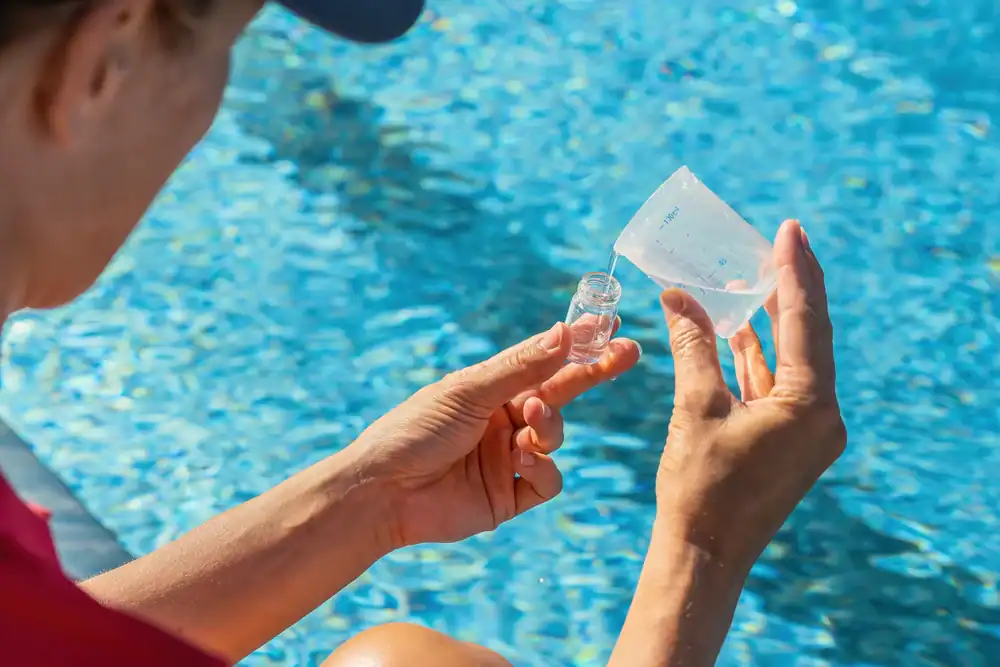
Professional pool water testing removes the guesswork. You bring in a water sample, and within minutes, you know exactly what’s happening in your pool—sanitizer levels, pH balance, alkalinity, calcium hardness, stabilizer. More importantly, you know what to fix and how much to add. No more dumping chemicals and hoping it works. No more wasting money on products you don’t need.
When your water chemistry is dialed in, swimming is more comfortable, your equipment lasts longer, and you’re not constantly fighting the same problems. That’s what balanced water actually does.
We’ve been serving Millwood and the surrounding South Georgia area since 2014, built on more than three decades of hands-on experience in pool construction, plumbing, and water chemistry. We’re not a franchise. We’re a local business that understands how Georgia’s heat, humidity, and seasonal shifts affect your pool.
We offer free water testing because we know it’s the foundation of proper pool care. When you stop by, you’re not getting a sales pitch—you’re getting accurate readings and straight answers from people who’ve been doing this long enough to know what works. We test for everything that matters, explain what the numbers mean, and tell you exactly what your pool needs.
Millwood pool owners deal with the same challenges as the rest of South Georgia—high temperatures that burn through chlorine faster, afternoon storms that throw off pH, and equipment that takes a beating when water chemistry isn’t right. We’ve seen it all, and we know how to fix it.
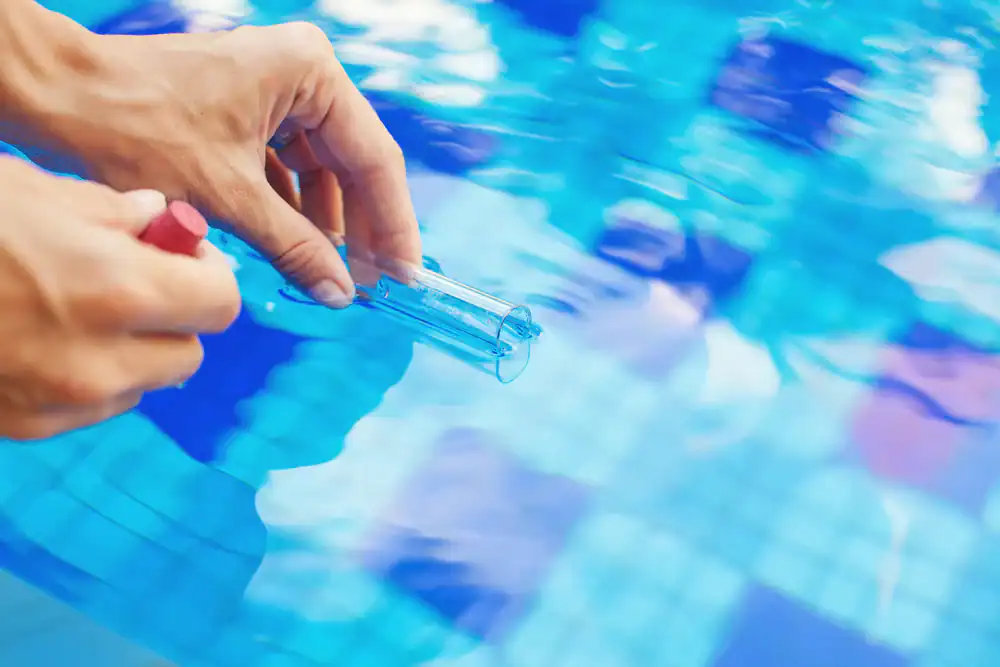
Bring in a water sample from your pool. Use a clean plastic bottle and collect water from about elbow-deep—not right at the surface, not off the bottom. If you’ve added chemicals recently, wait at least 24 hours before collecting your sample so we’re testing what’s actually happening in your pool, not what you just poured in.
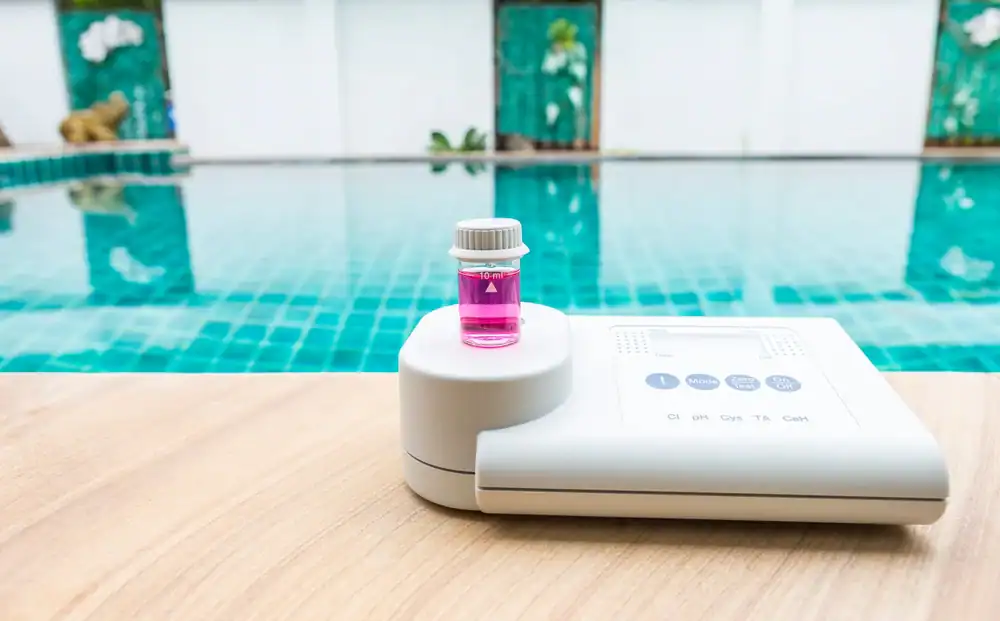
When you come in, we run the sample through our testing equipment. This isn’t a quick dip-and-read. We’re measuring chlorine or bromine levels, pH, total alkalinity, calcium hardness, and cyanuric acid (your stabilizer). Each one affects the others, so we’re looking at the full picture, not just one number.
Once we have your results, we walk you through what they mean. If your pH is high, we’ll explain why that matters—it makes chlorine less effective and can cause scaling on your equipment. If your alkalinity is low, we’ll tell you how that leads to pH swings and corrosion. Then we give you specific recommendations: what to add, how much, and in what order.
You leave with a printout of your results and a clear plan. No upselling. No confusion. Just the information you need to get your water where it should be.
Ready to get started?
Every water test includes a full analysis of the six key factors that determine whether your pool is safe to swim in and whether your equipment is protected. We test sanitizer levels to make sure bacteria and algae don’t have a chance to grow. We check pH because it affects everything—how well your chlorine works, how your water feels, and whether your surfaces and equipment are getting damaged.
We measure total alkalinity, which acts as a buffer for your pH. When alkalinity is off, your pH bounces around no matter what you do. We test calcium hardness because South Georgia water can be unpredictable—too low and your water starts pulling calcium from your plaster or grout; too high and you get scaling on everything.
Cyanuric acid is your chlorine stabilizer. In Millwood’s sun, chlorine burns off fast without it. But too much stabilizer and your chlorine stops working, even if your test says it’s there. We measure it so you’re not wasting money on chlorine that isn’t doing its job.
After testing, you get a printed report and a breakdown of what needs adjusting. If your pool needs chemicals, we’ll tell you what to buy and exactly how much to use based on your pool’s size. If your water is already balanced, we’ll tell you that too. The goal is to give you accurate information so you can make the right call.
At least once a week during swimming season, and twice a week is better if your pool gets heavy use or if we’re in the middle of a hot stretch. Georgia summers are tough on pool chemistry—high temperatures burn through chlorine faster, afternoon storms dump debris and dilute your chemicals, and heavy swimmer load introduces contaminants that throw everything off.
If you’re only testing once a month, you’re reacting to problems instead of preventing them. Algae blooms, cloudy water, and equipment damage don’t happen overnight—they build up when your chemistry drifts out of range and stays there. Weekly testing catches small issues before they become expensive ones.
Bring in a fresh sample each time. Water chemistry changes constantly, especially in summer, so last week’s results don’t tell you what’s happening today.
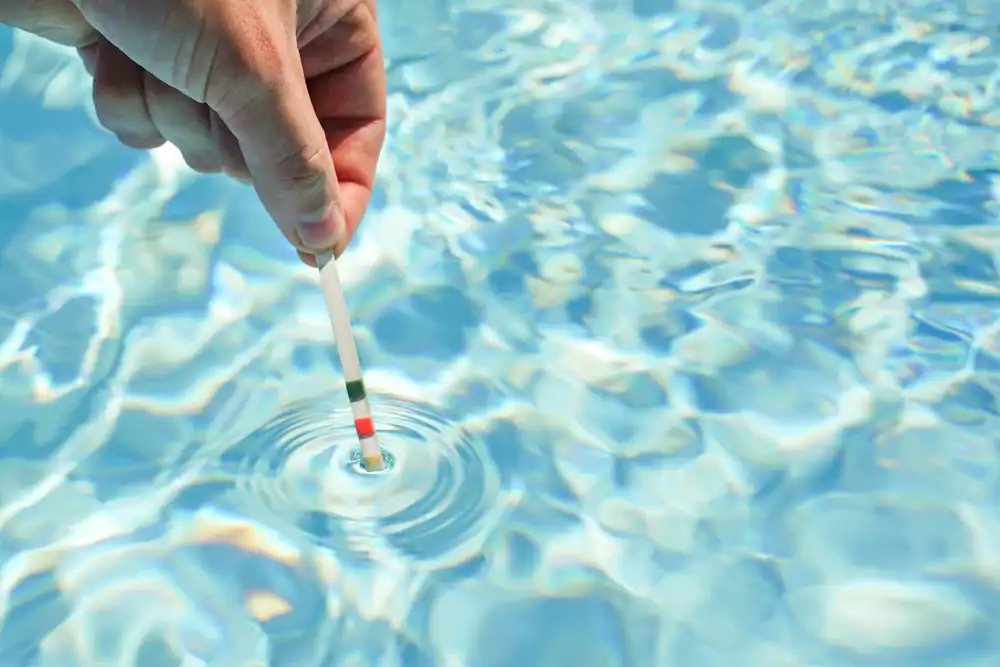
Test strips give you a rough idea of chlorine and pH, but they miss a lot. They don’t measure stabilizer, and most don’t accurately test calcium hardness or total alkalinity. Even when they do, the color matching is subjective—what looks like 7.4 to you might look like 7.6 to someone else.
Professional testing uses calibrated equipment that measures exact levels, not color approximations. We’re testing for six different factors, and we’re doing it with tools that are designed for accuracy. That matters when you’re trying to figure out why your chlorine isn’t working or why your water won’t clear up—the answer is usually in the numbers that test strips don’t show you.
Strips are fine for a quick check between professional tests, but they shouldn’t be your only source of information. If you’re making chemical adjustments based on strips alone, you’re guessing more than you think.
Chlorine isn’t always the problem. Cloudy water usually means something else is off—most often pH, alkalinity, or stabilizer. If your pH is too high, chlorine doesn’t sanitize effectively even if your test says you have plenty in the water. If your stabilizer is too high, it locks up your chlorine and makes it useless.
Alkalinity affects pH stability. When it’s out of range, your pH swings constantly, and you end up chasing problems instead of fixing them. Calcium hardness also plays a role—if it’s too low, your water can look hazy because it’s pulling minerals from your pool surfaces.
The fix isn’t to dump more chlorine in and hope it clears. The fix is to test everything, see what’s actually out of balance, and correct it in the right order. That’s why professional water testing matters—you’re not treating symptoms, you’re fixing the root cause.
Absolutely. Low pH is acidic and will corrode metal components in your pump, heater, and filter. It also etches plaster and eats away at grout. High pH does the opposite—it causes calcium to precipitate out of the water and form scale on your tiles, in your pipes, and inside your equipment. Both extremes cost you money in repairs or replacements.
Low calcium hardness makes your water aggressive. It will pull calcium from wherever it can find it—your plaster, your grout, even your tile. High calcium hardness leads to scaling, which clogs filters, reduces heater efficiency, and leaves crusty buildup on everything.
Stabilizer is less obvious but just as important. Too much cyanuric acid makes your chlorine ineffective, which means bacteria and algae can grow even when you think your pool is sanitized. That leads to staining, surface damage, and a lot of money spent on shock treatments and algaecides that wouldn’t be necessary if your stabilizer was in range.
Balanced water protects your investment. Unbalanced water slowly destroys it.
It’s actually free. No purchase required, no obligation, no catch. You bring in a water sample, we test it, we give you the results and tell you what your pool needs. If you want to buy chemicals from us, great. If you’d rather pick them up somewhere else, that’s fine too.
We offer free testing because it’s the right way to help pool owners take care of their pools. Water chemistry is the foundation of everything—if it’s wrong, nothing else works. We’d rather give you accurate information for free than have you guess your way through it and end up with bigger problems down the road.
We’ve been doing this for over 30 years. We’re not trying to trick anyone into buying something they don’t need. We’re trying to give Millwood pool owners a reliable resource so their pools stay clean, safe, and functional. That’s it.
Fix them in the right order, or you’ll waste time and money. Alkalinity comes first because it stabilizes pH. If your alkalinity is off, your pH will keep drifting no matter how much acid or soda ash you add. Get alkalinity into range, then adjust pH.
Once pH is stable, you can address calcium hardness and stabilizer if needed. Chlorine comes last because it only works properly when everything else is balanced. If you add chlorine while your pH is still high, you’re burning through it without getting the sanitation you’re paying for.
When you get your test results from us, we’ll walk you through the order of operations and tell you how long to wait between adjustments. Some changes take hours, some take a day or two. Trying to fix everything at once usually makes things worse. We’ll give you a clear plan so you’re not guessing.
Other Services we provide in Millwood