
Hear from Our Customers
You’ve been adding chemicals based on a test strip that might be expired, stored wrong, or just plain inaccurate. Maybe the water looks fine one day and cloudy the next. You’re spending money on chlorine and pH adjusters, but nothing seems to stick.
Here’s what changes when you get accurate water testing. You know exactly what’s in your water—not a rough estimate. You stop over-treating or under-treating, which means you’re not burning through chemicals or leaving your pool vulnerable to algae and bacteria. Your equipment lasts longer because the water stays balanced, and balanced water doesn’t corrode metal fittings or eat away at your pool finish.
You also stop second-guessing yourself. When you get a printout that tells you your free chlorine is at 1.2 ppm and your pH is 7.8, you know what to add and how much. No more trial and error. No more throwing chemicals at a problem you can’t see.
And if your water’s been green for a week or you’ve been fighting the same issue all summer, professional water testing cuts through the confusion. There’s a reason it’s off, and a test that measures calcium hardness, cyanuric acid, and total alkalinity will show you exactly what that reason is.
We’ve been serving South Georgia since 2014, and the experience behind our company goes back more than 30 years. We’ve built custom inground pools across the region, and we’ve seen what happens when water chemistry gets ignored or handled incorrectly.
Most of our work comes from referrals. People in Ocilla and the surrounding areas recommend us because we show up, we’re straight with you, and we don’t sell you something you don’t need. If your pool water’s off, we’ll tell you why and what it takes to fix it.
We’re local. We know how South Georgia summers hit pools hard, and we understand what it takes to keep water clear when it’s 95 degrees and your kids are in the pool every day. That’s why we offer free water testing—it’s a service that helps you stay ahead of problems instead of reacting to them.
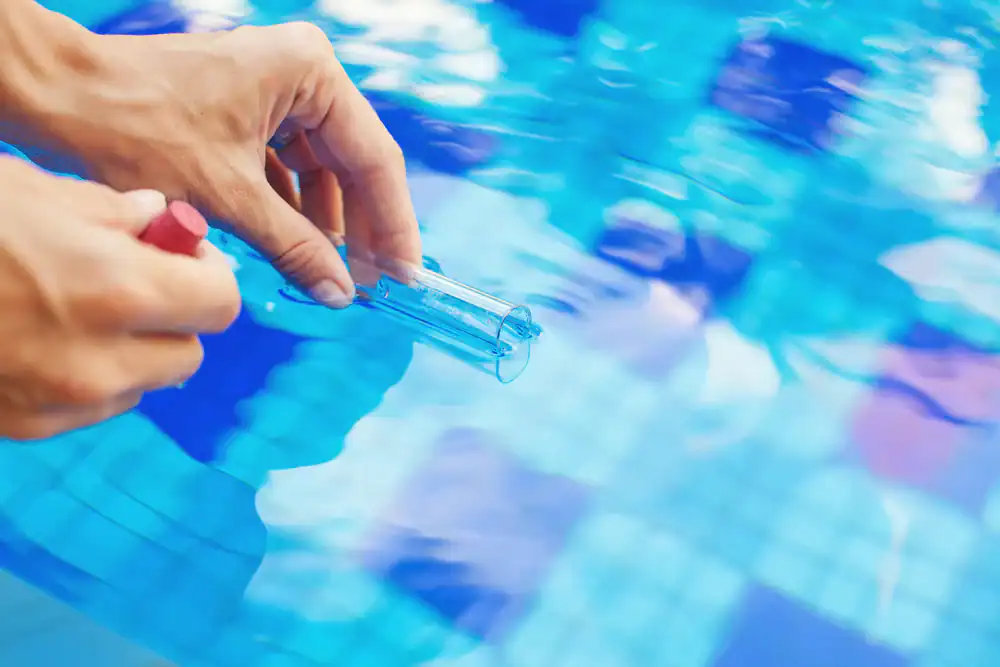
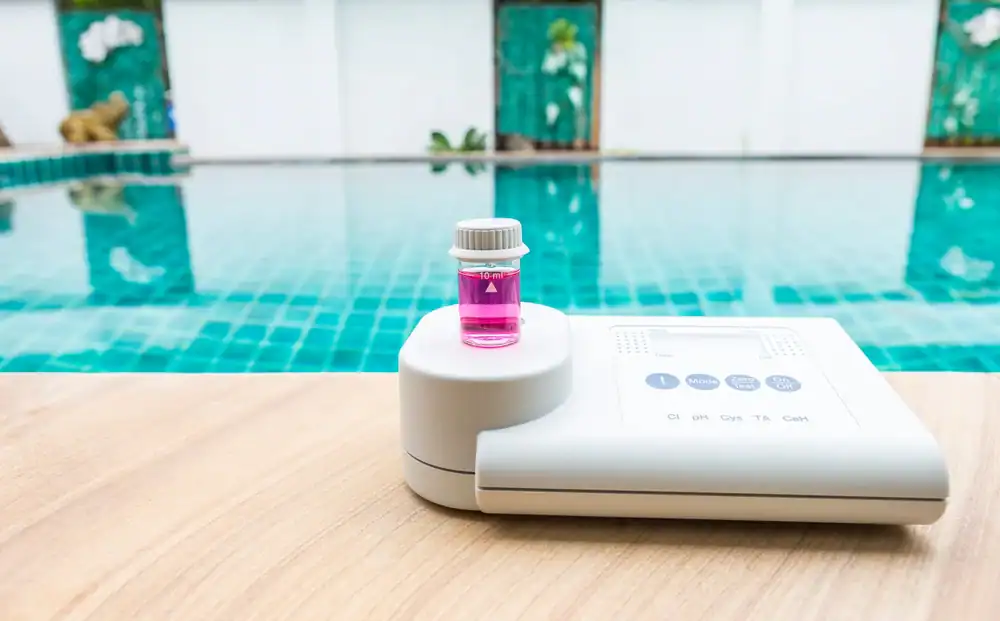
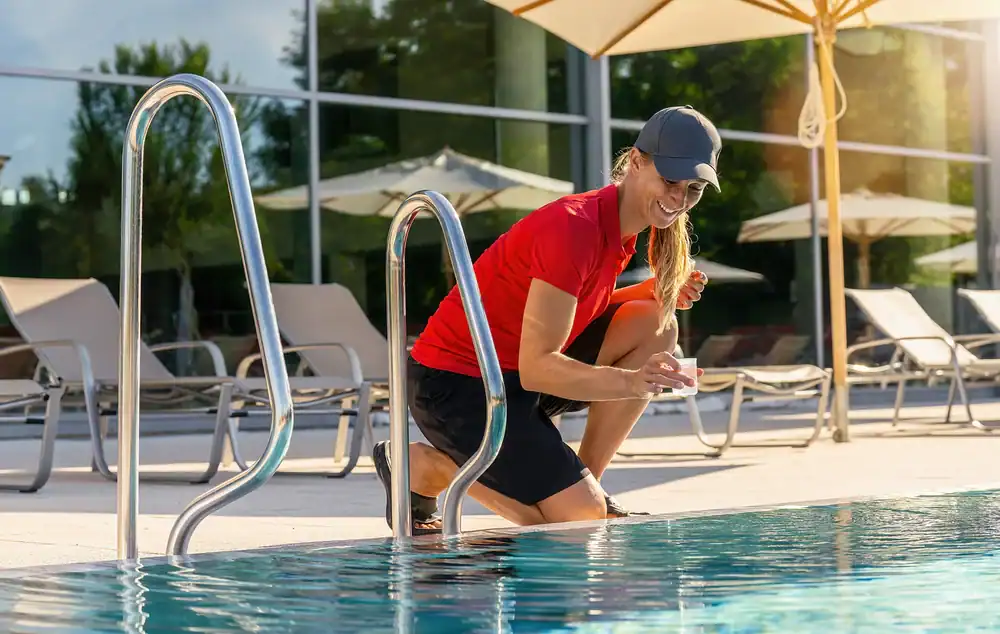
Water testing with us takes about two to three minutes. You bring in a sample of your pool water—ideally from elbow-deep, away from the return jets—and we run it through our testing system. This isn’t a test strip. It’s a calibrated system that measures free chlorine, total chlorine, pH, total alkalinity, calcium hardness, and cyanuric acid.
Once the test is done, you get a printout. It shows your current levels and what they should be. If your pH is too high, it’ll say so. If your calcium hardness is low, you’ll see that too. And you’ll get recommendations for what to add and how much.
If your water’s been a problem—cloudy, green, or just not staying clear no matter what you do—we’ll walk you through what’s happening. Sometimes it’s a simple fix, like your cyanuric acid is too high and your chlorine isn’t working. Other times, it’s a combination of things. Either way, you’ll leave knowing what to do next.
This service is free. You don’t pay for the test, and you don’t have to buy chemicals from us if you don’t want to. We’re here to give you accurate information so you can make the right call for your pool.
Ready to get started?
Every water test we run covers six key measurements. Free chlorine tells you how much active sanitizer is in your water right now. Total chlorine shows you what’s there overall, including the stuff that’s already been used up. If those two numbers are far apart, you’ve got a buildup of chloramines, which is what makes your eyes burn and your water smell like chemicals.
pH measures how acidic or basic your water is. If it’s too low, your water’s corrosive and it’ll damage your equipment. If it’s too high, your chlorine stops working and you’ll fight algae all season. Total alkalinity acts as a buffer for pH—it keeps it stable. Calcium hardness prevents your water from pulling calcium out of your pool surface, which leads to etching and rough spots.
Cyanuric acid protects your chlorine from getting burned off by the sun. But if it gets too high, your chlorine becomes ineffective, even if your test says you have plenty. That’s a common issue in South Georgia, where pools get heavy sun exposure and people use stabilized chlorine tablets.
In Ocilla, where summer heat is intense and pools see constant use, these levels shift faster than you’d think. A week of kids swimming, a heavy rainstorm, or a stretch of 90-degree days can throw everything off. That’s why regular water testing matters—it catches problems before they become expensive or time-consuming to fix.
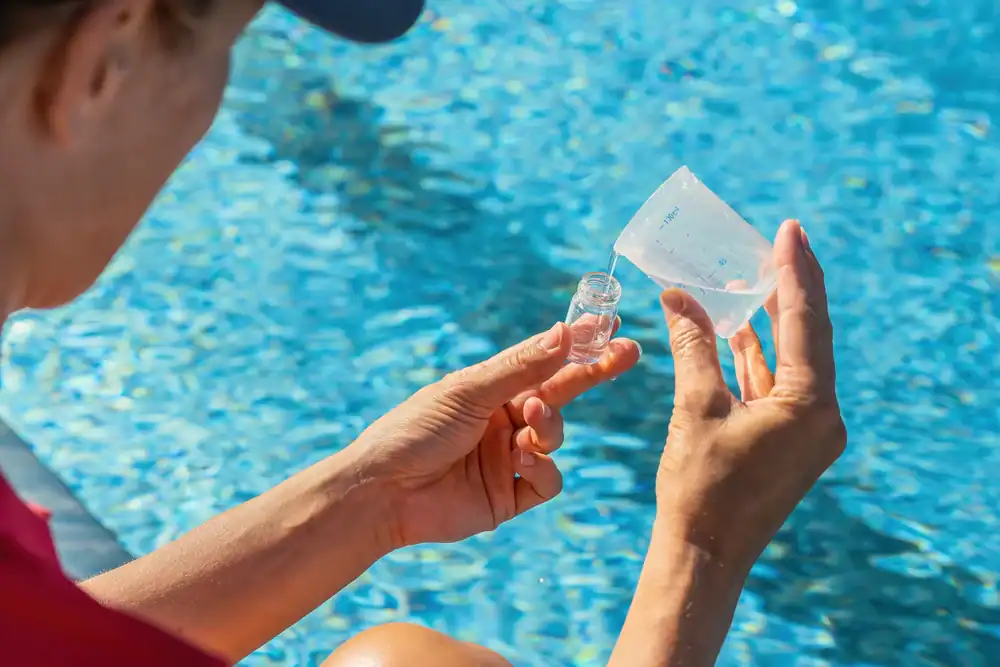
At minimum, once a week during swim season. If your pool’s getting heavy use—kids in and out all day, pool parties, or just a lot of traffic—test it more often. Same goes for after a big rainstorm or if you’ve added a lot of chemicals trying to clear up a problem.
Weekly testing catches small shifts before they become big issues. Your pH might creep up half a point, or your chlorine might drop lower than you thought. If you’re testing at home with strips, those can miss things or give you bad readings if they’re old or stored in a hot garage.
Professional water testing picks up what home kits miss. Calcium hardness and cyanuric acid aren’t on most test strips, but they’re critical for keeping your water balanced and your chlorine effective. If you’re only testing at home, you’re flying blind on half the equation.
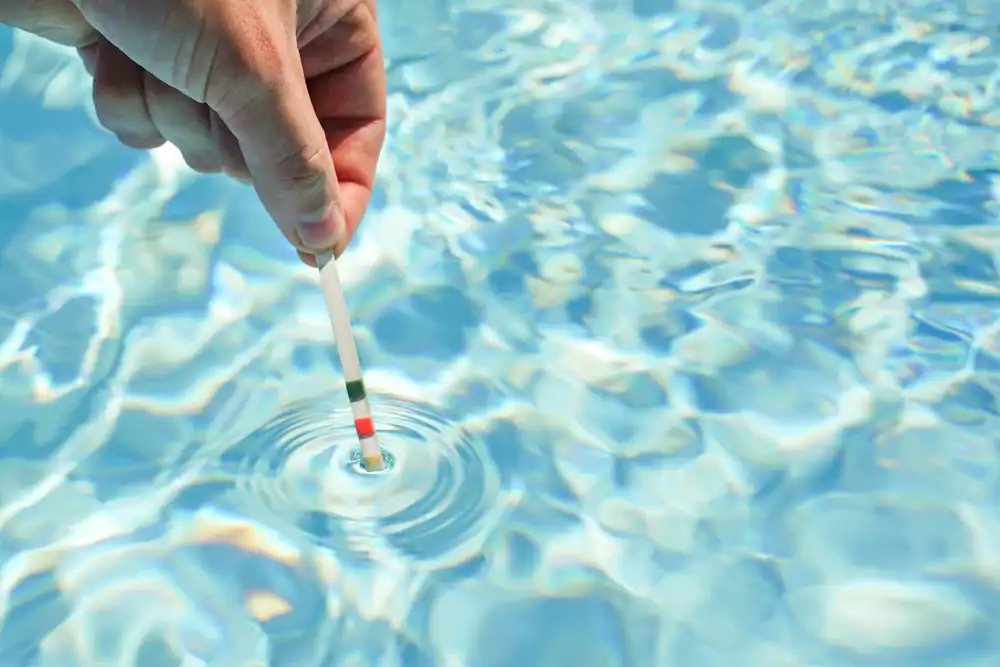
Test strips give you a rough idea. They’re fine for a quick check, but they’re not precise, and they don’t test for everything. Most strips only measure chlorine, pH, and alkalinity. They don’t tell you anything about calcium hardness or cyanuric acid, both of which directly affect how well your pool water stays balanced.
Professional water analysis uses calibrated equipment that measures exact levels. You’re not comparing a color on a strip to a chart and guessing if it’s 7.4 or 7.6. You’re getting a number: 7.52. That level of accuracy matters when you’re trying to dial in your water chemistry.
Strips also degrade over time. If they’ve been sitting in your pool shed all summer, exposed to heat and humidity, they’re probably not accurate anymore. Professional testing equipment is maintained and calibrated, so you’re getting reliable data every time. That’s the difference between guessing and knowing.
Because chlorine is only part of the picture. If your pH is too high, your chlorine isn’t working efficiently, even if the level looks good. If your total alkalinity is off, your pH is bouncing around and your chlorine can’t keep up. If your calcium hardness is too low, your water’s pulling minerals from wherever it can find them, which creates cloudiness.
Cyanuric acid is another common culprit. If it’s too high—over 80 or 100 ppm—your chlorine gets locked up and stops sanitizing effectively. You’ll test your water, see that you have plenty of chlorine, and wonder why your pool still looks off. The cyanuric acid is the reason.
Cloudy water usually means something’s out of balance, and it’s often not the thing you think it is. That’s why a full water analysis matters. It shows you what’s actually happening in your pool, not just what your chlorine level is. Once you know what’s off, you can fix it. Until then, you’re just guessing.
You can, but not all water testing is the same. Some stores use automated systems that are accurate and well-maintained. Others rely on older equipment or undertrained staff, and the results can be inconsistent. If the person running your test doesn’t know what they’re looking at, the printout won’t help you much.
We’ve been doing this for over 30 years, and we’ve seen every kind of water problem South Georgia pools can throw at us. When we test your water, we’re not just handing you a printout—we’re explaining what it means and what you should do next. If your water’s been green for two weeks, we’ll tell you why and how to fix it.
Our testing is free, and we’re not here to upsell you on chemicals you don’t need. We’re here to give you accurate information so you can take care of your pool the right way. If you want to buy chemicals from us, great. If not, that’s fine too. You’ll still leave with a clear plan.
Fix them in the right order, or you’ll waste time and money. If your pH and alkalinity are both off, adjust alkalinity first—it stabilizes pH. If your chlorine is low and your pH is high, bring the pH down before you add more chlorine, because high pH makes chlorine less effective.
If your cyanuric acid is through the roof, you’ll need to dilute your water by draining some and refilling. There’s no chemical that removes cyanuric acid. If your calcium hardness is low, add calcium chloride. If it’s too high, you’ll need to dilute the water, same as with cyanuric acid.
This is where professional water testing helps. We’ll walk you through what to fix first and what can wait. If you try to fix everything at once without a plan, you’ll end up chasing your tail. Get the test, follow the steps, and retest in a few days to make sure everything’s moving in the right direction.
It’s free. No purchase required, no obligation, no catch. You bring in a water sample, we test it, and you get a printout with your results and recommendations. If you want to buy chemicals from us, we’ve got them. If you’d rather go somewhere else, that’s your call.
We offer free water testing because it’s useful to you and it builds trust. Most of our business comes from referrals, and people refer us because we’re straight with them. If we can help you keep your pool clear and save you money on chemicals by giving you accurate information, that’s worth it to us.
We’ve been serving South Georgia pool owners since 2014, and we’ve built our reputation on doing right by people. Free water testing is part of that. You get reliable information, and we get the chance to show you that we know what we’re doing. If you need help down the road—whether it’s more testing, chemicals, or pool work—you’ll know who to call.
Other Services we provide in Ocilla