
Hear from Our Customers
You’re standing at your pool with a test strip that’s supposed to tell you something useful. The colors don’t quite match the chart. You squint. You guess. And then you dump in chemicals based on what you think might be right.
That’s not how water chemistry works. And in South Georgia, where a single afternoon thunderstorm can dump enough rain to throw off your pH and dilute your chlorine, guessing isn’t just frustrating—it’s expensive.
Professional pool water testing gives you the actual numbers. We’re talking about precise readings on chlorine levels, pH balance, alkalinity, calcium hardness, and phosphates. The kind of analysis that catches problems before your water turns cloudy or green. The kind that prevents your pump and heater from corroding because the chemistry was off for weeks without you knowing.
When your water is properly balanced, you’re not dealing with eye irritation, algae blooms the day before a pool party, or that slimy feeling on the walls. You’re swimming in water that’s safe, clear, and properly maintained. And you’re protecting the investment you made when you built that pool in the first place.
Deep Waters Pools was built on more than 30 years of hands-on pool construction and maintenance experience right here in South Georgia. We started in 2014 after spending decades working in concrete, plumbing, and custom pool builds. We know what happens when water chemistry goes wrong because we’ve seen the damage it causes to equipment, surfaces, and peace of mind.
We’re not a franchise following a corporate script. We’re a family-owned business in Douglas County that treats every pool like it’s our own. When you bring in a water sample or have us test on-site, you’re getting advice from people who understand Georgia’s weather patterns, the pollen that clogs your skimmers every spring, and the way summer heat accelerates algae growth if your chlorine dips even slightly.
We offer free water testing because we’d rather help you maintain your pool correctly than watch you struggle with problems that could have been prevented. That’s how we’ve built our reputation in Osierfield and the surrounding areas—by being honest, thorough, and genuinely helpful.
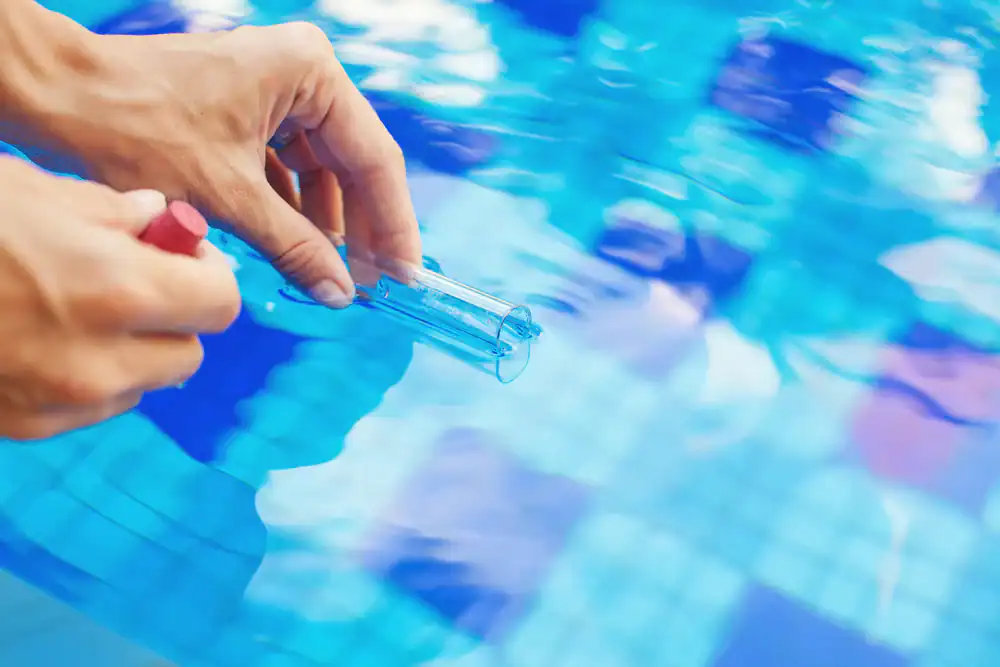
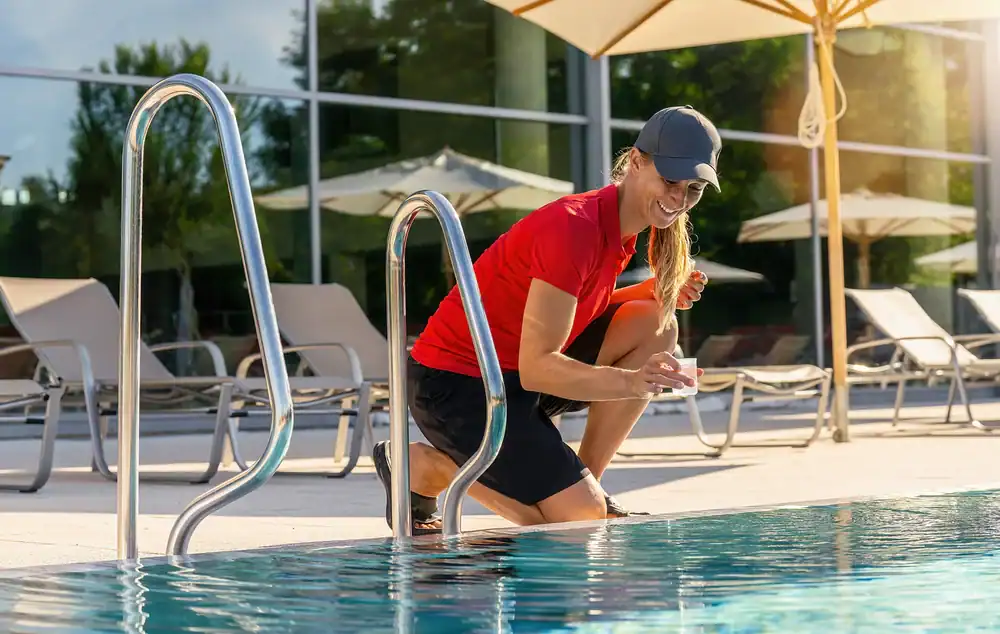
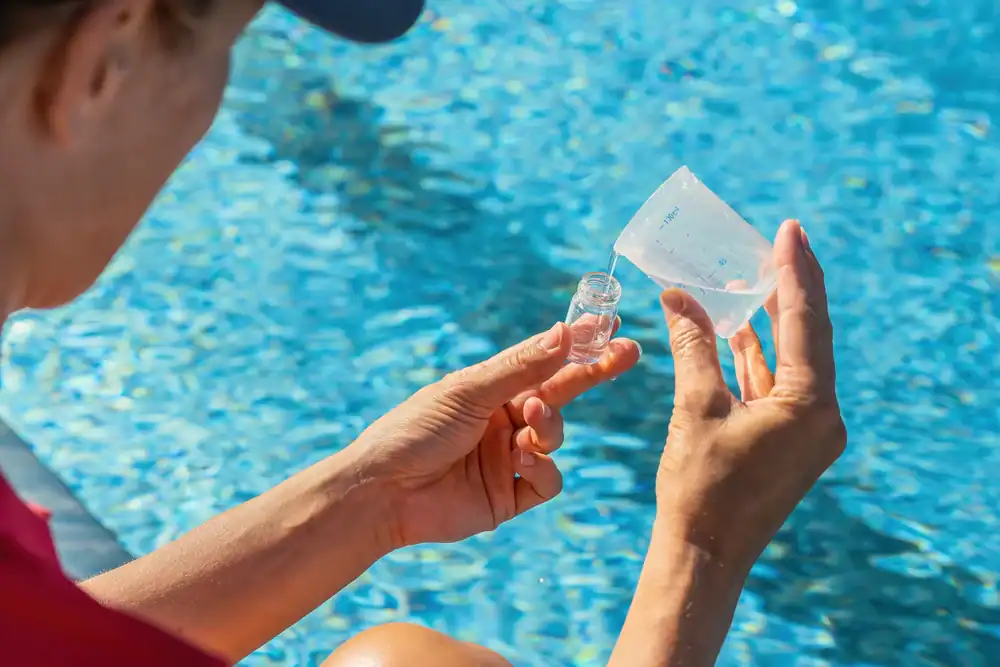
Bring us a water sample in a clean container—about 12 to 16 ounces is plenty. If you’re collecting it yourself, get the sample from about elbow-deep in the water, away from return jets and skimmers. That gives us the most accurate reading of what’s actually happening in your pool.
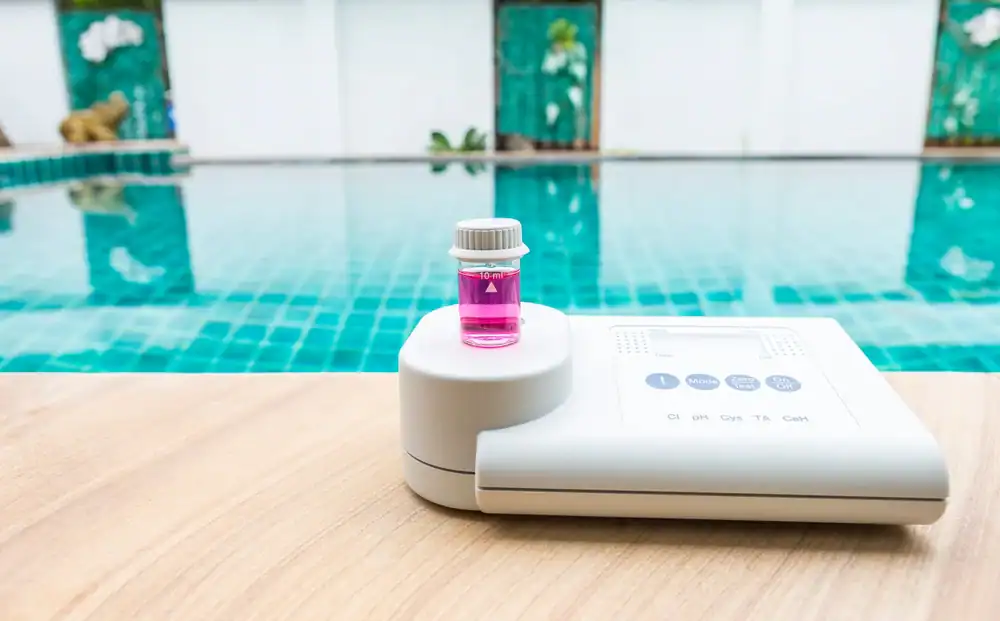
We run your sample through professional testing equipment that measures chlorine, pH, total alkalinity, calcium hardness, and phosphate levels. These aren’t the basic test strips you buy at the store. We’re using the same analysis methods that commercial pool operators rely on to keep public pools safe and compliant.
Once we have your results, we walk you through what they mean in plain language. If your pH is too high, we’ll explain why that matters and what it’s doing to your chlorine effectiveness. If phosphates are elevated—which happens a lot during Georgia’s pollen season—we’ll tell you how that’s feeding algae growth and what you can do about it.
You’ll leave with a printed report and specific recommendations. No pressure, no upselling. Just clear information about what your pool needs and why. If you want to handle the adjustments yourself, great. If you’d rather have us take care of it, we can do that too.
Ready to get started?
Our residential water test covers everything that affects your pool’s safety and clarity. We measure free chlorine and combined chlorine to make sure your sanitizer is actually working. We check pH levels because even small deviations affect how well chlorine kills bacteria and how comfortable the water feels on skin and eyes.
Total alkalinity gets tested because it’s your pH buffer—when alkalinity is off, your pH becomes unstable and you’re constantly chasing balance. We measure calcium hardness to prevent your water from either etching your pool surface or forming scale on your equipment. And we test for phosphates, which are the invisible fuel that algae needs to bloom.
In Osierfield and throughout Douglas County, we see the same patterns every year. Spring brings pollen that spikes phosphate levels. Summer heat and heavy pool use burn through chlorine faster. Fall drops leaves and organic debris that cloud the water and feed bacteria. Winter’s milder temperatures in Georgia mean your pool never fully goes dormant—it still needs attention.
That’s why we recommend testing at least weekly during swim season and after any heavy rain or windstorm. Georgia’s slightly acidic rainwater—usually around 5.5 to 6.0 pH—dilutes your pool and lowers both pH and alkalinity every time it storms. One good thunderstorm can undo a week of balanced chemistry if you’re not paying attention.
Test weekly during active swim season—roughly April through October in South Georgia. That’s when heat, UV exposure, and heavy use are constantly shifting your water chemistry. If you’re swimming daily or hosting pool parties, test twice a week.
After any significant weather event, bring in a sample. A heavy rainstorm doesn’t just add water to your pool—it dilutes your chemicals, drops your pH, and washes in contaminants like pollen, dust, and organic debris. Even a half-inch of rain in a standard residential pool can throw off your balance enough to cause problems.
During the cooler months, you can stretch testing to every two weeks, but don’t skip it entirely. Georgia’s mild winters mean your pool isn’t frozen—it’s still accumulating leaves, dealing with temperature swings, and supporting algae growth if conditions are right. Staying on top of chemistry year-round prevents you from opening a green pool come spring.
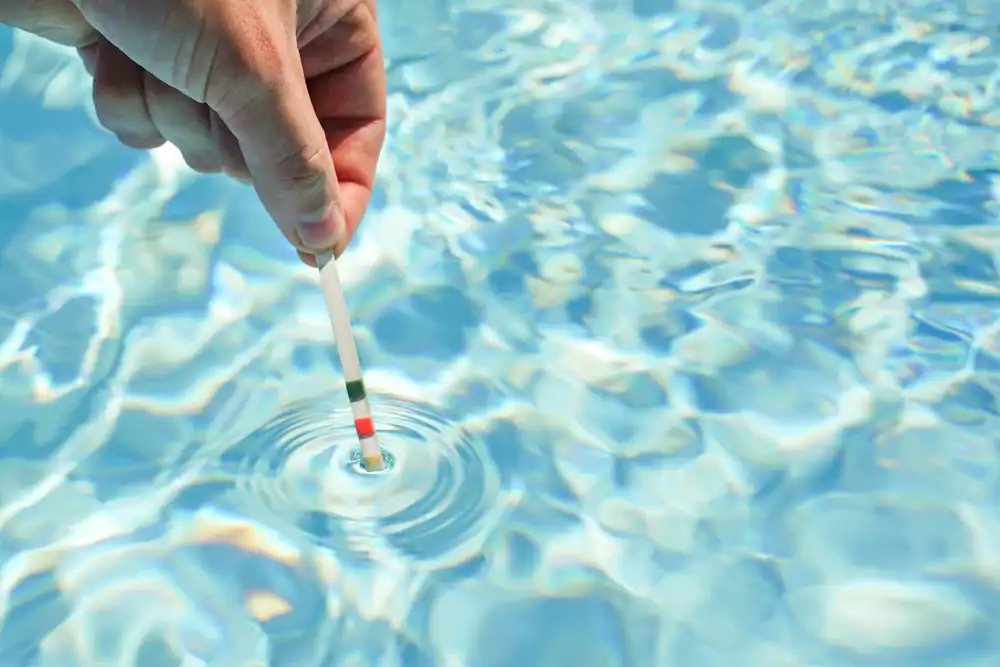
Home test strips give you a rough estimate. They’re better than nothing, but they’re not precise enough to catch problems early or dial in perfect balance. The color matching is subjective—what looks like 7.4 pH to you might actually be 7.8, and that difference matters when you’re trying to calculate how much acid to add.
Professional pool water analysis uses calibrated equipment that measures exact concentrations. We’re not eyeballing colors—we’re getting digital or reagent-based readings that are accurate to a tenth of a part per million. That level of precision is what lets us catch rising phosphate levels before you see algae, or detect calcium hardness issues before scale starts forming on your heater.
We also test for things most home kits skip entirely, like phosphates and combined chlorine. Those factors directly impact how clear your water stays and how effectively your sanitizer works. If you’re only testing with strips, you’re missing half the picture. And in a climate like South Georgia’s, where conditions change fast, that incomplete picture costs you time and money fixing problems that could have been prevented.
Cloudy water usually means your filtration or chemistry is off—sometimes both. If you’re adding chlorine but the water stays hazy, your pH is probably too high. When pH climbs above 7.8, chlorine becomes significantly less effective at sanitizing. You’re adding it, but it’s not doing its job.
Another common cause is poor filtration. Your filter might be dirty, undersized for your pool, or running for too few hours per day. In South Georgia’s heat, your pump should run long enough to turn over all the water in your pool at least once daily—sometimes twice during peak summer. If your filter can’t keep up, dead algae, oils, and fine particles stay suspended in the water.
High calcium hardness or total dissolved solids can also cause persistent cloudiness that chlorine won’t fix. This happens over time as your pool water ages and accumulates minerals from fill water, chemicals, and environmental debris. Sometimes the only fix is partially draining and refilling with fresh water. A professional water test will tell you exactly which factor is causing your cloudy water so you’re not just throwing chemicals at the problem and hoping something works.
If your chlorine level has dropped below 1 ppm, you’re swimming in water that isn’t properly sanitized. Bacteria and pathogens multiply fast in warm water—especially in Georgia’s summer heat. Low chlorine means higher risk of ear infections, skin rashes, and gastrointestinal issues if someone accidentally swallows water.
High pH or alkalinity won’t make you immediately sick, but it will irritate eyes and dry out skin. You’ll notice people getting out of the pool with red, burning eyes or complaining that their skin feels tight and itchy. That’s not normal, and it’s a sign your water chemistry is off.
Green or cloudy water is a hard stop. If you can’t see the bottom of your pool clearly, don’t swim. That murkiness is algae, bacteria, or both—and it means your sanitizer has failed. Dark green water with a slimy feel is actively unsafe. It needs to be shocked, filtered, and retested before anyone gets back in.
Regular testing catches these issues before they become health risks. You’re not just maintaining clear water—you’re maintaining safe water. And in a residential pool where kids are playing and swallowing water without thinking about it, that safety margin matters.
Absolutely. Georgia’s climate is one of the more challenging environments for pool maintenance. Spring pollen is notorious—it clogs skimmers, feeds algae through elevated phosphates, and creates a constant layer of yellow-green debris on the surface. If you’re not skimming daily and using a clarifier, that pollen breaks down and clouds your water.
Summer heat accelerates everything. Chlorine degrades faster under intense UV exposure. Algae grows exponentially when water temperatures climb into the 80s and 90s. And if your chlorine dips even slightly—say, down to 0.5 ppm for just a day—you can wake up to a green pool.
Fall brings decaying leaves, which are loaded with phosphates. Every leaf that sinks to the bottom and sits there is feeding algae and adding organic load to your water. You’ll notice your chlorine demand goes up because it’s working overtime to oxidize all that debris.
Even winter isn’t a break. Georgia’s mild temperatures mean your pool doesn’t freeze, but it’s still accumulating contaminants and dealing with temperature swings that affect chemical stability. The pool owners who stay on top of testing year-round are the ones who open their pools in spring without needing a major recovery effort. The ones who ignore it all winter are the ones calling us in April asking how to fix green, swampy water.
It’s actually free. No purchase required, no obligation to buy chemicals or service from us. Bring in a water sample and we’ll test it, explain the results, and give you a printed report. What you do with that information is entirely up to you.
We offer free testing because it’s good for the community and good for business. Pool owners who understand their water chemistry take better care of their pools, which means fewer emergency calls about green water or broken equipment. And when people need help—whether that’s chemicals, maintenance, or a full-service cleaning—they remember who gave them straight answers without a sales pitch.
We’ve been doing this in Douglas County since 2014, and before that we spent 30 years in pool construction and service. We’re not trying to upsell you on things you don’t need. If your water is balanced, we’ll tell you it’s balanced. If something’s off, we’ll explain what’s wrong and give you options for fixing it—whether you handle it yourself or hire us to do it.
That’s the catch, if you want to call it that. We’re betting that treating people honestly and being genuinely helpful builds trust and long-term relationships. So far, that’s worked out pretty well for everyone involved.
Other Services we provide in Osierfield