
Hear from Our Customers
Those color-matching strips you bought? They’re missing half the story. Bacterial contamination doesn’t show up on a basic test. Neither do the mineral imbalances that corrode your pump or eat away at your liner.
Professional water testing gives you the full picture. You’ll know exactly what’s in your water—chlorine levels, pH balance, alkalinity, calcium hardness, and the stuff that causes real problems if left unchecked. That means no more skin irritation from over-chlorinated water. No more algae blooms after a heavy rain. No more replacing equipment years earlier than you should.
You get a water analysis that’s actually accurate. Then you get clear instructions on what to add, how much, and when. No guesswork. No wasted chemicals. Just clean, balanced water that’s safe for your family and easy on your pool.
We’ve been building and maintaining inground cement pools across South Georgia for over 30 years. We’re licensed, insured, and based right here in Douglas—serving Pearson and the surrounding area with the kind of local knowledge that only comes from doing this work in Georgia’s unique climate.
We know how summer heat accelerates chlorine burn-off. We know what heavy rains do to your chemical balance. And we know that Georgia’s soil and water conditions require a different approach than what works up north. That’s why our water quality testing goes beyond the basics—because your pool deserves more than a one-size-fits-all answer.
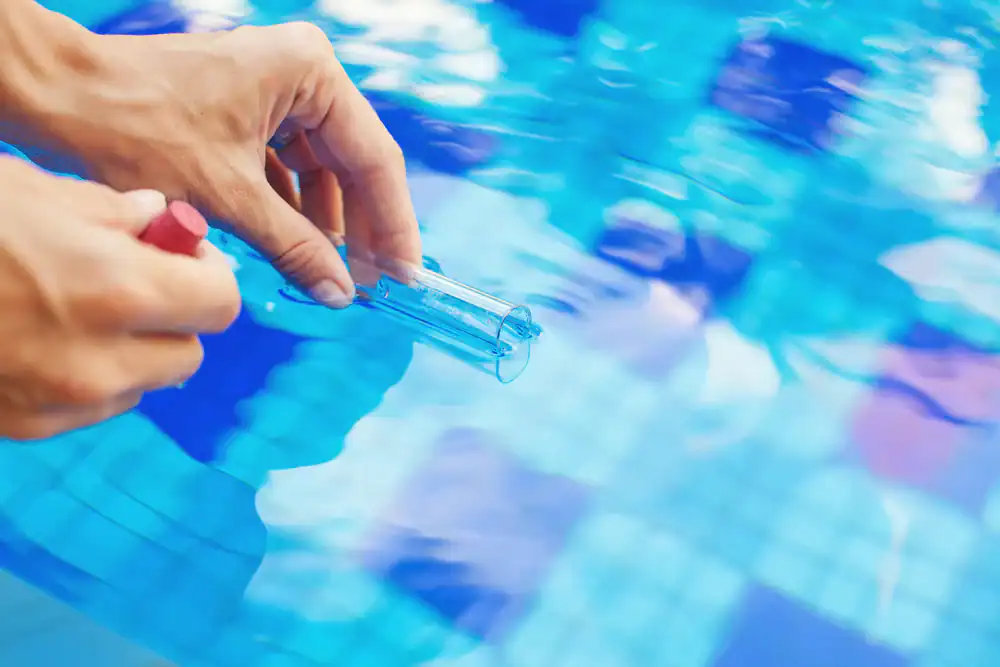
Grab a clean plastic bottle and collect about 12 ounces of water from elbow-deep in your pool—not from the surface, where debris floats, and not right next to a return jet. Bring it to us within a few hours for the most accurate results.
We run a full analysis that measures chlorine, pH, total alkalinity, calcium hardness, cyanuric acid, and checks for metals or phosphates that fuel algae growth. This takes a few minutes, and it’s completely free. You don’t need to buy anything from us to get tested.
Once we have your results, we walk you through what they mean. If your pH is too low, we’ll explain why that matters and what it’s doing to your pool surfaces. If your calcium is high, we’ll tell you how that leads to scaling. Then we give you a straightforward treatment plan—what to add, how much, and in what order. You can handle it yourself, or we can take care of it. Either way, you’ll know exactly what your pool needs.
Ready to get started?
Every residential water test includes a complete chemical breakdown: free chlorine, combined chlorine, pH, total alkalinity, calcium hardness, cyanuric acid, and a check for copper, iron, and phosphates. We’re looking at the full chemistry, not just the basics.
You’ll also get customized recommendations based on your specific pool type and Pearson’s local conditions. Georgia’s extended swim season means your pool is working harder for longer. High summer temperatures deplete chlorine faster. Afternoon thunderstorms dilute your chemicals overnight. We account for all of that when we tell you what to adjust.
And because this is a free service, there’s no reason to skip it. Most pool owners should be testing at least once a week during swim season—twice a week if you’re getting heavy use or dealing with weather swings. Catching a problem early saves you money. Fixing one after your water turns green or your heater starts corroding costs a lot more.
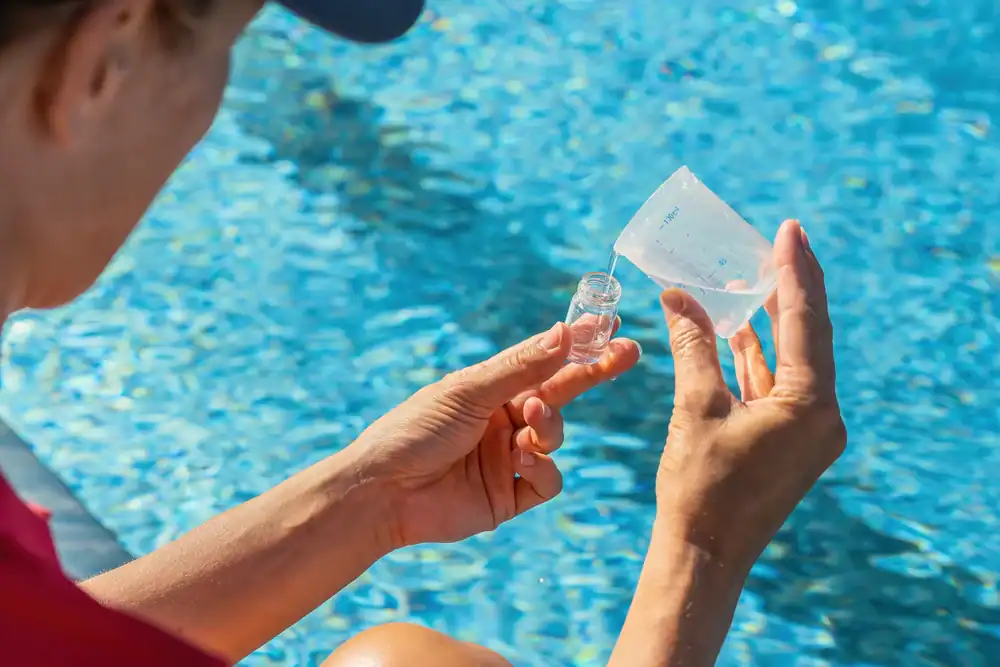
Test your pool water at least once a week during swimming season. If you’re in the pool daily, if you’ve had a heavy rainstorm, or if temperatures are spiking above 90 degrees, test twice a week.
Georgia’s climate puts extra demand on your pool chemistry. Heat accelerates chlorine loss. Rain dilutes your chemicals. Both create conditions where algae and bacteria can take hold fast. Weekly testing catches small imbalances before they become expensive problems.
Bring in a fresh sample every seven days, and you’ll stay ahead of issues that would otherwise cost you time, chemicals, and equipment life. It’s free, it takes five minutes, and it’s the easiest way to protect your investment.
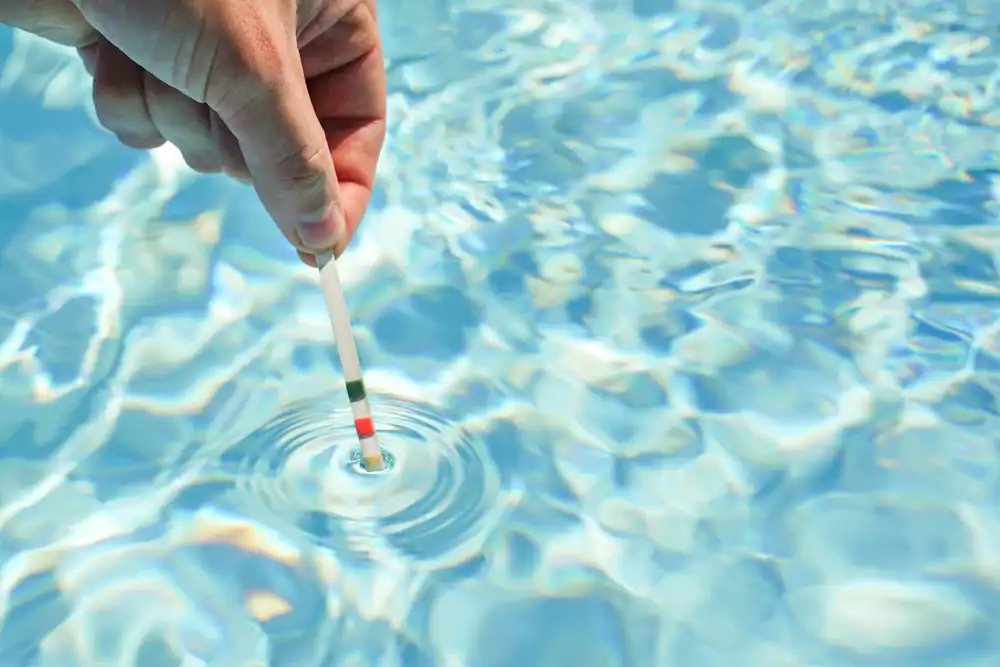
Home test strips give you a rough estimate of chlorine and pH. That’s useful for a quick check, but they miss a lot. They don’t measure calcium hardness, cyanuric acid, phosphates, or metals—all of which affect water quality and equipment longevity.
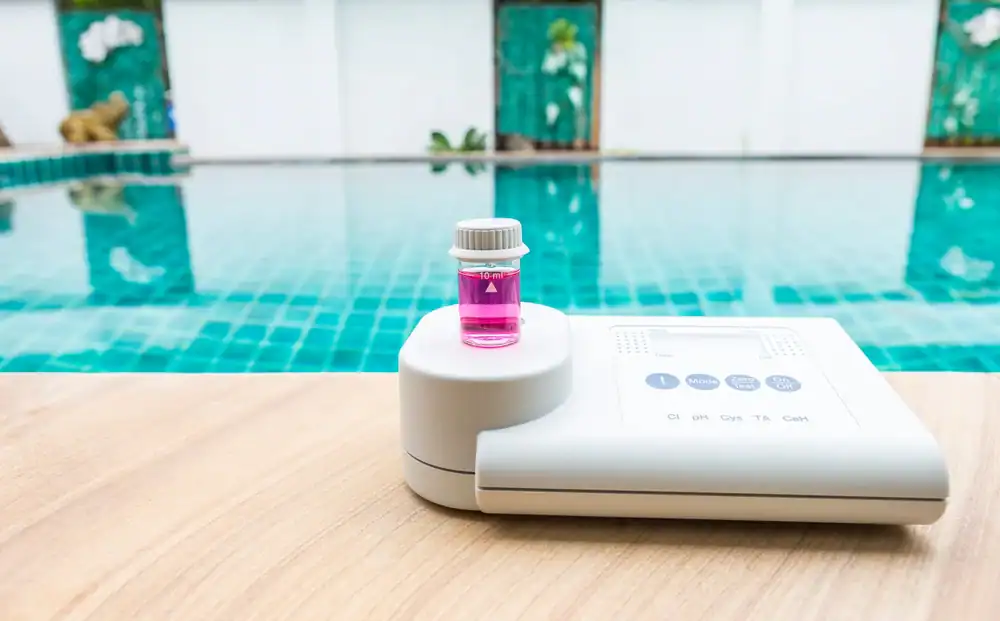
Professional water analysis uses calibrated equipment that delivers precise readings across a full spectrum of chemicals and minerals. We can detect copper that’s staining your liner, phosphates that are feeding algae growth, or high cyanuric acid that’s making your chlorine ineffective. You can’t see any of that on a color-matching strip.
If you’re serious about maintaining your pool correctly and avoiding costly repairs, professional testing isn’t optional. It’s the only way to know what’s actually happening in your water. And since we offer it for free, there’s no reason not to use it.
Yes. Low pH turns your water acidic, which corrodes metal components in your pump, heater, and filter. High pH causes calcium to precipitate out of the water and form scale on your tile, in your pipes, and inside your equipment. Both shorten the life of everything in your system.
High chlorine levels degrade your liner and fade your pool surfaces. Low calcium leads to water that’s hungry for minerals—so it pulls them from your plaster or grout, causing pitting and rough spots. Unbalanced water is expensive water.
We’ve seen heaters fail years early because of acidic water. We’ve seen pumps clog with scale buildup from high calcium. These aren’t rare occurrences—they’re predictable outcomes of ignoring water chemistry. Regular testing and proper balancing prevent all of it. Your equipment will last longer, run more efficiently, and cost you less over time.
Clear water doesn’t mean safe water. You can have perfect clarity and still have a chlorine level that’s too low to kill bacteria, or a pH that’s damaging your equipment. That’s why testing matters more than appearance.
If your water looks fine but the test shows an imbalance, follow the treatment plan we give you. Adjust your pH first if it’s off, because pH affects how well your chlorine works. Then address alkalinity, calcium, and any other issues in the order we recommend. Trying to fix everything at once usually makes things worse.
Retest a day or two after treatment to confirm your adjustments worked. Water chemistry isn’t always intuitive—adding one chemical can shift another reading. That’s why we walk you through the process and why retesting is part of keeping your pool dialed in. Don’t assume clear water means you’re done. Test it to be sure.
Absolutely. A heavy afternoon thunderstorm can drop several inches of rainwater into your pool, diluting your chlorine, lowering your pH, and throwing off your alkalinity. If your pool overflows, you’re losing treated water and replacing it with untreated runoff.
After any significant rain event in Pearson, you should test your water within 24 hours. Don’t wait until the weekend or until you notice a problem. Algae can start growing in as little as 48 hours when chlorine levels drop, and once it takes hold, you’re looking at days of treatment and filtration to clear it.
Bring in a sample after the storm passes. We’ll tell you what got diluted and what you need to add to get back to balanced. It’s a five-minute fix if you catch it early. It’s a multi-day headache if you don’t. Georgia’s summer storms are predictable—your response to them should be too.
It’s actually free. No purchase required. Bring in a water sample, and we’ll test it and give you the results and treatment recommendations at no cost. You’re free to buy your chemicals wherever you want.
We offer free testing because we want pool owners in Pearson to have access to accurate information. Most people don’t test often enough because they think it’s going to cost them every time. Removing that barrier means you’re more likely to stay on top of your water chemistry—which protects your pool, your equipment, and your family.
If you do want us to handle the treatment for you, we can do that. But there’s no pressure and no obligation. We’ve been doing this for over 30 years because we care about pools and the people who own them. Free testing is just part of how we serve this community.
Other Services we provide in Pearson