
Hear from Our Customers
You can’t see pH. You can’t see alkalinity. And you definitely can’t see when your chlorine level is about to let algae take over.
That’s the problem with pool water—it looks fine until it doesn’t. By the time it’s cloudy or green, you’re already dealing with a bigger issue that takes more time, more chemicals, and more money to fix.
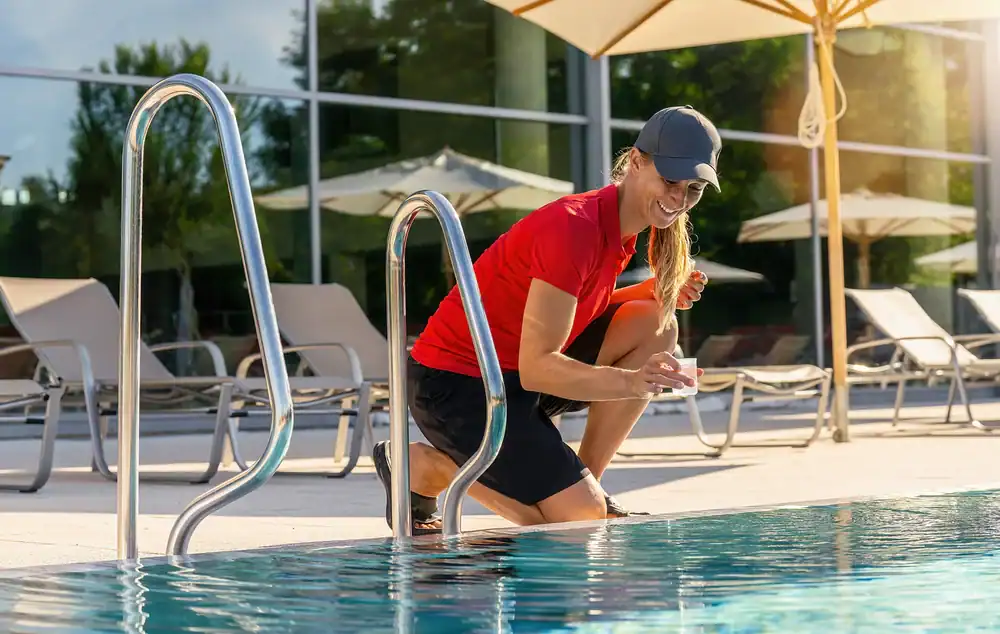
Water testing catches those problems early. It tells you what’s actually happening in your pool so you can adjust before your equipment starts corroding, before your eyes start burning, and before you’re dumping shock into green water wondering what went wrong. Regular testing means fewer surprises and a pool that stays swimmable without the guesswork.
We’ve been designing and building custom inground pools across South Georgia for over a decade. We’re not a franchise. We’re a local company built on 30+ years of hands-on pool construction experience.
We know what South Georgia weather does to pool chemistry. We know how fast rain can throw off your pH and how quickly algae can bloom when temperatures spike in late spring. That’s why we offer free water testing—it’s one of the simplest ways to help pool owners in Roper stay ahead of problems instead of reacting to them.
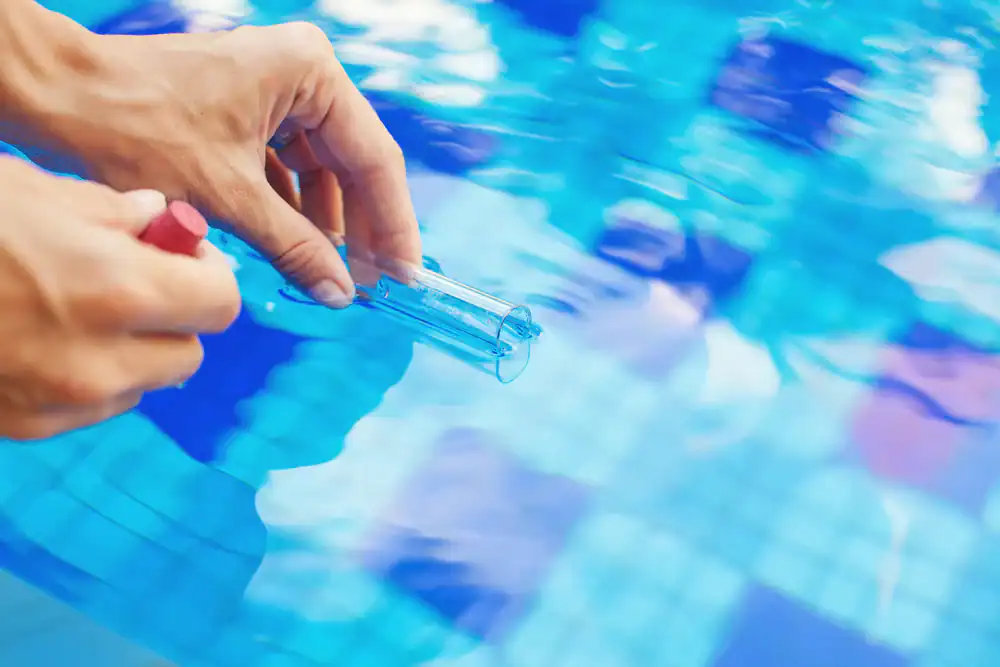
Grab a clean plastic bottle or container. Reach about elbow-deep into your pool—away from the skimmer and returns—and fill it up. Cap it and bring it to us.
We’ll run a full water analysis that checks pH, alkalinity, calcium hardness, chlorine levels, and stabilizer. The whole test takes a few minutes. Once we have the results, we’ll walk you through what each number means and what’s out of range.
Then we’ll tell you exactly what to add, how much, and in what order. If your alkalinity is low, we’ll explain why that matters and what happens if you ignore it. If your calcium is high, we’ll tell you what that does to your pool surface over time. You leave with a printout of your results and a clear plan—not a sales pitch.
Ready to get started?
Every water test we run covers the same core factors: pH, total alkalinity, calcium hardness, free chlorine, combined chlorine, and cyanuric acid. These aren’t random numbers—they all affect how your pool performs and how long your equipment lasts.
pH tells you if your water is acidic or basic. If it’s too low, it’ll corrode your heater, pump seals, and metal fixtures. If it’s too high, chlorine stops working and you’ll fight algae no matter how much you add. Alkalinity acts as a pH buffer—it keeps your pH stable so you’re not chasing it every other day.
Calcium hardness matters more than most people think. Too little and your water pulls calcium from your plaster or grout, causing pitting and damage. Too much and you get scaling on your tile, equipment, and inside your pipes. In Roper, where rain is common from spring through fall, calcium gets diluted fast. One heavy storm can drop your levels enough to start affecting your pool surface within weeks.
Chlorine is obvious—it kills bacteria and keeps your water safe. But combined chlorine, also called chloramines, is what causes that strong “pool smell” and eye irritation. When we test, we measure both to see if you need to shock. Cyanuric acid protects chlorine from getting destroyed by the sun, but too much locks up your chlorine and makes it useless. We check all of it so you’re not guessing.
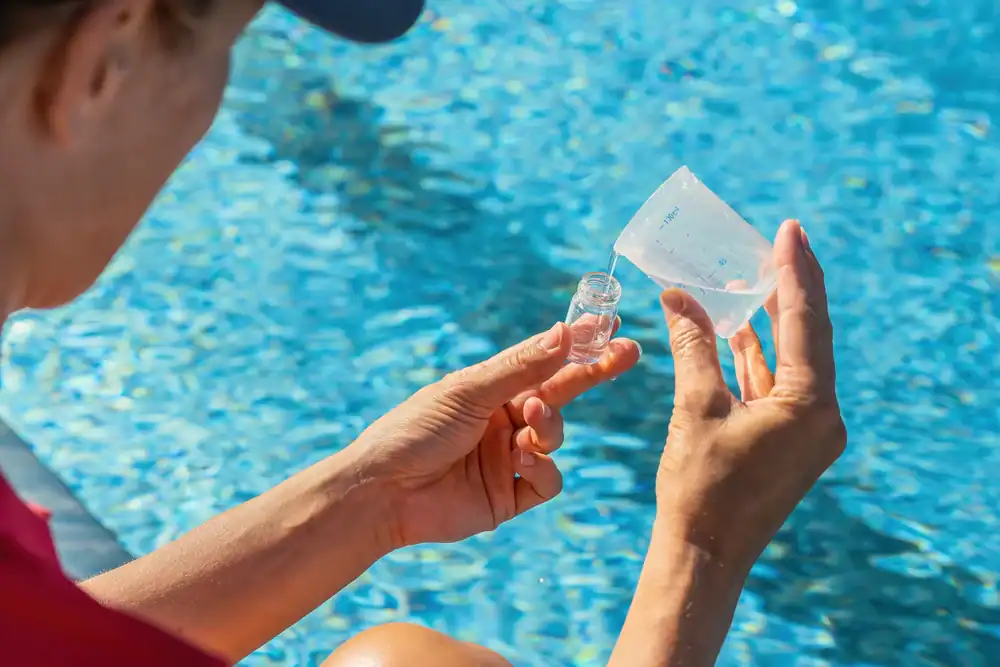
Once a week during swim season is the standard. If you’re using your pool heavily—kids in and out all day, pool parties, dogs jumping in—test twice a week.
After a rainstorm, test within a day or two. Georgia rain is acidic, usually sitting around a pH of 5.5 to 6.0, which is way below your pool’s ideal range of 7.4 to 7.6. A heavy rain doesn’t just dilute your chemicals—it actively lowers your pH and alkalinity. It also washes in pollen, dirt, and organic debris that feeds algae.
If your pool sits unused for a while or you’re between swim seasons, you can stretch it to every two weeks. But if something looks off—water’s hazy, chlorine smell is strong, or it just doesn’t feel right—don’t wait. Bring a sample in.
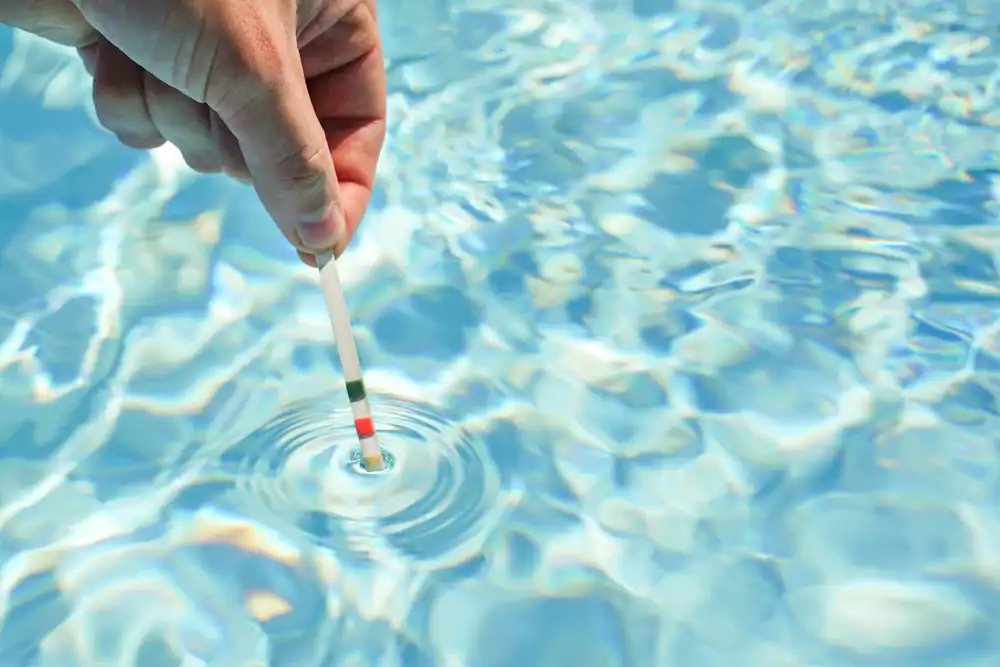
You can, but they’re not as accurate. Test strips give you a rough idea, but they’re easily affected by how long you dip them, how you read the color, and how old the strips are. If they’ve been sitting in your garage through a South Georgia summer, they’re probably not reliable anymore.
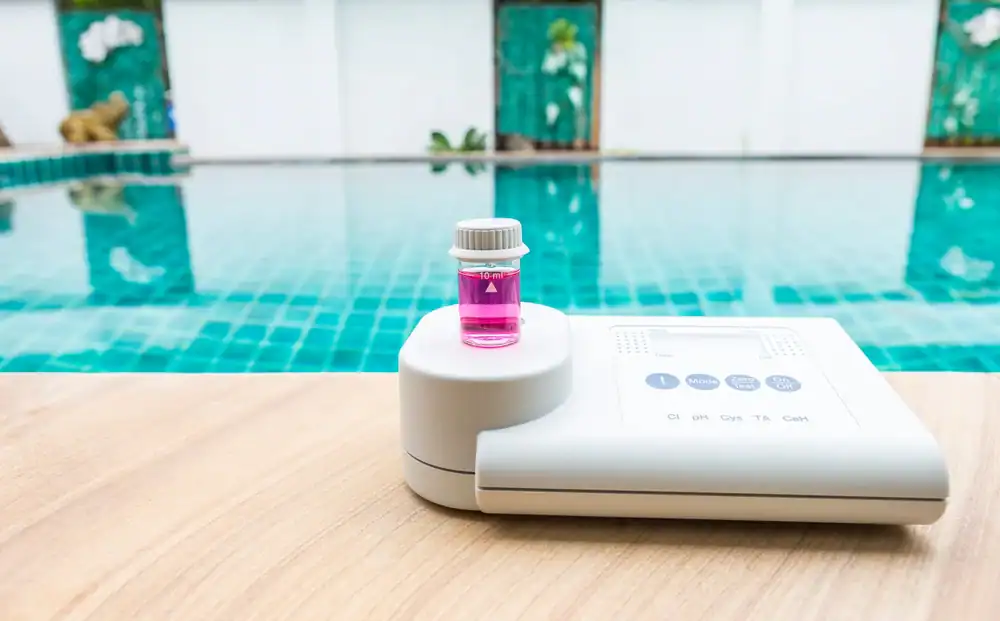
Professional testing uses liquid reagents and calibrated equipment. We’re measuring exact levels, not comparing colors under different lighting. That precision matters when you’re trying to prevent equipment damage or avoid dumping in chemicals you don’t actually need.
If you want to check your chlorine between professional tests, strips are fine for that. But for a full water analysis—especially pH, alkalinity, and calcium—get it tested properly. It’s free here, and it takes the guesswork out of balancing your pool.
You’ll either overspend on chemicals or deal with problems that could’ve been avoided. Most people guess when they add chemicals, which means they’re usually adding too much or not enough. Too much chlorine and you’re burning through money while irritating skin and eyes. Not enough and algae starts growing.
Imbalanced pH eats away at your equipment. Low pH is acidic—it corrodes metal parts, degrades seals, and etches plaster. High pH makes your chlorine ineffective and causes scaling that clogs filters and coats heating elements. Both cost you money in repairs.
Calcium that’s out of range damages your pool surface. If it’s too low, the water pulls calcium from your plaster or grout, causing pitting and rough spots. If it’s too high, you get white scaling on your tile and equipment that’s hard to remove. Regular testing catches these issues while they’re still easy to fix.
Because every pool is different. The size of your pool, how much sun it gets, how often it’s used, and whether you have a heater or saltwater system all affect your water chemistry.
A pool in full sun all day burns through chlorine faster than one that’s partially shaded. A pool that gets used daily by kids needs more frequent chemical adjustments than one that sits mostly unused. If you have a heater, your calcium and pH levels shift differently than an unheated pool.
Your water source matters too. If you’re filling or topping off with well water, it’s going to have different mineral content than city water. That changes your starting point for calcium, pH, and alkalinity. We test your specific water and give you recommendations based on what’s actually in your pool—not a generic chart.
Don’t try to fix everything at once. There’s an order to balancing pool chemistry, and doing it wrong can make things worse.
Start with alkalinity. It’s the foundation—if your alkalinity is off, your pH will keep bouncing around no matter what you do. Get that stable first. Then adjust your pH. Once those two are in range, you can address calcium hardness and chlorine levels.
If your numbers are really far off—pH below 7.0 or above 8.0, alkalinity under 80 or over 150, calcium below 200 or above 400—don’t dump a bunch of chemicals in and hope for the best. Bring us a sample, and we’ll walk you through the exact steps and amounts. Trying to correct severe imbalances without guidance usually leads to overcorrecting, which creates new problems.
Yes. A heavy rain can drop your pH by half a point or more and dilute your chlorine enough that algae starts growing within 48 hours.
Roper gets consistent rainfall, especially from spring through early fall. Every time it rains, you’re adding water that’s more acidic than your pool should be. That lowers your pH and alkalinity. It also dilutes your chlorine and washes in contaminants—pollen, dust, leaves, dirt—that feed algae and bacteria.
If you get a storm that dumps two or three inches, your water chemistry is going to shift. You’ll need to rebalance your alkalinity and pH, and you’ll probably need to add chlorine. Test within a day or two after any significant rain so you’re adjusting before problems start. If you wait a week and your pool’s green, you’re dealing with a much bigger fix than if you’d tested right after the storm.
Other Services we provide in Roper