
Hear from Our Customers
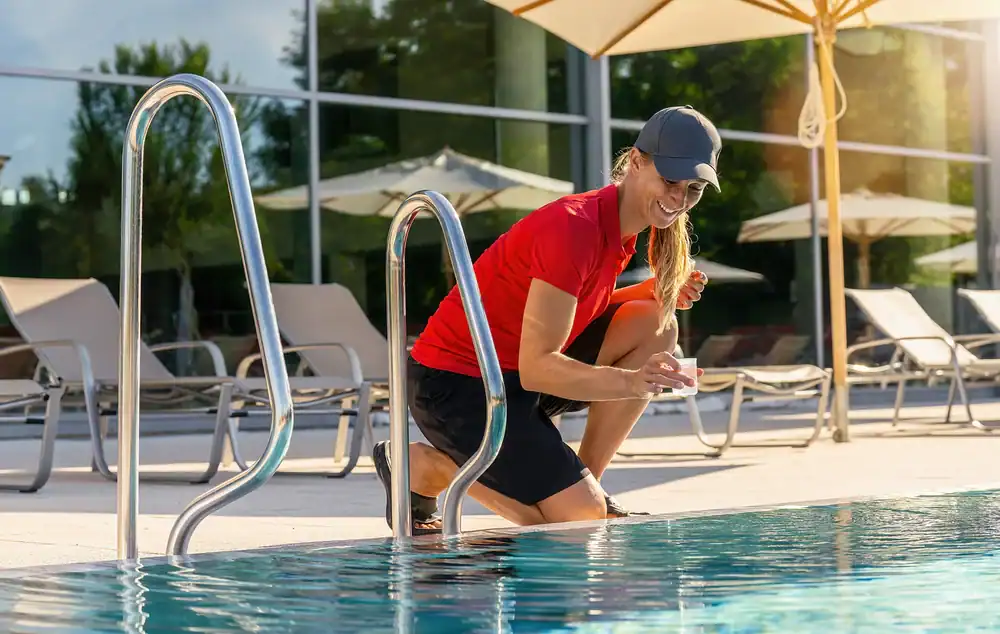
Most pool owners are flying blind. You test at home with strips that expired six months ago, add chemicals based on a hunch, and hope the water clears up. Meanwhile, your pH is drifting into corrosive territory and your chlorine isn’t actually sanitizing anything.
Professional pool water analysis changes that. You get accurate readings on free chlorine, pH, total alkalinity, and calcium hardness—the four levels that determine whether your water is safe or slowly damaging your pool. When those numbers are off, even by a little, you’re looking at algae growth, equipment corrosion, and skin irritation for anyone who swims.
Here’s what balanced water actually does: it protects your pool surface from etching and scaling, keeps your pump and filter running longer, prevents that burning feeling in your eyes, and stops algae before it turns your water green. You’re not dumping chemicals and hoping. You’re making small, precise adjustments that keep everything stable—and that saves you money on both chemicals and repairs.
In Saginaw, where summer heat and afternoon storms are part of the deal, your water chemistry shifts constantly. Testing twice a week isn’t overkill. It’s how you catch problems while they’re still cheap to fix.
Deep Waters Pools has been building and maintaining inground pools across South Georgia since 2014, backed by over 30 years of hands-on construction and service experience. That’s not marketing talk—it means the people testing your water have seen what happens when chemistry goes wrong, and we know how to prevent it.
You’re not dealing with a retail store trying to upsell you a cart full of chemicals. You’re working with a local team that understands how Saginaw’s water behaves, what seasonal shifts do to your pool, and what actually needs adjusting versus what can wait.
This service is free because balanced water protects the pools we build. When your chemistry is dialed in, your pool lasts longer, runs better, and costs less to maintain. That’s the outcome you’re paying for when you choose quality construction—and it’s why we keep testing long after the build is done.
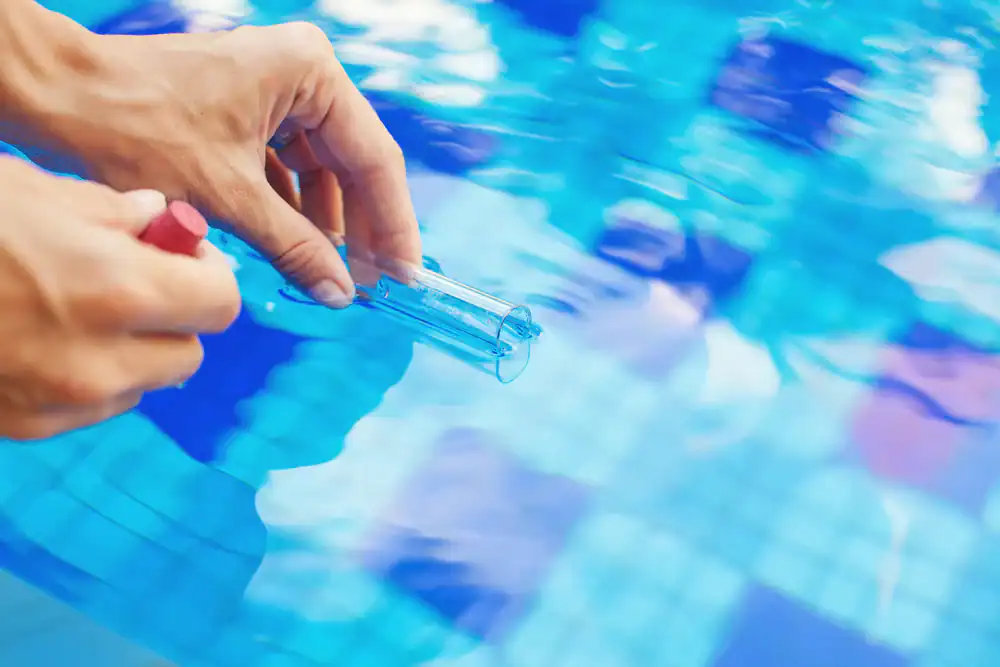
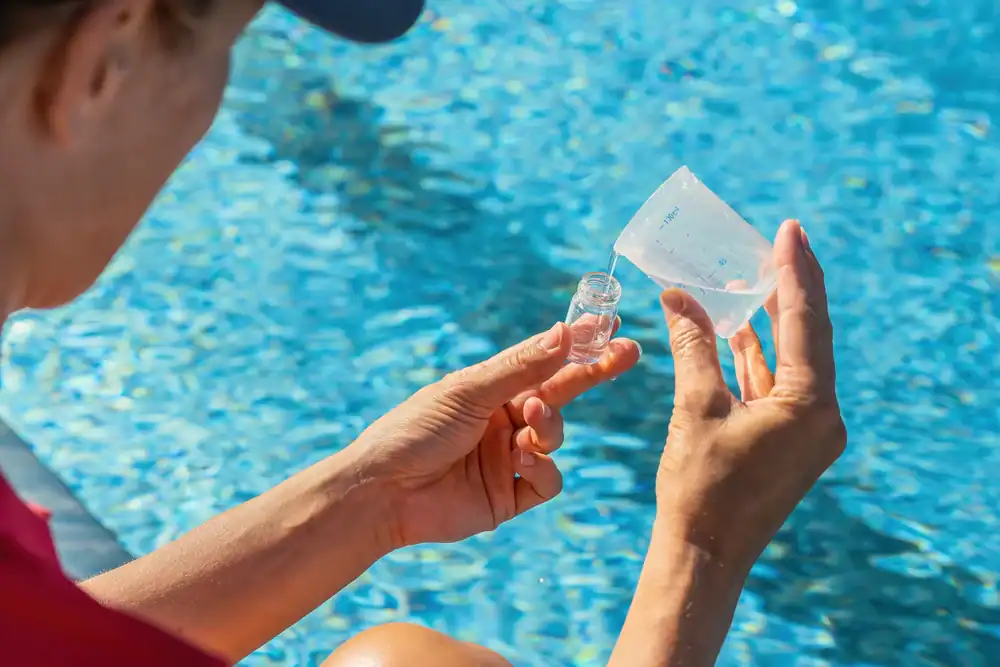
You bring in a water sample—just a clean plastic bottle filled about halfway from elbow-deep in your pool, away from the return jets. If the bottle sat in your garage for three years, rinse it a few times with pool water first. You want a fresh sample that actually represents what’s in your pool right now.
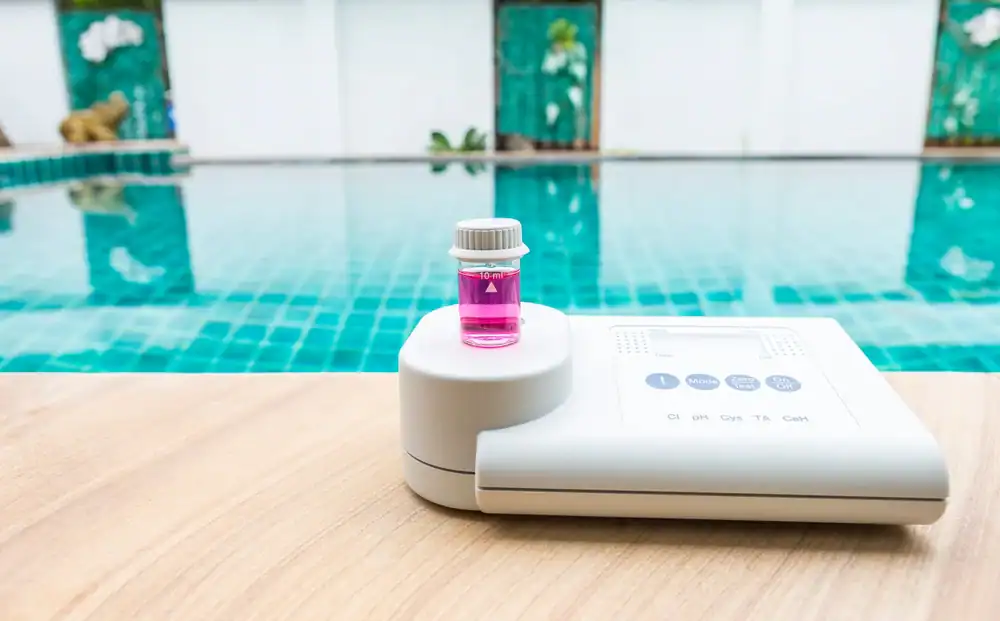
We run it through professional-grade testing equipment, measuring free chlorine, pH, total alkalinity, and calcium hardness. These aren’t test strips. This is the same lab-quality analysis that commercial pools use to stay within health department standards. You get real numbers, not color-matching guesses.
Then comes the part that actually matters: we explain what those numbers mean for your pool and what you need to do about it. If your pH is low, you’ll know exactly how much soda ash to add. If your calcium hardness is climbing, you’ll understand why and what happens if you ignore it. If everything looks good, you’ll know that too—and you’re not buying chemicals you don’t need.
You walk out with a printed report and a clear plan. No upselling, no confusion, just the information you need to keep your water safe and your pool running right.
Ready to get started?
Every residential water test covers the four critical measurements that determine water safety and equipment longevity. Free chlorine tells you if your water is actually sanitized or just looks clear. pH determines whether your water is corrosive or scaling. Total alkalinity acts as a pH buffer—when it’s off, your pH swings wildly no matter what you add. Calcium hardness protects your pool surface and equipment from both etching and buildup.
In Saginaw, GA, where groundwater tends to run hard and summer heat accelerates chemical consumption, those readings shift faster than in other climates. A pool that tested perfect last week might be trending acidic after three days of rain. That’s not a failure of your maintenance routine—it’s just how water chemistry works in South Georgia.
You also get a printed breakdown of your results with specific product recommendations and dosage amounts. Not “add some pH increaser.” More like “add 1.5 pounds of soda ash, wait four hours, and retest.” That level of detail is what separates guessing from actually fixing the problem.
This water analysis service isn’t a sales pitch for a closet full of chemicals. It’s a diagnostic tool that helps you spend less, not more, by only adjusting what actually needs adjusting. When you know your numbers, you’re not over-chlorinating or chasing your pH in circles. You’re making small, precise corrections that keep your water stable and your costs down.
Twice a week during swim season, once a week in cooler months. That sounds like a lot until you consider what changes your water chemistry: rain dilutes your chlorine, heat accelerates evaporation and chemical breakdown, swimmers introduce contaminants, and even a few degrees of temperature shift affects how your sanitizer works.
In South Georgia, you’re dealing with all of those factors regularly. A storm rolls through and drops two inches of rain in your pool—your chemical balance just got diluted by hundreds of gallons of untreated water. Three days of 95-degree heat and your chlorine is burning off faster than usual. Your pH drifts up, your alkalinity drops, and suddenly you’re adding twice as much acid as you normally would.
Testing frequently lets you catch those shifts early, when a small adjustment fixes everything. Wait two weeks between tests and you’re trying to correct major imbalances that could’ve been prevented with a quarter-pound of chemicals. The cost difference between proactive testing and reactive chemical dumping is significant over a season—and that’s before you factor in potential equipment damage from corrosive or scaling water.
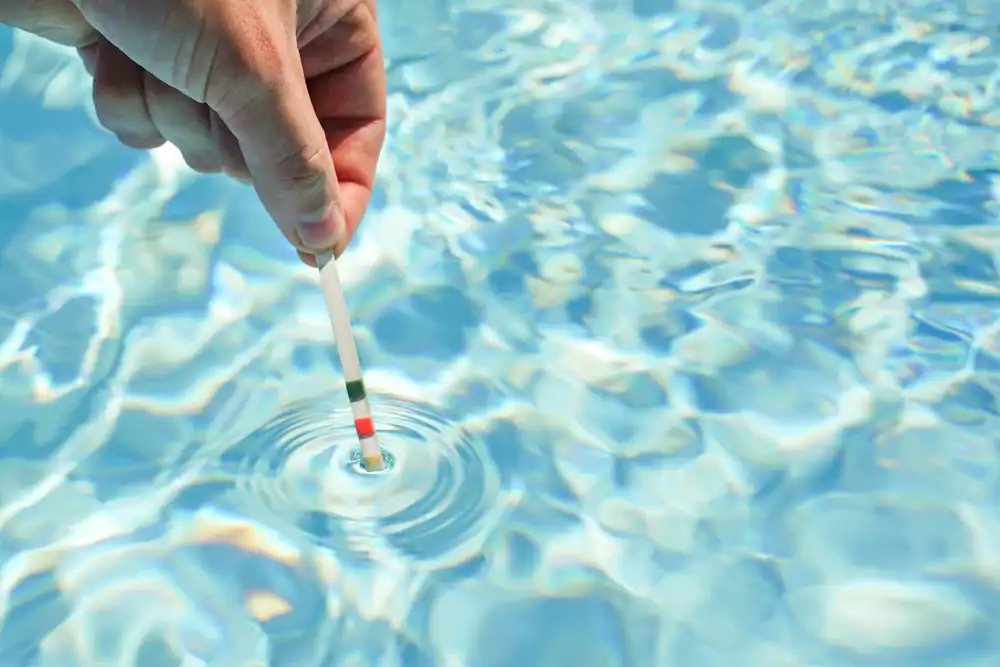
Accuracy. Test strips give you a ballpark range by matching colors on a chart, and that’s fine for a quick check between professional tests. But they’re affected by lighting, how long you wait before reading them, whether they’ve been exposed to humidity, and how old they are. You might think your pH is 7.4 when it’s actually 7.8—and that difference matters.
Professional testing equipment measures exact values using reagents and photometric analysis. You’re getting a precise number, not a color match. That precision is what allows you to make small, targeted adjustments instead of dumping chemicals and hoping. When you know your pH is 7.1 instead of “somewhere between 7.0 and 7.4,” you can calculate exactly how much soda ash you need to bring it to 7.4 without overshooting.
The other advantage is expertise. A test strip tells you your chlorine is low. A professional test tells you your free chlorine is low, your combined chlorine is high, and you need to shock your pool to break down chloramines—not just add more chlorine. That’s the kind of insight that keeps your water actually safe instead of just looking clear.
You’re looking at three categories of damage: health risks, equipment failure, and surface deterioration. All of them cost significantly more to fix than preventing them with regular testing.
Low chlorine creates a breeding ground for bacteria and algae. You’ll see cloudy water first, then green patches, then a full algae bloom that requires shocking, scrubbing, and potentially draining the pool if it gets bad enough. More importantly, waterborne pathogens thrive in under-chlorinated water—and that’s a health risk for anyone swimming.
Imbalanced pH attacks your equipment. Low pH is corrosive—it eats away at metal components in your pump, filter, and heater. High pH causes scaling that clogs your filter, reduces circulation, and builds up on your tile and surface. Both extremes reduce the lifespan of equipment that costs thousands to replace.
Your pool surface itself isn’t immune. Acidic water etches plaster and concrete, creating rough spots that harbor algae and feel terrible on bare feet. Alkaline water leaves calcium deposits that are difficult to remove and make your pool look neglected. In South Georgia’s climate, where heat accelerates these reactions, you can see visible damage within weeks of ignoring your water chemistry.
You can bring in a sample during normal business hours without an appointment. The testing process takes about 10 minutes, so you’re not waiting around all afternoon. Just make sure your sample is fresh—collected the same day you bring it in, ideally within a few hours.
Here’s how to collect a good sample: use a clean plastic bottle, reach down to about elbow depth away from return jets and skimmers, and fill it about halfway. Don’t skim water off the surface or collect it right next to a return jet where chemicals are concentrated. You want a sample that represents the overall condition of your pool, not just one spot.
If you’re dealing with a specific issue—green water, cloudy water, staining—mention that when you drop off the sample. It helps us know what to look for and whether additional testing might be useful. Sometimes what looks like an algae problem is actually a metal staining issue, and the solution is completely different.
The free testing service is available year-round, not just during peak season. Even if you’re not swimming in January, your water chemistry still matters. Letting your pool go unbalanced all winter means you’re starting spring with a mess that takes more time and money to correct than maintaining it would have.
Every standard test measures four essential parameters: free chlorine, pH, total alkalinity, and calcium hardness. Those four numbers tell you whether your water is safe to swim in and whether it’s damaging your pool.
Free chlorine is your active sanitizer—the amount of chlorine actually available to kill bacteria and algae. It should stay between 1 and 3 parts per million. Below that and you’re not sanitizing effectively. Above that and you’re wasting money on excess chemicals that don’t improve safety.
pH measures how acidic or alkaline your water is, on a scale from 0 to 14. Pool water should sit between 7.2 and 7.6. Lower than that and your water is corrosive, eating away at metal and plaster. Higher than that and your chlorine stops working efficiently, your water gets cloudy, and you start seeing scale buildup.
Total alkalinity acts as a pH buffer. When it’s in range—80 to 120 parts per million—your pH stays stable. When it’s off, your pH bounces around no matter how much acid or base you add, and you end up chasing your chemistry in circles.
Calcium hardness prevents your water from either etching your pool surface or depositing scale on it. The ideal range is 200 to 400 parts per million. In Saginaw, where water tends to run hard, you’re more likely dealing with high calcium than low—but both extremes cause problems if left unchecked.
Yes. Clear water doesn’t mean safe water, and it definitely doesn’t mean balanced water. You can have crystal-clear water with a pH of 6.8 that’s slowly corroding your equipment, or water that looks perfect but has zero free chlorine and is growing bacteria you can’t see yet.
Algae and bacteria don’t make water cloudy immediately. By the time your pool looks green or hazy, you’re already dealing with a significant bloom that requires aggressive treatment. Catching it early—when your chlorine dips below 1 ppm but the water still looks fine—means you add a pound of shock and you’re done. Wait until it’s visible and you’re looking at multiple shock treatments, scrubbing, and possibly algaecide.
The same goes for pH and alkalinity. Your water can look perfect while sitting at a pH of 8.0, where your chlorine is only about 20% effective and scale is starting to form on your tile line. You won’t see the damage until it’s already done—and then you’re scraping calcium deposits and wondering why your filter keeps clogging.
Water chemistry is about prevention, not reaction. Testing regularly and making small adjustments keeps your water in range before problems become visible. That’s how you avoid the expensive corrections, the emergency chemical runs, and the equipment repairs that could’ve been prevented with a free water test every few days.
Other Services we provide in Saginaw