
Hear from Our Customers
You’re not testing your pool water because it’s fun. You’re doing it because you need to know it’s safe for your kids, your guests, and anyone who jumps in. And if you’ve ever used those drugstore test strips, you know how frustrating it is when the colors don’t quite match the chart, or the results don’t make sense, or you’re left wondering if you just wasted money on chemicals you didn’t actually need.
That’s where professional pool water analysis changes everything. You bring in a sample, and you get real numbers—pH, chlorine levels, alkalinity, calcium hardness—all the stuff that matters. No squinting at color charts. No second-guessing whether your water is actually balanced or just close enough.
Here’s what that means for you: your pool stays clear, your equipment lasts longer, and you’re not throwing money at chemicals that aren’t fixing the problem. You also avoid the stuff that actually matters—skin irritation, cloudy water, algae blooms, and expensive repairs down the line because your pH was off for months and you didn’t realize it.
Georgia’s heat and humidity make water chemistry tricky. Your chlorine burns off faster. Your pH swings more. Pollen, rain, and heavy use all throw things out of balance. A professional water test catches that before it becomes a bigger issue.
We’ve been building and maintaining pools in South Georgia since 2014, backed by over 30 years of hands-on experience in the industry. That means we’ve seen what happens when water chemistry goes wrong, and we know how to fix it before it costs you money or ruins your summer.
We’re not a national chain. We’re local to Sandy Bottom and Douglas County, and we understand what Georgia weather does to your pool. We know the pollen explosions in spring, the brutal heat in July, and the algae blooms that pop up when your phosphates get out of control.
When you come in for water testing, you’re getting advice from people who’ve been doing this long enough to know the difference between a quick fix and a real solution. And because we offer this service for free, there’s no pressure—just honest feedback on what your water needs.
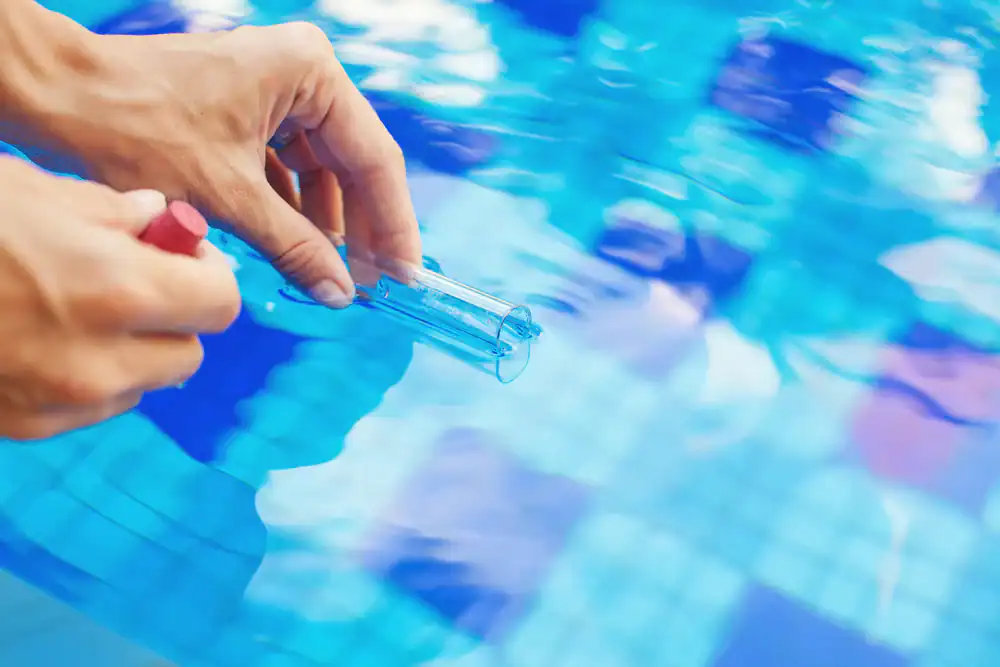
Bring in a water sample from your pool—about 16 ounces in a clean bottle works fine. Try to collect it from elbow-deep in the water, away from the skimmer or return jets, so you’re getting a true reading of what’s happening in the bulk of your pool.
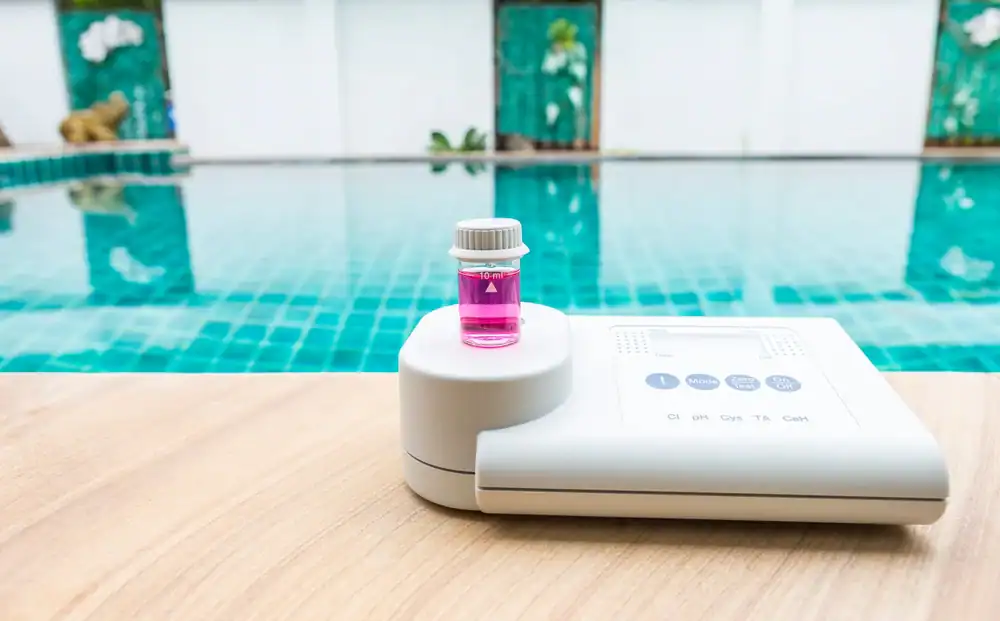
We run the sample through professional-grade testing equipment that measures pH, free and total chlorine, alkalinity, calcium hardness, and other factors that affect water quality and equipment longevity. This takes just a few minutes, and the results are accurate—not an estimate based on a color you think you see on a test strip.
Once we have your numbers, we walk you through what they mean. If your pH is low, we’ll tell you how much pH increaser to add. If your alkalinity is high, we’ll explain why that matters and what to do about it. You leave with a clear plan, not a guess.
If you need chemicals, we carry what you need. If your water is fine, we’ll tell you that too. The goal is to give you the information you need to keep your pool in good shape without overselling or overcomplicating it.
Ready to get started?
Every residential water test we run covers the core parameters that determine whether your pool is safe, comfortable, and properly maintained. That includes pH, which affects how your chlorine works and whether your water irritates skin and eyes. It includes free chlorine and total chlorine, which tell you if your sanitizer is doing its job or if you’ve got chloramines building up. We also test alkalinity, which stabilizes your pH, and calcium hardness, which protects your plaster and equipment from corrosion or scaling.
In Sandy Bottom and across South Georgia, water chemistry isn’t static. Your pool loses chlorine faster in the summer heat. Rain dilutes your chemicals. Pollen and organic debris throw your balance off. A water test gives you a snapshot of where things stand right now, so you can make adjustments before small issues turn into big problems.
This isn’t about selling you a bunch of chemicals. It’s about giving you accurate information so you can make smart decisions. If your water is balanced, you’ll use less chlorine, your equipment will last longer, and your pool will be more enjoyable. If it’s not, you’ll know exactly what to fix and how much of each chemical to add. That’s the value of professional pool water testing—it takes the guesswork out and puts you in control.
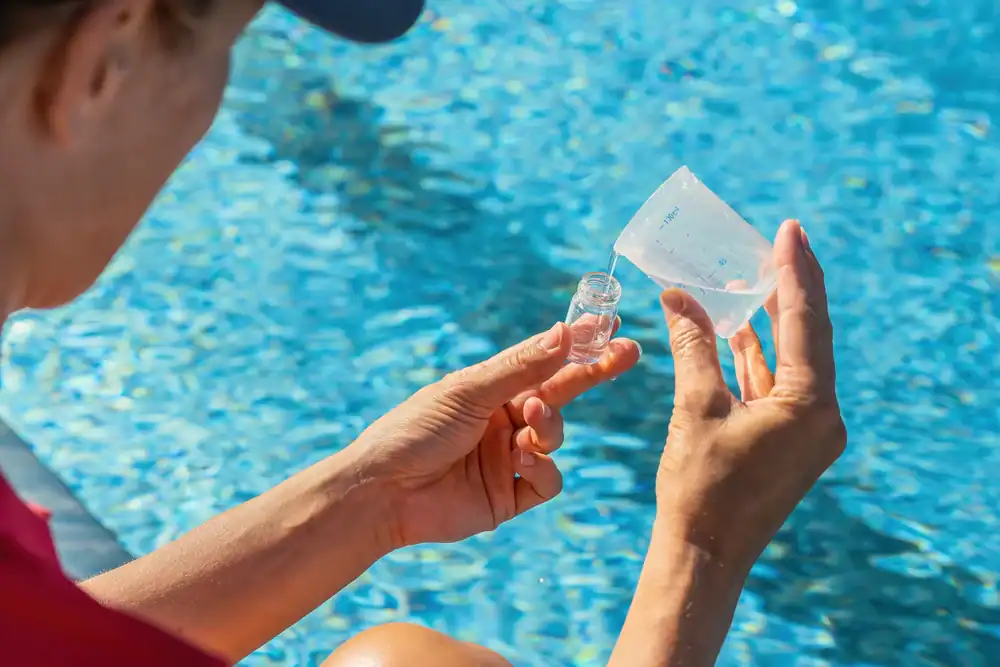
Once a week during swim season is ideal, especially in Georgia where heat and heavy use can shift your water chemistry quickly. If you’re only testing once a month, you’re giving problems time to develop—algae growth, cloudy water, equipment damage from low pH, or wasted money from adding chemicals you don’t actually need.
Weekly testing lets you catch issues early. Your chlorine might be fine on Monday and completely depleted by Friday after a few hot days and a pool party. Your pH can drop after a heavy rain or climb after you’ve added chlorine. Testing frequently means you’re making small adjustments instead of big corrections.
If your pool isn’t getting much use or it’s the off-season, you can test less often—every two weeks or once a month. But during the summer in Sandy Bottom, when your pool is getting hit with heat, sun, pollen, and swimmers, weekly testing keeps you ahead of problems instead of reacting to them.
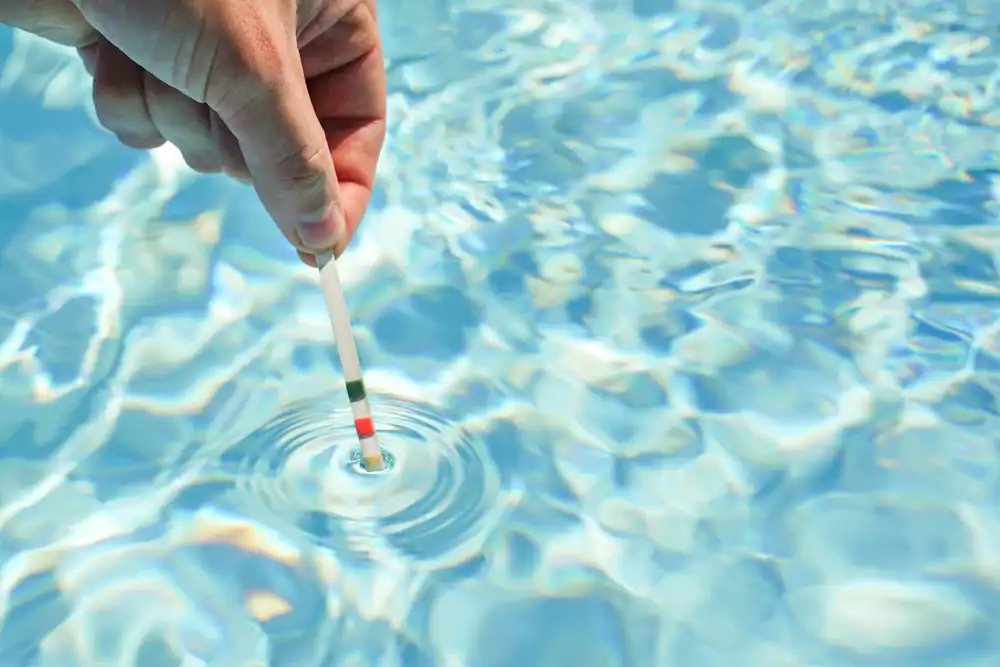
You can, but test strips are less accurate and harder to read correctly. The color matching is subjective—what looks like 7.4 to you might look like 7.2 to someone else. And if the strips are old or have been exposed to moisture, the results can be way off. That means you might be adding chemicals based on bad information, which wastes money and can make your water problems worse.
Professional water analysis uses calibrated equipment that gives you actual numbers, not color approximations. You’ll know your pH is 7.6, not “somewhere between 7.4 and 7.8.” That precision matters when you’re trying to balance your water correctly and protect your pool equipment from damage.
Test strips are fine for a quick check between professional tests, but if you’re making decisions about what chemicals to add and how much, you want accurate data. That’s what professional pool water testing gives you—and since we offer it for free, there’s no reason to rely on strips alone.
If your pH is too low, your water becomes acidic and starts eating away at your pool equipment, plaster, and grout. It also irritates skin and eyes, making swimming uncomfortable. If your pH is too high, your chlorine stops working effectively, which means bacteria and algae can grow even if your chlorine levels look fine on paper.
Low chlorine levels mean your water isn’t sanitized properly, which can lead to algae blooms and waterborne illnesses. High chlorine can bleach your liner and irritate swimmers. Low alkalinity makes your pH unstable and hard to control. High calcium hardness leads to scaling on your tile and equipment, while low calcium can corrode your pool surfaces.
The good news is that all of these issues are fixable once you know what’s wrong. A professional water test identifies exactly what’s out of balance, and we’ll tell you what to add and how much. Most corrections are simple—add a pound of this, half a gallon of that—and your water is back where it should be. The key is catching it early through regular water quality testing, before it turns into a bigger, more expensive problem.
No. Water testing is free at Deep Waters Pools. You bring in a sample, we test it, and we give you the results and recommendations at no charge. There’s no obligation to buy anything, and we’re not going to pressure you into chemicals you don’t need.
We offer free testing because it’s the right way to build trust with pool owners in Sandy Bottom and the surrounding area. You get accurate information about your water, and you can decide what to do with it. If you need chemicals, we carry them. If your water is fine, we’ll tell you that too.
This is especially helpful if you’re a new pool owner and you’re still learning how to maintain your water, or if you’ve been frustrated with DIY testing and you want a second opinion from someone with three decades of experience. Free professional pool water testing means you can check your water as often as you need to without worrying about the cost adding up.
Bring a clean water sample in a plastic bottle—about 16 ounces is plenty. Collect the sample from elbow-deep in your pool, away from the skimmer and return jets, so you’re getting water that represents the overall condition of your pool, not just what’s near the surface or the circulation system.
Try to test the water the same day you collect it, or at least within 24 hours. Water chemistry can shift over time, especially if the sample sits in a hot car or in direct sunlight. The fresher the sample, the more accurate the results.
If you’ve recently added chemicals, wait at least four to six hours before collecting your sample so the chemicals have time to circulate and mix. Testing too soon after adding something can give you skewed results that don’t reflect what’s actually happening in your pool. Other than that, just bring the sample in and we’ll take care of the rest.
Georgia’s heat, humidity, and intense sun all accelerate chemical reactions in your pool. Chlorine breaks down faster in high temperatures and UV exposure, which means you’re losing sanitizer more quickly than you would in a cooler climate. That’s why your pool might test fine on Monday and show low chlorine by Wednesday after a few 95-degree days.
Heavy summer rainstorms dilute your pool water and lower your chemical levels across the board. Pollen—especially in spring—introduces organic material that feeds algae and consumes chlorine. High humidity doesn’t directly affect your water chemistry, but it does create conditions where algae and bacteria thrive if your sanitizer levels drop even a little bit.
All of this means that pool water analysis needs to happen more frequently here than it might in other parts of the country. What worked in a cooler state won’t necessarily work in Sandy Bottom. Regular testing helps you stay on top of these shifts so your water stays balanced, clear, and safe no matter what the weather does.
Other Services we provide in Sandy Bottom