
Hear from Our Customers
You’re not looking for another chore. You want to know if your pool is safe to swim in, why the water looks off, and what chemicals you actually need—without buying things you don’t.
That’s what professional pool water testing gets you. We test chlorine, pH, alkalinity, calcium hardness, and stabilizer levels. Then we tell you what’s out of balance and exactly how to fix it. No sales pitch. No upselling chemicals you don’t need.
Most pool owners in Sapps Still, GA deal with the same frustrations: cloudy water after a storm, algae creeping in during summer heat, or equipment acting up because the chemistry’s been off for weeks. A proper water analysis catches those problems early. It also prevents the expensive ones—like a burned-out pump motor or etched plaster that costs thousands to repair.
We’ve been serving families across South Georgia since 2014, built on more than 30 years of hands-on pool construction and maintenance experience. We’re not a national chain. We’re local to Coffee County, and we understand what pool ownership looks like here.
That means we know how Georgia summers accelerate algae growth. We know what heavy rain does to your chemical balance. And we know that most people don’t want to become chemists—they just want a pool that works.
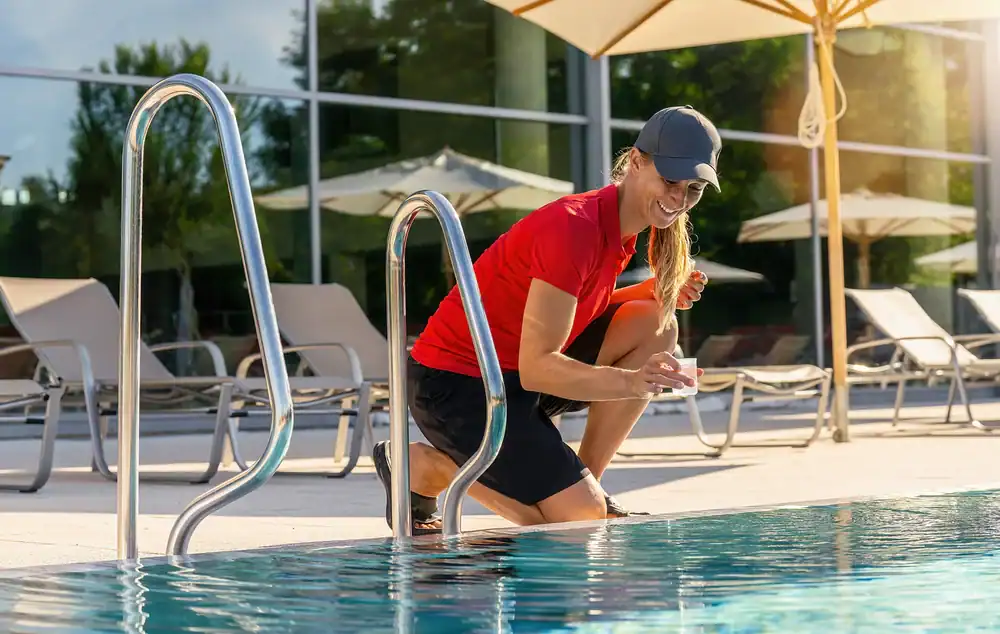
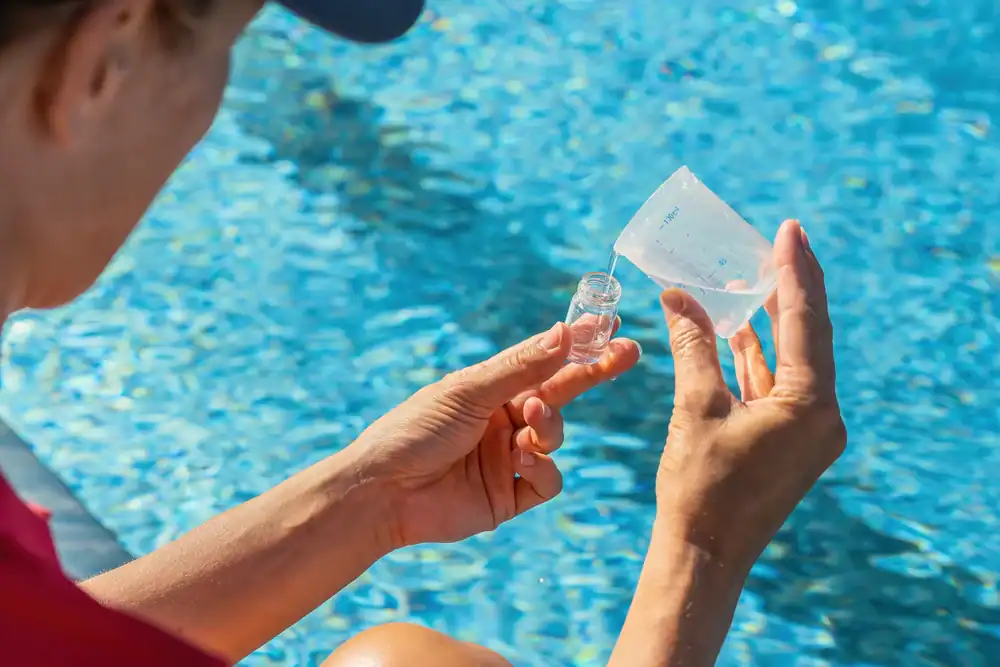
Our water testing service is free because we’d rather you get accurate information than waste money guessing. Bring in a sample from elbow-deep in your pool, and we’ll run a full analysis while you wait.
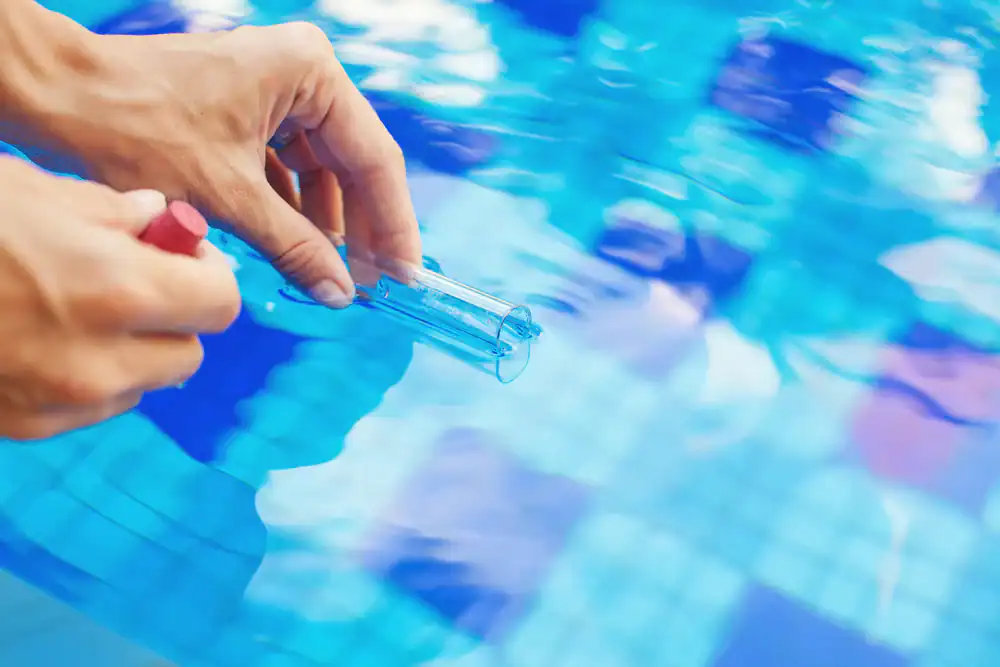
Here’s how it works. Grab a clean plastic bottle or use one of ours if you’ve stopped by before. Reach down about elbow-deep into your pool—not at the surface, not near a return jet—and fill the bottle. Cap it and bring it to us in Douglas.
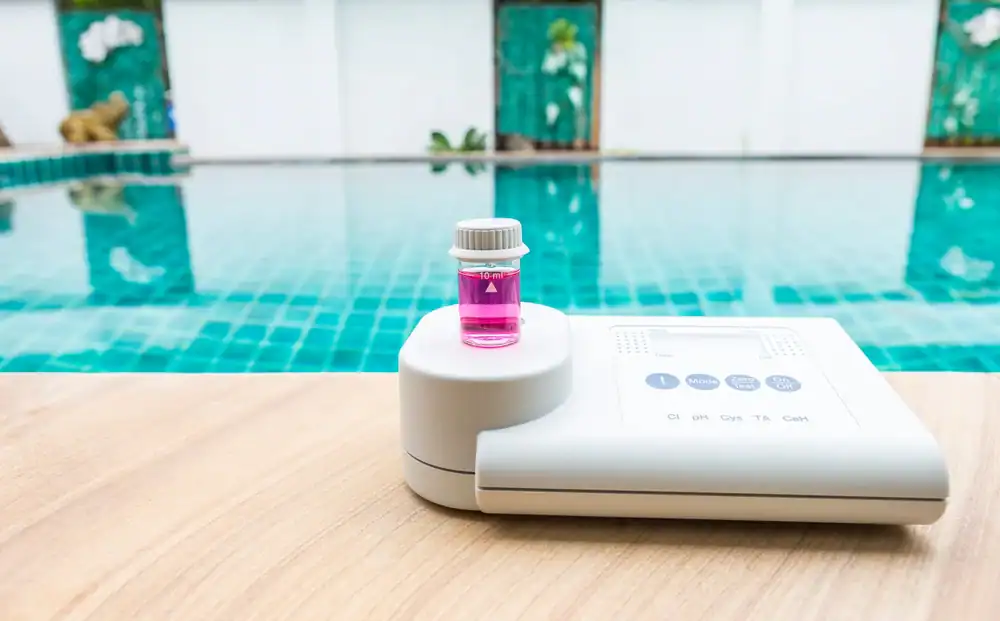
We’ll test it on the spot using professional-grade equipment. You’ll get results for chlorine, pH, total alkalinity, calcium hardness, and cyanuric acid. We’ll also check for metals or phosphates if something looks off.
Then we walk you through what’s out of range and why it matters. If your pH is high, we’ll explain how that affects chlorine efficiency and what to add. If calcium is low, we’ll tell you how that can etch your pool surface over time. You leave with a printed report and a clear plan—no confusion, no overselling.
Most tests take less than ten minutes. If you’re dealing with green water or persistent cloudiness, we’ll dig deeper and help you understand what’s actually going on.
Ready to get started?
Every water sample gets tested for the six key factors that determine whether your pool is safe, clear, and properly balanced. Chlorine levels tell us if your water is sanitized. pH affects how well that chlorine works—and whether your water irritates skin or eyes. Total alkalinity stabilizes your pH so it doesn’t swing wildly every time you add chemicals.
Calcium hardness protects your pool surface and equipment from corrosion or scaling. Cyanuric acid shields chlorine from breaking down in sunlight, which matters a lot during Sapps Still, GA’s long, hot summers. We also check for metals like iron or copper, which can stain your pool, and phosphates, which feed algae.
Georgia’s climate makes water quality testing more important than in other states. You’re dealing with heat, humidity, afternoon thunderstorms, and pollen. All of that affects your pool chemistry. Storms dump debris and dilute chemicals. Heat accelerates evaporation and algae growth. If you’re testing with strips at home, you’re getting rough estimates. If you’re not testing at all, you’re flying blind.
Bring in a sample once a week during swim season, or after any heavy rain. If something looks or smells wrong, don’t wait. The sooner we catch an imbalance, the easier and cheaper it is to fix.
Once a week during summer is the standard. Georgia heat accelerates chemical loss and algae growth faster than in cooler climates, so weekly testing keeps you ahead of problems instead of reacting to them.
If you’re using your pool heavily—kids swimming daily, pool parties, etc.—test twice a week. Same goes after storms. A heavy rain can drop your chlorine, dilute your chemicals, and throw off your pH in a matter of hours.
If your pool sits unused for stretches or you’re only swimming occasionally, you can test every two weeks. But don’t skip it entirely. Water doesn’t stay balanced on its own, and catching an issue early saves you from spending a weekend shocking green water or scrubbing algae off the walls.
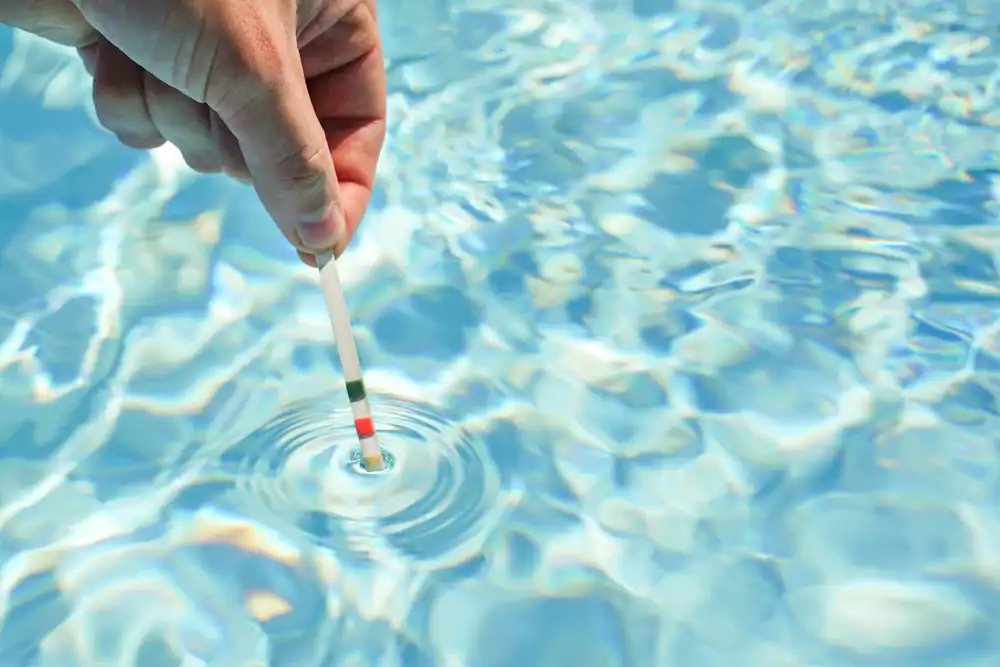
Test strips give you a ballpark reading. They’re useful for quick daily checks of chlorine and pH, but they’re not precise. Colors can be hard to read, they degrade in heat or humidity, and they don’t catch everything.
Professional water testing uses calibrated digital equipment and liquid reagents. We’re measuring exact levels, not comparing a strip to a color chart in bad lighting. That precision matters when you’re trying to prevent equipment damage or figure out why your water won’t clear up.
Strips also don’t test for everything. Most won’t measure cyanuric acid, calcium hardness, phosphates, or metals—all of which affect your water quality and can cause expensive problems if ignored. If you’re serious about keeping your pool in good shape, get a professional test regularly and use strips in between for daily monitoring.
Rain dilutes your chlorine and drops your pH, especially in South Georgia where we get heavy afternoon storms during summer. When chlorine drops, your water loses its ability to sanitize, and organic matter starts building up. That’s what causes cloudiness.
Rainwater also brings in dirt, pollen, and debris. If your pool overflows, you’re pulling in runoff from your deck or yard. All of that adds contaminants that your filtration system has to process, and if your chemicals aren’t balanced, the filter can’t keep up.
The fix is simple but has to be done quickly. Test your water right after a storm. You’ll almost always need to add chlorine and rebalance your pH. Run your pump longer than usual for a day or two to circulate and filter everything. If you wait, that cloudiness turns into algae, and now you’re dealing with a much bigger problem.
Yes, and it’s one of the most expensive mistakes pool owners make. Low pH turns your water acidic, which corrodes metal components in your pump, heater, and filter. It also etches plaster and eats away at grout. High pH causes scaling, which clogs your filter, coats your heater elements, and reduces efficiency.
Low calcium makes your water aggressive—it’ll pull calcium from your plaster or grout to balance itself, which pits and damages your pool surface. High calcium does the opposite and leaves crusty deposits on everything.
If your water level drops and your pump runs dry even for a few minutes, it can burn out the motor. That’s a $500+ repair that’s completely preventable with proper water management. Keeping your chemistry balanced isn’t just about clear water. It’s about protecting a significant investment. A little attention now saves you from major repairs later.
Absolutely. Salt systems generate chlorine, but they don’t balance your water. You still need to monitor and adjust pH, alkalinity, calcium, and stabilizer levels. In fact, salt systems tend to raise pH over time, so you’ll be adding acid more often than traditional chlorine pools.
You also need to check your salt level to make sure the system is producing chlorine efficiently. Too little salt and the cell can’t generate enough chlorine. Too much and you risk damaging the cell or causing corrosion.
Salt systems are convenient, but they’re not autopilot. Water chemistry still matters. Bring in a sample regularly so we can make sure everything’s dialed in. A properly maintained salt system is great—but only if the water behind it is balanced.
High phosphates feed algae. They don’t make your water unsafe, but they make it much harder to keep clean. Even with good chlorine levels, phosphates give algae the nutrients it needs to grow. You’ll notice your pool turning green faster, or you’ll struggle to get rid of algae even after shocking.
Phosphates come from lawn fertilizers, leaves, pollen, and decomposing organic matter—all common in South Georgia. If your test shows elevated phosphates, you’ll need a phosphate remover. It’s a simple chemical treatment that binds to phosphates and lets your filter remove them.
After treatment, vacuum your pool and clean your filter. Then retest in a few days to make sure levels dropped. Once phosphates are under control, your chlorine works better and you’ll spend less time fighting algae. If you’re constantly battling green water despite balanced chemicals, phosphates are usually the hidden culprit.
Other Services we provide in Sapps Still