
Hear from Our Customers
You test your pool water with strips from the store. The colors look close enough, so you add some chlorine and hope for the best. Three weeks later, your pump starts making noise, or someone gets out of the pool with red eyes and itchy skin.
Here’s what most pool owners in Sessoms don’t realize: those basic test strips miss a lot. They don’t catch copper or iron in your water. They can’t tell you if calcium is building up in your system. They won’t show you the phosphate levels that are feeding algae growth before you can even see it.
Professional water testing checks for everything that matters. We’re looking at pH, chlorine, alkalinity, calcium hardness, cyanuric acid, metals, and phosphates. That’s the difference between maintaining your pool and actually protecting it.
When your water chemistry is right, your equipment lasts longer. Your family swims in water that’s genuinely safe, not just clear. You’re not dumping chemicals in and hoping they work.
We’re based in Douglas, about 20 minutes from Sessoms. We’ve been testing and maintaining pools across South Georgia long enough to know how the climate here affects your water chemistry.
Summer heat in this area evaporates water fast, which concentrates your chemicals. Heavy afternoon storms dilute everything. Well water in Coffee County often carries iron and minerals that throw off your balance. We account for all of it.
We offer this water testing service for free because we’d rather you catch a problem early than call us later for an expensive repair. It’s straightforward: you bring us a sample, we run a full analysis, and we tell you exactly what your pool needs.
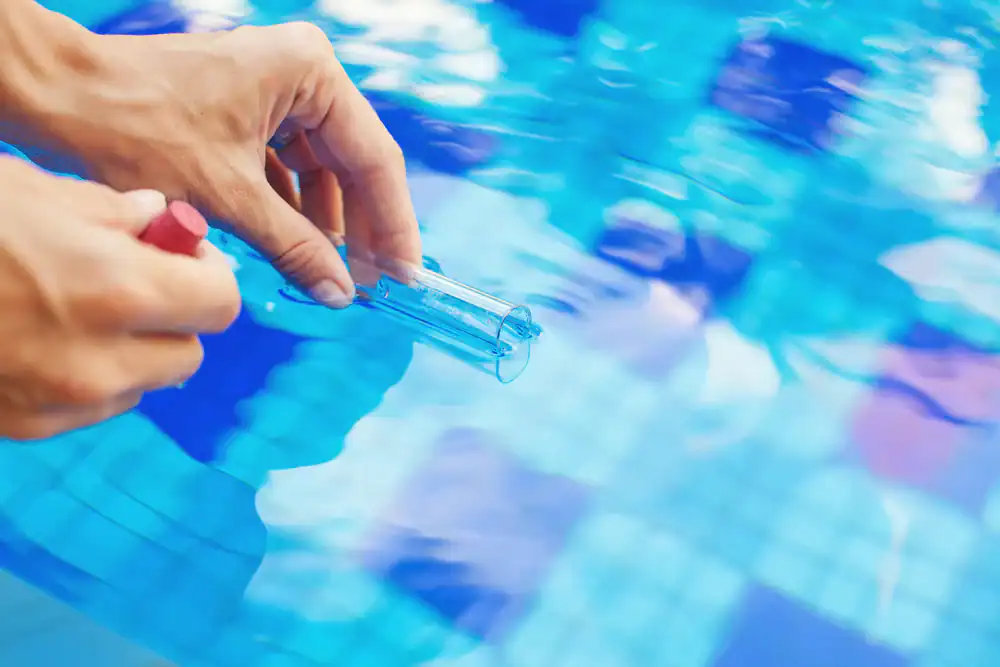
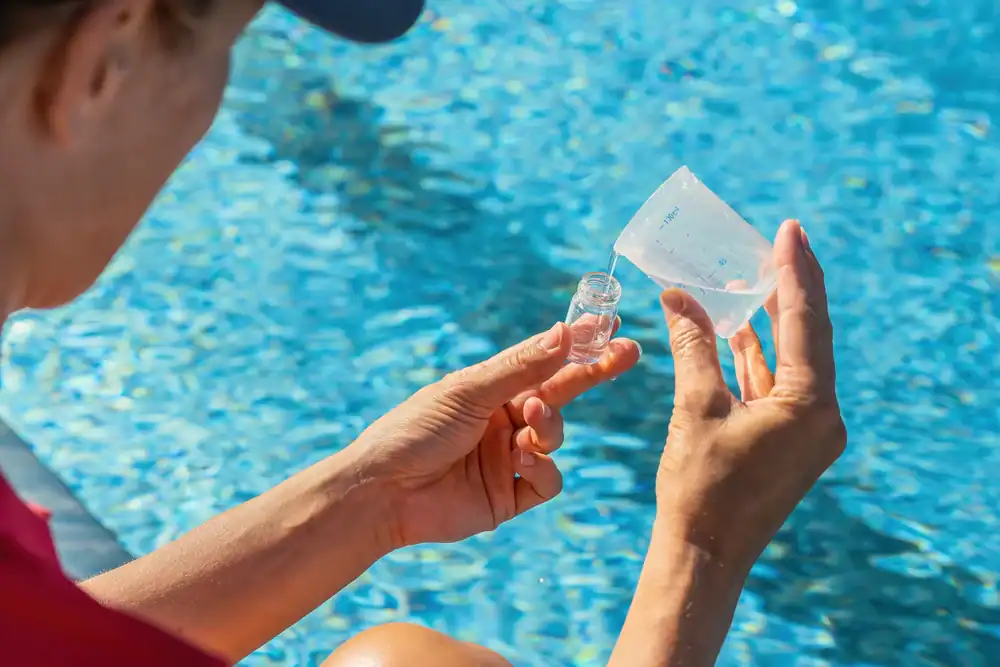
Grab a clean plastic bottle or use one of our sample containers if you’ve stopped by before. Collect water from about elbow-deep in your pool, away from the returns and skimmers. That gives us a sample that represents what’s actually in your pool, not just what’s near the surface.
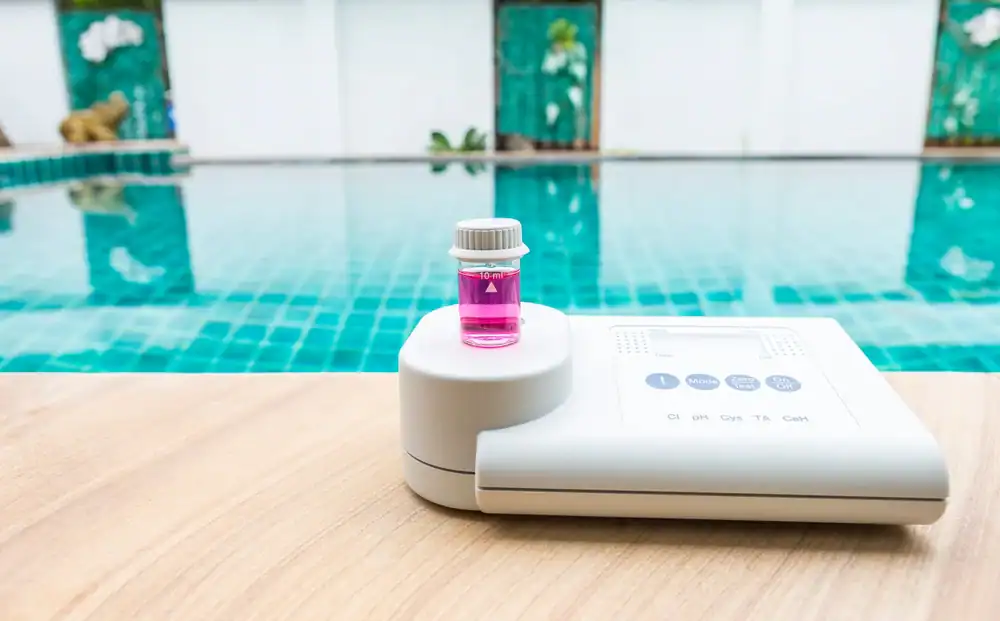
Bring the sample to our location in Douglas at 839 Boardwalk Circle. We run it through professional testing equipment that measures all the parameters that matter: pH, free chlorine, total chlorine, alkalinity, calcium hardness, cyanuric acid, and we check for metals and phosphates.
You’ll get a printed report that shows where each level currently sits and where it should be. We’ll tell you exactly what to add, how much, and in what order. If something’s off enough to cause damage or safety issues, we’ll walk you through why it matters and what happens if you don’t address it.
Most people are surprised by at least one thing in their results. Maybe your cyanuric acid is too high and your chlorine isn’t working as well as it should. Maybe you’ve got copper in your water that’s going to stain your pool surface if you don’t treat it. You can’t fix what you don’t know about.
Ready to get started?
Every residential water test we run covers the same comprehensive panel. pH tells us if your water is acidic or basic, which affects everything from how chlorine works to whether your pool surfaces are getting damaged. Total alkalinity acts as a pH buffer and keeps your water stable. Free chlorine shows us what’s actually available to sanitize your pool right now.
Calcium hardness matters more than most people think. Too low and your water pulls calcium from your plaster or grout. Too high and you get scaling on everything. Cyanuric acid protects your chlorine from the sun, but too much and your chlorine stops working effectively, which is common in Sessoms during summer when people are adding stabilized chlorine constantly.
We also test for metals like copper and iron, which are common in well water around Coffee County. These cause staining and discoloration that’s expensive to remove. Phosphates feed algae, so catching elevated levels early means you’re not fighting a green pool later.
Georgia requires pool owners to maintain proper chlorine and pH levels for health and safety. Beyond meeting those legal requirements, proper water chemistry protects your investment. Pumps, heaters, and filters aren’t cheap to replace, and unbalanced water is one of the main reasons they fail early.
Bring a sample in every two to four weeks during swimming season. That’s often enough to catch trends before they become problems, but not so frequent that you’re wasting time.
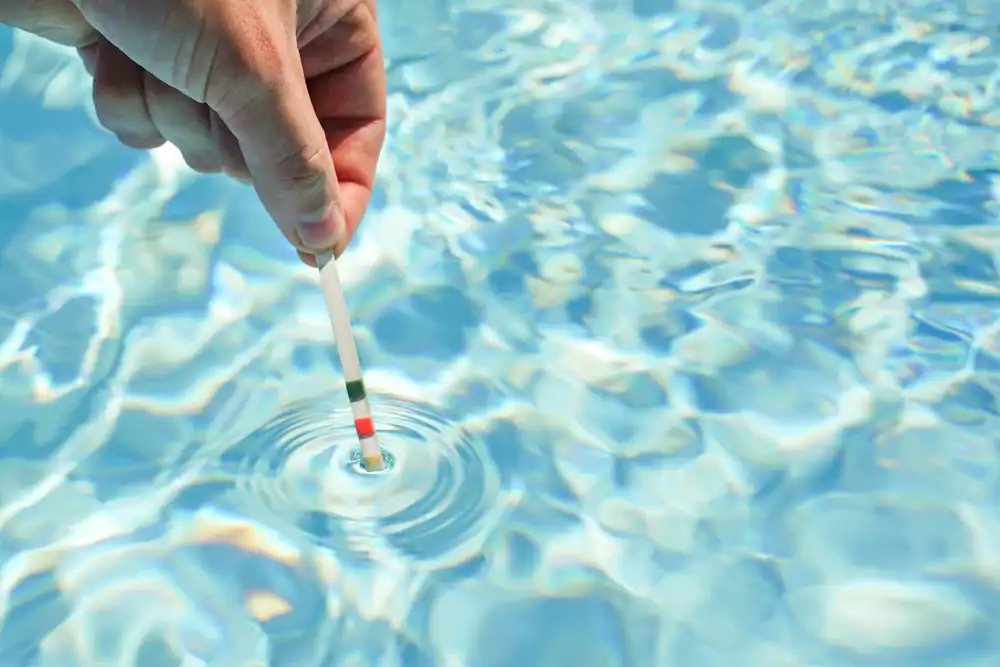
If you’re testing at home with strips weekly, which you should be, professional testing is your quality check. Home strips are fine for keeping an eye on chlorine and pH between visits, but they’re not accurate enough to catch everything, and they degrade if you don’t store them properly.
Test more frequently if you’ve had heavy rain, a lot of swimmers, or if you’re fighting algae or cloudy water. After you’ve shocked the pool or made major chemical adjustments, a test confirms everything landed where it should. If your pool is new or you just opened it for the season, test it before anyone swims.
Test strips check three or four basic parameters, and they’re not that precise. The color matching is subjective, the strips expire and lose accuracy, and they miss most of the things that cause long-term problems.
Professional testing uses calibrated equipment that measures exact levels. We’re checking eight to ten different parameters, including metals and phosphates that strips don’t test for at all. You get a printed report with numbers, not colors you’re trying to match to a chart in bad lighting.
Strips are useful for quick checks between professional tests. If you test at home on Wednesday and your chlorine looks low, you know to add some before the weekend. But strips won’t tell you that your cyanuric acid has been creeping up all season, or that you’ve got copper in your water that’s about to stain your pool walls. That’s what professional water analysis catches.
We’d rather build a relationship with you than charge $15 for a water test. If your pool chemistry is properly maintained, you’re less likely to need emergency repairs or expensive equipment replacements, and you’re more likely to call us when you do need something.
Most pool owners who start testing their water regularly with us end up buying their chemicals here too, because we’re telling them exactly what they need instead of guessing. Some become maintenance customers. Others just stop by for testing and handle everything themselves, which is fine.
It costs us about ten minutes and minimal materials to run your test. That’s worth it to us to be the place you think of first when you have pool questions or problems. We’re not trying to upsell you on services you don’t need, but we are trying to earn your trust by being helpful and straightforward.
We’ll prioritize what needs to be fixed first and in what order. Some adjustments need to happen before others, or you’ll be fighting yourself and wasting money on chemicals that won’t work.
For example, if your pH and alkalinity are both off, you adjust alkalinity first because it stabilizes pH. If your cyanuric acid is too high, adding more chlorine won’t help much until you dilute your pool water. If you’ve got metals present, you need to treat those before you shock the pool or you’ll set stains into your surfaces.
We’ll write down exactly what to add, how much, and when to add the next chemical. Most of the time, you’re looking at adjustments over a few days, not all at once. Then you retest in a week or two to make sure everything moved in the right direction. If you’re not comfortable handling it yourself, we can take care of it for you, but plenty of pool owners prefer to do their own chemical adjustments once they know what’s actually needed.
We focus on pool and spa water testing because that’s where our expertise is and what our equipment is calibrated for. Well water testing requires different parameters and different lab standards, especially if you’re testing for bacteria or contaminants that affect drinking water safety.
If you’re concerned about your well water quality, the Georgia Department of Public Health recommends testing through a certified lab at least once a year for bacteria and every three years for chemicals. That’s different from what we do for pools.
That said, if you’re filling your pool from a well and want to know what you’re starting with, we can test a sample of that source water for the parameters we normally check: pH, metals, hardness, and alkalinity. That tells you what adjustments you’ll need to make after filling. It won’t tell you if your well water is safe to drink, but it will tell you how it’s going to affect your pool chemistry.
Water samples stay stable for a few hours if you keep them out of direct sunlight and heat, so you’ve got some flexibility in when you bring them by. Collect the sample in the morning or evening when you’re heading in our direction anyway.
If you’re in Sessoms and the drive to Douglas doesn’t work with your schedule, you can still test at home with quality test strips or a liquid test kit for basic maintenance. Just know that you’re missing the fuller picture that professional testing provides, especially for things like metals, phosphates, and precise calcium levels.
We’re open during regular business hours, and bringing a sample in takes less time than a grocery store trip. Most people swing by on their way to or from work, or they make it part of their weekend routine. If you’re a regular maintenance customer, we’re already at your property and can test on-site, but for testing-only service, samples need to come to us.
Other Services we provide in Sessoms