
Hear from Our Customers
Those test strips you bought? They’re missing half the story. Low alkalinity eating away at your heater. Calcium levels slowly destroying your pump. Mineral content you didn’t even know to look for.
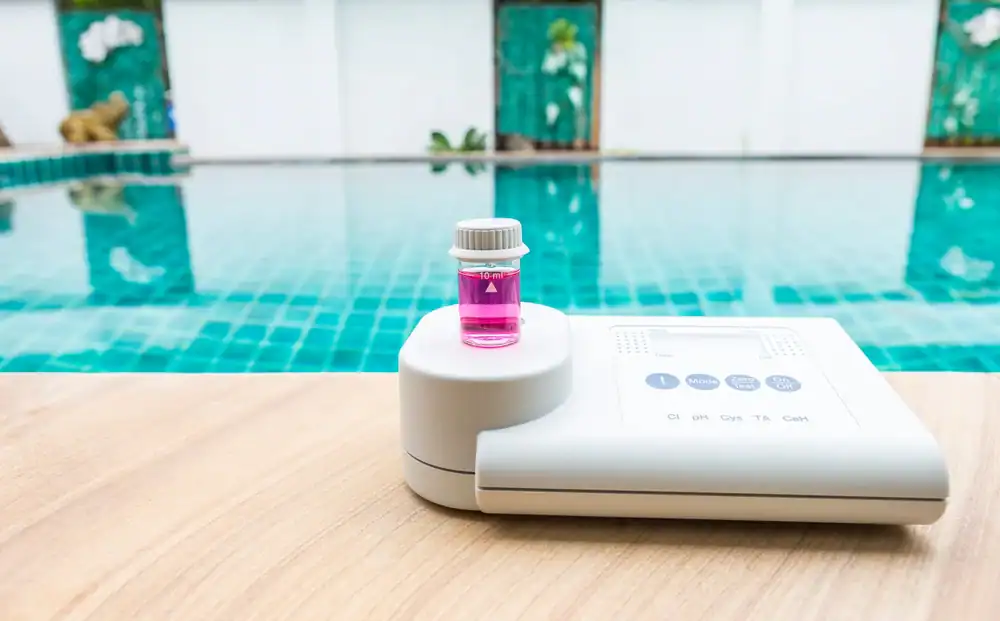
Professional pool water testing catches what home kits can’t. We run a 10-point analysis that covers pH, chlorine, alkalinity, calcium hardness, and the stuff that only shows up with lab-grade equipment. You get a full printout in minutes, plus straightforward recommendations on what to add and how much.
Your pool represents a serious investment. The equipment alone—pumps, heaters, filtration systems—can cost thousands to replace. Proper water chemistry is what keeps that equipment running. It’s also what keeps your family safe when they jump in on a hot Georgia afternoon.
We’ve been building and maintaining custom inground pools in Douglas County since the early ’90s. We’re licensed, insured, and we’ve dealt with every water chemistry issue you can imagine—and plenty you probably haven’t.
When you’re based in Snipesville, GA, you learn how local water behaves. Georgia groundwater comes with its own challenges: naturally occurring minerals, seasonal bacteria growth in our humid subtropical climate, and the occasional contamination issue that pops up in well water across the region. We test for all of it.
We offer this service for free because we know what happens when pool owners try to balance chemicals without accurate information. They overspend on products they don’t need, damage equipment they can’t afford to replace, and end up frustrated. Easier to just test it right the first time.
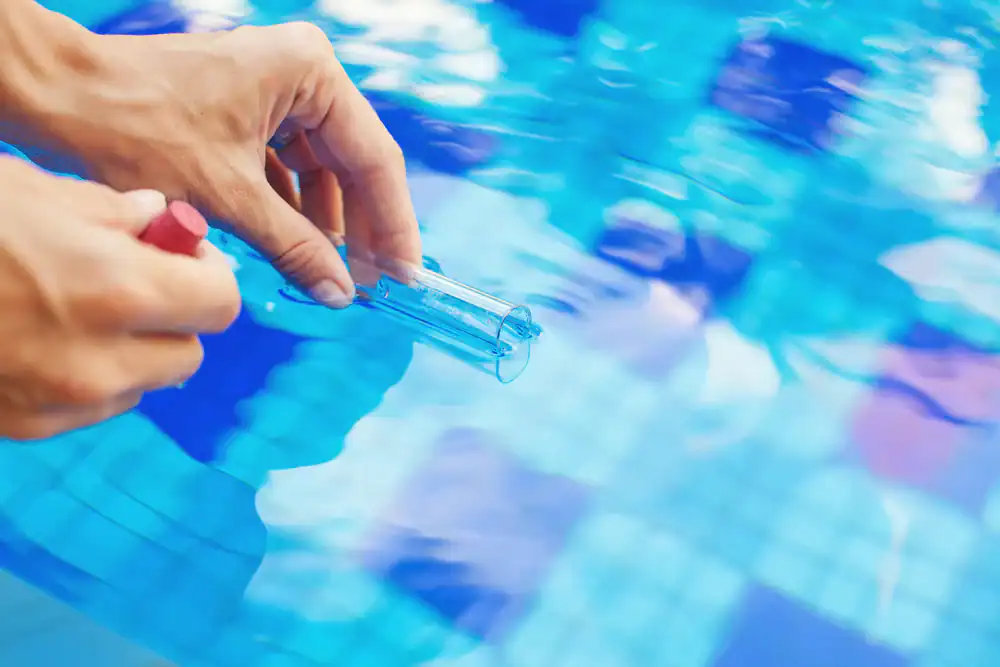
Grab a clean container and collect about 16 ounces of water from your pool. Take it from elbow-depth, away from return jets and skimmers—that’s where you’ll get the most accurate sample of what’s actually circulating through your system.
Bring it to us in Snipesville, GA. We’ll run it through our testing equipment, the same technology used in chemistry and medical labs. The process takes two to three minutes. You’re not waiting around all day.
You’ll get a printed report showing current levels for every parameter we test: pH, total chlorine, free chlorine, combined chlorine, total alkalinity, calcium hardness, cyanuric acid, copper, iron, and salt content if you have a saltwater system. We’ll walk you through what each number means and what needs adjusting.
Then we’ll tell you exactly what to buy and how much to add. No sales pitch, no upselling—just the information you came for. You can handle the chemicals yourself or we can take care of it. Your call.
Ready to get started?
Our water quality testing covers ten critical parameters. pH tells us if your water is acidic or basic—outside the 7.2 to 7.8 range, you’re looking at corrosion or scaling. Chlorine levels (total, free, and combined) show whether your water is properly sanitized or if you’re dealing with chloramines that cause that harsh chemical smell.
Total alkalinity acts as a pH buffer. When it’s off, your pH swings wildly and you’re constantly adding chemicals to chase balance. Calcium hardness protects your pool surfaces and equipment—too low and water gets aggressive, too high and you get cloudy water and scaling.
Cyanuric acid stabilizes chlorine in sunlight, but too much and your chlorine stops working effectively. Copper and iron cause staining and discoloration. In Snipesville, GA and throughout Douglas County, these metals can leach into pool water from well sources or aging pipes. We catch them before they become visible problems.
This level of water analysis service isn’t something you can replicate with a $15 test kit from the hardware store. The equipment we use costs thousands and requires regular calibration. We’re offering you access to it for free because accurate testing is the foundation of everything else we do.
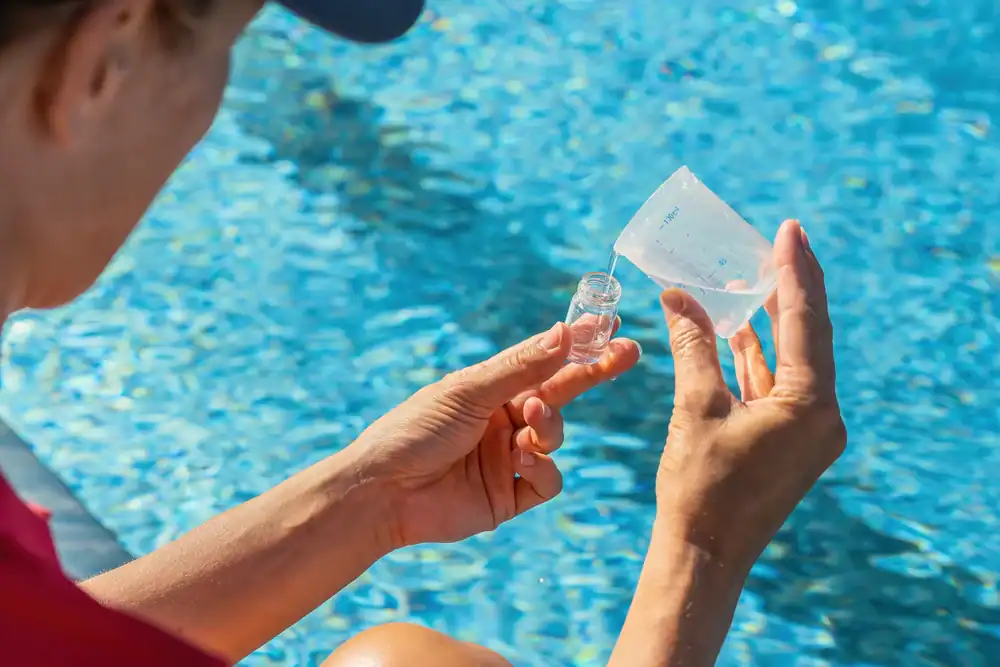
Every two weeks during swimming season, monthly in the off-season. That’s the baseline for residential pools in Georgia’s climate.
If you’re dealing with heavy use—lots of swimmers, frequent parties, kids in and out all day—test weekly. Every person who enters your pool brings contaminants: sunscreen, body oils, sweat, cosmetics. That organic load consumes chlorine and throws off your chemical balance faster than you’d think.
After major weather events, test immediately. Heavy rain dilutes your chemicals and introduces debris. Extreme heat accelerates chlorine loss and promotes algae growth. Georgia summers are brutal on pool chemistry, and our afternoon thunderstorms don’t help. When you’re managing water quality in these conditions, more frequent testing isn’t optional—it’s necessary to avoid problems that cost real money to fix.
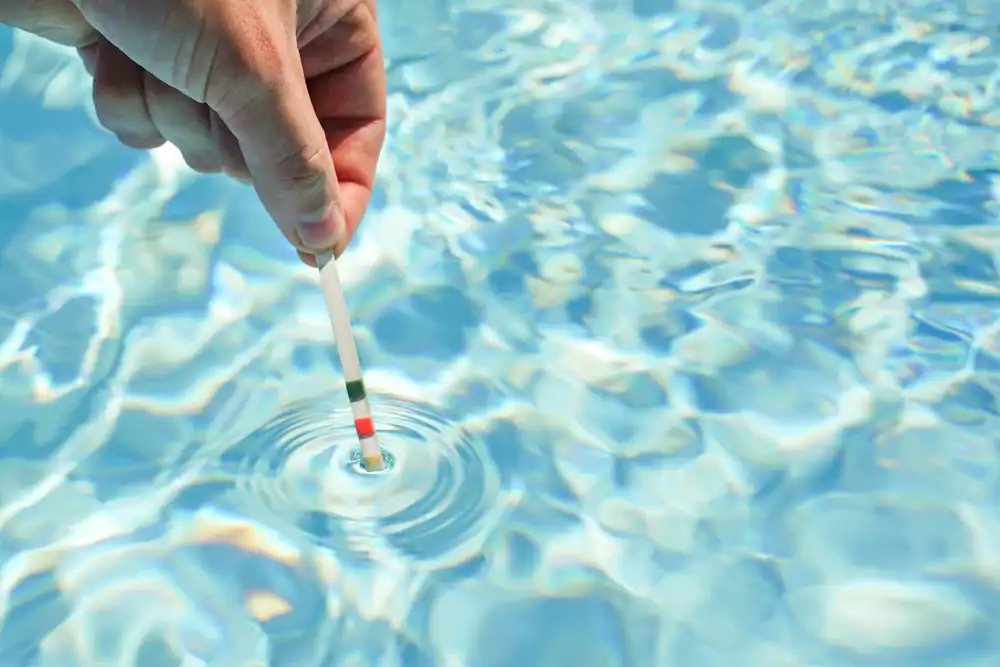
Test strips measure a limited range and they’re not particularly accurate. They’ll give you a rough idea of pH and chlorine, but they miss critical details that determine whether your water is actually balanced.
They don’t measure combined chlorine, so you won’t know if you have chloramines building up. They can’t detect metals like copper and iron until you’ve already got staining. They don’t give you precise calcium hardness readings, which means you’re guessing on whether your water is aggressive or scale-forming. And they’re notoriously unreliable for total alkalinity—the single most important factor in maintaining stable pH.
Professional pool water analysis uses photometric technology that measures light absorption to determine chemical concentrations. It’s the same principle used in medical diagnostics. The accuracy difference isn’t small—we’re talking about the gap between “somewhere in this range” and “exactly this number.” When you’re trying to protect expensive equipment and keep water safe for your family, that precision matters.
We’ll tell you exactly what’s wrong and how to fix it. If the imbalance is severe, we’ll walk you through the correction process step by step because adding too much of anything at once can make things worse.
Low pH and alkalinity? Your water is acidic and corrosive. It’s eating away at metal components in your pump and heater, etching your plaster, and irritating swimmers’ eyes and skin. We’ll calculate the precise amount of pH increaser and alkalinity increaser you need, and we’ll tell you to add them separately with the pump running, testing between additions.
High calcium hardness in Snipesville, GA is common because of our local water supply. The only real fix is partial dilution—draining some water and refilling with fresh water that has lower mineral content. We’ll tell you how much to drain based on your current levels and target range. It’s not complicated, but you need accurate numbers to do it right.
If we find metals in your water, you’ll need a metal sequestrant to keep them in solution and prevent staining. If your cyanuric acid is too high (over 100 ppm), your chlorine effectiveness is compromised and the only solution is dilution. We’ve never encountered a water chemistry problem we couldn’t solve, but solutions only work when you start with accurate information about what you’re dealing with.
It’s actually free. No purchase required, no service contract, no fine print. You walk in with a water sample, you walk out with test results and recommendations. That’s it.
We offer free residential water testing because it’s good business. Pool owners who understand their water chemistry take better care of their pools, which means less emergency repair work and more long-term maintenance relationships. It also means you’re more likely to come back to us when you need chemicals, equipment, or service—but there’s no obligation.
Some pool stores offer “free” testing but then pressure you to buy their complete chemical package whether you need it or not. We’ll tell you what your water needs. If you want to buy those chemicals from us, great. If you’d rather pick them up somewhere else, that’s fine too. The testing is free regardless of what you do with the information.
Yes. Chlorine, saltwater, mineral systems—we test them all. The basic chemistry principles are the same, but the target ranges and treatment approaches differ depending on your sanitization system.
Saltwater pools still need balanced pH, alkalinity, and calcium hardness. The salt cell generates chlorine, but it doesn’t manage the other parameters. We’ll test your salt level to make sure your cell is operating efficiently, and we’ll check for the same imbalances that affect traditional chlorine pools.
Mineral systems use reduced chlorine levels combined with minerals like copper and silver for sanitization. We’ll verify that your mineral levels are in the effective range without being high enough to cause staining. These systems are popular in Snipesville, GA because they’re gentler on skin and require less chlorine, but they still need professional water analysis to work properly. The testing process is the same—bring us a sample and we’ll tell you exactly where everything stands.
Use a clean plastic container—a water bottle works fine as long as it’s been rinsed thoroughly. Don’t use a container that held other chemicals, even if you’ve washed it. Residue can contaminate your sample and throw off the results.
Collect the sample from about elbow-depth in your pool, away from return jets, skimmers, and any areas where you recently added chemicals. You want water that’s representative of your pool as a whole, not water that’s sitting stagnant in a corner or water that’s right next to where you dumped shock yesterday. Reach down into the pool, turn the container upside down, then flip it right-side up underwater and let it fill. Cap it while it’s still submerged if you can.
Bring it to us the same day you collect it, ideally within a few hours. Water chemistry changes over time, especially in a container that’s sitting in your hot car. The faster we test it, the more accurate your results will be. If you can’t make it the same day, keep the sample in a cool, dark place and bring it in the next morning. After that, you’re better off collecting a fresh sample.
Other Services we provide in Snipesville