Hear from Our Customers
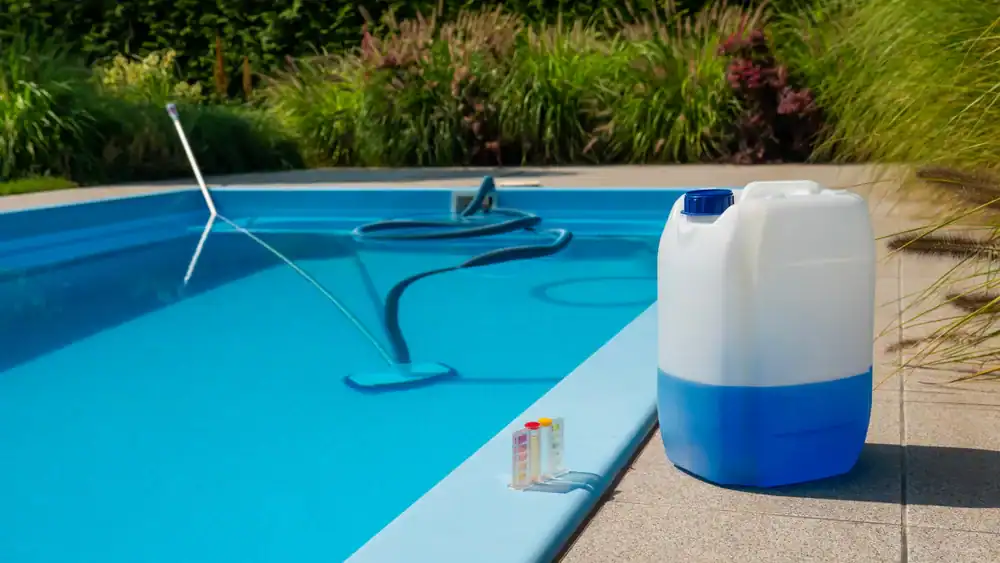
A pool that looks clear is not always a safe pool. pH imbalance, calcium buildup, and low sanitizer levels are all invisible and in Sylvester’s July heat, where temperatures average nearly 90°F and the heat index regularly pushes past 107°F, the chemistry window between a clean pool and a green one is shorter than most people realize. When your water is properly balanced, you stop chasing problems and start actually using the pool.
Sylvester’s municipal water comes from the Floridan Aquifer limestone geology that produces naturally hard water with elevated calcium content. Every gallon you add to your pool starts behind the curve. Without regular testing that accounts for this baseline, calcium hardness climbs over time, leaving white mineral scaling on your walls, cloudy water that won’t clear no matter how much chlorine you add, and filters that clog faster than they should. We catch that drift before it becomes damage.
The other thing Worth County pool owners deal with is the agricultural calendar. Peanut harvest runs late August through October the exact window when most families are heads-down in the fields and not thinking about the pool. Chemistry that gets ignored for two or three weeks in that heat can turn a clean pool into a real problem fast. Knowing that going in, and testing before and after that stretch, is the difference between a pool that recovers quickly and one that costs you a week and a few hundred dollars to fix.
Deep Waters Pools was formally established in 2014, but the experience behind it goes back more than 30 years. We’ve been building, plumbing, and servicing pools across South Georgia long before there was a company name attached to it and that construction background is what separates the way we approach water chemistry from what you get at a pool supply store.
When you understand how a pool is built how the surface interacts with the water, how circulation affects chemistry, how gunite and plaster respond differently to calcium hardness imbalances you test differently. You’re not just reading numbers. You’re reading what those numbers mean for that specific pool.
We serve Sylvester and Worth County because South Georgia is our backyard, not a market we’re trying to reach. From the Northlake Subdivision neighborhoods to the rural acreage outside the city limits, we’ve seen what the Floridan Aquifer water does to pools out here over time and we test accordingly.
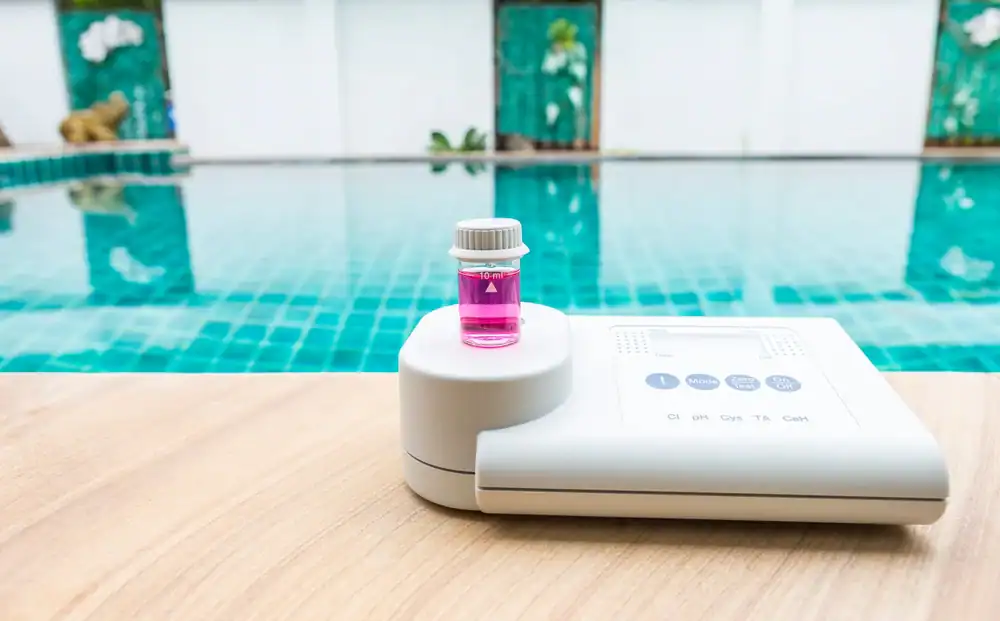
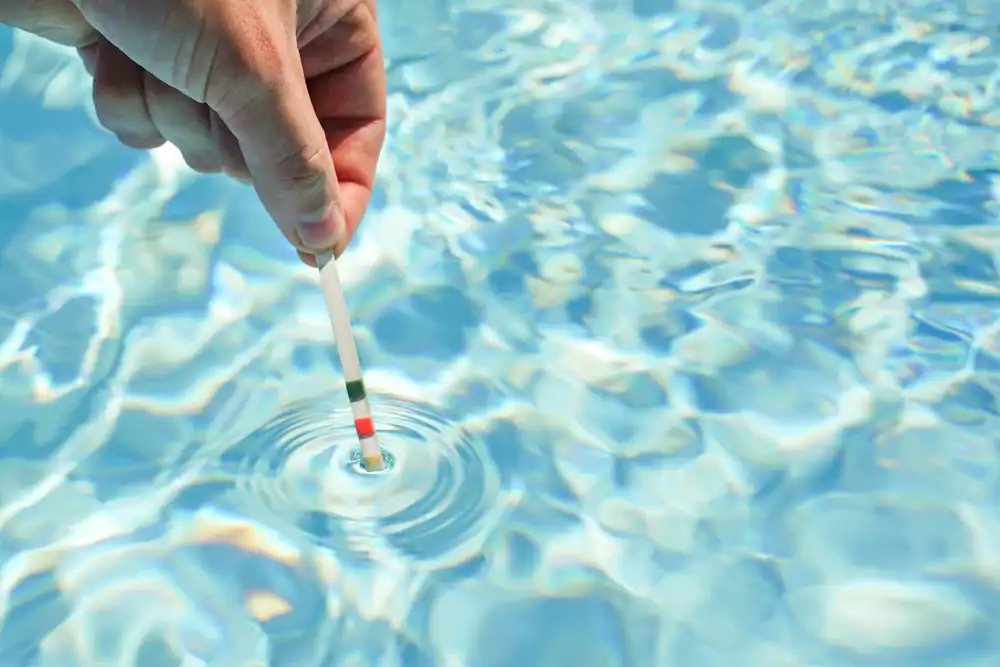
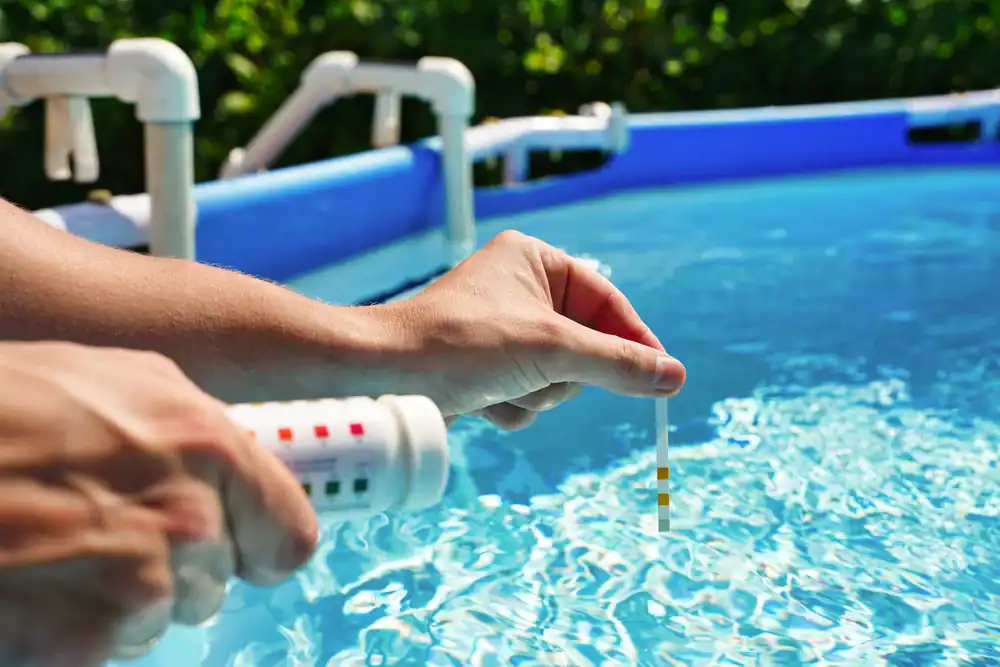
It starts with a full digital water analysis not test strips. We measure free chlorine, total chlorine, pH, total alkalinity, calcium hardness, cyanuric acid, TDS, and metals. Every parameter, every time. You get a clear readout of where your water actually stands, not a color-match approximation that varies depending on how wet your fingers are when you dip the strip.
From there, we walk you through what’s off and why. If your pH is running high which happens easily in Sylvester’s heat and after the rain events that come with nearly 174 rainfall days a year we explain what that’s doing to your chlorine’s effectiveness and how to correct it. If your calcium hardness is climbing, which it will over time with Floridan Aquifer water as your source, we show you what that looks like and what it costs if it goes unaddressed. Nothing is handed to you as a mystery chemical recommendation.
The correction plan is specific to your pool and your results. If you’ve got a gunite or plaster surface common in established Sylvester homes the calcium hardness tolerances matter more than they do with other surface types, and we factor that in. You leave knowing exactly what was wrong, what was done, and what to watch for before the next test.
Ready to get started?
Pool chemistry is not a single number. It’s a system, and every part of it affects the others. When pH climbs above 7.8 which it does regularly in Sylvester summers your chlorine loses roughly half its sanitizing power even when the reading looks normal. That’s the most common reason pools turn green in Worth County despite regular chemical treatment. We test pH as the foundation of everything else, because no amount of chlorine fixes a pool with pH out of range.
Total alkalinity is what keeps your pH from swinging wildly every time it rains or someone adds a chemical. Calcium hardness, as mentioned, is particularly relevant here given the limestone-heavy Floridan Aquifer water coming out of Sylvester’s taps. Cyanuric acid the stabilizer that protects chlorine from UV destruction matters enormously in a climate where unprotected chlorine can be wiped out by direct sun in under two hours. We test all of it. We also check for metals, because older plumbing and well water sources can introduce iron and copper that cause staining long before you’d notice any other symptom.
The result is a complete picture of your water’s chemistry not just what’s visibly wrong, but what’s quietly building toward a problem. For Sylvester homeowners where a pool represents a real portion of your property’s value, that kind of thorough testing is what keeps a manageable maintenance cost from becoming a resurfacing bill.
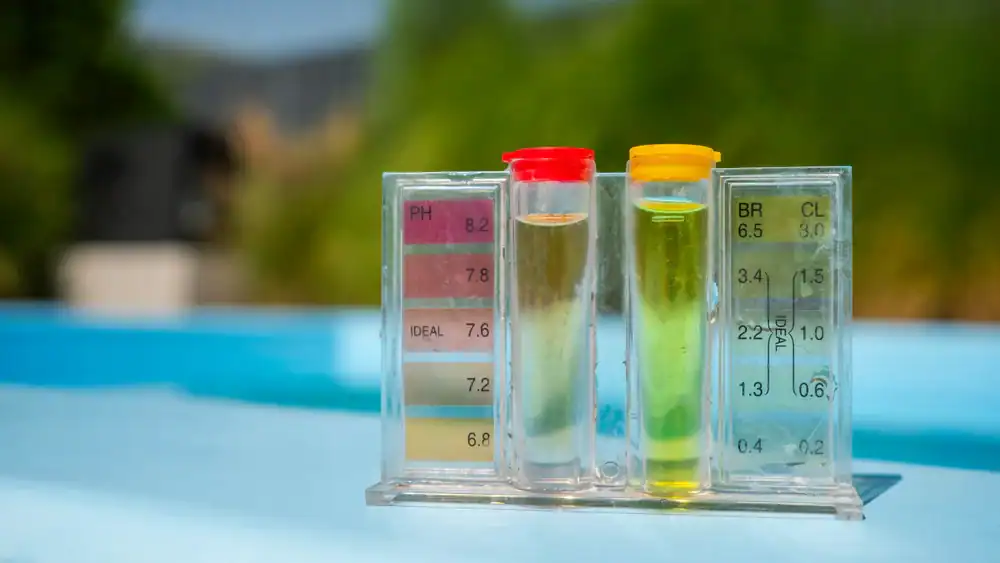
For most pools in Worth County, testing every two weeks during active swim season roughly April through October is a reasonable baseline. But that assumes relatively stable conditions, and Sylvester doesn’t always cooperate. With nearly 174 rainfall days per year, a single heavy rain event can dilute your sanitizer, drop your pH, and introduce organic material from the surrounding peanut and cotton fields all at once. After any significant rain, it’s worth testing before you assume the chemistry is still where you left it.
During peak summer July and August especially weekly testing is smarter. The heat accelerates chemical consumption, UV exposure is at its most intense, and the window between balanced water and a problem is shorter than at any other time of year. If you’re heading into harvest season and you know the pool is going to get less attention for a few weeks, we recommend a professional test before that window and another one after it. This saves you from a much bigger correction job on the other side.
This is almost always a pH problem, a cyanuric acid problem, or both and it’s one of the most common frustrations we hear from pool owners across South Georgia. When your pH is above 7.8, chlorine’s sanitizing effectiveness drops dramatically. You can have a chlorine reading that looks perfectly fine on a test strip while the water is barely protected. The chlorine is there, but it’s not working and algae doesn’t care about the number on your strip.
The other common culprit is cyanuric acid that’s drifted out of range. CYA is the stabilizer that protects chlorine from UV breakdown, and in Sylvester’s summer sun it’s genuinely necessary. But when CYA levels get too high, they suppress chlorine’s ability to sanitize a condition sometimes called “chlorine lock.” Test strips can’t accurately measure CYA at elevated levels, which means you can be dosing chlorine regularly, testing with strips, and still have a pool that goes green because the underlying stabilizer balance is off. Digital testing catches this. Strips generally don’t.
Sylvester’s water supply comes from deep wells drawing from the Floridan Aquifer limestone geology that naturally produces water with elevated calcium and magnesium content. Every time you top off your pool or fill it after a partial drain, you’re introducing water that already starts on the harder end of the scale. Over time, without testing and management, calcium hardness climbs.
When calcium hardness gets too high, you start seeing white mineral scaling on your pool walls, tile line, and equipment. The water can turn cloudy in a way that doesn’t respond to shock treatments or clarifiers, because the cloudiness is mineral-based, not organic. Filters clog faster. Heaters and pump components scale up. For gunite and plaster pools which are common in established Sylvester homes high calcium hardness is also a surface issue. It deposits crust on the plaster finish that’s difficult and expensive to remove once it’s set. The flip side is also true: water that’s too soft is corrosive and will slowly leach minerals out of the plaster itself. Professional testing keeps calcium hardness in the range where neither of those things happens.
Yes, and it matters more than most people realize. Free chlorine is the active sanitizer in your water the chlorine that’s actually available to kill bacteria and algae. Total chlorine includes free chlorine plus combined chlorine, which is chlorine that has already reacted with contaminants and is essentially spent. Combined chlorine also called chloramines is what causes that strong “pool smell” and the eye irritation people often associate with a heavily chlorinated pool. The irony is that smell usually means your pool needs more chlorine, not less.
If your total chlorine reading is normal but your free chlorine is low, you have a chloramine problem. The water isn’t properly sanitized, and adding more chlorine without addressing the underlying cause just adds to the combined chlorine load. In South Georgia’s summer heat, where bather load is high and UV is constantly depleting your free chlorine, the gap between free and total chlorine can widen quickly. Digital water analysis measures both separately and gives you an accurate picture. A single test strip reading labeled “chlorine” typically only tells you part of the story.
Pool store testing is better than nothing, but it’s worth understanding what it is and what it isn’t. Most in-store testing is a retail tool the result is the opening to a product recommendation, and the recommendation tends to involve something on the shelf. That’s not a knock on every pool store employee, but the structure of the service creates an inherent bias toward selling chemicals rather than diagnosing root causes.
The other limitation is accuracy. In-store testing typically covers the basics pH, chlorine, maybe alkalinity but often misses cyanuric acid levels, metals, and the precision needed to correctly adjust calcium hardness. For pools in Worth County drawing from Floridan Aquifer water, calcium hardness management is not a secondary concern it’s one of the most important parameters to track accurately over time. We give you a complete, unbiased readout of every relevant parameter, along with a correction plan that addresses the actual problem rather than the most convenient product answer. For pools where the surface, equipment, and water clarity are all on the line, that difference is real.
Sylvester averages close to 175 rainfall days per year, and each one affects your pool chemistry in multiple ways simultaneously. Rain is slightly acidic, so it pushes pH down. It dilutes your sanitizer levels, lowering free chlorine and total alkalinity. And in Worth County’s agricultural landscape surrounded by peanut, cotton, and corn fields rainwater carries pollen, dust, and organic particulates into your pool that spike chlorine demand almost immediately after the rain stops.
The practical result is that a pool you tested on Monday with balanced chemistry can be measurably off by Thursday after a couple of good afternoon storms. Most homeowners don’t retest after rain events they assume the numbers are still close enough. That assumption is usually where the green water or persistent cloudiness starts. If you’re seeing chemistry problems that seem to come out of nowhere, rainfall is often the trigger that went unaccounted for. Testing after significant rain events, particularly during the summer months when storms are frequent and bather load is high, closes that gap and keeps you from playing catch-up all season.