
Hear from Our Customers
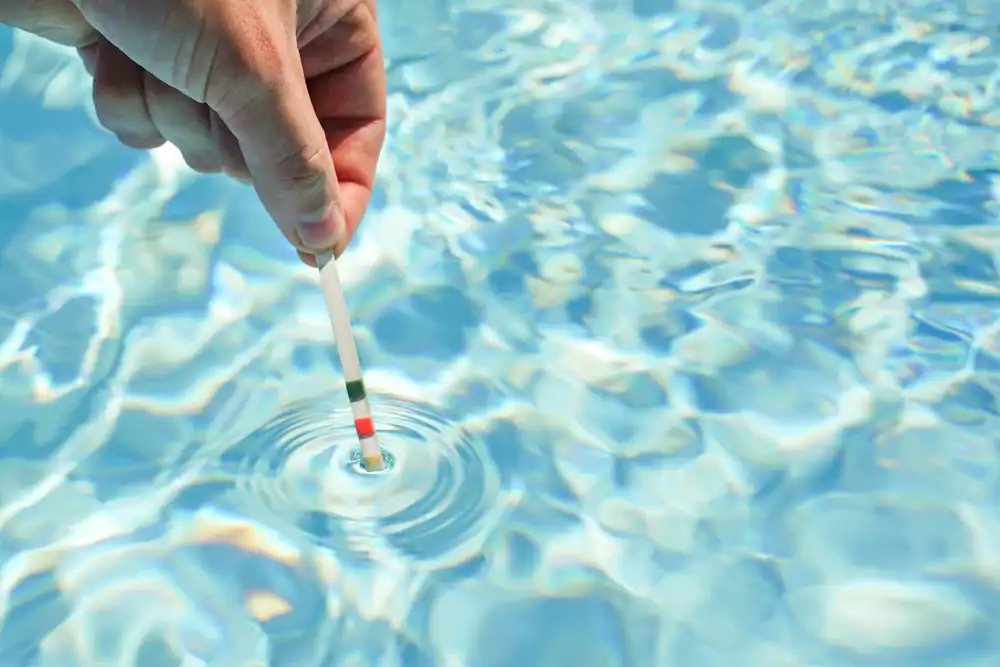
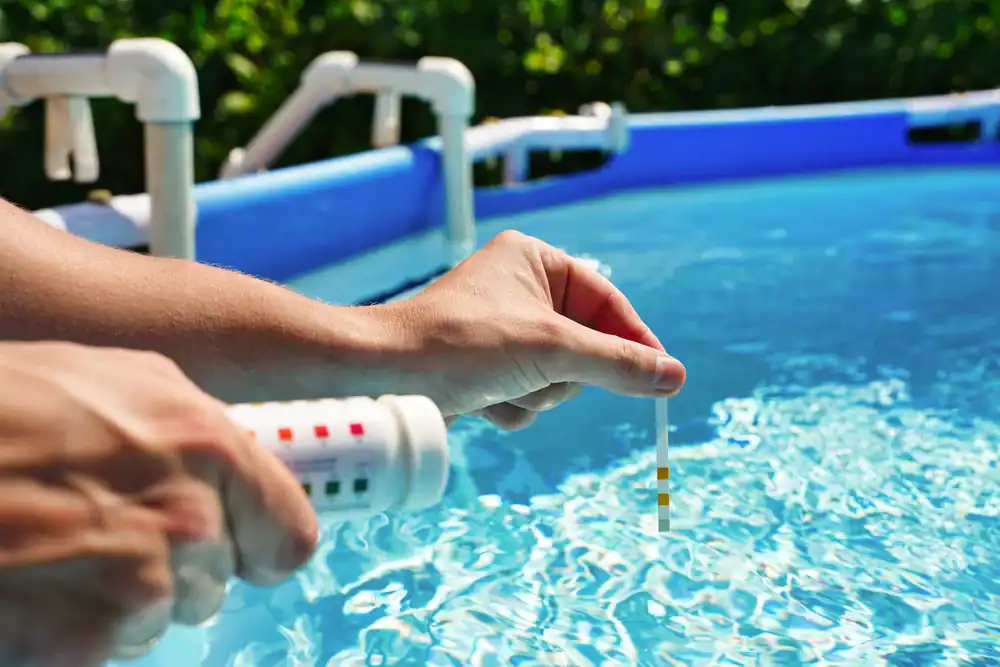
A pool that looks clear isn’t always safe and in Tifton’s summer heat, the gap between “looks fine” and “actually fine” closes fast. When your water’s pH drifts above 7.8, chlorine loses roughly half its effectiveness. You can add more and more sanitizer and still end up with an algae problem, because the water simply won’t let it work. That’s not a product issue. That’s a chemistry issue and a test strip won’t catch it in time.
Tifton’s municipal water comes entirely from groundwater, and the Tift County system has documented elevated hardness levels. That means the water going into your pool is already mineral-heavy before the South Georgia sun starts evaporating it all summer long. As water evaporates, those minerals concentrate and calcium hardness that starts in a reasonable range can creep into scaling territory by August without anyone noticing until there’s buildup on the tile line or stress on the equipment.
Then add the rainfall. August averages over four and a half inches in Tifton, right in the middle of peak swim season. Every significant storm dilutes your sanitizer, shifts your pH, and creates a window for algae to take hold within 24 to 48 hours. Professional water testing gives you a precise, complete picture of where your chemistry stands so you’re correcting real numbers, not chasing symptoms.
We’re based in Douglas, Georgia about 45 miles from Tifton on a straight South Georgia route and have been building and servicing pools across this region for over 30 years. That history matters when it comes to water testing, because we built pools like yours. We know what’s under the surface, how gunite and plaster interact with chemistry over time, and what happens when calcium hardness goes unchecked in a region where the fill water is already hard coming out of the tap.
Tifton has long had a local pool institution that pool owners relied on for chemistry guidance. That resource is no longer operating. If you’ve been without a reliable, knowledgeable pool chemistry service since then, we fill that gap not as a store trying to move product, but as a construction and service company that understands your pool from the ground up. We’re licensed, insured, and have been doing this work across Tift County and the surrounding communities long enough to know what South Georgia pools actually need.
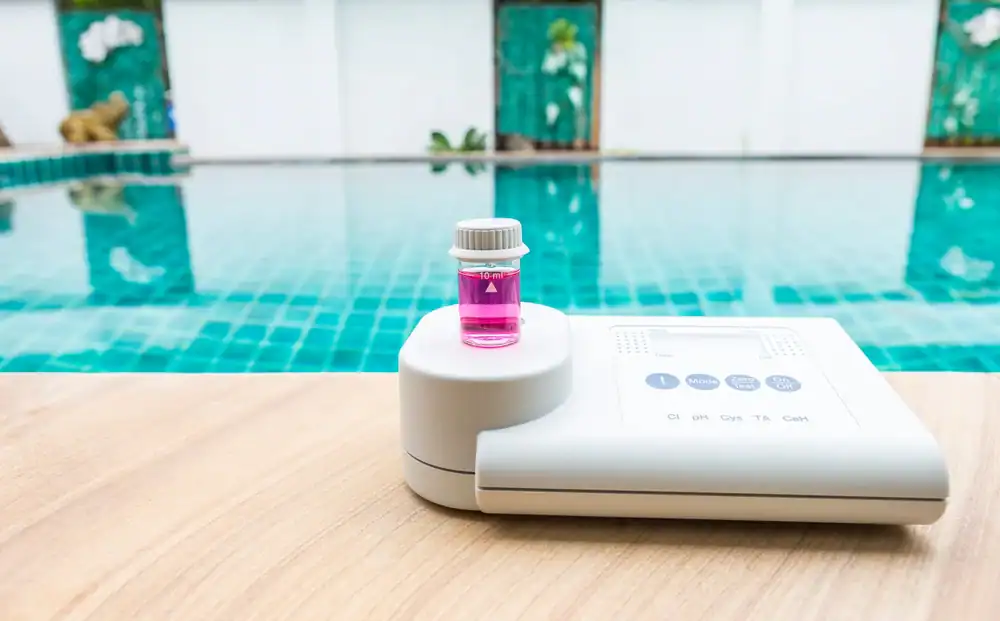
It starts with a full digital analysis not test strips, not color-matching, not a quick visual read. Our professional-grade equipment measures every parameter that matters: free chlorine, total chlorine, pH, total alkalinity, calcium hardness, and cyanuric acid. Each one tells a different part of the story, and skipping any of them leaves gaps that show up later as cloudy water, algae, scaling, or equipment wear.
Once the numbers are in, you get a clear explanation of what’s off and why it matters. If your pH is high, you’ll understand why adding more chlorine won’t solve your algae problem until that’s corrected first. If your calcium hardness is climbing which it will in Tifton’s summer heat as evaporation concentrates the already-mineral-heavy groundwater supply you’ll know before it starts etching your plaster or coating your filter. The correction plan is specific to your actual readings, not a generic add-this-and-hope approach.
From there, the chemistry is adjusted based on what your water actually needs. In Tifton’s long swim season which runs from late April well into October that kind of precision matters more than it does in climates with shorter exposure windows. The goal every time is water that’s safe, balanced, and not silently damaging the pool you’ve invested in.
Ready to get started?
A complete water test from us covers everything that affects how your pool behaves: free and total chlorine, pH, total alkalinity, calcium hardness, and cyanuric acid. These aren’t separate add-ons they’re all part of a single, thorough analysis because they all affect each other. Alkalinity buffers your pH. Cyanuric acid protects your chlorine from Tifton’s intense UV exposure. Calcium hardness determines whether your water is slowly corroding your plaster or depositing scale on your equipment. None of it works in isolation.
For Tifton pools specifically, calcium hardness testing is one of the most important readings on the report. The groundwater feeding the Tift County municipal system carries elevated mineral content, and that starting point means calcium levels can climb into the scaling range faster here than in areas with softer water. Add summer evaporation to the equation and it compounds quickly. Catching it early is a fraction of the cost of correcting scaling damage or replacing stressed equipment.
The same applies to cyanuric acid levels. In direct South Georgia sunlight, unprotected chlorine can break down in under two hours. Stabilizer keeps it working longer but too much cyanuric acid locks chlorine up and renders it ineffective. Getting that balance right is something a digital test catches and a test strip misses. That’s the difference between water that’s actually sanitized and water that just looks like it is.
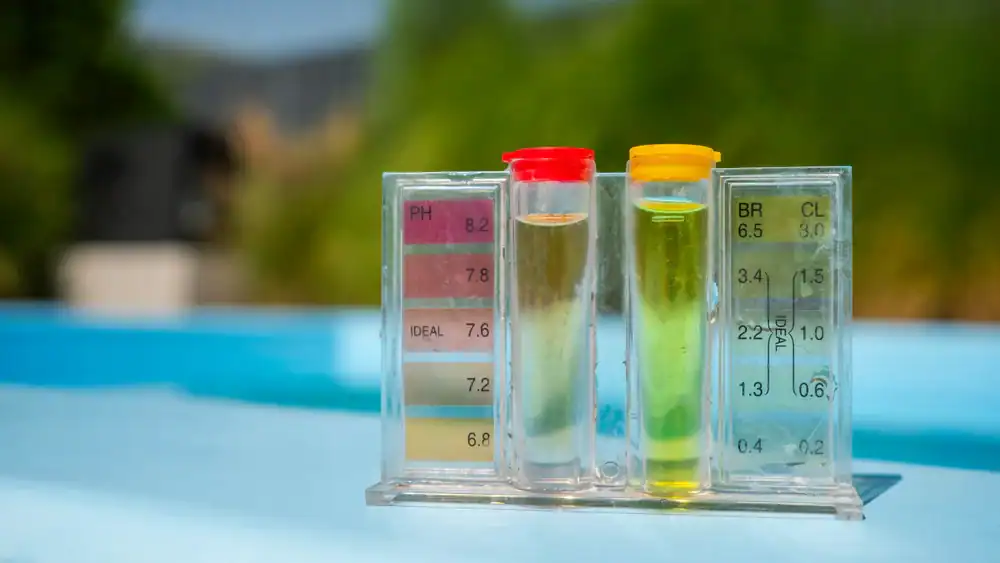
During Tifton’s peak swim season roughly late April through September professional water testing every two to four weeks is a reasonable baseline. But the honest answer is that the schedule should respond to conditions, not just a calendar. After a heavy rainstorm, which Tifton sees frequently in August, your sanitizer levels can drop significantly within 24 hours. During stretches of extreme heat with a heat index pushing above 100°F, chlorine burns off faster and algae growth accelerates. Those are the moments when waiting until your next scheduled test is how you end up with a green pool.
Bather load matters too. A pool that’s being used daily by a full household in July is consuming chemistry at a much higher rate than one that sees light use. If your pool is getting heavy traffic, erring toward more frequent testing and having a professional baseline to work from keeps you ahead of problems rather than reacting to them.
Cloudy water after adding chlorine is almost always a pH problem. When pH climbs above 7.8, chlorine becomes significantly less effective sometimes losing more than half its sanitizing power. You’re adding the right chemical, but the water chemistry won’t let it do its job. The result is water that reads “fine” for chlorine on a basic test but is still murky because the sanitizer isn’t actually working at full capacity.
The other common cause is calcium hardness that’s too high. In Tifton, where the municipal water supply already carries elevated mineral content, calcium levels can drift into the scaling range during summer without much warning. When that happens, dissolved calcium starts to precipitate out of the water and creates that hazy, milky appearance. A full digital water test separates these two causes immediately which is why a precise analysis matters more than guessing at a fix and adding chemicals until something changes.
Total alkalinity is what keeps your pH stable. Think of it as a buffer when alkalinity is in the right range, your pH holds steady even when rain, bather load, or chemicals try to push it in one direction or another. When alkalinity is too low, pH becomes erratic and hard to control. You’ll find yourself constantly adjusting it, and it’ll keep drifting back out of range. When alkalinity is too high, pH gets locked in place and becomes difficult to move even when you need to correct it.
In Tifton, the combination of frequent summer rain events and intense UV exposure puts real pressure on alkalinity levels. A heavy August storm can dilute your alkalinity and destabilize your pH in the same event. That’s why total alkalinity is one of the first things a professional water test checks because fixing pH without addressing alkalinity first is like mopping the floor while the faucet is still running. You have to correct the foundation before the rest of the chemistry will hold.
Yes and it’s worth understanding before you ever fill or top off your pool. Tifton’s municipal water system draws entirely from groundwater through 12 production wells, and that groundwater carries elevated mineral content. The Tift County water system has documented hardness levels that are higher than what you’d find in areas with surface water or softer aquifers. When you fill your pool from a Tifton tap, you’re starting with water that’s already on the harder end of the calcium hardness spectrum.
That’s not a problem on its own it just means calcium hardness needs to be monitored more closely here than it might elsewhere. As summer heat drives evaporation, the water volume drops but the dissolved minerals stay behind, concentrating further. Over weeks of hot weather, calcium hardness that started in an acceptable range can climb into scaling territory. Knowing your starting point and testing regularly throughout the season is how you stay ahead of it before it shows up as buildup on your tile line or stress on your filtration equipment.
Cyanuric acid is a chlorine stabilizer, and in Tifton, it’s not optional it’s essential. In direct South Georgia sunlight, unstabilized chlorine can break down in less than two hours. Cyanuric acid binds to chlorine molecules and protects them from UV degradation, dramatically extending how long your sanitizer stays active in the water. Without it, you’d be adding chlorine constantly just to keep up with the sun.
The catch is that too much cyanuric acid causes a different problem. When stabilizer levels get too high above around 80 to 100 parts per million chlorine gets locked up and can’t sanitize effectively even though it’s technically present. Your test reads chlorine, but the pool isn’t actually being sanitized. This is called chlorine lock, and it’s more common than most pool owners realize, especially in pools that use stabilized chlorine tablets exclusively without periodic water changes or dilution. A professional water test measures cyanuric acid directly and tells you exactly where you stand not just whether you have it, but whether it’s in a range where your chlorine can actually do its job.
The practical answer is that the long-standing local pool store Tifton residents relied on for in-store water testing no longer appears to be operating. But even when in-store testing was available, there’s a structural limitation worth understanding: when a store tests your water for free, the result almost always ends with a product recommendation. That’s not necessarily bad advice, but the test exists to support a sale not to give you an independent read on your pool’s actual condition.
We test your water as a service, not a sales step. The goal is an accurate picture of your chemistry and a correction plan based on what your pool actually needs not what’s on the shelf. Beyond that, we bring 30 years of pool construction experience to the analysis. We understand how your pool’s surface type interacts with chemistry over time, how Tifton’s hard groundwater supply affects calcium hardness throughout the season, and what South Georgia’s summer conditions do to chlorine and stabilizer levels week to week. That context doesn’t come with a free in-store test.