
Hear from Our Customers
Most pool problems don’t start with a green pool. They start weeks before with chemistry that drifted quietly while you were busy. By the time the water looks wrong, the imbalance has already been working against your equipment, your surface, and anyone swimming in it. Professional water testing catches those shifts before they become expensive.
In Valdosta, that window closes faster than most places. With over ten hours of direct sunlight during peak summer months, chlorine breaks down at an accelerated rate sometimes losing up to 90% of its effectiveness within two hours of exposure. Add in the near-daily thunderstorms that roll through South Georgia from June through August, and you’ve got a pool that can go from balanced to problematic between service visits without any warning.
If your pool is in Kinderlou Forest or anywhere along the Baytree Road corridor, there’s another layer to this. The custom gunite and shotcrete finishes common in Valdosta’s higher-end homes are particularly sensitive to calcium hardness swings. Too low, and the water starts etching your plaster. Too high, and you get scaling that stains the surface and clogs your filter. Neither shows up visually until real damage has already been done. Getting an accurate read on every parameter not just chlorine and pH is what actually protects that investment.
We’re based in Douglas, GA and have been serving the South Georgia region for over a decade with more than 30 years of hands-on pool construction and chemistry experience behind our work. That distinction matters. We’re not a retail store that tests water to sell you a shopping cart full of chemicals. We’re a team that has built concrete pools from the ground up and understands how surfaces, water, and chemistry interact at a structural level.
Serving Valdosta and Lowndes County means working in one of the most demanding pool environments in the state. The subtropical climate, the Floridan aquifer-sourced municipal water, the pollen seasons, the summer heat none of it is a surprise here. We account for local conditions in every assessment, not as an afterthought, but as the baseline.
Licensed, insured, and built on a reputation earned through real work across South Georgia not a franchise model, not a call center. When you reach out, you’re talking to the same team that shows up.
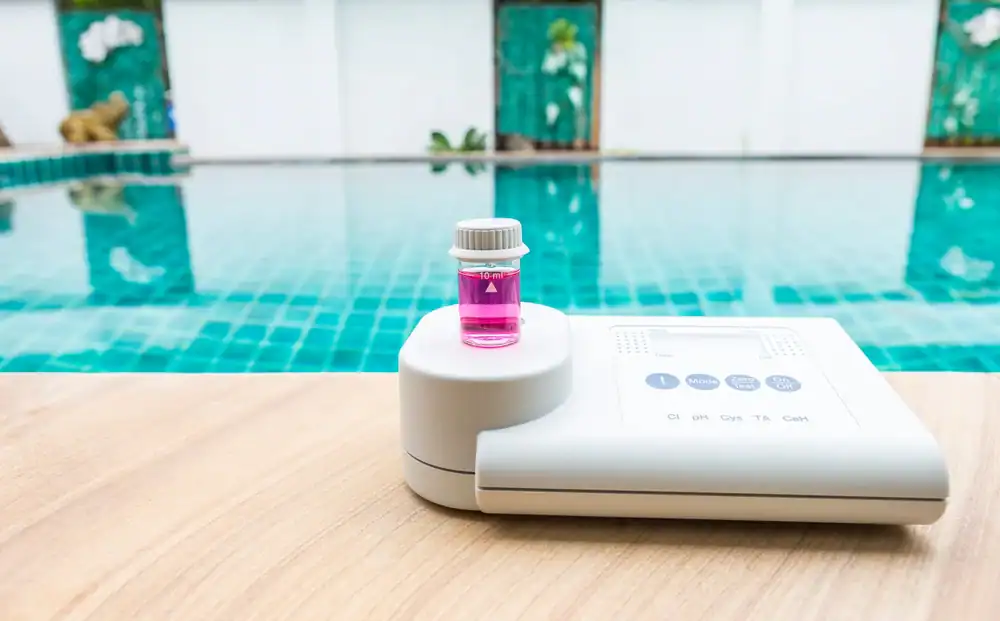
It starts with a water sample collected properly, not just a quick dip with a strip. From there, advanced digital analysis measures every critical parameter: free chlorine, combined chlorine, pH, total alkalinity, calcium hardness, cyanuric acid, and total dissolved solids. Each one tells a different part of the story, and missing any of them means missing the full picture.
Once the results are in, you get a clear explanation of where your water stands and what it needs not a vague recommendation to “add more shock.” If your cyanuric acid has built up to the point where it’s neutralizing your chlorine (a common issue in Valdosta pools that see heavy UV exposure all summer), that gets flagged specifically. If your calcium hardness is trending in a direction that threatens your pool’s finish, you’ll know before it becomes a repair bill.
From there, the chemistry gets corrected and balanced. Valdosta’s municipal water comes from the Upper Floridan aquifer and is treated with ozone it has its own baseline characteristics that affect how your pool chemistry behaves over time. We factor that local water profile into the process, not ignore it. The goal at the end of every visit is simple: water that’s safe, clear, and properly balanced for the conditions it’s actually in.
Ready to get started?
A professional water test from us covers the full chemistry picture. That means free and combined chlorine levels, pH, total alkalinity, calcium hardness, cyanuric acid stabilizer, and total dissolved solids all measured with digital testing equipment, not color-matching strips that leave too much room for interpretation.
For Valdosta pool owners, a few of these parameters carry extra weight. Cyanuric acid management is critical in a climate where UV exposure runs high for six or more months out of the year. CYA protects chlorine from burning off in the sun, but when it accumulates past a certain threshold, it starts locking chlorine up and making it ineffective even when the chlorine reading looks fine. This is one of the most common reasons pools in South Georgia stay cloudy or turn green despite regular chemical additions, and it’s something a test strip simply won’t catch accurately.
Total alkalinity and pH work together to keep your water stable between adjustments. In a city that receives over 42 inches of rainfall annually much of it concentrated in heavy summer storms those numbers can shift significantly after a single rain event. Calcium hardness matters especially for the concrete and gunite pools common throughout Kinderlou Forest and other established Valdosta neighborhoods. Every parameter gets checked, every time, because in this climate, one overlooked number is all it takes for a problem to build quietly until it isn’t quiet anymore.
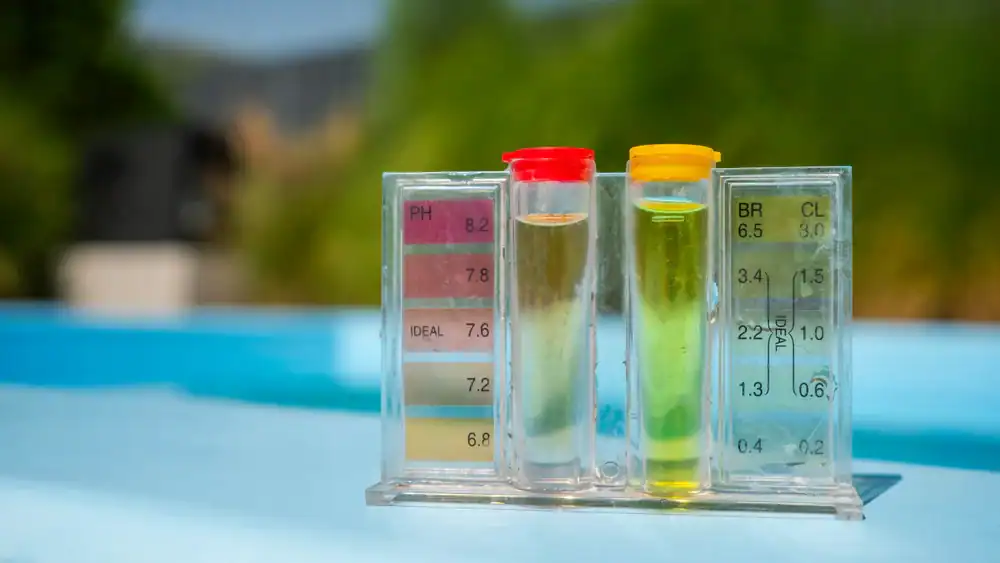
In most parts of the country, testing every two weeks during swim season is a reasonable baseline. In Valdosta, that schedule can fall short quickly. Between the heat, the UV intensity, and the frequency of summer thunderstorms across Lowndes County, your water chemistry can shift significantly within days not weeks. A pool that was balanced on Monday can be measurably off by Thursday after a heavy afternoon storm dilutes your chemicals and drops your pH.
During peak season roughly May through September weekly professional testing is the more appropriate standard for Valdosta pools. Outside of that window, monthly testing is usually sufficient to catch any drift before it turns into a visible problem. If you’ve recently had a heavy rain event, a large pool party, or noticed any change in water clarity or odor, that’s a reason to test sooner rather than waiting for your next scheduled visit.
The in-store water tests available at Valdosta pool supply retailers are designed to identify what products you need to buy. That’s not a criticism it’s just what they’re built for. They typically measure a handful of basic parameters and generate a chemical recommendation tied to that store’s product inventory. The test is free because the revenue comes from what you purchase afterward.
A professional water test measures a broader set of parameters with more precise equipment, and the result is an independent assessment not a shopping list. Combined chlorine, cyanuric acid saturation, total dissolved solids, and calcium hardness trends are all part of a complete professional analysis. More importantly, the interpretation of those results accounts for your specific pool type, your water source, and the local conditions your pool is actually dealing with. For a gunite pool in Valdosta’s subtropical climate, that context changes what the numbers mean and what the right correction actually is.
This is one of the most common frustrations for Valdosta pool owners, and the answer is almost always cyanuric acid. CYA is the stabilizer that protects chlorine from UV degradation which is genuinely necessary in a climate where your pool is sitting in direct sunlight for over ten hours a day during summer. But CYA accumulates over time, and once it climbs past a certain level, it binds to your chlorine and makes it largely ineffective, even when your chlorine reading looks normal.
The result is a pool that tests fine on a basic strip but still turns green because the chlorine isn’t actually doing its job. This condition is called chlorine lock, and it doesn’t resolve by adding more chlorine it requires draining a portion of the pool and diluting the CYA concentration down to a functional range. A professional water test that includes CYA measurement will identify this immediately. If you’ve been fighting a recurring green pool in Valdosta and can’t figure out why, this is the first thing worth checking.
Yes, and it’s worth understanding before you assume your pool chemistry is off because of something you did. Valdosta’s municipal water is sourced from the Upper Floridan aquifer and treated with ozone a process that’s been in place since the city’s treatment plant opened in 1992. Third-party water quality monitoring has noted increasing hardness levels in Valdosta’s municipal supply, which means every time you top off your pool with tap water, you’re introducing a baseline calcium hardness level that affects your pool’s overall balance.
Over time, this can push calcium hardness in a direction that causes scaling on pool surfaces and equipment particularly relevant for the concrete and gunite pools common in Valdosta’s established neighborhoods. It can also affect how your other chemistry readings interact. A professional water test that accounts for your local fill water characteristics gives you a more accurate picture than one that treats all tap water as identical. Knowing what’s coming in from the source helps explain what you’re seeing in the pool.
Rainfall is one of the most disruptive and underestimated factors in pool chemistry management, and Valdosta gets a lot of it around 42 inches per year, with the heaviest activity concentrated in summer thunderstorm season. When significant rain falls into your pool, several things happen at once: your chemical concentrations get diluted, your pH typically drops, and organic contaminants from runoff and the surrounding environment get introduced into the water, spiking chlorine demand.
The practical result is that a single heavy storm can meaningfully shift your pH, total alkalinity, and effective chlorine levels within hours. Pools that are already running lean on any of those parameters before the rain are the ones that turn cloudy or start growing algae within a day or two. This is why relying on a biweekly or monthly testing schedule during Valdosta’s summer months creates real risk. After any significant rain event especially the kind of sustained afternoon thunderstorm that’s common across Lowndes County from June through August it’s worth getting your water checked before assuming it’s still in range.
It depends on what your current pool service is actually measuring. Many pool maintenance companies in the Valdosta area handle cleaning, skimming, and basic chemical additions on a routine schedule but the depth of their water testing varies significantly. If your service is using test strips and adjusting chlorine and pH based on those readings, they’re working with a limited picture. Parameters like cyanuric acid, calcium hardness, combined chlorine, and total dissolved solids often aren’t part of a basic maintenance check, even when they’re actively affecting your water quality.
For pools in Kinderlou Forest, Stone Creek, or any Valdosta neighborhood with a concrete or gunite finish, those overlooked parameters are the ones most likely to cause long-term surface damage or equipment wear. A comprehensive professional water test done a few times per season even alongside your regular service gives you a complete baseline and catches the kind of slow-moving chemistry problems that a routine visit won’t flag until they’ve already done damage. It’s not about replacing your current service. It’s about knowing the full picture of what’s happening in your water.