
Hear from Our Customers
You’re not looking for a science lesson. You want to know if your pool is safe for your kids to swim in today.
That’s what professional pool water testing does. It catches the problems before they become expensive—before algae takes over, before your pump starts corroding, before someone gets an ear infection that ruins the weekend.
Home test strips miss things. They’re hard to read, they expire, and they don’t test for half the stuff that matters. Our residential water test uses lab-grade equipment that reads every important chemical and mineral in your pool. You get a full printout with your current levels and what to adjust. Takes about three minutes. Completely free.
You walk in with a water sample. You walk out knowing exactly what your pool needs. No appointment necessary.
We’ve been serving West Green, GA and South Georgia since 2014, but our experience goes back over 30 years. We’ve built hundreds of custom inground pools across the region, which means we’ve also maintained them, troubleshot them, and fixed every water chemistry disaster you can imagine.
We know what Georgia heat does to chlorine levels. We know how summer storms throw off your pH. We know the specific challenges pool owners face in West Green—the clay soil, the pollen, the long swimming season that runs April through October.
There hasn’t been a pool we couldn’t get crystal clear. That’s not bragging. That’s just what happens when you’ve dealt with every possible water issue for three decades.
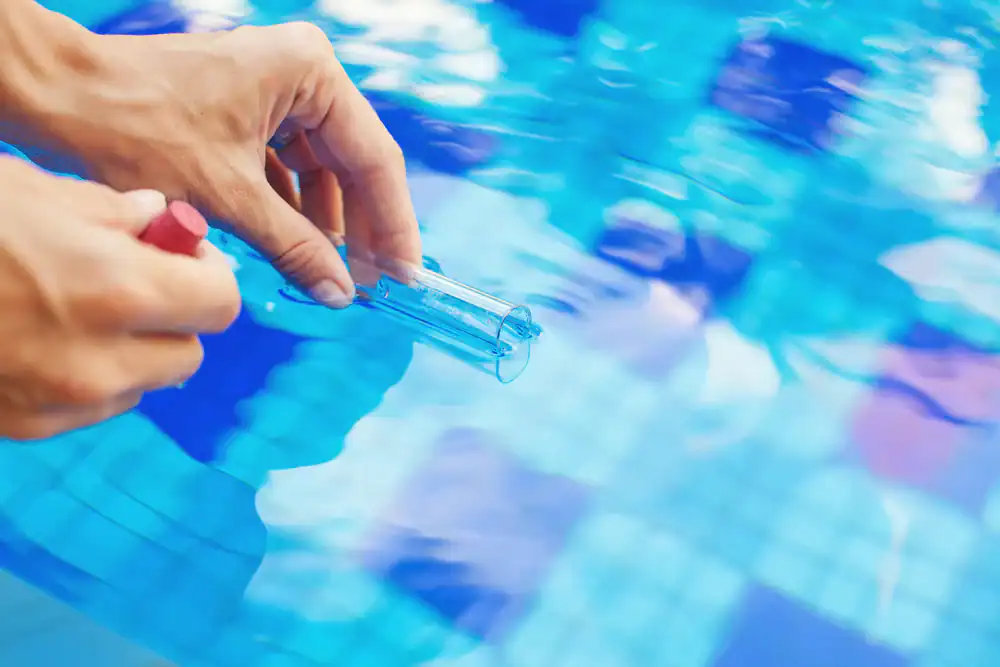
Bring us a water sample in a clean plastic bottle. Fill it about halfway, taken from elbow-deep in your pool—not from the surface where debris floats, and not from right next to a return jet.
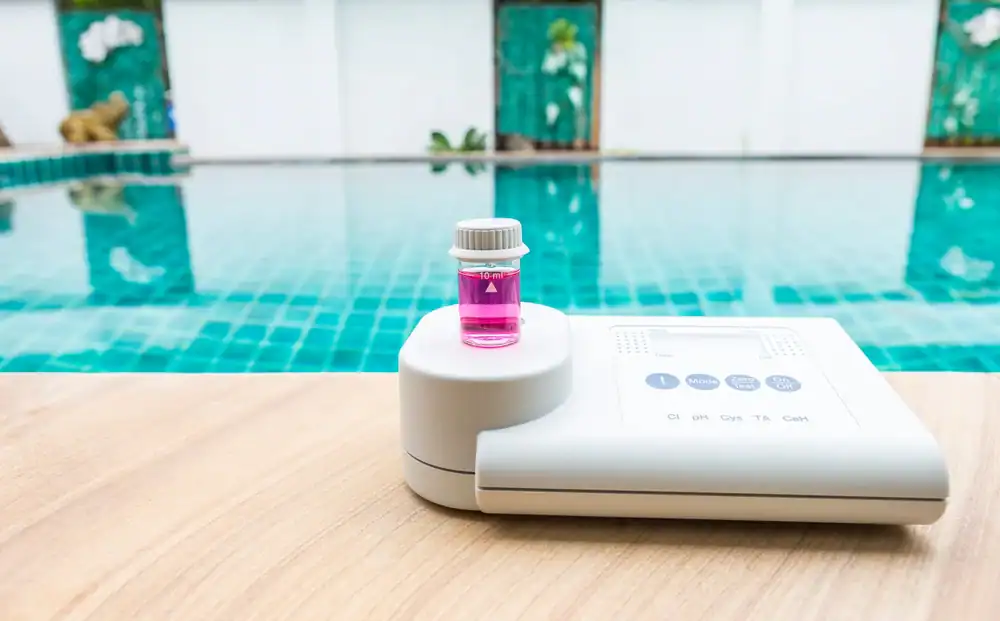
We run it through our water analysis service equipment. This isn’t a test strip you squint at. It’s the same technology used in chemistry labs, and it measures everything: free chlorine, pH, total alkalinity, calcium hardness, cyanuric acid, salt levels, phosphates, metals.
You get a printed report showing where each level sits and where it should be. We’ll tell you exactly what to add, how much, and in what order. If something’s way off, we’ll explain why it happened and how to prevent it next time.
The whole process takes two to three minutes. You don’t need an appointment. You don’t pay anything. You just get answers.
Ready to get started?
Every water quality testing session covers the levels that actually affect your pool’s safety and lifespan. Free chlorine tells us if your water can kill bacteria right now. pH determines whether that chlorine even works—too high and it’s basically useless, too low and it’s eating your equipment.
Total alkalinity keeps your pH stable. Calcium hardness protects your plaster and prevents scale buildup. Cyanuric acid shields chlorine from Georgia sun but becomes a problem if it climbs too high. We also check for phosphates that feed algae and metals that stain your pool walls.
In West Green, we see patterns. Spring pollen spikes phosphate levels. Summer heat burns through chlorine faster. Heavy rains dilute everything and drop your chemical balance overnight. Our testing accounts for what’s normal here, not what some generic chart says.
You should test weekly during swim season. After a big storm or a pool party, test again. If your water looks cloudy or feels slimy, don’t wait—bring a sample in. The earlier you catch an imbalance, the easier and cheaper it is to fix.
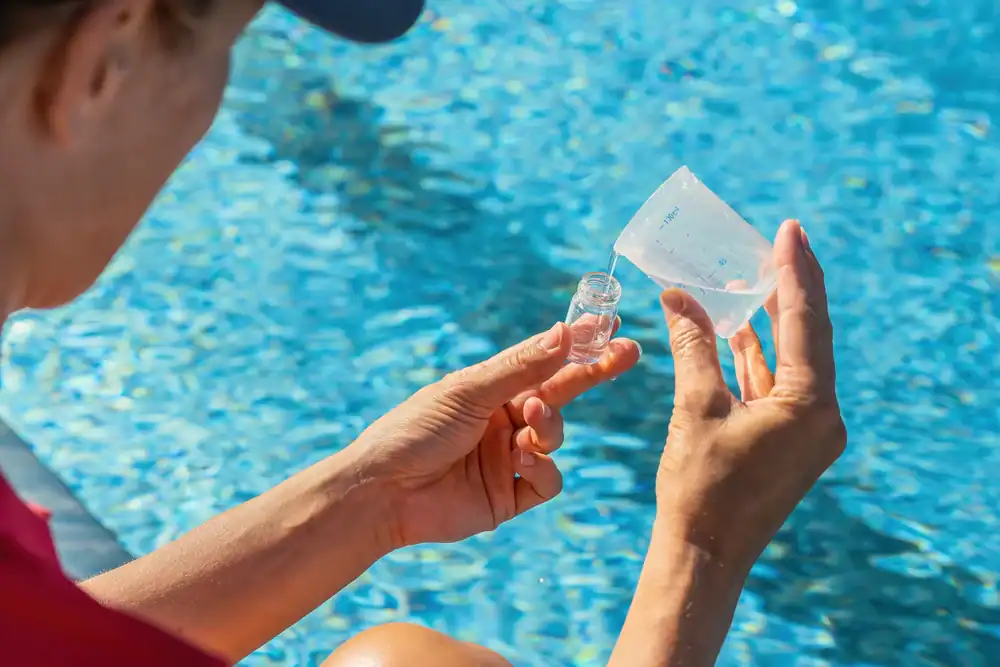
Weekly during swimming season is the standard. That’s roughly April through October in West Green, though some years you’re swimming into November.
If you’re using your pool daily or hosting parties, test twice a week. After heavy rain, test within 24 hours—storms dilute your chemicals and wash debris into the water. Same goes for after you’ve had a dozen people in the pool all afternoon.
In the off-season, you can stretch it to every two weeks, but don’t skip it entirely. Water chemistry doesn’t pause just because it’s cold. Algae can still bloom in 50-degree water if your chlorine drops too low.
The cost of testing is zero. The cost of not testing shows up when you’re scrubbing algae for three days or replacing a corroded pump. Test often. Adjust small. Avoid disasters.
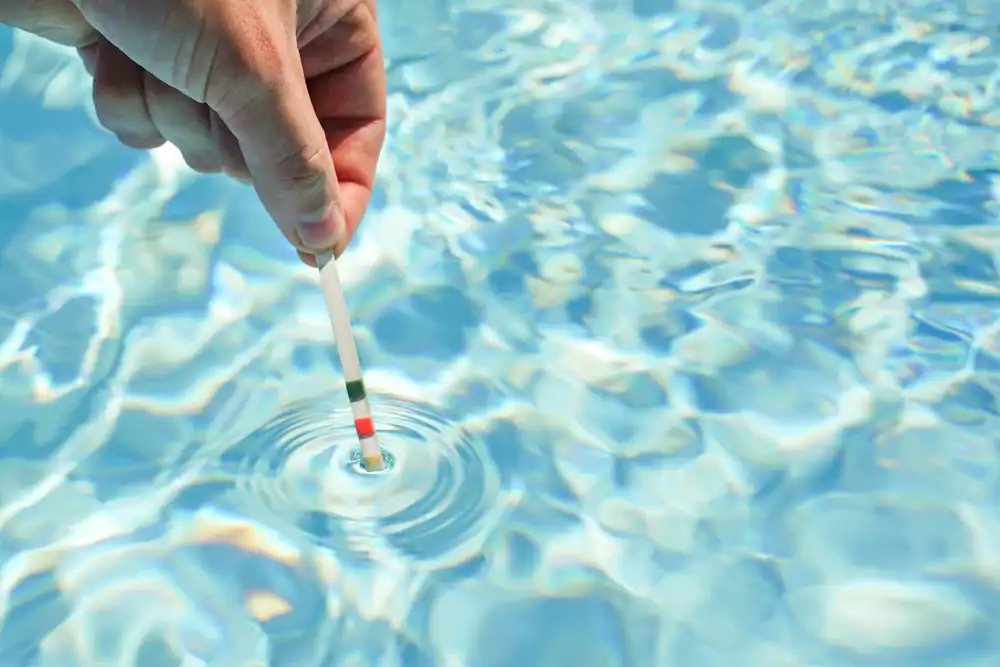
Test strips are fine for a quick chlorine and pH check between professional tests. That’s about where their usefulness ends.
They don’t measure phosphates, which feed algae. They can’t accurately read cyanuric acid above 100 ppm, which is exactly when it becomes a problem. They expire, they’re hard to read in anything but perfect light, and the color matching is subjective. Two people looking at the same strip will see different results.
Our professional pool water analysis uses a photometer and reagents that measure exact levels, not color approximations. It tests for metals like copper and iron that strips miss entirely. It catches problems early, when they’re still easy to fix.
Use strips at home if you want. But bring us a sample weekly so you’re working with real numbers, not guesses.
No appointment needed. Bring a sample whenever we’re open.
The test takes two to three minutes, so there’s rarely a wait. If we’re helping another customer, you might stand around for five minutes. That’s it.
Use a clean plastic bottle—a water bottle works fine. Fill it about halfway with pool water taken from elbow depth, away from return jets and skimmers. Don’t scoop from the surface where leaves and bugs float.
If you’re coming from more than an hour away, keep the sample out of direct sunlight. Heat can affect some readings slightly, though it’s rarely enough to matter for residential water test purposes.
Bring it in, get your results, and you’re back home adjusting chemicals within 20 minutes.
Free chlorine should sit between 2 and 4 ppm for regular use. If you’re expecting a crowd, push it to 4 or 5 ppm beforehand. Below 1 ppm and bacteria start multiplying. Above 10 ppm and you’ll irritate skin and eyes.
pH needs to stay between 7.4 and 7.6. Lower than 7.2 and the water becomes corrosive—it’ll eat your equipment and sting your eyes. Higher than 7.8 and your chlorine stops working efficiently, even if the level looks fine.
Total alkalinity should be 80 to 120 ppm. It acts as a pH buffer. Calcium hardness should be 200 to 400 ppm to protect plaster and prevent scale. Cyanuric acid should stay between 30 and 50 ppm—it protects chlorine from the sun, but too much blocks chlorine from sanitizing.
These ranges aren’t arbitrary. They’re based on what keeps water safe, comfortable, and non-damaging to your pool. Our printout shows you where your levels are and where they need to be.
Chlorine level is only part of the equation. Cloudy water usually means your pH is off, your filter isn’t running enough, or you’ve got an algae bloom starting.
High pH makes chlorine lazy. It’s present, but it’s not actively sanitizing. Your test might show 3 ppm of chlorine, but if your pH is 8.0, that chlorine isn’t killing anything. Drop the pH back to 7.4 and the water often clears within a day.
Calcium hardness that’s too low can cause cloudiness too. The water is literally hungry for minerals, so it pulls them from your plaster or grout, leaving a haze. Phosphates feed algae, which clouds water before it turns green.
Sometimes it’s simpler—your filter needs cleaning or you’re not running it long enough. In Georgia heat, run your pump at least 8 hours a day during summer. Bring us a water sample and we’ll tell you what’s actually causing the cloudiness, not what you think it might be.
No. The test is completely free. You don’t have to buy anything. You don’t have to use our pool service. You just get your results and recommendations.
We’ve been doing free water testing since we opened. It’s how we help pool owners in West Green maintain their pools correctly, and it’s how we build trust. You’re not walking into a sales pitch. You’re getting accurate information about your water chemistry.
If your levels are way off and you need help figuring out the fix, we’ll walk you through it. If you want to handle it yourself, that’s fine too. If you’d rather we handle the chemicals and maintenance, we can talk about that.
But the water analysis service itself costs nothing. Bring a sample in whenever you need one.
Other Services we provide in West Green