
Hear from Our Customers
You’re not looking for someone to tell you your water “looks fine.” You need to know if your pH is off, if your chlorine levels are where they should be, or if something else is throwing everything out of balance.
That’s what this service does. We test your water for chlorine, pH, alkalinity, hardness, and other parameters that home test strips usually miss. You get a printed report in a few minutes, plus a straightforward explanation of what’s happening and what to do about it.
No sales pitch. No pressure. Just real answers so you can make informed decisions about your pool. Whether you’re dealing with cloudy water, algae that won’t quit, or you just want to confirm everything’s dialed in—this gives you clarity.
We’ve been serving families across South Georgia since 2014, but the experience behind this business goes back more than 30 years. We’ve built pools, fixed pools, and maintained pools through every season and every challenge Georgia weather throws at them.
That background matters when you’re testing water. We’re not just reading numbers off a machine—we’re interpreting what those numbers mean for your specific pool, your equipment, and the conditions in White City, GA. Hot summers, high humidity, heavy use—it all affects your water chemistry, and we’ve seen it all.
This isn’t a side service. It’s part of how we help pool owners stay ahead of problems instead of reacting to them.
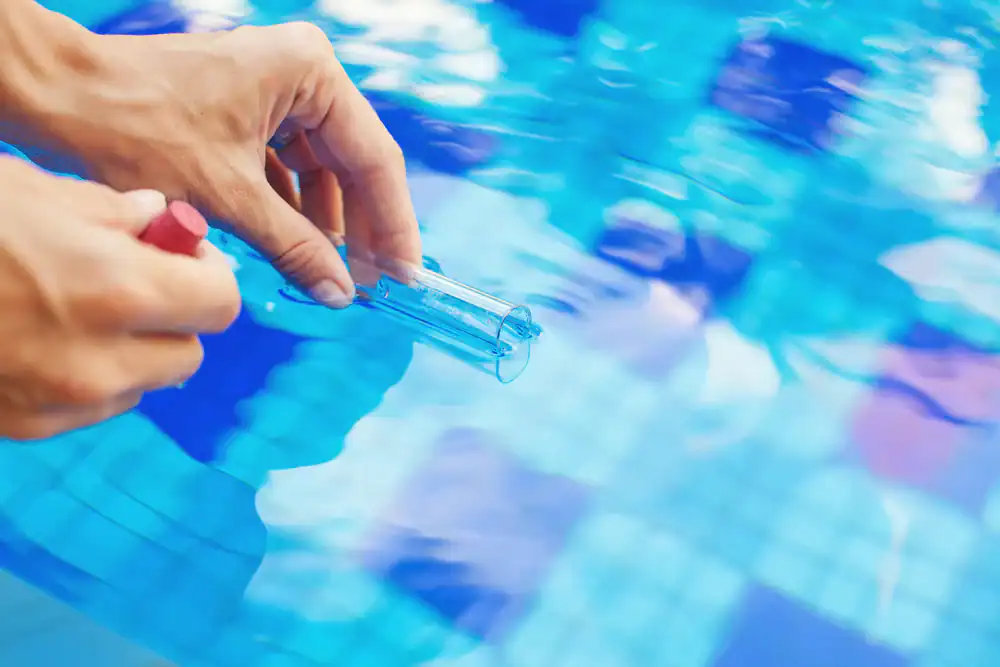
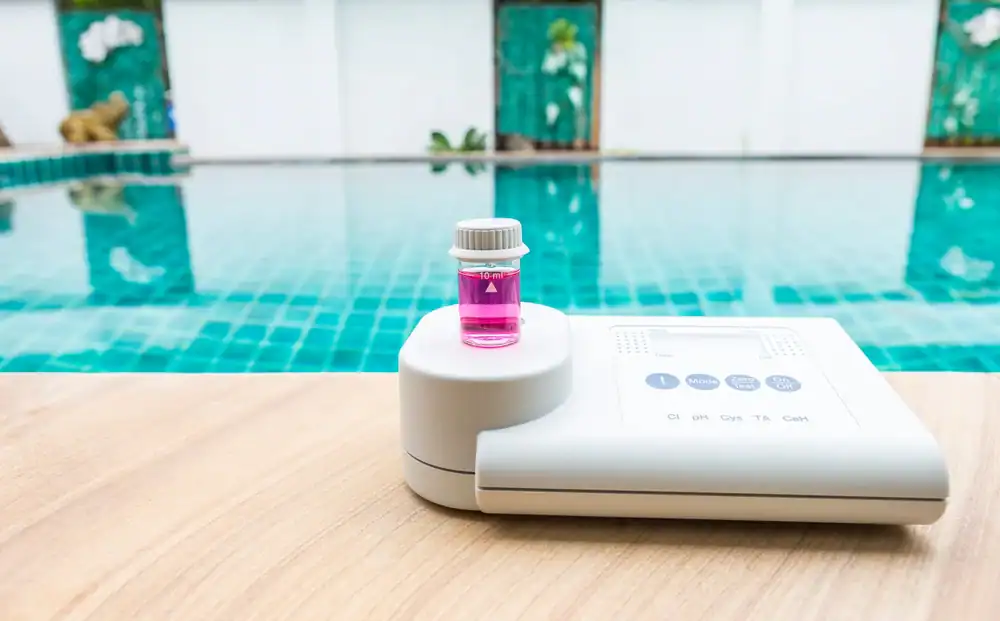
Bring us a water sample from your pool—about 6 to 8 inches below the surface works best. We run it through our LaMotte Waterlink Spin Disk system, which is the same technology used in chemistry and medical labs. It’s not a basic test strip. It’s a full analysis.
Within two to three minutes, you’ll have a printed report showing your chlorine levels, pH, total alkalinity, calcium hardness, and more. We’ll walk through what each number means and where adjustments need to happen.
If your pH is sitting at 7.8 and your chlorine is low, we’ll explain why that matters—not just for water clarity, but for your pump, your filter, and anyone swimming in that water. If everything checks out, we’ll tell you that too. The goal is to give you an accurate picture so you’re not guessing or over-treating.
And yes, this service is completely free. No purchase required. No strings attached.
Ready to get started?
This isn’t a quick dip-and-guess. We’re measuring the levels that actually determine whether your pool is safe, balanced, and protecting your equipment.
Free chlorine tells you if your water is sanitized enough to kill bacteria and algae. pH affects everything—from how well your chlorine works to whether your water is corroding metal parts or scaling up your heater. Total alkalinity acts as a buffer for pH, keeping it stable. Calcium hardness prevents your water from becoming corrosive or forming deposits.
In White City, GA, the heat and humidity mean your pool is working harder during the summer months. Chlorine burns off faster. Algae grows quicker. Your water chemistry shifts more than it would in a milder climate. That’s why regular testing matters here—not once a season, but weekly during heavy use, and definitely after storms or pool parties.
We also catch the things most people don’t think about until there’s a problem. Low calcium can eat away at your plaster. High pH makes your chlorine ineffective, even if you’re adding plenty of it. These are the details that save you money and frustration down the road.
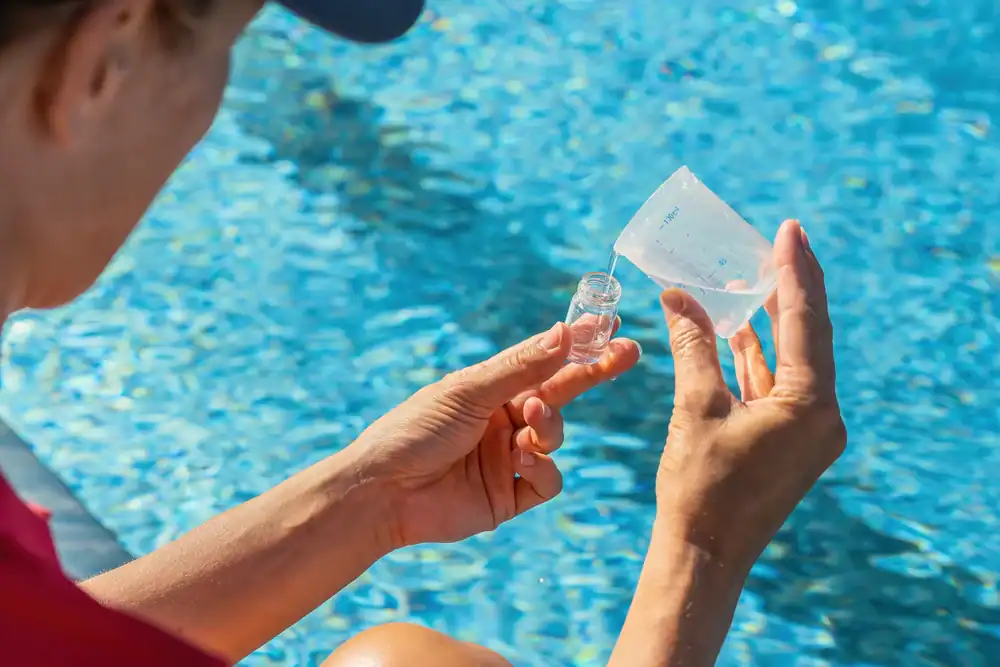
At minimum, once a week during swim season. If you’re using your pool heavily—kids in and out all day, weekend parties, or after a big rainstorm—test it more often.
Home test strips can give you a rough idea, but they miss a lot. They don’t measure calcium hardness, stabilizer levels, or some of the other factors that affect long-term water balance. Bringing a sample in for professional testing fills in those gaps.
Think of it this way: you’re not just checking if the water is safe today. You’re making sure it stays balanced enough that you’re not dealing with algae blooms, equipment corrosion, or expensive chemical corrections later. Weekly testing keeps you ahead of problems instead of reacting to them.
We’ll tell you exactly what needs adjusting and why. If your pH is too high, we’ll explain how that’s affecting your chlorine efficiency and what to add to bring it down. If your alkalinity is low, we’ll walk through how to stabilize it without overshooting.
You’ll leave with a printed report and clear instructions. You can handle the adjustments yourself, or we can help—it’s your call. There’s no pressure to buy anything. The goal is to give you the information you need to make the right decision for your pool.
Some issues are simple fixes. Others might point to a bigger problem, like a leak or equipment that’s not functioning right. Either way, you’ll know what you’re dealing with instead of guessing or throwing chemicals at a problem that might not be chemical-related.
It’s actually free. No purchase required. No obligation to buy chemicals or sign up for a service plan. You bring in a water sample, we test it, you get the results and recommendations. That’s it.
We offer this because accurate water testing is the foundation of good pool care. If you know what your water needs, you make better decisions—whether you’re handling maintenance yourself or working with a pool service. It’s also how we build trust with pool owners in White City, GA and across South Georgia.
If you do need chemicals or products based on the test results, we’ll let you know what’s available. But there’s zero pressure. Some people test with us and handle everything on their own. Others appreciate the convenience of picking up what they need while they’re here. Both are fine.
You can, and they’re better than nothing—but they’re not giving you the full picture. Most test strips only measure pH and chlorine, maybe total alkalinity if you get a better kit. They don’t test calcium hardness, stabilizer, or some of the trace minerals that affect water balance.
They’re also less accurate. Color matching is subjective, and if the strips are old or have been exposed to moisture, the results can be way off. That’s frustrating when you’re trying to fix a problem and the numbers don’t add up.
Professional testing uses lab-grade equipment that measures everything in precise increments. You’re not squinting at a color chart—you’re getting exact numbers on a printed report. For something as important as water chemistry, especially in Georgia’s climate where things shift fast, that accuracy matters.
Grab a clean plastic bottle or container—nothing that had soap, chemicals, or anything else in it before. Rinse it with pool water first if you’re not sure.
Reach down about 6 to 8 inches below the surface, away from return jets or skimmers, and fill the container. You want a sample that represents the overall pool, not just what’s near the surface or right by the equipment.
Bring it in as soon as you can. Water chemistry can shift if the sample sits around too long, especially in heat. If you can’t make it right away, keep it out of direct sunlight and bring it within a few hours. That’s it—no special prep, no waiting for the pool to sit unused. Just a fresh sample and a few minutes of your time.
Heat, humidity, and sunlight. Georgia summers are tough on pools. High temperatures make chlorine evaporate faster, which means your sanitizer levels drop quicker than they would in a cooler climate. More sunlight accelerates algae growth, especially if your water isn’t balanced.
Humidity adds another layer. It slows down evaporation from the pool surface, but it doesn’t slow down the chemical reactions happening in the water. You’re still burning through chlorine, your pH is still shifting, and your water balance is still moving around—sometimes daily.
If your water chemistry is off, even a little, those conditions amplify the problem. Low pH becomes corrosive faster. High pH makes your chlorine ineffective when you need it most. Algae takes hold quicker. Equipment wears out sooner. That’s why regular, accurate testing isn’t optional here—it’s how you protect your investment and keep your pool usable all season.
Other Services we provide in White City