
Hear from Our Customers
You can’t fix what you can’t see. That’s the problem with pool water—it might look fine until algae blooms overnight or your equipment starts corroding from imbalanced chemistry.
Professional pool water testing gives you the actual numbers. pH, chlorine, alkalinity, calcium hardness—all the levels that determine whether your pool stays clear or turns into a maintenance nightmare. We test it in minutes and hand you a printout with your current readings and what needs adjusting.
Most pool problems in Wilsonville, GA start with water chemistry that drifted off course weeks earlier. Georgia heat accelerates algae growth exponentially when water hits 80°F, and summer rain drops your pH faster than you’d expect. Testing regularly means you catch issues while they’re still easy to fix, before you’re draining green water or replacing damaged equipment.
We’ve been building and maintaining pools in Wilsonville, GA and throughout South Georgia since 2014, backed by over 30 years of hands-on experience in pool construction, plumbing, and water chemistry. We’re not a franchise following a script—we’ve poured the concrete, installed the systems, and fixed the problems that come from South Georgia’s climate.
That matters when you’re trying to keep your pool balanced. We understand how local conditions affect your water because we’ve been managing them for decades. The heat, the storms, the pollen—we know what throws your chemistry off and how to correct it.
We offer free water testing because it’s the foundation of proper pool care. You shouldn’t have to pay to find out what your pool needs.
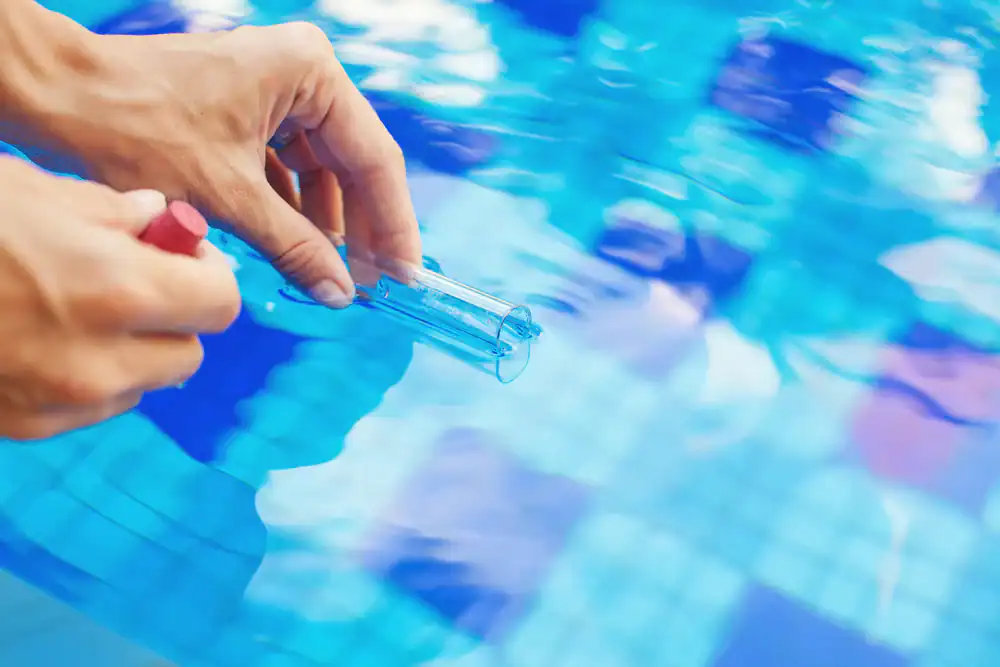
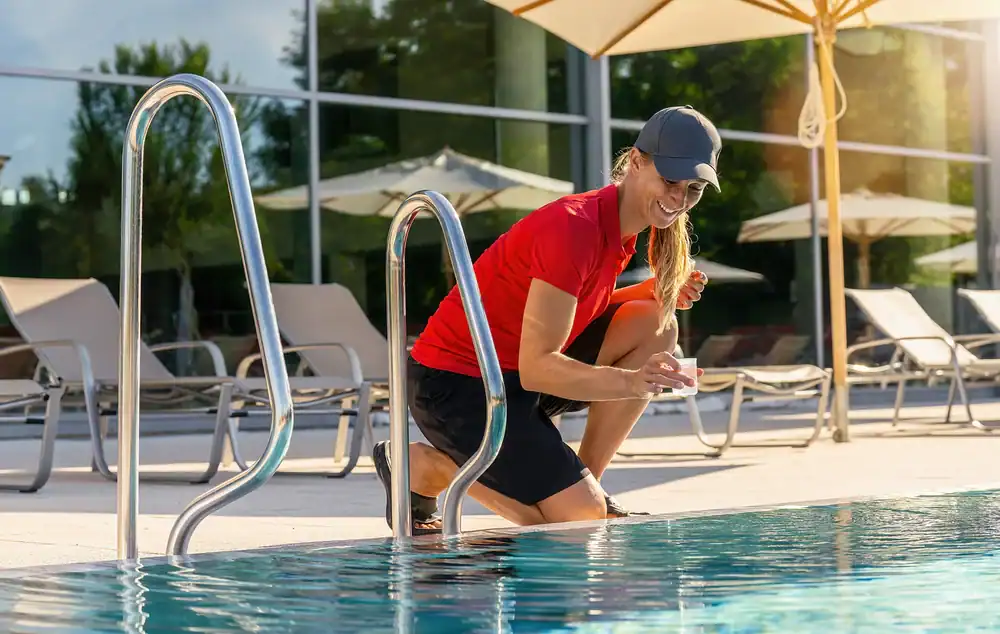
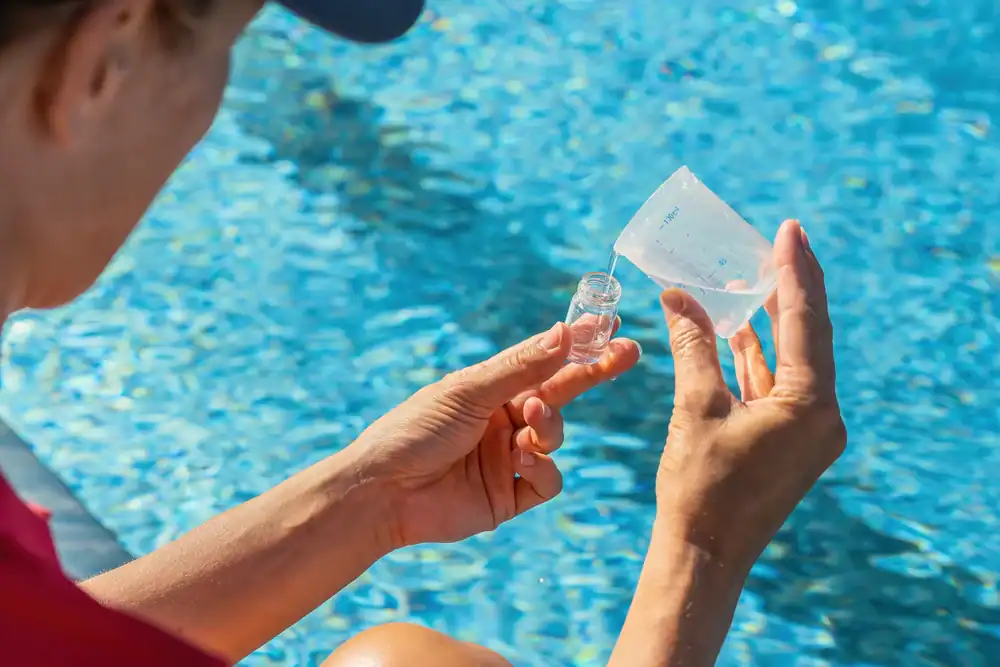
Bring us a water sample from your pool. Use a clean container and collect water from about elbow-deep—not right at the surface where debris floats, and not from right next to a return jet where chemicals are still mixing.
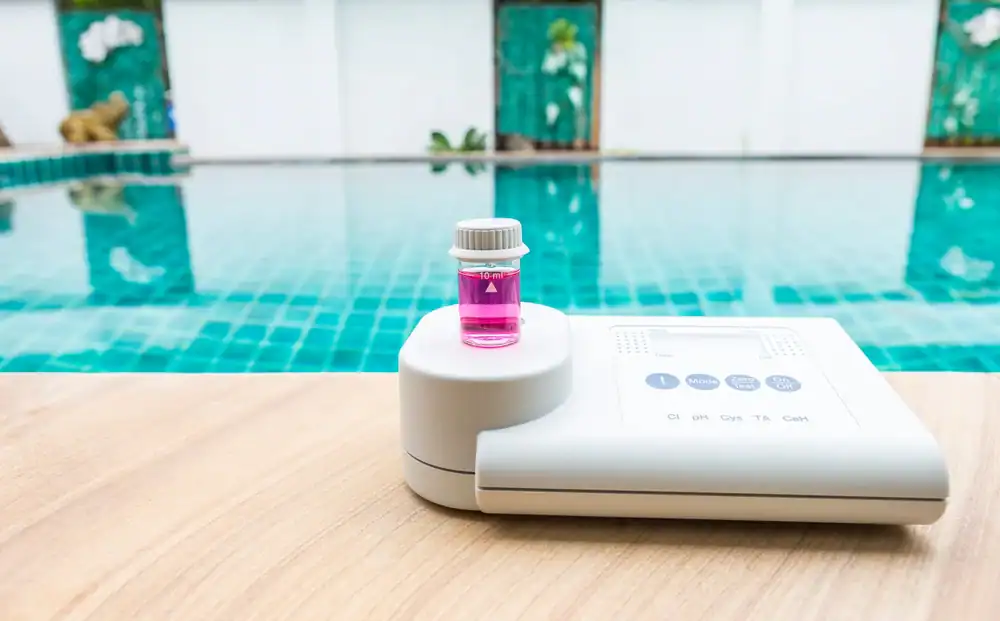
We run the sample through professional testing equipment that measures chlorine levels, pH, total alkalinity, calcium hardness, and other critical parameters. This takes about two to three minutes. You’re not dropping off a sample and waiting days—you get results while you wait.
Once testing is complete, we print out your full water analysis showing current levels and ideal ranges. Then we walk through what the numbers mean for your specific pool. If your pH is low, we’ll explain why that matters and what it takes to raise it. If calcium hardness is climbing, we’ll tell you what happens if it keeps going and how to prevent scaling.
You leave with a clear understanding of your water chemistry and a specific plan for what to add, how much, and when to test again. No confusion, no sales pitch—just straightforward information about your pool.
Ready to get started?
We test for the parameters that actually affect your pool’s performance and longevity. Chlorine levels tell us if your water is properly sanitized or if bacteria and algae have room to grow. pH determines whether your water is corrosive or scaling—both damage your pool and make chlorine less effective. The ideal range is 7.2 to 7.8, and outside that window you’re creating problems.
Total alkalinity acts as a pH buffer. When it’s too low, your pH swings wildly with every rain or chemical addition. Calcium hardness prevents your water from pulling calcium out of your pool surfaces, which leads to etching and deterioration. In Wilsonville, GA, we also watch for how local weather patterns affect these levels—summer storms drop pH with acidic rainwater around 5.5 to 6.0, and heat accelerates chlorine loss from UV exposure.
Every test includes a full printout of your results with recommended adjustments. We explain what each chemical does, how much you need based on your pool size, and what order to add them in. If you’re dealing with persistent algae or cloudy water despite adding chemicals, we can usually spot the underlying imbalance causing it.
This is a free service because proper water chemistry prevents the expensive problems we see too often—damaged liners, corroded equipment, and complete water chemistry crashes that take days to fix.
Test your water at least once every two weeks during swimming season, and weekly if you’re having any issues with clarity or algae. That’s the baseline for staying ahead of problems.
You should also test after heavy rain, after a pool party with lots of swimmers, and any time your water looks off or feels different. Rain dilutes your carefully balanced chemistry and drops pH. Swimmers introduce contaminants that consume chlorine faster. Waiting until you see visible problems means you’re already behind.
Home test strips give you a rough idea, but they’re not precise enough to catch subtle imbalances before they become obvious. Professional testing equipment measures levels more accurately and tests for parameters that basic strips miss. Bring us a sample whenever you’re unsure—there’s no cost and it takes just a few minutes to know exactly where your water stands.
Your pH is probably too high. When pH climbs above 7.8, chlorine becomes significantly less effective at killing algae even if your chlorine reading looks fine. You’re adding sanitizer that can’t actually sanitize.
This is extremely common in Wilsonville, GA during summer because heat and evaporation naturally push pH upward. You might have plenty of chlorine in the water, but if your pH is sitting at 8.0 or higher, that chlorine isn’t doing its job. Algae takes advantage and blooms overnight.
The fix is getting pH back down into the 7.2 to 7.8 range, then shocking the pool to kill existing algae. But you need to know your current pH level before you start adjusting it—adding acid blindly can overshoot and create new problems. Bring us a water sample and we’ll show you exactly where your pH is and how much adjustment it needs. Once pH is corrected, your chlorine will actually work and the green stops coming back.
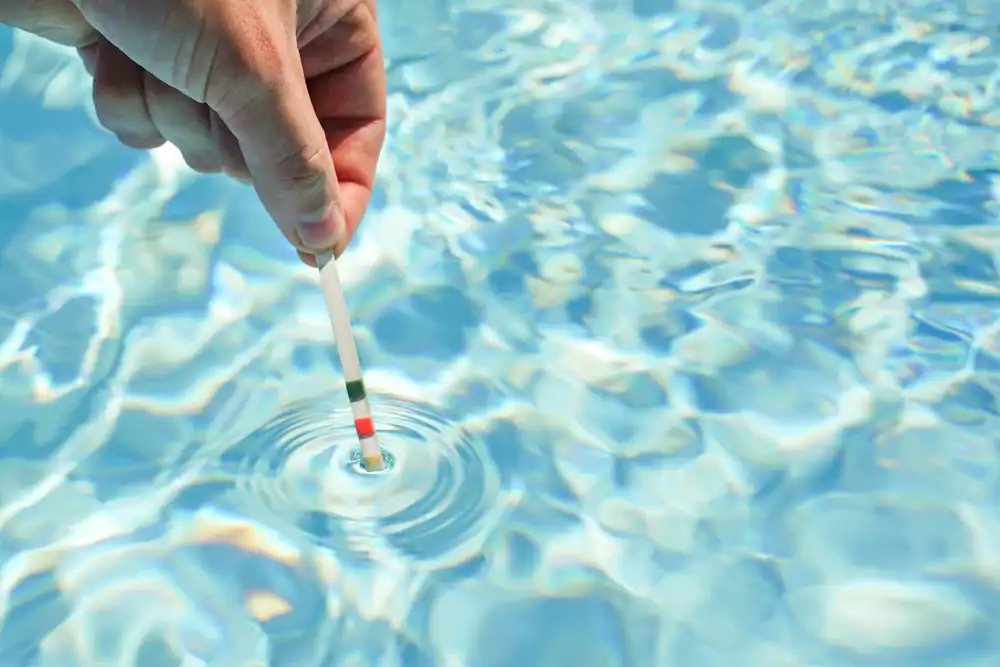
Test strips work for quick checks between professional tests, but they’re not accurate enough to rely on exclusively. The color matching is subjective, the strips degrade if stored in heat or humidity, and they don’t test for everything that affects your pool’s health.
Professional water testing uses calibrated equipment that gives you precise numerical readings, not approximate color ranges. We test for parameters that strips often skip, like calcium hardness and stabilizer levels. These matter—calcium protects your pool surfaces from etching, and stabilizer (cyanuric acid) protects chlorine from UV breakdown. Without knowing these levels, you’re managing your pool half-blind.
Strips are fine for checking if your chlorine dropped before a pool party or confirming your pH is still in range mid-week. But for actual water balancing and troubleshooting problems, you need the accuracy of professional testing. Since we offer it free, there’s no reason not to get the complete picture. Bring us a sample every couple weeks and use strips in between if you want to monitor daily.
Georgia heat accelerates everything happening in your pool. Algae cells double every few hours when water temperature exceeds 80°F, which means a small algae problem becomes a visible bloom incredibly fast. Your chlorine also breaks down faster under intense UV exposure—unstabilized chlorine can lose half its strength within hours on a sunny day.
Summer storms compound the issue. Georgia gets frequent afternoon thunderstorms that dump acidic rainwater (pH around 5.5 to 6.0) into your pool, diluting your chemistry and dropping pH and alkalinity. The storms also blow in organic debris that feeds algae and consumes chlorine as it decomposes.
Higher temperatures mean your pool equipment works harder and chemicals react faster, so the margin for error shrinks. What might stay balanced for two weeks in spring might need adjustment every few days in July. That’s why testing frequency matters more in summer—you’re trying to stay ahead of conditions that change rapidly. If you’re struggling to keep up, bring us water samples more often so we can help you maintain stable chemistry despite the heat.
Low pH water is acidic and irritates your eyes, skin, and respiratory system. You’ll notice stinging eyes and dry, itchy skin after swimming. High pH water feels slippery and can also cause irritation, plus it allows bacteria to survive because chlorine doesn’t sanitize effectively above 7.8.
Low chlorine means bacteria, viruses, and algae aren’t being killed. You’re swimming in water that isn’t properly sanitized, which can lead to ear infections, skin rashes, and gastrointestinal issues if water is swallowed. This is especially risky for kids who spend more time in the pool and are more likely to accidentally ingest water.
Unbalanced water also damages your pool itself. Low pH corrodes metal equipment, etches plaster, and causes vinyl liners to wrinkle and degrade. High pH leads to scaling—calcium deposits that build up on surfaces and inside equipment, reducing efficiency and requiring expensive repairs. The water might look fine, but the damage accumulates invisibly until something fails. Balanced water protects both swimmers and your investment in the pool.
Yes. After we test your water and explain what needs adjusting, we can provide the chemicals you need right then. We’ll calculate the exact amounts based on your pool size and current readings, so you’re not guessing at dosage or buying more than necessary.
We carry the standard chemicals for routine balancing—chlorine, pH adjusters, alkalinity increasers, calcium hardness adjusters, and algaecides. If your pool needs something less common, we’ll tell you exactly what to look for and how much to use.
You’re not required to buy from us. If you prefer to source chemicals elsewhere, we’ll give you the printout with specific product names and quantities so you know exactly what to purchase. Our goal is getting your water balanced correctly—whether you buy from us or handle it yourself doesn’t change the quality of information we provide. The testing is free and the advice is straightforward either way.
Other Services we provide in Wilsonville