
Hear from Our Customers
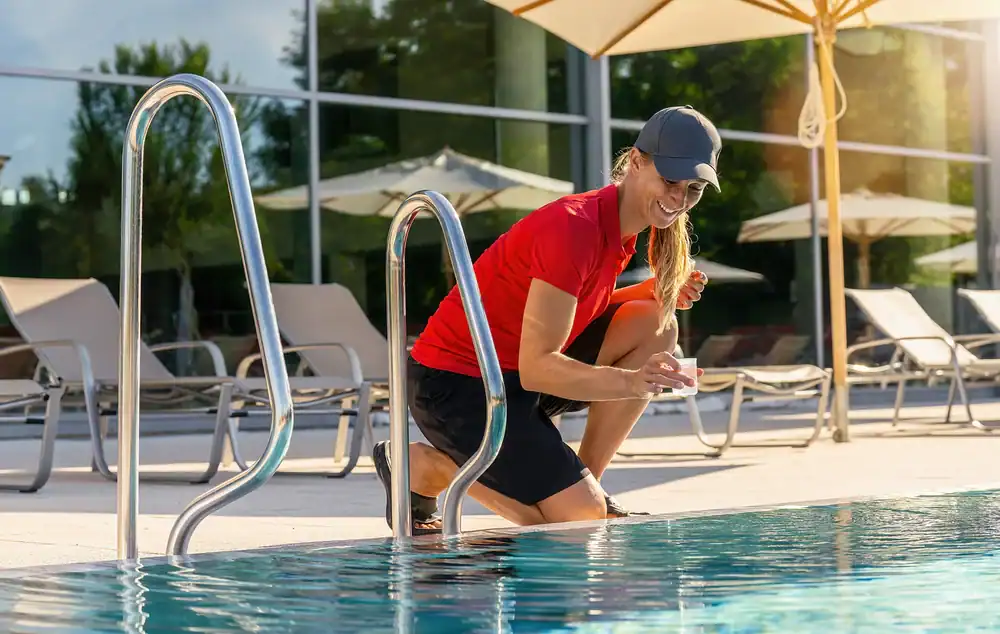
You’re busy. Between work, family, and everything else on your plate, the last thing you need is to spend your weekend trying to figure out if your chlorine’s too high or your pH is off. And when you guess wrong, you’re looking at cloudy water, irritated skin, or worse—equipment damage that costs thousands to fix.
Professional pool water testing takes that guesswork off your hands. You bring in a sample, we run a complete analysis, and you walk out knowing exactly what your pool needs. No confusion about which chemicals to add or how much. No wondering if your water’s safe for the kids to jump in.
The real benefit shows up over time. Balanced water protects your pump, heater, and filter from corrosion and scaling. It prevents algae before it starts. It keeps your pool clear without over-chlorinating to the point where everyone’s eyes are burning. You spend less time fixing problems because you’re catching them before they become problems.
We’ve been building and maintaining custom inground pools across South Georgia since 2014, but our hands-on experience goes back over 30 years. We’ve seen what happens when water chemistry goes wrong—and we’ve helped hundreds of pool owners in Wray, GA and throughout Douglas County keep their pools running right.
Water testing is something we do for free because we know it’s the foundation of pool health. When your water’s balanced, everything else works better. Your equipment lasts longer. Your chemicals work more efficiently. Your pool stays cleaner with less effort.
We’re not a big chain operation. We’re local, we know the water conditions in this area, and we’re here when you need straight answers about what’s going on with your pool.
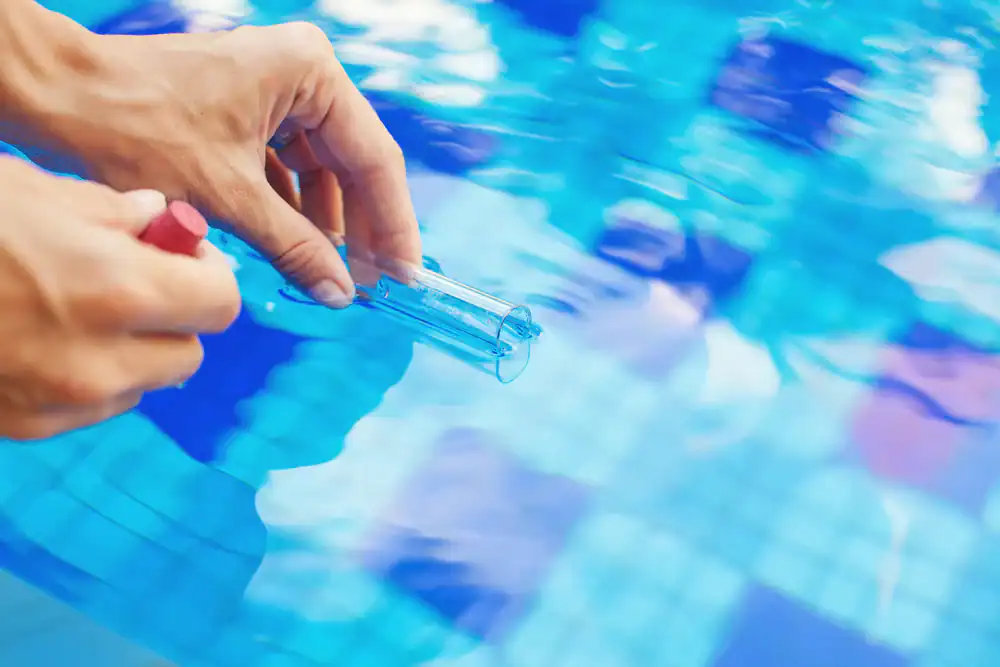
Bring in a water sample from your pool—about 16 ounces in a clean container, taken from elbow-deep in the water, not right at the surface. That gives us an accurate reading of what’s actually happening in your pool.
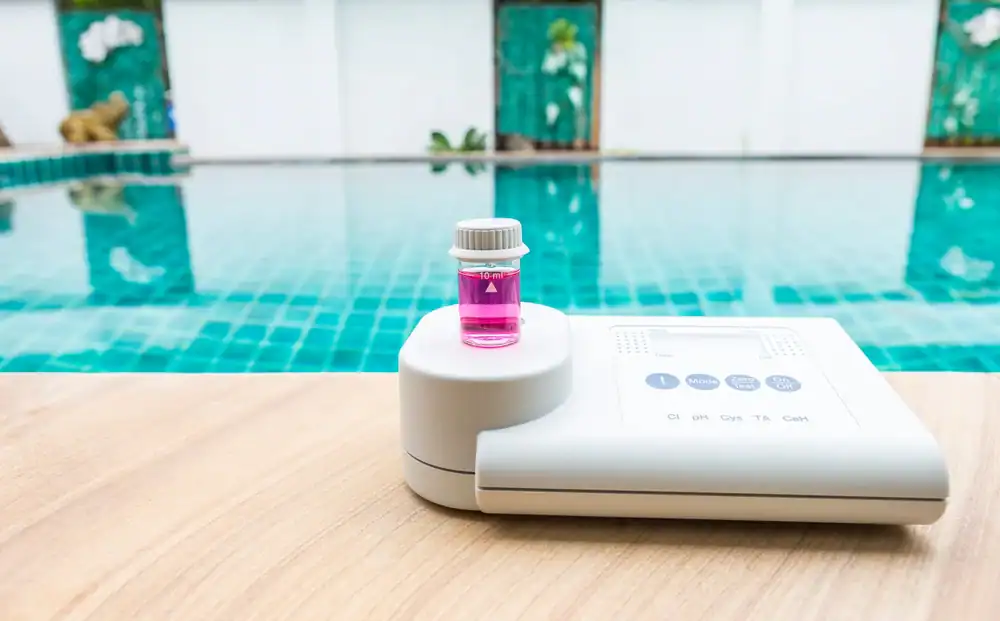
We test for pH, chlorine levels, total alkalinity, calcium hardness, and other parameters that affect water balance and equipment health. This takes a few minutes. We’re checking whether your water’s too acidic or too basic, whether you have enough sanitizer to kill bacteria, and whether minerals are building up that could damage your system.
Then we walk you through the results. You’ll know what’s in range, what’s not, and what you need to do about it. We’ll tell you which chemicals to add, how much, and in what order. If something looks off—like your pH keeps dropping no matter what you do—we’ll explain what might be causing it and how to fix the underlying issue.
You leave with a printed report and a clear plan. No sales pitch, no upselling. Just the information you need to keep your pool in good shape.
Ready to get started?
Every residential water test we run covers the critical parameters that affect your pool’s safety and longevity. We measure pH levels to make sure your water isn’t too acidic or too alkaline—both of which cause problems. Acidic water corrodes metal components and etches plaster. Alkaline water causes scaling and cloudy conditions.
Chlorine testing tells us whether you have enough sanitizer to kill bacteria and algae. Too little and you’re swimming in contaminated water. Too much and you’re dealing with bleached swimsuits and irritated skin. We check both free chlorine (the active sanitizer) and combined chlorine (the spent stuff that causes that strong pool smell).
Total alkalinity acts as a pH buffer. When it’s in range, your pH stays stable. When it’s off, you’re constantly chasing pH swings. Calcium hardness matters because Georgia’s water conditions vary, and both low and high calcium levels damage pool surfaces and equipment over time.
In Wray, GA and Douglas County, we see common patterns—hard water in some areas, soft in others. We know what to look for based on local water conditions, and we adjust our recommendations accordingly. That local knowledge makes a difference in how well your pool responds to treatment.
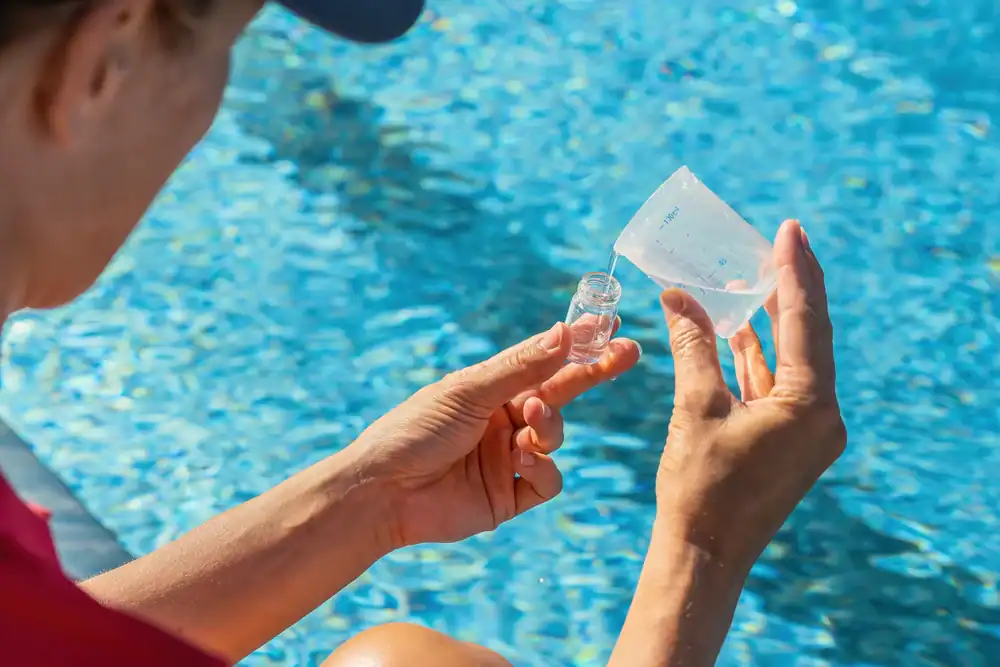
At minimum, test your water every two weeks during swimming season. If you’re using your pool heavily, if you’ve had a lot of rain, or if you’re dealing with any water clarity issues, test it weekly.
Georgia’s climate means your pool chemistry changes faster than it would in cooler states. Heat accelerates chlorine loss. Summer storms dump debris and dilute your chemicals. Heavy use introduces contaminants—sunscreen, sweat, leaves—that throw off your balance.
Testing more frequently during problem periods helps you catch issues early. It’s a lot easier to adjust slightly off numbers than to rescue a pool that’s turned green. And since our water testing service is free, there’s no reason not to check in regularly and stay ahead of problems.
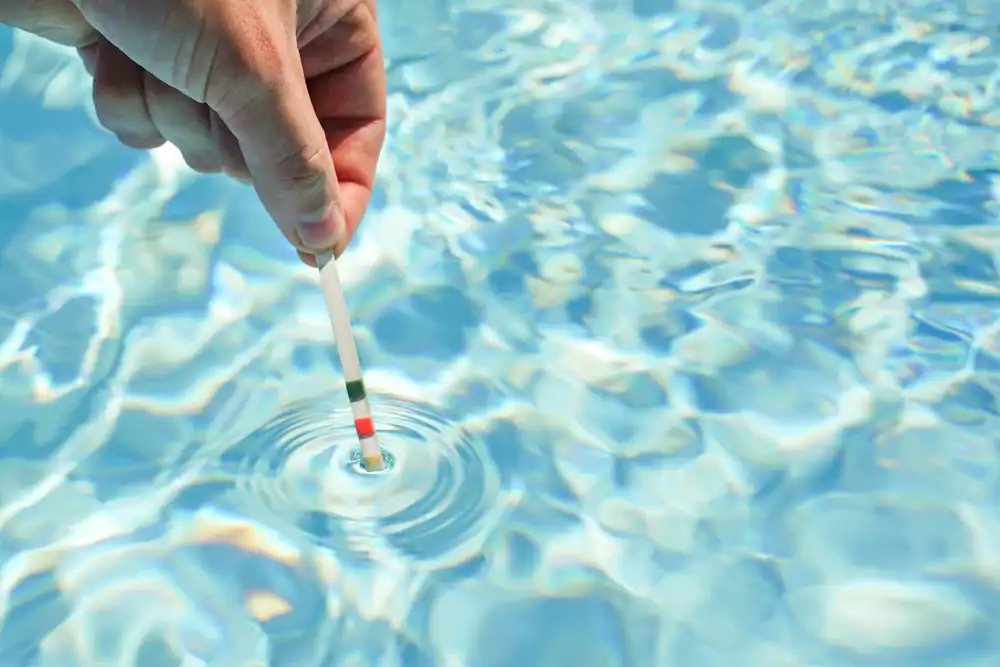
Test strips give you a rough estimate. They’re fine for a quick check between professional tests, but they’re not precise enough to catch subtle imbalances before they become bigger issues.
Professional testing uses more accurate methods and tests for parameters that strips often miss or measure poorly. Calcium hardness, for example, is hard to read accurately on a strip. Same with total alkalinity. And if your strip’s been sitting in a hot garage or it’s past its expiration date, the readings get even less reliable.
The bigger difference is interpretation. We don’t just hand you numbers—we explain what they mean for your specific pool and equipment. We’ve seen thousands of test results and we know what patterns indicate developing problems. That experience catches things that a color-matched strip can’t tell you.
Absolutely, and it’s one of the most expensive consequences of ignoring water chemistry. Low pH water is acidic and corrodes metal components in your pump, heater, and filter. We’re talking about equipment that costs thousands to replace.
High pH water causes calcium scaling that clogs pipes, coats heating elements, and reduces your system’s efficiency. Your heater has to work harder, your pump strains, and your filter can’t do its job properly. Over time, that scaling can cause complete system failure.
Unbalanced water also damages your pool’s surface. Acidic water etches plaster and concrete. Alkaline water leaves mineral deposits that are difficult and expensive to remove. Keeping your water balanced isn’t just about comfort—it’s about protecting a significant investment from preventable damage.
Cloudy water usually means your filtration isn’t keeping up, your pH is off, or you have an algae bloom starting. Adding more chlorine might not fix it if the underlying chemistry is wrong.
If your pH is too high—above 7.8—your chlorine becomes much less effective at sanitizing. You could have plenty of chlorine in the water, but it’s not actually killing bacteria and algae because the pH is blocking it from working. That’s why testing the full panel of chemicals matters, not just chlorine.
Cloudiness can also come from high calcium hardness, poor circulation, a dirty filter, or organic material that’s overwhelming your system. When you bring in a water sample, we can see what’s actually causing the problem and recommend the right fix—which might not be more chlorine at all.
Your pH should stay between 7.2 and 7.8, with 7.4 to 7.6 being ideal. That range is comfortable for swimmers and allows your chlorine to work effectively. Free chlorine should be between 1 and 3 ppm for residential pools—enough to sanitize without causing irritation.
Total alkalinity should be between 80 and 120 ppm to keep your pH stable. Calcium hardness depends on your pool surface, but generally you want 200 to 400 ppm. Too low and water becomes aggressive and corrosive. Too high and you get scaling.
These ranges aren’t arbitrary—they’re based on what protects both swimmers and equipment. When everything’s in balance, your water feels soft, it doesn’t irritate eyes or skin, and your pool systems run efficiently. Georgia’s Department of Public Health has specific requirements for public pools, and while residential pools aren’t regulated the same way, following similar standards keeps your family safe.
Yes, but less frequently. Even when you’re not swimming, your pool water still needs attention. Chemical levels drift, debris accumulates, and algae can take hold if conditions are right—especially during Georgia’s mild winters.
Test your water at least once a month during the off-season. Check that your chlorine hasn’t dropped too low and your pH hasn’t shifted. If you’ve had heavy rain or storms, test afterward because that dilutes your chemicals and introduces contaminants.
Maintaining basic water balance through winter makes spring opening much easier. You’re not starting from scratch trying to clear green water or dealing with staining and scale that developed over months of neglect. A little attention during the cold months saves you significant time and money when swimming season returns.
Other Services we provide in Wray